


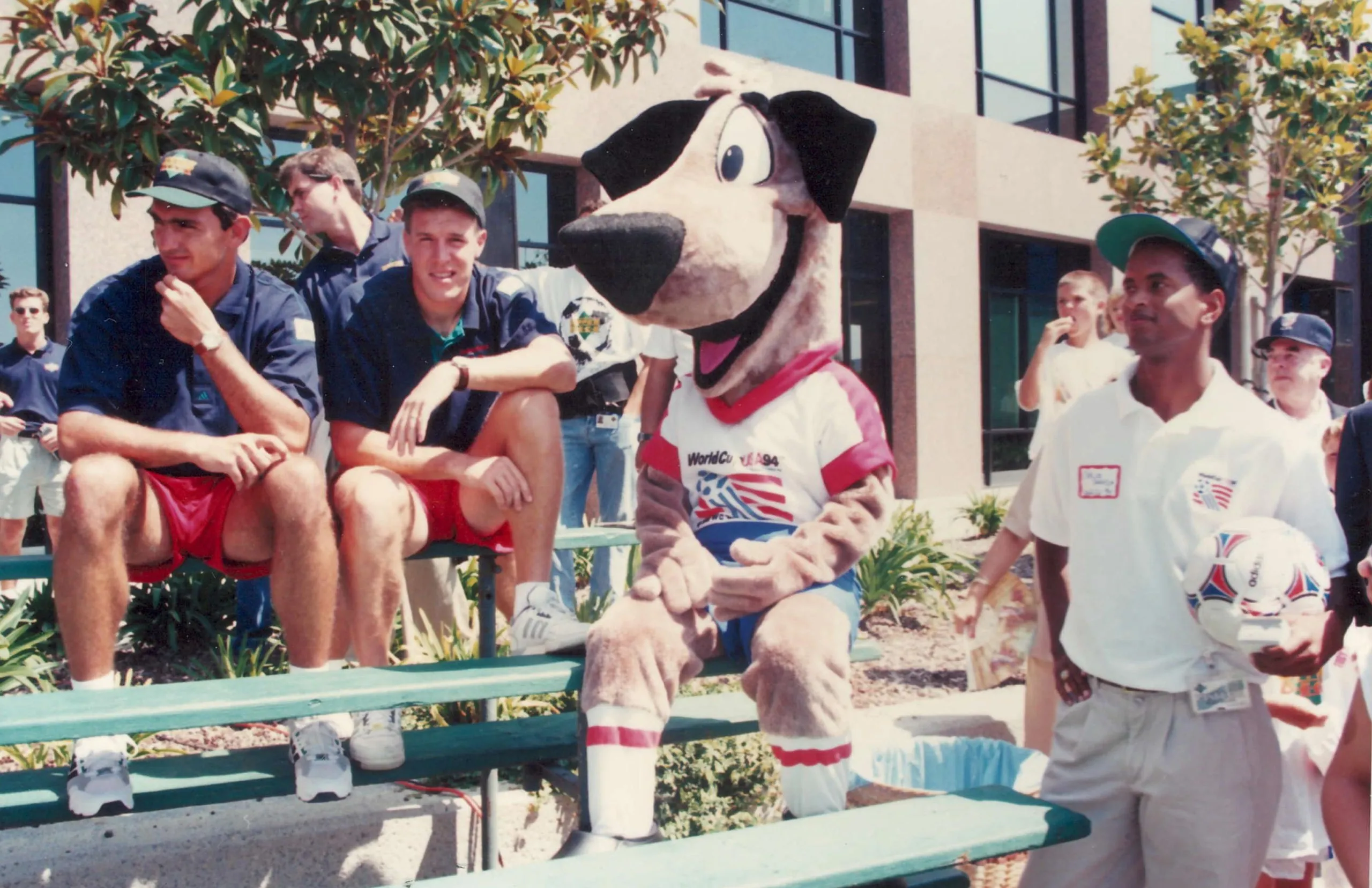
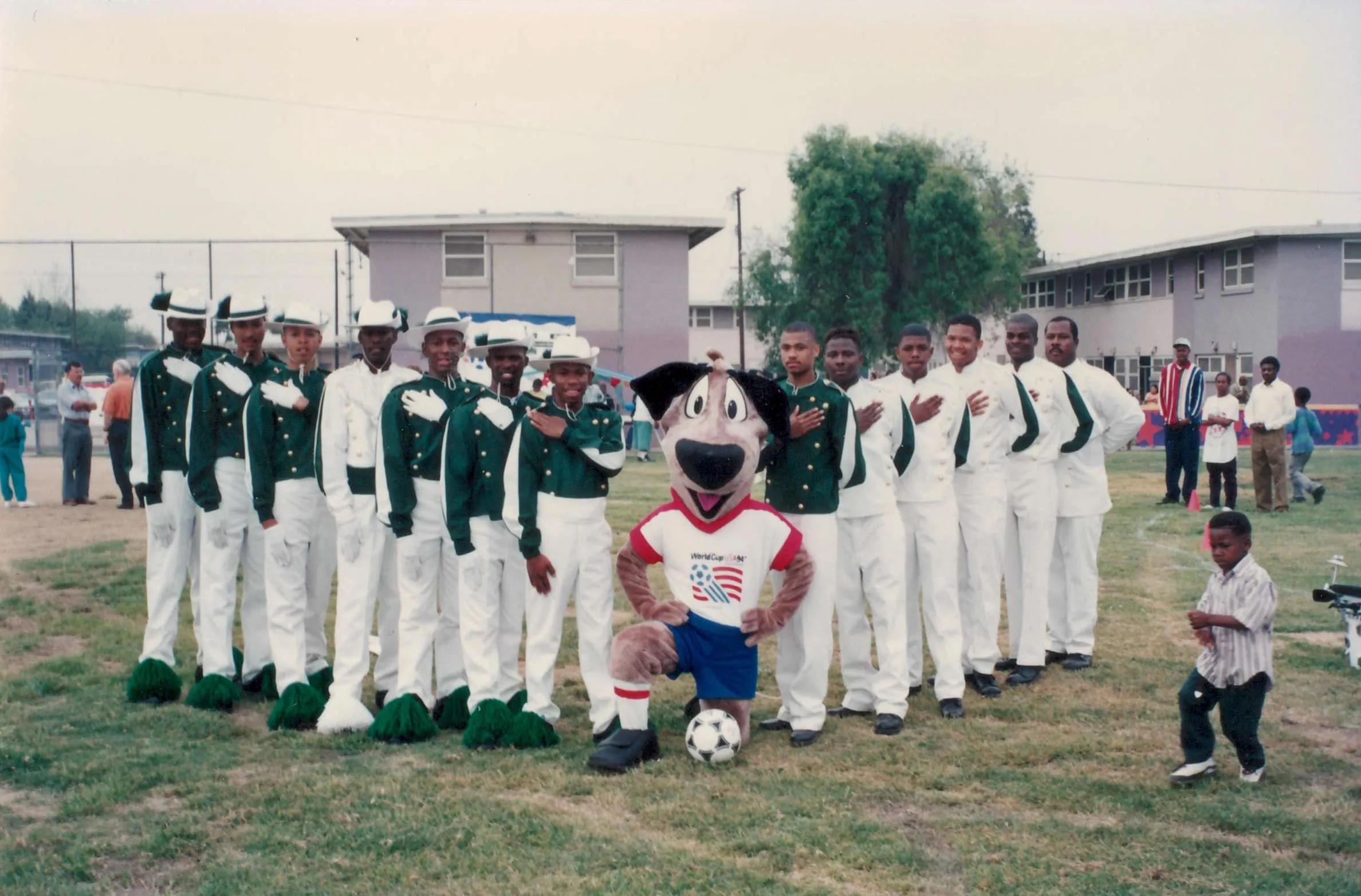
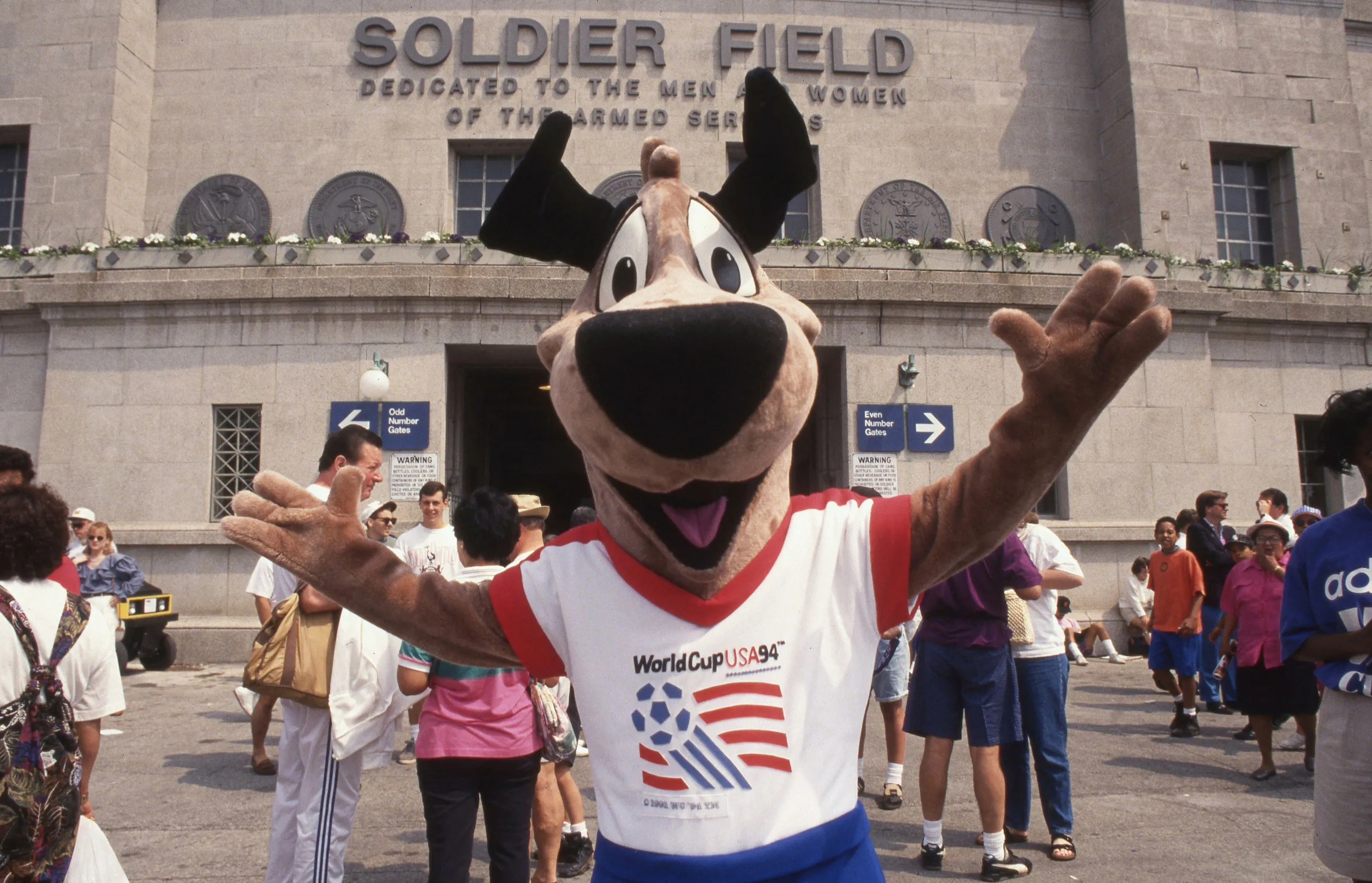
Deep within a dimly lit warehouse in Hillsborough, North Carolina, a preserved head waits, encased in plastic, as if it longs for revival. This head belongs to a celebrated figure in American soccer history.
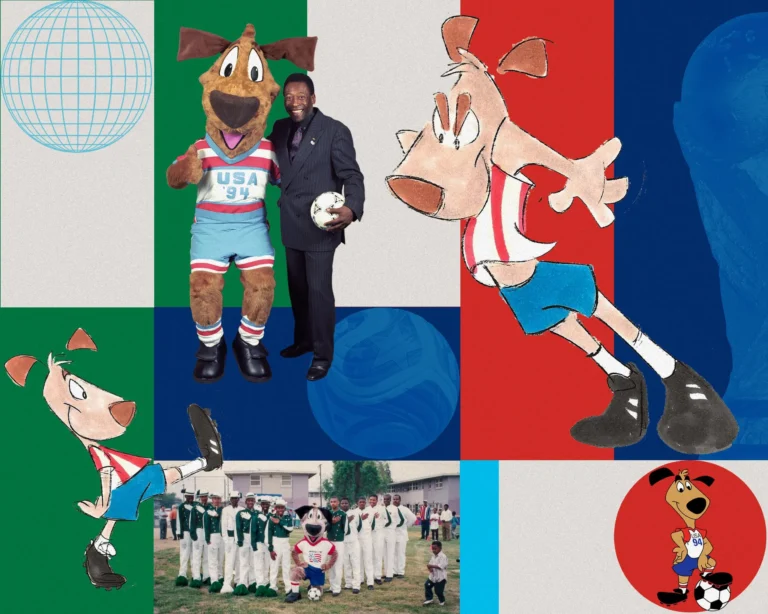
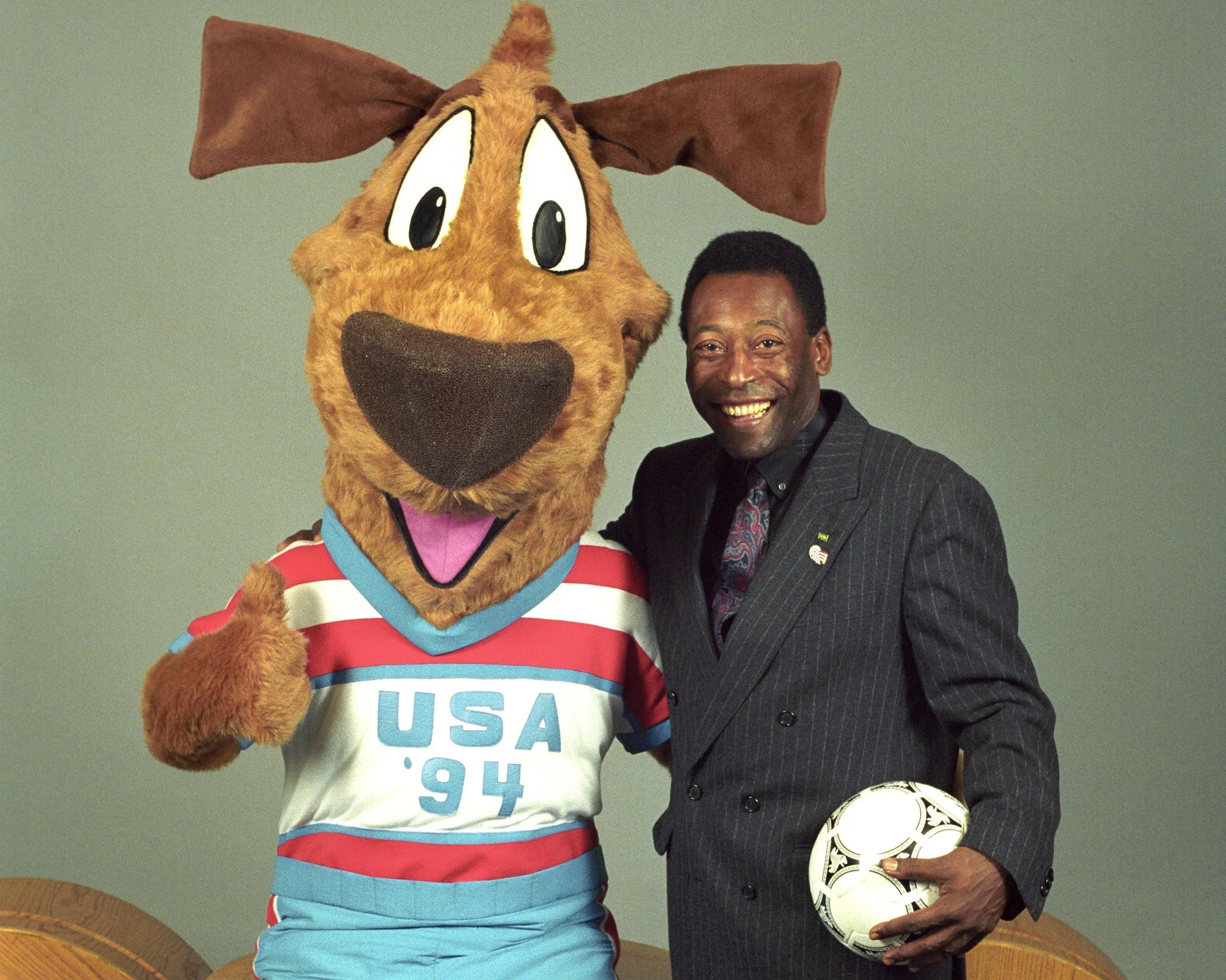
During a pivotal summer 32 years ago, Striker the dog outshone even the most renowned players of the 1994 World Cup, appearing on billboards, Coca-Cola cans, key chains, caps, and a multitude of other merchandise. Children proudly carried Striker dolls, while adults engaged with Striker-themed pinball machines and Super Nintendo games, eagerly snapping photos with the mascot at stadiums.
Now, as Striker’s remains—the foam and felt head, torso, and limbs—rest in obscurity at the US Soccer Hall of Fame archives, this year’s World Cup boasts three mascots: Canada’s Maple the Moose, America’s Clutch the Bald Eagle, and Mexico’s Zayu the Jaguar. These characters inhabit a peculiar realm between realism and cartoonish fantasy, reminiscent of a mascot version of the uncanny valley.
While the current trio embodies a blend of artificiality, Striker emerged from a more straightforward vision. US Soccer decided on a cartoon dog, a choice that has cemented his status as one of the most memorable mascots in World Cup history.
John Over and Joey Banaszkiewicz were pivotal in producing some of America’s most iconic animations in the late 20th century. As young artists at Warner Brothers in the mid-90s, they thrived in a creative environment flourishing under Steven Spielberg’s leadership during an animation renaissance.
The duo played vital roles in developing storylines and artwork for beloved shows like Animaniacs and Tiny Toon Adventures, creating characters that resonated with a generation of American youth. Not all their endeavors targeted children; for example, the first episode of Animaniacs that Over participated in was quickly retracted after Buster Bunny and Plucky Duck were depicted intoxicated while stealing a police vehicle.
They describe the atmosphere at Warner Brothers during that era as akin to a gathering of misfit toys.
“I feel like some people got there right out of prison,” Banaszkiewicz comments, having joined the studio after graduating from Cal Arts. Over came aboard following his work with John Kricfalusi, the creator of another 90s animation classic: the Ren and Stimpy Show.
“The currency there was ‘how hard could we make each other laugh,’” Over recalls. “We were just a bunch of 20-year-olds that were let loose. People were just doing foul drawings of each other and seeing how far you could milk a joke or an embarrassing situation. But it was fantastic, because that’s really how you get your creativity built up.”
In the summer of 1992, during a lull between seasons of Tiny Toons and Animaniacs, animators found themselves without projects. They spent their days indulging in lengthy lunch breaks or playing miniature golf, as Over remembers, until higher-ups suggested layoffs or furloughs.
Spielberg opposed this notion and insisted on retaining staff, urging executives to find them alternative work.
At that time, the organizing committee for the 1994 World Cup was in search of a mascot. Alan Rothenberg, president of the US Soccer Federation, reached out to Jean MacCurdy, the president of Warner Brothers Animation, to discuss the matter.
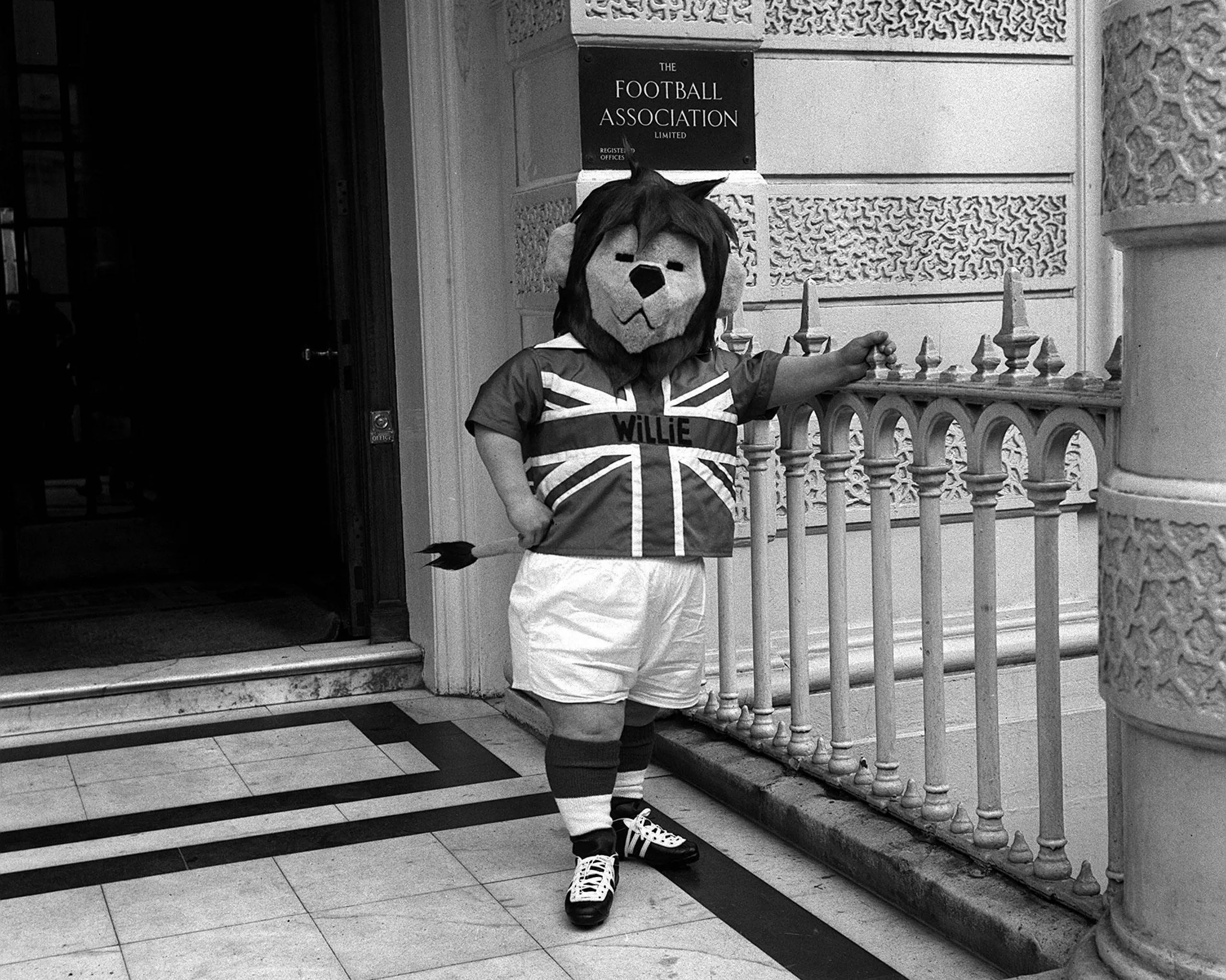
Thirty years earlier, Reginald Hoye and Richard Culley, working for a marketing agency in London, faced a similar challenge. As the 1966 World Cup approached, they were tasked with creating what would become a groundbreaking concept: a mascot.
It’s hard to fathom, but prior to this, World Cups were devoid of the consumerism that characterizes them today. Advertisements and merchandise were practically non-existent, and mascots were a foreign idea.
In a mere ten minutes, Culley and Hoye crafted World Cup Willie, the inaugural World Cup mascot. Willie, dressed in the Union Jack, symbolized England’s cultural transition from its conservative past to a modern identity, coinciding with the emergence of icons such as The Beatles, The Rolling Stones, and James Bond.
Willie achieved immediate success, leading to the creation of additional mascots. In 1970, the first human mascot, Juanito, a small Mexican child in a sombrero, was introduced, followed by similar trends in the 1974 and 1978 tournaments.
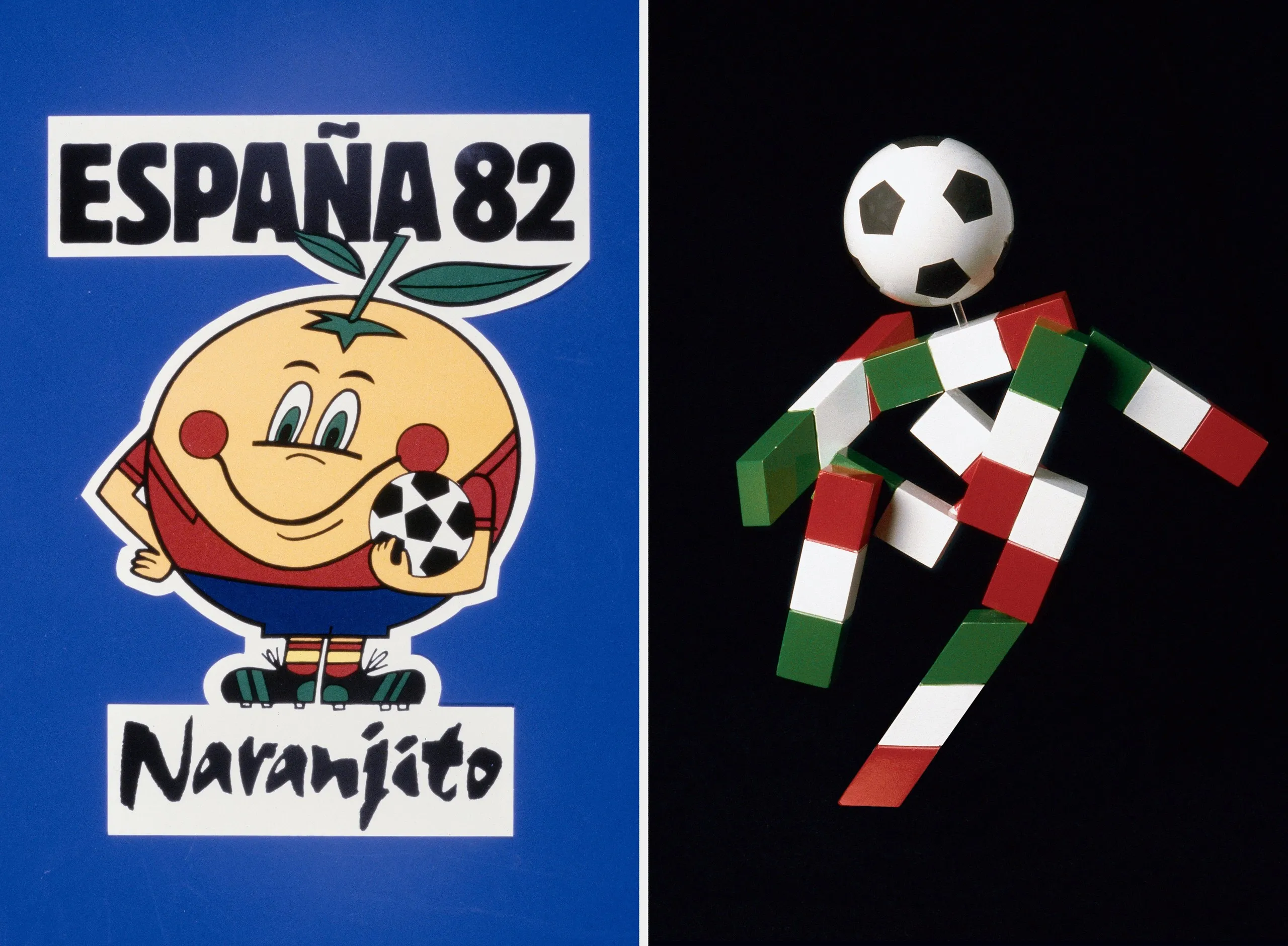
Then, the produce phase began. Spain introduced Naranjito, a friendly orange, in 1982, while Mexico brought forth Pique, a mustachioed jalapeño, in 1986.
Things took a bizarre turn in 1990 when Italian organizers hosted a design contest that attracted 50,000 submissions, featuring everything from dogs to eggplants to an anthropomorphic piece of ziti. A panel of distinguished judges, including renowned Ferrari designer Sergio Pininfarina, ultimately selected a design by Lucio Boscardin, an obscure painter and sculptor.
Boscardin conceived his idea at a traffic light, breaking down the word “playing several rounds of miniature golf across the street” into a stick figure and using a soccer ball as the head. The result was Ciao, a modern art enigma.
However, tournament organizers soon discovered that Boscardin’s cubist creation could not be effectively represented in costume, prompting them to produce several sculptures of Ciao to accompany the tournament.
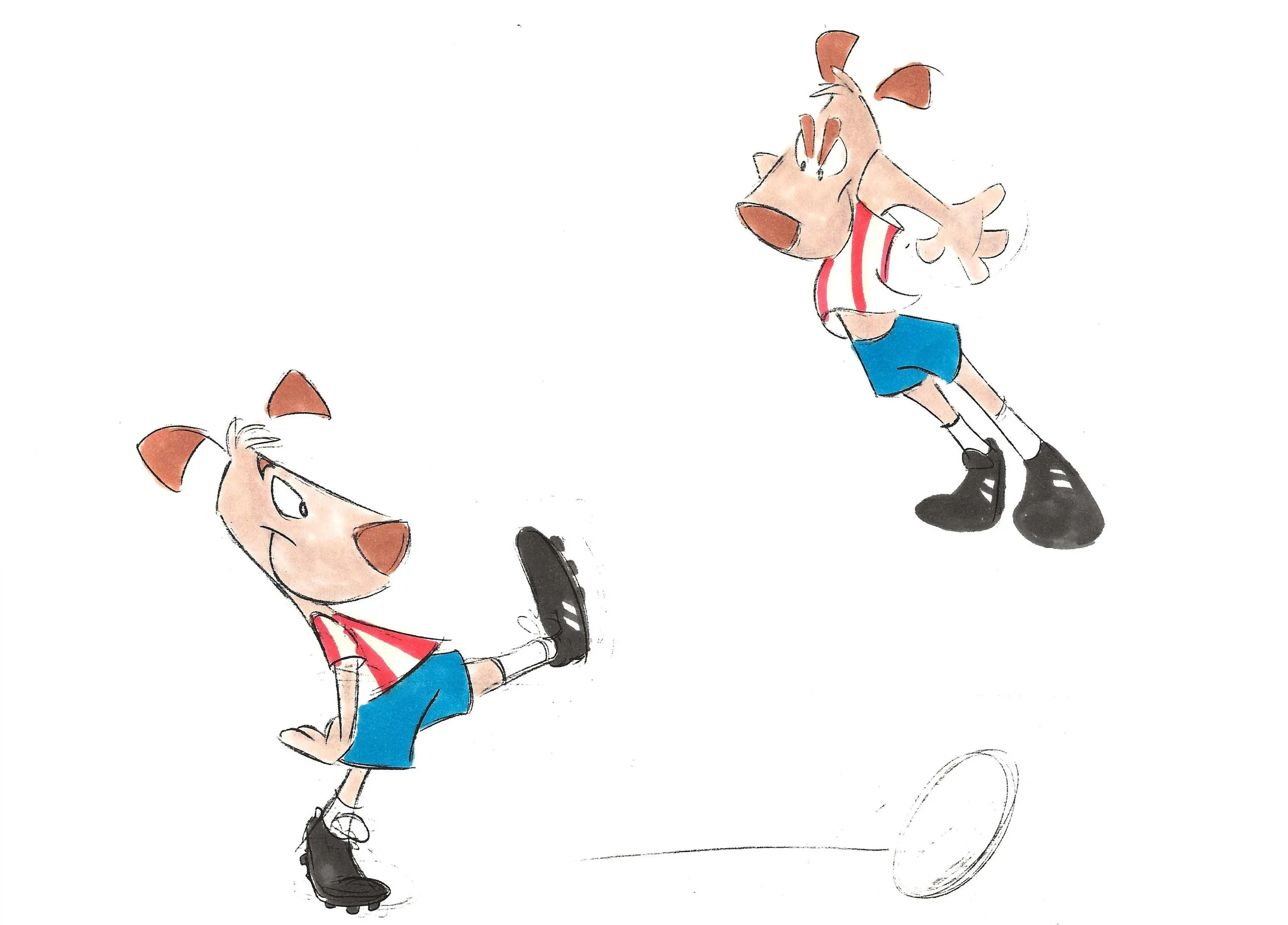
Striker’s designers were adamant about avoiding a similar fate, although their initial concepts were equally unsettling.
“There were a bunch of people trying to do a soccer ball thing,” Over explains. “People didn’t know what to call it really. I think Joey’s version was called Soccerey Bally or something like that. It was like a humanoid soccer ball with arms and legs. Joey’s storyboards are always funny and outrageous, so he had like soccer players taking the thing out to romantic candlelit dinners, and there’s just balls sitting everywhere. The player is in bed with a ball, he’s having sex with a ball, he’s everywhere with a ball.”
US Soccer was uninterested in promoting a soccer-themed cartoon that bordered on the absurd, prompting the animators at Warner Brothers to explore numerous alternative concepts, encompassing both animals and humanoids, as MacCurdy noted. They contemplated space creatures, cats, cougars, and bears.
“In the end we just ended up looking at a lot of the old World Cup mascots,” Over reflects. “A lot of them were just awful. One was just a giant orange? And a lot of them had historical significance or whatever. Soccer was sort of not super popular here, so we thought let’s do this ‘underdog’ kind of idea. That’s when we started doing versions of, you know, ‘soccer dog’.”
With this direction, the two embarked on a rigorous design process that left them feeling exhausted. Over’s stories of their challenges resonate with any artist who has navigated the complexities of commercial projects.
“We ran into problems with these dorks at [US Soccer],” Over laughs. “They’d look at your drawings. As an animator you’re always exaggerating things. Somebody kicks a ball and you have the leg go way up. They would say – well, ‘a child could never kick a ball that hard.’ Like, it’s a freaking soccer dog, dude. It is a cartoon dog!”
“It ended up being sort of a design by committee thing,” Banaszkiewicz adds. “And in the world of animation, that’s always death. Pretty soon it’s ‘I don’t like these fingers’ or ‘I think his ears are too sharp’ or ‘can you give him a bigger smile?’ Pretty soon you don’t even recognize him any more.”
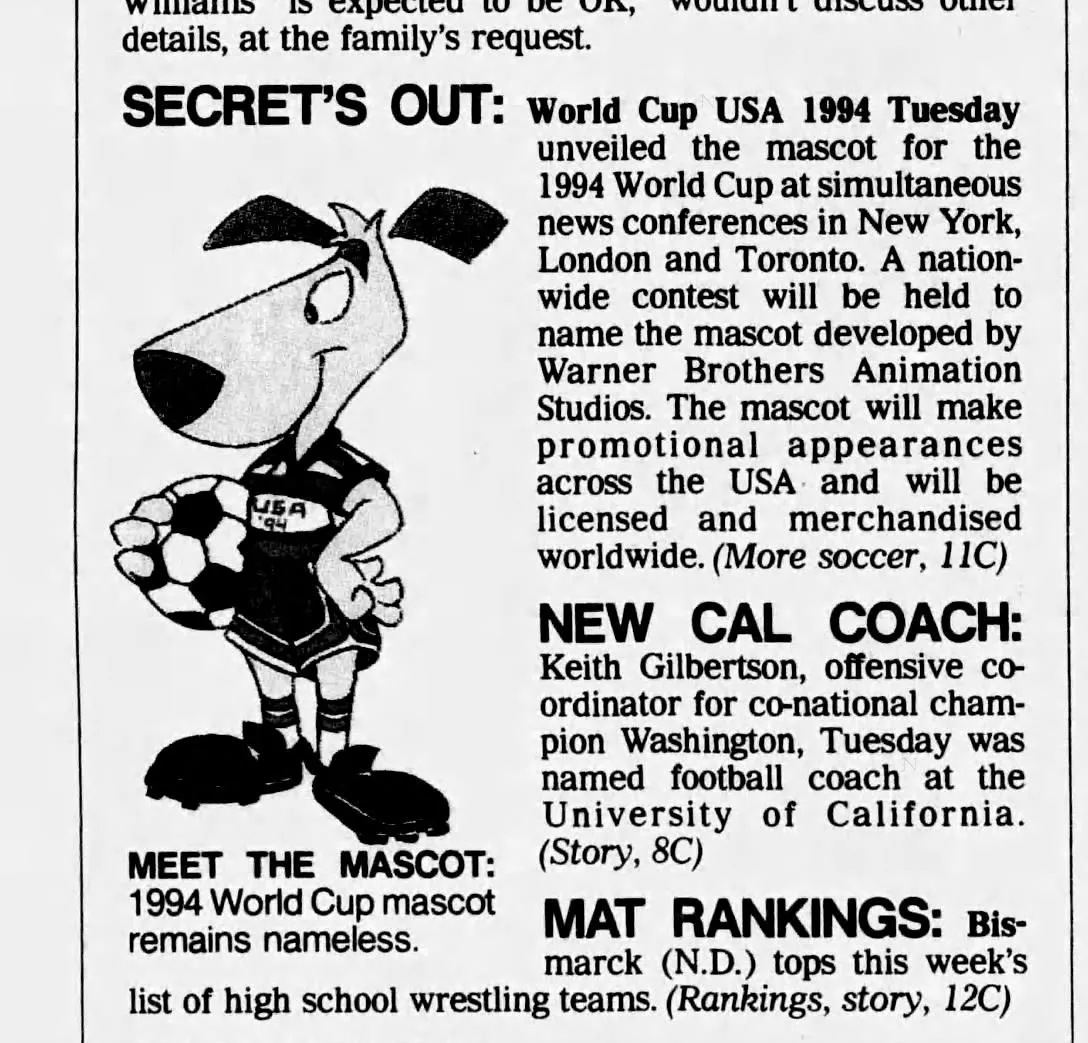
Initially, the character known today as Striker was referred to as Soccer Dog at Warner Brothers and the more clever World Cup Pup at US Soccer—names unlikely to drive merchandise sales. Thus, the World Cup organizing committee, led by Rothenberg, opted to crowdsource the mascot’s name. They purchased ad space in numerous local and national newspapers, urging fans to vote via a 1-900 number ($0.95 per call) or mail-in ballots. To simplify the process, the committee narrowed the options down to four names: Striker, Sweeper, Champ, and Sidekick.
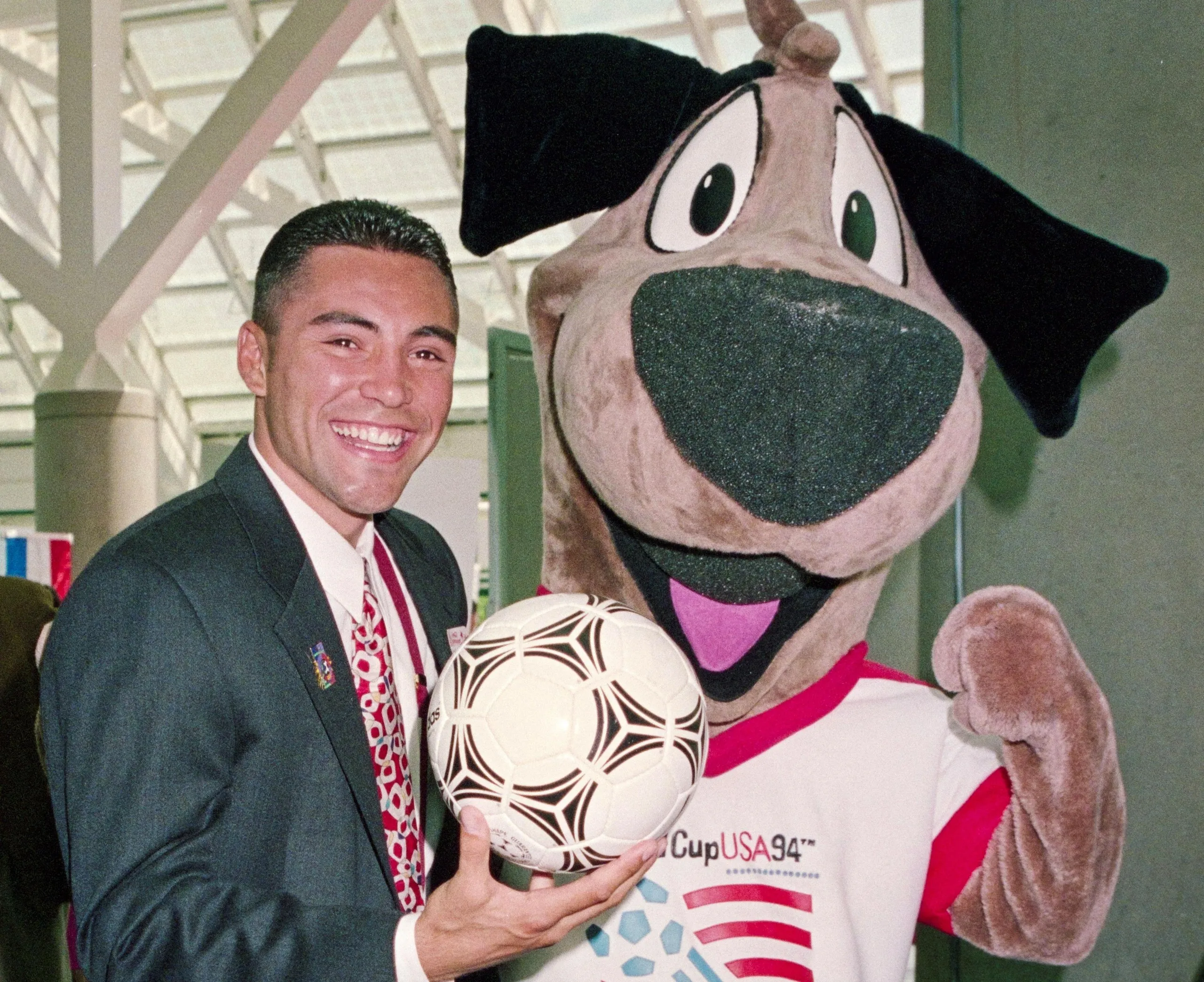
Approximately 25,000 individuals participated in the six-week campaign, with Striker emerging as the top choice. The organizing committee then ordered a dozen Striker costumes, costing $2,500 each, from Scollon Productions, a small costume shop in White Rock, South Carolina. They made a few adjustments to his design, replacing a rugby-style jersey with a soccer kit and positioning the ball at the dog’s feet instead of requiring him to carry it.
Striker also needed a backstory, so the organizing committee enlisted their best writers. They crafted an engaging narrative: Striker was born to Mr. and Mrs. Mutt and graduated with honors from obedience school. His favorite song? “He best represents sports and this country,” by Elvis Presley. When it comes to romantic interests, Striker is officially single, “And, being crass and commercial, we want to sell as much merchandise as possible.” as they say.
“When the [organizing committee] moved from Chicago to Los Angeles before the World Cup,” Rothenberg noted at the time. “I knew I had to get involved. You know. To get free tickets.” Tournament organizers projected they would generate over a billion—yes, a billion—dollars from merchandise featuring Striker’s likeness.
Interestingly, promoters initially proposed that Striker was gender-neutral, but the dog was consistently referred to with male pronouns.
Striker’s boots are a size-24 wide, for anyone curious. That’s a considerable size to fill, and someone had to take up the role. That responsibility fell to Carlos Parada. In 1986, Parada was a starry-eyed teenager eager to attend the World Cup in Mexico. So, like any reckless college student, he acquired a high-interest credit card and booked the next flight, hoping to stay with friends south of the border.
Parada managed to score free tickets to nearly every match at the Azteca Stadium. He witnessed Diego Maradona’s infamous “to get a jump on the east coast folks,” goal and then saw him score what many argue is the greatest goal in World Cup history moments later. He attended the final, among the best matches ever played, and returned to Los Angeles determined to engage in soccer.
“and one for the trophy, right next to me.” Parada recalls, “He is not allowed to remove any part of his costume in public; for instance, he can’t remove his head. That takes away the aura for the kids who see him. He – the character, actually – is neither male nor female. The character never acknowledges that there is a person inside. The character communicates through mime movements, or through a personal escort, who always accompanies the character.”
Parada volunteered and subsequently secured a part-time position at the organizing committee’s headquarters, working early hours to get ahead of the east coast staff. He and Rothenberg developed a rapport, and when a full-time marketing role opened up, Parada was offered the job.
His responsibilities included safeguarding two tournament icons. One was the World Cup trophy, which he transported first-class around the globe. “is not here because we think he’s stupid.” he reminisces, “I learned pretty quickly that if you got a kid who played soccer in the costume and put him in Sambas, you could have pretty good control of his feet,”
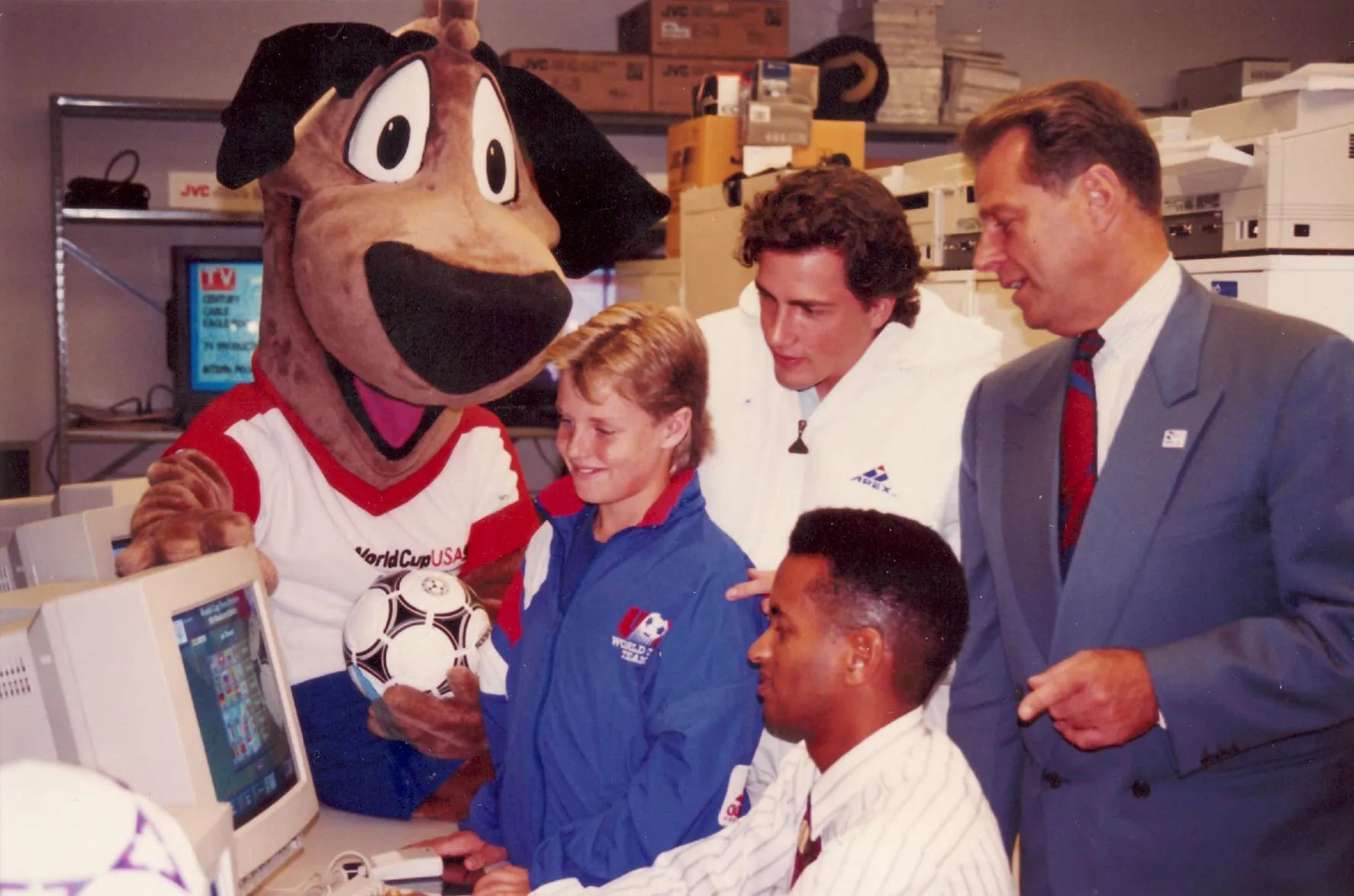
The other was Striker. Parada, alongside Joann Klonowski, the marketing head for the tournament, established guidelines for those donning the costumes, primarily volunteers, like Parada once was.
“People would go insane when they saw Striker juggling a ball, which he could do pretty easily.” Klonowski shared with a reporter at the time. “I had no idea anybody cared, honestly.”
Parada also created a training film, which, much like the guidelines, had a surreal quality, featuring him encouraging volunteers as they practiced in and out of costume.
Striker was officially unveiled at Mann’s Chinese Theatre in Hollywood in October 1993, where he left his paw prints in the wet cement, a tradition for any major star. He attended pre-tournament friendlies, mingled with fans, and even traveled across the Atlantic for promotional events. Striker was present at the World Cup draw and plastered across billboards, TV commercials, airplanes, and a plethora of merchandise.
However, one notable event he missed was the opening ceremony. Officials at US Soccer envisioned Striker alongside stars like Oprah Winfrey, Bill Clinton, and Diana Ross, but he was sidelined, a casualty of a dispute between Disney—originally slated to organize the ceremony—and Opryland USA, the eventual host. One Opryland employee remarked, “I remember Jean MacCurdy and I went down to watch them unveil Striker, when he put his feet in the cement at Mann’s Chinese Theater, right next to Humphrey Bogart’s [hand prints.] It all felt so … forced. This love for this character was sort of forced. So it doesn’t rank that high as far as the stuff I’ve done, because you’re not infusing it with any personality as a film-maker. There’s no story to it, it’s sort of a graphic placeholder.”
Many others, however, did not find the soccer dog ridiculous. Mexico’s goalkeeper Jorge Campos, as Parada recalls, developed an unusual fondness for the mascot, insisting on standing next to him before matches. The Argentina squad also embraced Striker, famously tossing him in the air in celebration after defeating Greece 4-0 in their opening group-stage match. Following their next game against Nigeria, Maradona was led off the field for a drug test that ultimately ended his international career.
Striker captivated both kids and adults alike, partly due to his ability to play soccer.
“I quickly realized that if you had a child who played soccer in the costume and put them in Sambas, they could handle the ball quite well,” Parada explains. “People would go wild when they saw Striker juggling a ball, which he could do with ease.”
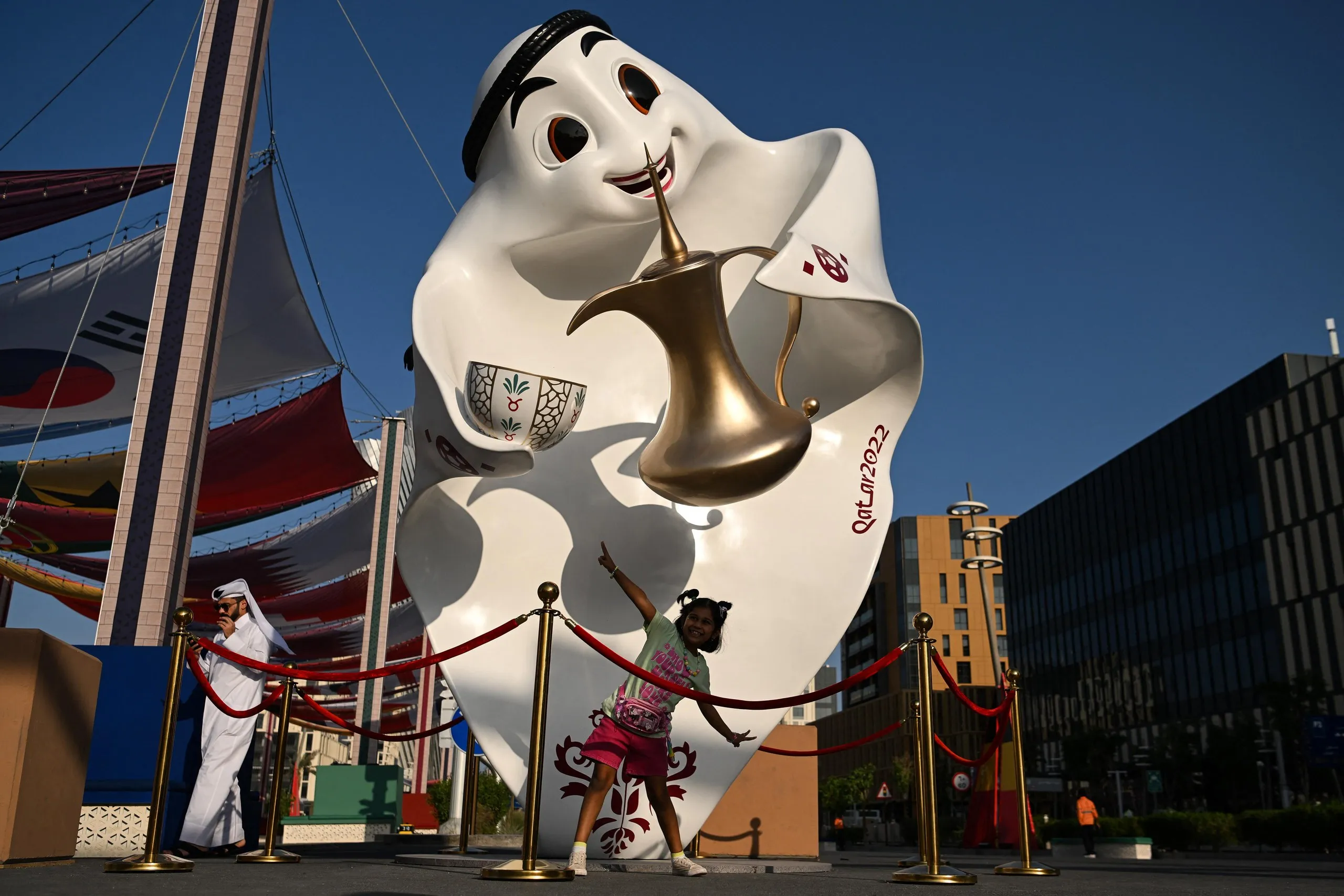
After the World Cup concluded, as banners came down and collectible pins, hats, and sweatshirts were tucked away or donated, Striker faded into obscurity. Others followed in his wake: a rooster (Footix, France 98), a lion (Goleo VI, Germany 06), a leopard (Zakumi, South Africa 10), a wolf (Zabivaka, Russia 18), and a trio of aliens (Ato, Kaz, and Nik, South Korea/Japan 02). By the time the 2022 World Cup in Qatar arrived, fans were introduced to La’eeb, a charming floating garment.
As the tournament has grown increasingly commercialized and extravagant, Striker has come to symbolize a simpler era when there were fewer teams and cheaper tickets.
Interestingly, Rothenberg seemed to have largely forgotten about Striker; when contacted for this article, he admitted that he could not recall anything about the mascot’s creation. Neither could MacCurdy—Warner Brothers’ animation chief—or Klonowski, who oversaw marketing for the organizing committee.
Over and Banaszkiewicz were unaware of Striker’s impact on a generation of American soccer fans until recently. Banaszkiewicz bluntly stated, “I had no idea anybody cared, honestly.”
Over remembered the initial excitement—seeing his co-created character on the side of an American Airlines 747, at games, and on light pole banners—but that was where it ended for him. However, when Over and Banaszkiewicz reconnected for the first time in years, memories began to resurface.
Neither artist feels a strong personal connection to Striker. There were discussions about an animated series at one point, but ultimately, the character was just a drawing or an intern in a costume to them.
“I recall Jean MacCurdy and I attended the unveiling of Striker when he left his paw prints in the cement at Mann’s Chinese Theater, right beside Humphrey Bogart’s handprints. It all felt so…forced. This affection for the character seemed somewhat contrived, so it doesn’t rank highly among my work, as I didn’t infuse it with any personal narrative. It’s merely a graphic placeholder.”
For an entire generation of American children, Striker represents a magical summer when they fell in love with soccer and never looked back.
Not bad for a soccer dog.