


In the aftermath of Argentina’s intense quarter-final triumph over Switzerland, head coach Lionel Scaloni quickly turned his focus to the looming semi-final against England, a matchup steeped in historical rivalry.
During a press conference shortly after the match, a reporter posed a question in Spanish, suggesting that the upcoming game held significant emotional weight beyond just football. “This won’t just be a special game from a footballing standpoint,”
Scaloni interjected firmly, clarifying, “but also in an emotional sense. How do you imagine you and the players will come out for this game and what message would you give to all of us Argentines that are …”
Four decades earlier, Diego Armando Maradona addressed a similar situation before a quarter-final game against England in the 1986 World Cup. Reporters at that time framed the match as a reflection of the Falklands War, a conflict that claimed the lives of numerous soldiers from both nations. The loss of 649 Argentine and 255 British soldiers, along with three islanders, from the 74-day conflict was still a raw and poignant memory for many Argentinians.
Maradona responded in kind, stating, “This is a football match, OK?” and reiterated the sentiment multiple times, mirroring Scaloni’s insistence decades later.
The intensity of Maradona’s narrative persisted until the teams emerged from the tunnel at Estadio Azteca. “The message is that this is a football match. Let’s not look for anything else. This is a football match.” recalled Argentina defender José Luis Brown before his passing in 2019. “This is just a match, OK?”
The upcoming semi-final on Wednesday is undeniably more than just a sporting event. For many English fans, the historical context of the Falklands War has faded, while for Argentinians, the conflict remains a significant part of their collective memory. This sentiment has been transmitted through generations of players and coaches, fueled by social media and oral history. Maradona’s influence endures, remaining a central figure in this narrative, even after his death in 2020. Unlike English supporters who do not wave flags with Bobby Charlton or Bobby Moore, Argentine fans continue to honor Maradona.
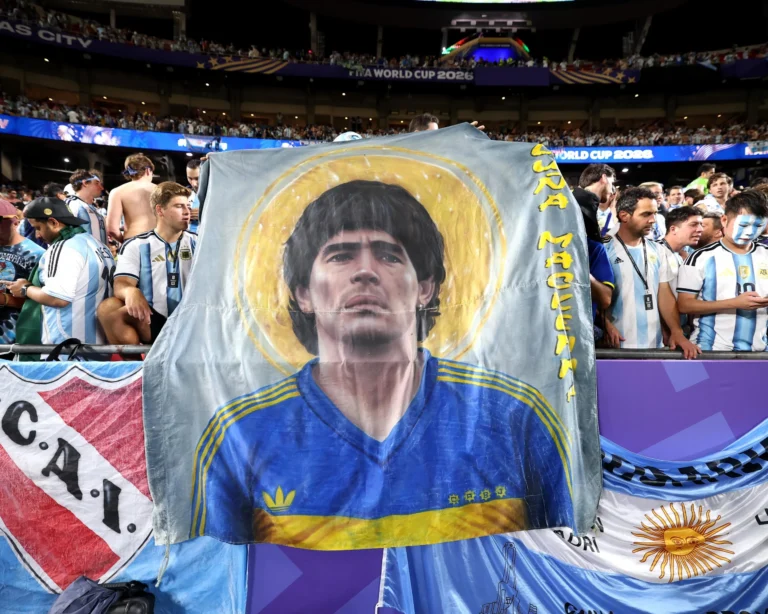
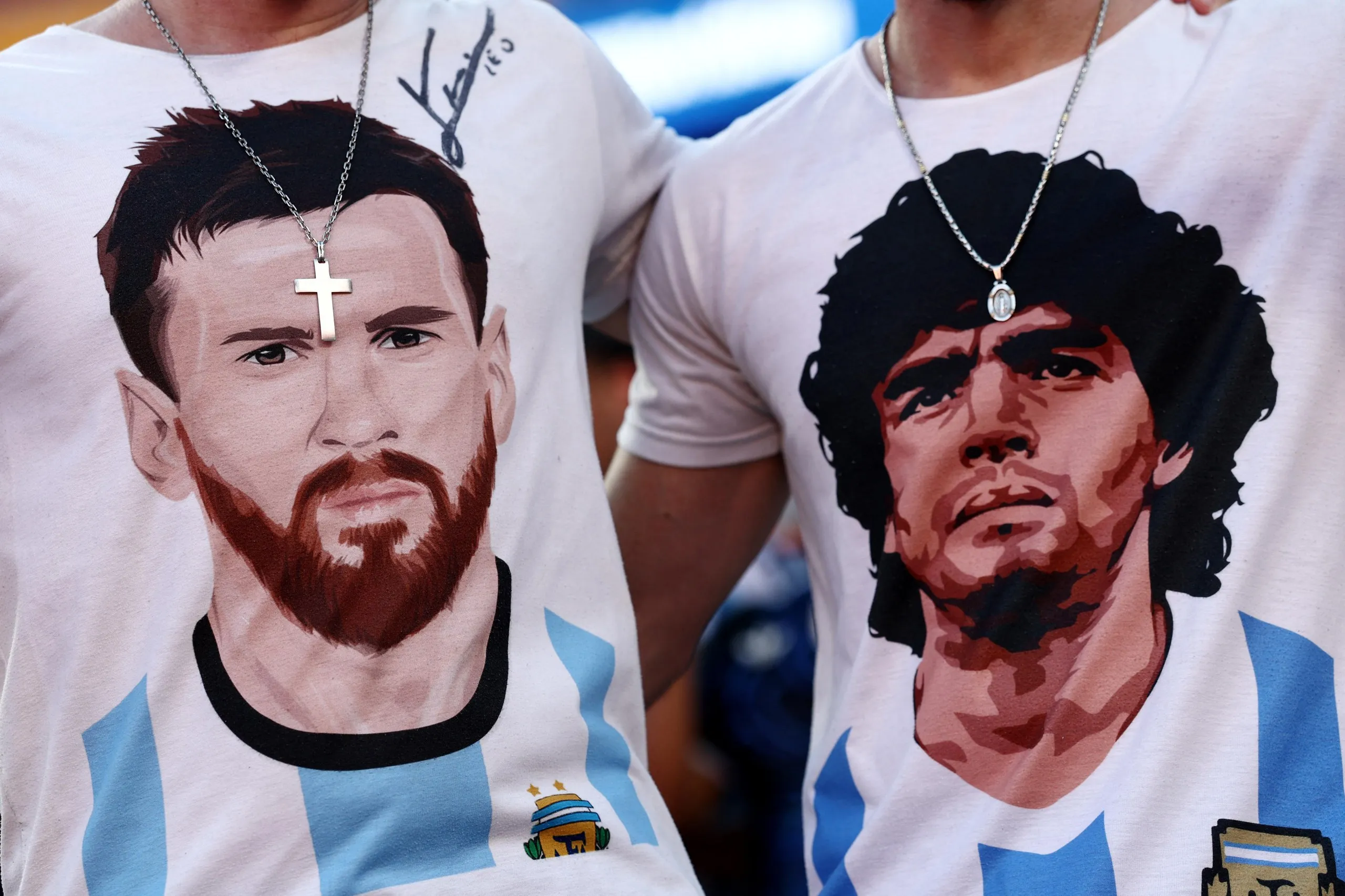
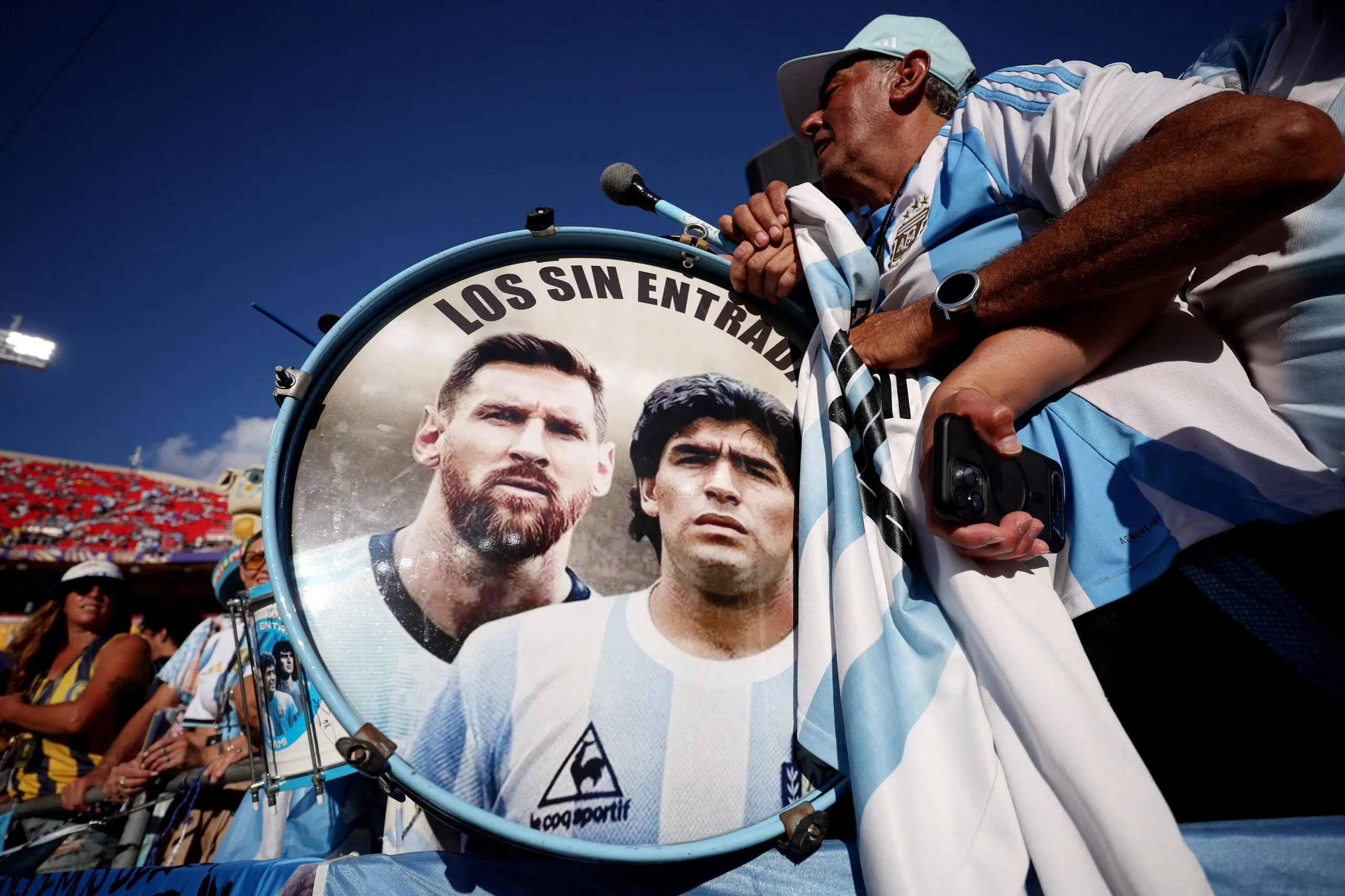
Throughout this World Cup, Maradona’s image has been omnipresent, reminiscent of his visibility during the 2022 tournament in Qatar. Across stadiums in the United States, Argentine fans have proudly displayed his likeness alongside Lionel Messi, who is often hailed as his successor. The idolatry surrounding Maradona has only intensified, with social media posts depicting Messi visiting Maradona in heaven, alongside Jesus Christ.
The sentiments regarding England expressed by Maradona have also been revived this summer. A new generation of fans is engaging with iconic images and quotes circulating online, such as Maradona celebrating his second goal in 1986, with enraged English supporters visible in the background.
Clips of him claiming he played that match not only with his boots but also with a rifle, seeking vengeance, have surfaced. Moreover, more recent comments have resurfaced, in which he alleged England’s theft of victory against Colombia in the 2018 World Cup and their controversial win in 1966.
The current Argentine squad, however, has shown their spirit without needing further encouragement. Following their thrilling win against Egypt in the round of 16, the players celebrated in their locker room, joyfully singing the anthem La Cuarta Estrella (The Fourth Star).
“I’m Argentine from the cradle to the grave,
For Malvinas, for Diego, for the last [championship] of Leo,
Argentina, I want to see you as ‘bicampeon’.”
This song, embraced by both players and fans, was released in March, well before Argentina knew they would face England. The emotional charge against the English is palpable, regardless of the match setting.
All these factors—the enduring presence of Maradona and the deep-seated anti-English sentiments—are likely to inspire an Argentina team that has played an exhausting 240 minutes of football in under a week.
The squad, featuring many seasoned players, has yet to fully showcase their capabilities in this tournament, having narrowly escaped elimination on two occasions against teams deemed weaker. Their advancement has often seemed propelled by sheer determination.
Messi, notably, has never faced England in a match. His only opportunity in 2005 was squandered due to a red card suspension, which would have marked his fifth cap. After the match against Switzerland, Messi made his way past reporters toward the team bus, pausing briefly to respond to a few inquiries. He was quickly asked about the upcoming clash with England.
“Diego was walking in line with us,” he remarked. “and he started raving. He says: ‘Let’s go, yeah? These motherfuckers killed our neighbours, they killed our relatives.’ I understood, obviously … After the anthems, nobody said anything. We hadn’t said anything about that before the game but we’d all been thinking about it. We just went out there and ran.”
This response reflects Messi’s typically measured demeanor, characteristic of one of the most media-savvy athletes, who seldom reveals much. However, it was evident that this match bore significant importance for him, potentially marking his last meaningful appearance in an Argentina jersey.
Much like Scaloni and Maradona before him, Messi was not deceiving anyone.
- World Cup 2026
- Argentina
- World Cup
- Diego Maradona
- Lionel Messi
- features