


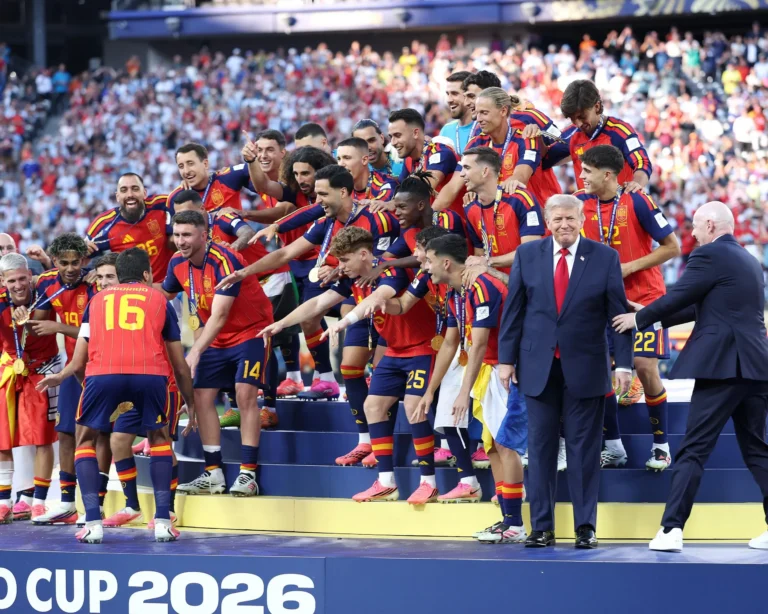
The World Cup concluded in a manner reminiscent of the orchestrated plans set forth by Gianni Infantino and Donald Trump. On the final day of the tournament, the trophy emerged from a Louis Vuitton trunk, a scene emblematic of the event’s extravagance. Moments later, Infantino and Trump ascended the podium to present the trophy to a jubilant Rodri, though their moment was slightly marred when Trump lingered during Spain’s team photo. After a brief exit, they departed amidst a glimmering spectacle, leaving behind the echoes of a football event that impacted far beyond the confines of this small New Jersey venue.
How does one interpret a tournament that was both exhilarating and bizarre, seeming to offer warmth while maintaining a chilling detachment? The event drew to a close under a vivid blue sky, where football often felt like a secondary attraction, even if the match itself did not contribute positively to that perception. For those seeking a narrative, Spain’s victory could symbolize the triumph of a unified vision in a World Cup designed to celebrate individualism.
Throughout, Infantino and Trump watched the proceedings together from behind reinforced glass. What kind of endorsement for the sport did this represent? The controversies that unfolded over the past month highlight how disconnected football’s leadership has become, with Trump, given his considerable influence, now firmly entrenched in this dynamic. Argentina and Spain fought through one of the most lackluster finals in history, yet it raised questions about the significance of their struggle.
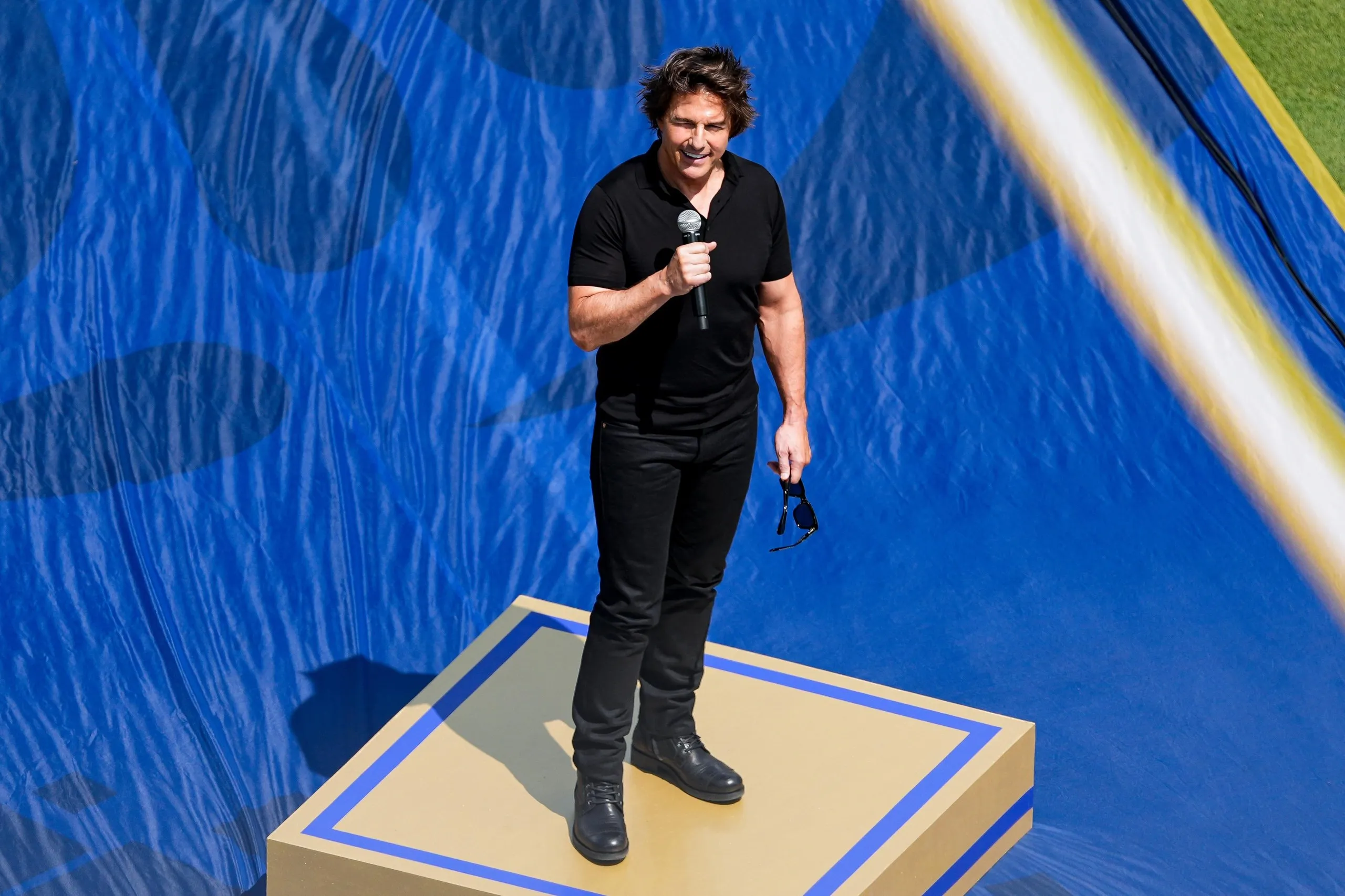
Fans who invested $1 million (£740,000) for pitchside access might have discovered the harsh reality that football does not always deliver excitement on cue. Primarily, this event served as a platform for visibility rather than genuine engagement. A document circulated by FIFA prior to kickoff named 235 celebrities and VIPs present, with Tom Cruise attempting to address the crowd during the lackluster pre-match show, only to be drowned out by the fervent Argentine supporters—one of the few moments that truly captured the football atmosphere.
This tournament has fundamentally altered the landscape of football. Those within Infantino’s circle may believe that any publicity can be refined, amplified, and forcefully injected into the sport’s gaudy, modern image to attract skeptics. FIFA has undoubtedly made an impression on the American public, many of whom seemed to think the tournament bore the name “the FIFA” throughout the summer.
However, the Folarin Balogun incident has severely undermined trust in FIFA’s processes and its claims of political neutrality. This controversy has tested the loyalty of insiders who may have once been unwavering in their support, yet it remains clear that Infantino is set for re-election in March by a significant margin. Disturbingly, it teaches newcomers to the sport that outcomes can be manipulated if the right connections exist. Trump has expressed his desire for the U.S. to be granted sole hosting rights in the future, indicating that his collaboration with Infantino is unlikely to diminish. By 2038, the U.S. may be hosting a tournament that could be ethically compared to the Enhanced Games.
In the meantime, the sport has its ways of persevering, despite the final being a tedious encounter until Ferran Torres sealed Spain’s victory as day turned to evening. The narrative of Cape Verde, especially that of their goalkeeper Vozinha, remains unforgettable. Stars like Lionel Messi, Erling Haaland, Kylian Mbappé, and Jude Bellingham delivered performances expected of top players. Belgium’s dismantling of a previously promising U.S. side in the knockout stage meant that Balogun’s brief hope had no real impact.
Amid the scandal and disgrace, there have been reminders of what a World Cup can achieve. Cities like Kansas City and Houston welcomed fans and teams with open arms, showcasing their hospitality and generosity. It would be easy to paint the entire U.S. with the brush of its government’s misdeeds, but the kindness and curiosity of individuals shone through. Traveling across the country provided a rare opportunity to recognize this humanity.
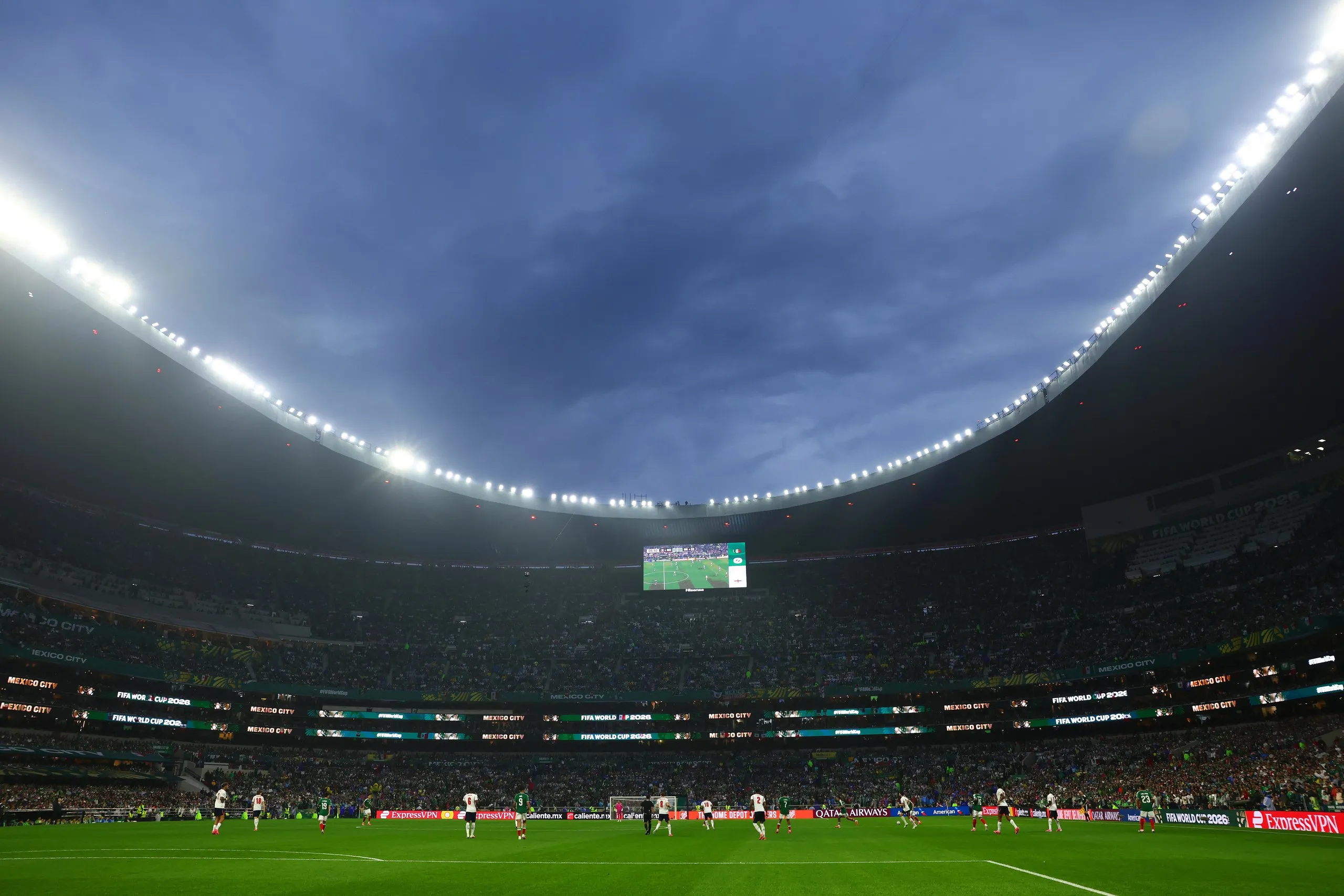
The U.S. is vast, its immigrant communities engaged, and its more remote areas sufficiently diverse, allowing the tournament’s presence to be felt in myriad ways. Canada experienced similar sentiments to varying degrees. Meanwhile, Mexico infused the event with genuine football fervor, offering the unparalleled Azteca as a venue that should have hosted more matches beyond the last 16. The concern is that it may not receive another opportunity.
FIFA and Infantino will undoubtedly benefit from the staggering $15 billion in revenue that surpassed expectations. It was virtually assured that they would announce a substantial profit. Infantino’s relentless pursuit of grander ambitions suggests a retreat from this trajectory is unlikely. The proposition of a 64-team tournament is now on the table. By the time such a format is implemented, perhaps international football outside Europe will have found a way to thrive, given that Argentina and Morocco were the only representatives from beyond the last 16.
Thus concludes a World Cup that has consumed resources, attention, and finances like never before. As Infantino and Trump left the stage, a tearful Messi faced Argentina’s supporters. Finally, there was the kind of deeply human moment that had been missing throughout the event. This marks the end of an era for the sport’s greatest player and the fans who transform his presence into a vibrant celebration. This month has seen an entire sport ascend into a new dimension.
- World Cup 2026
- FIFA
- Football Politics
- World Cup
- Gianni Infantino
- Features