


As Spain entered the latter stages of extra time during Sunday’s World Cup final, it became evident that Argentina aimed to test their resilience. Every tackle was fierce, and the Argentine defenders worked tirelessly to limit striker Mikel Oyarzabal’s usual avenues for service, prompting Spain to attempt eleven of their twenty shots from long range.
While Lionel Scaloni’s squad played aggressively, they also demonstrated a structured approach that allowed them to withstand Spain’s relentless pressure. This shift in strategy began in the 62nd minute when Luis de la Fuente made his first substitutions, adapting to the challenges posed by Enzo Fernández’s late dismissal.
In the 106th minute, with Lamine Yamal assessing the Argentine defense from the edge of the box, Pedro Porro observed the situation unfolding outside the box. His teammates were positioned parallel to him, creating just enough space behind the defense. As Yamal passed the ball back, many spectators expected yet another buildup towards a different attack.
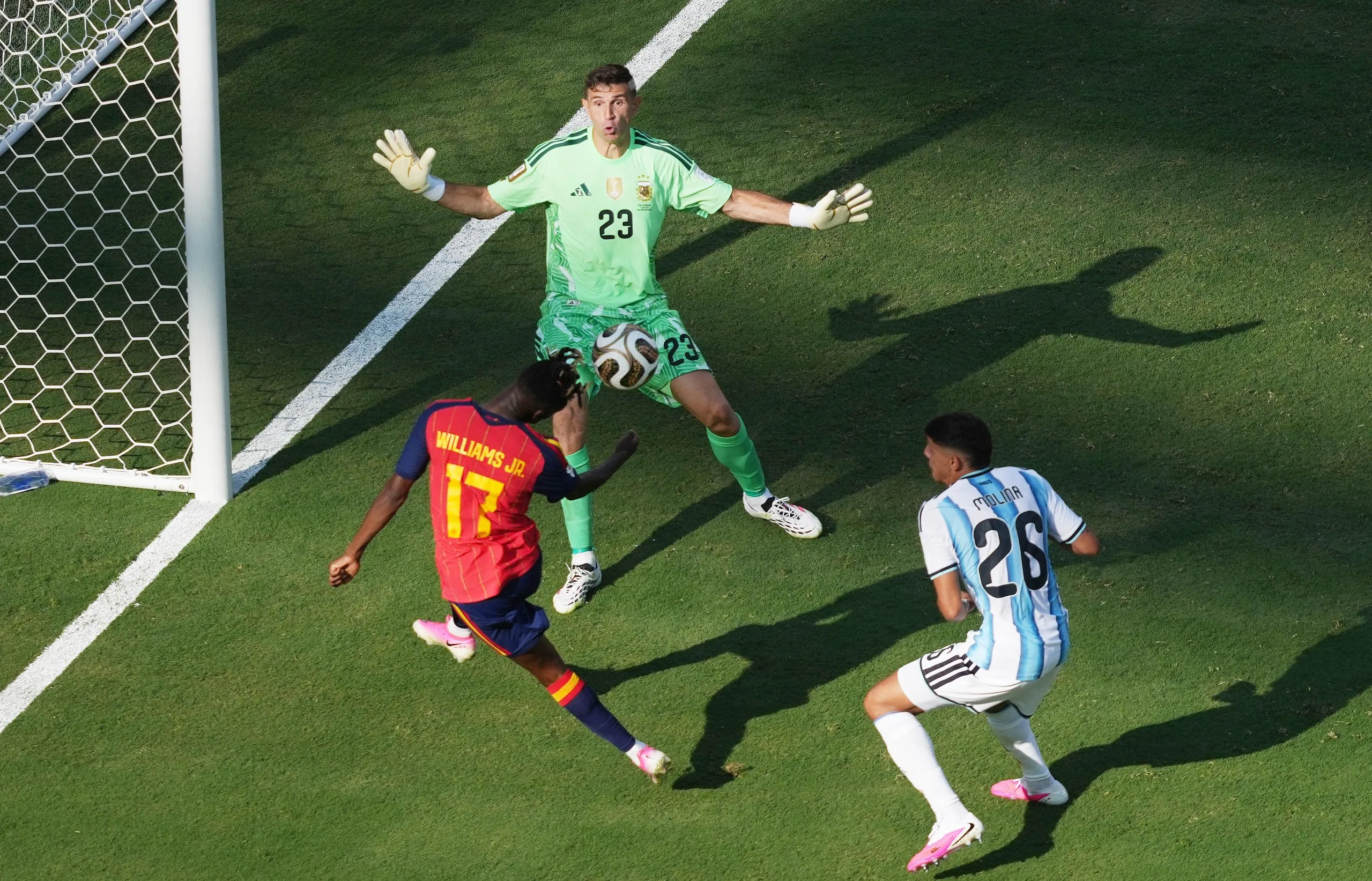
Contrary to expectations, Porro delivered a perfectly weighted cross. The Tottenham defender struck it with precision, enough to confuse some defenders but not so much that it risked going out of play. Nico Williams was quick to react, noticing that his fellow players were slightly behind him, creating space for late arrivals into the box.
Williams spent a considerable portion of the 2026 World Cup on the bench, far more than he would have desired. A starter throughout Spain’s successful Euro 2024 campaign, he arrived in the U.S. with a groin strain and hamstring issues that had plagued him late in the La Liga season; he left the final group stage match against Uruguay with an adductor injury.
Despite not starting a single match in the tournament, Williams made the most of his chance against Argentina, where his 45-minute performance was his longest. His entry into the game brought an element of dynamism and unpredictability, contrasting with the ineffective contribution of Alex Baena, whom he replaced.
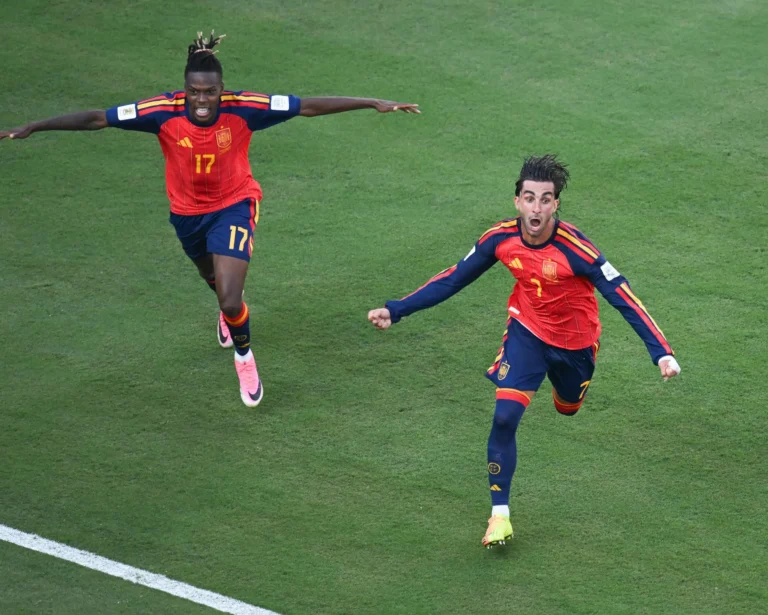
Seizing the moment, Williams made an impactful play as Porro’s cross descended. The 24-year-old expertly directed his header, not into the center of the six-yard box but skillfully placing it into the path of Ferran Torres, another substitute who had entered the match. This goal was a result of keen spatial awareness, enabling Spain to break through a tenacious Argentine defense intent on pushing the match to penalties.
Like Williams, Torres stepped onto the pitch with the intention of exploiting Argentina’s defensive strategy. While Oyarzabal was crucial for maintaining possession and assisting in buildup play, Argentina’s formation effectively neutralized his attempts to get closer to the goal. Torres, however, provided a different style, showcasing his ability to move off the ball dynamically, coupled with the energy necessary to outpace exhausted Argentine defenders.
In a match filled with aggressive challenges, Torres’ movement went unchecked. The closest defender, Giuliano Simeone, inadvertently removed himself from the action just as Torres sprinted past him. Moments before Williams kept the ball from going out, Simeone had misjudged the pass and was adjusting his sock when Williams’ header fell to Torres. As three Argentine defenders focused on Mikel Merino, who had previously scored decisive goals against Portugal and Belgium, Torres found himself with an unusual amount of space and time to push Spain toward their second men’s World Cup title.
As the tournament progressed, Spain was frequently hailed as the standout team. Their collective play became increasingly cohesive, maintaining focus on buildup even when they failed to score. Under de la Fuente, players grew confident in their roles, willingly accepting lesser individual recognition in a World Cup dominated by star players.
This balance is rare in contemporary international soccer. While club teams have meticulously honed their strategies, national teams often feature stars who thrive within a system designed around their individual strengths and weaknesses. Thomas Tuchel attempted to create a similar environment with his selections but faced challenges due to a lack of midfielders after Jordan Henderson’s unfortunate celebration.
It is easy to reduce teams to the star players they are built around. When this approach succeeds, as it did for Messi’s Argentina, few question its validity. Conversely, when it falters, as seen with Cristiano Ronaldo’s Portugal, the shortcomings become glaringly apparent, revealing a coach’s reluctance to adapt.
Like top clubs, de la Fuente adjusted Spain’s tactics during matches by introducing players who could seamlessly fill the roles of their predecessors, albeit with different interpretations. Williams’ style on the wing provided a more aggressive option compared to Baena, while Torres added variety and successfully stretched a fatigued Argentine defense. Even Pedri, who entered at the same time as Torres, further complicated life for Argentina, offering a more dynamic midfield presence alongside Rodri than Fabián Ruiz.
As Argentina struggled under the New Jersey sun, Spain continued to evolve their tactics, seeking fresh ways to pressure the defending champions. With an expertly placed cross, a brilliant header, and an opportunistic run into space, Spain is poised to enter the 2030 World Cup cycle at the height of their powers.
- World Cup 2026
- World Cup
- Spain
- analysis