


When tuning into US television, viewers will soon notice that advertisements can be categorized into three main types.
The first category features generic food products, each presented as a uniform package of glossy, salted morsels, yet adorned with its own vibrant colors and enticing packaging to portray itself as a unique food item. Sample the delicious Flame Sauced Philly Cheese Taco Wing Waffle Dog Deep Dish MegaDeath Burger Grenade-Shaped Eat Thing. You might find it delightful—or perhaps not. Either way, expectations vary.
The second type consists of healthcare commercials, typically showcasing a cheerful, active individual enjoying leisure activities like tossing a frisbee or engaging in a game of chess. Meanwhile, a voiceover highlights the life-changing benefits of the Omni-Pill.
However, since Omni-Pill is also a potent pharmaceutical, the latter part of this montage must include an extensive list of potential side effects, which often mention suicidal thoughts, depression, and genital warts. All of these adverse effects are presented in the same soothing tone alongside upbeat imagery, creating a bizarre juxtaposition of positivity and serious concerns.
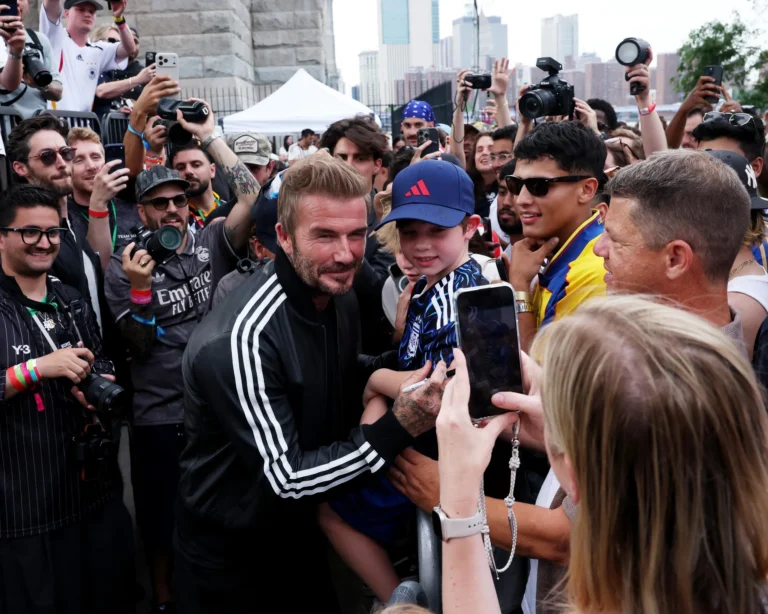
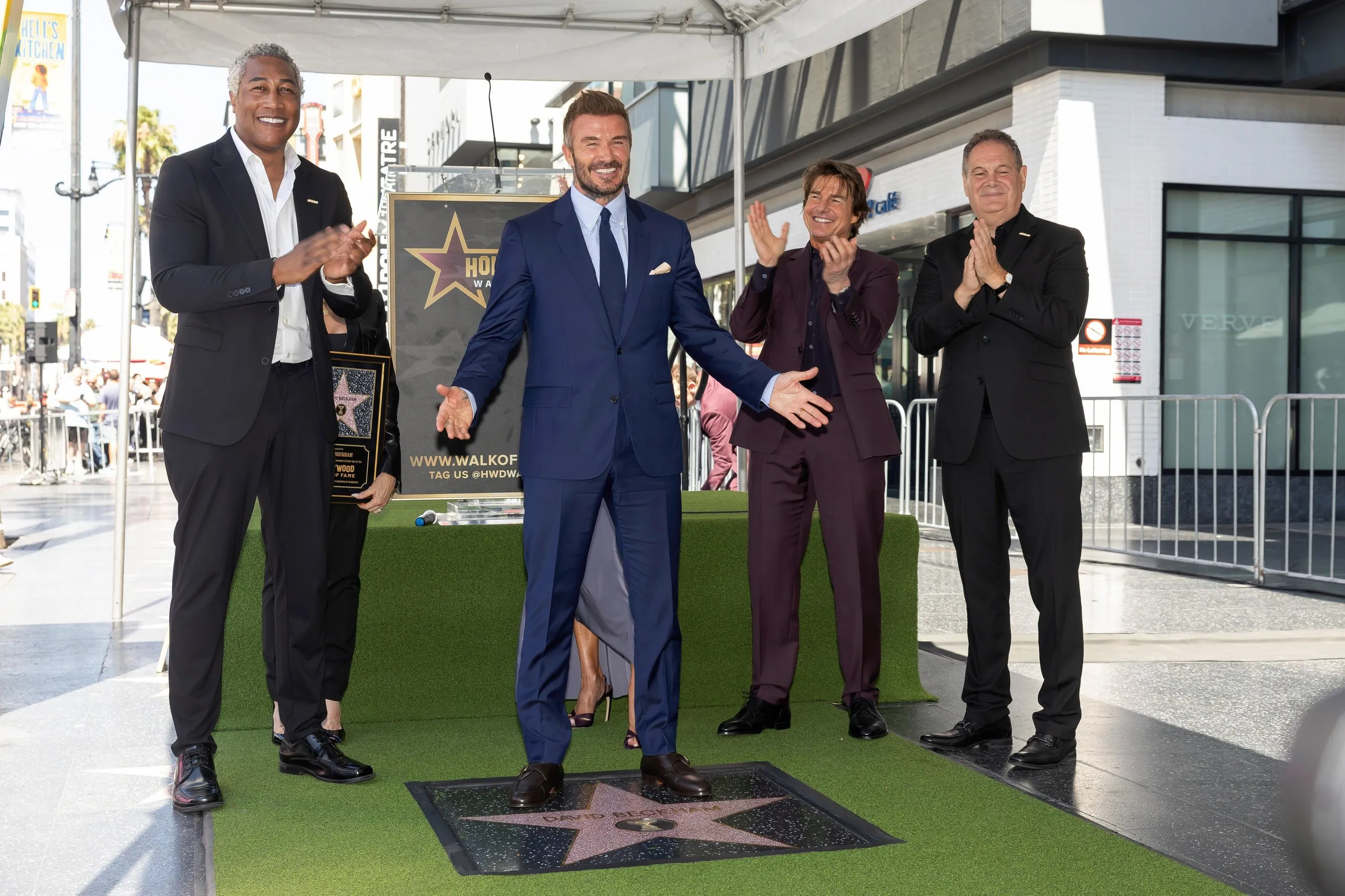
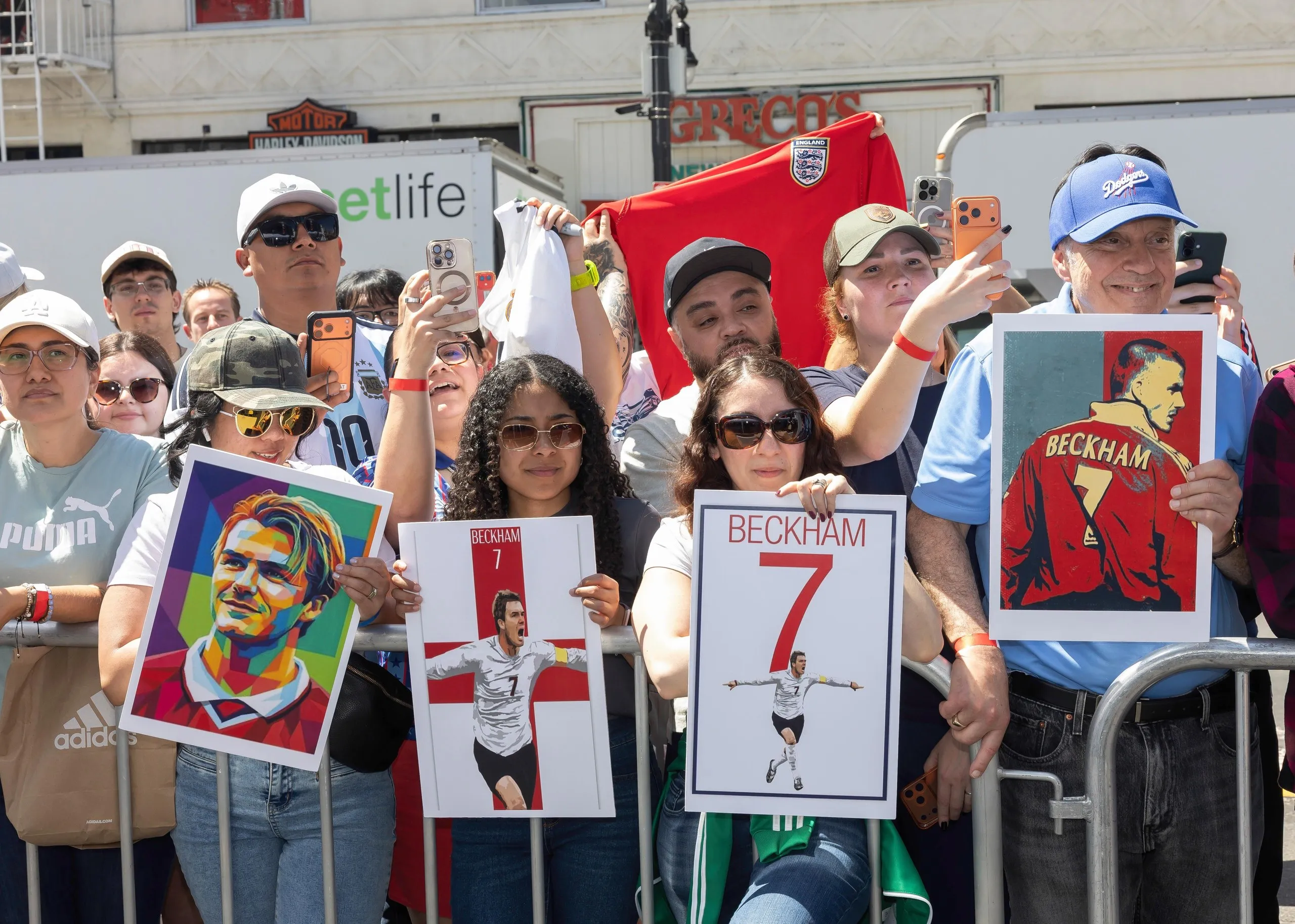
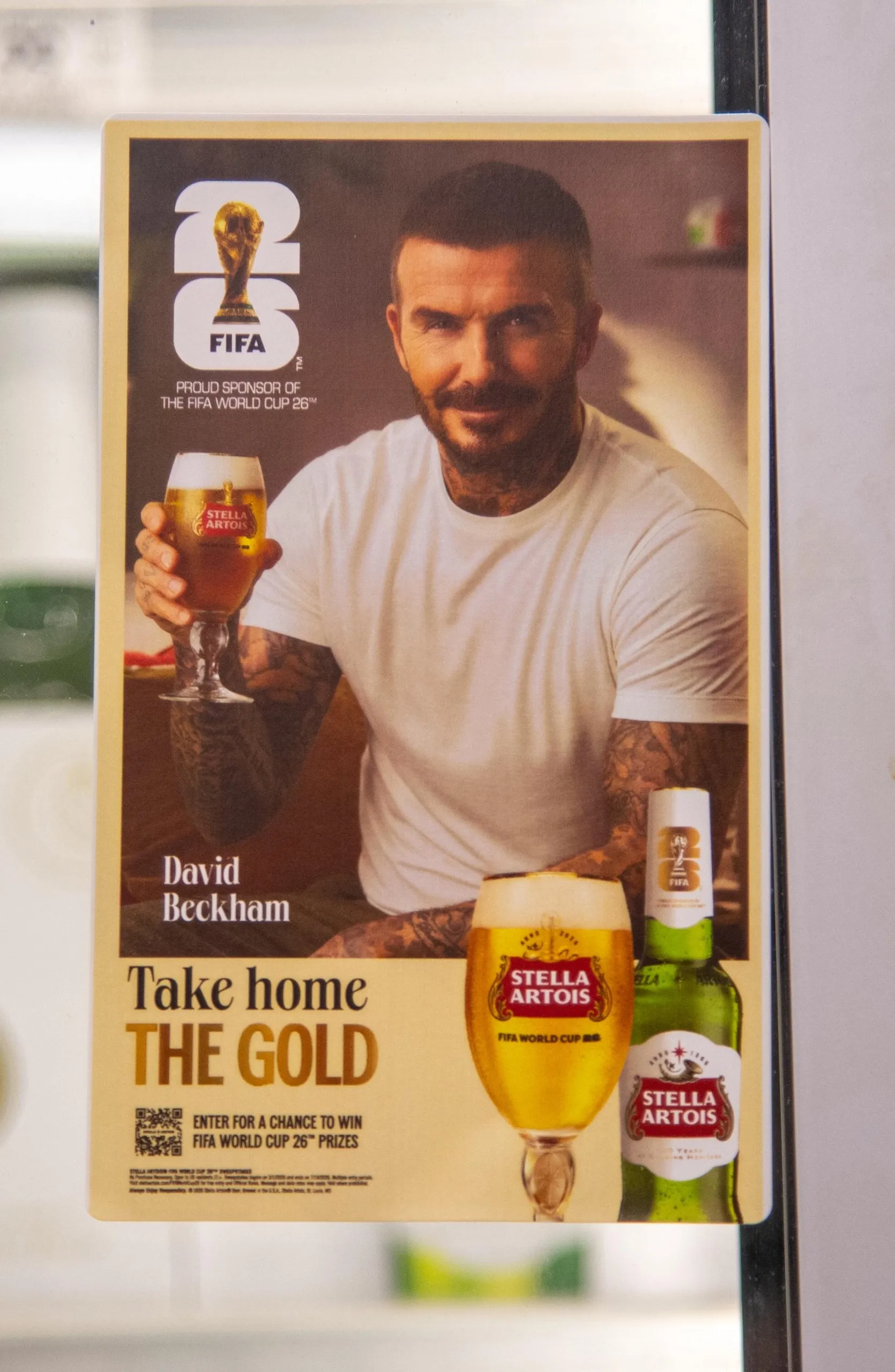
The third category is all about David Beckham. Any and all Beckham-related content fits here, forming a comprehensive Beckham universe that captivates audiences.
An Australian television program recently aired a humorous segment suggesting that Beckham is arguably the hardest working man in America, tirelessly promoting every aspect of his daily life—from his morning coffee to breakfast pancakes, and even his unique choice of shower attire (he’s 52: a noticeable detail). This includes shopping for home improvement supplies, consuming questionable food, enjoying a beer, contemplating his wristwatch, speeding down the road, presumably en route to a bar for a swift whisky, and ultimately transforming into some kind of sun deity before collapsing onto a lavish mattress (thankfully, his shower attire remains discreet).
Andy Warhol famously stated that making money is an art. As the eagerly transactional World Cup approaches its climax, Beckham’s real-time masterpiece seems to be nearing completion.
Are people in the UK fully aware of Beckham’s immense stature, not only as a globally recognized figure in America but also in terms of influence and power? Already a billionaire, Beckham is projected to earn up to $25 million from this World Cup—more than any other individual—while remaining an inactive participant. Just the hydration break alone, during which he drinks beer, promotes a snack van, and encourages education, becomes a continuous cash flow.
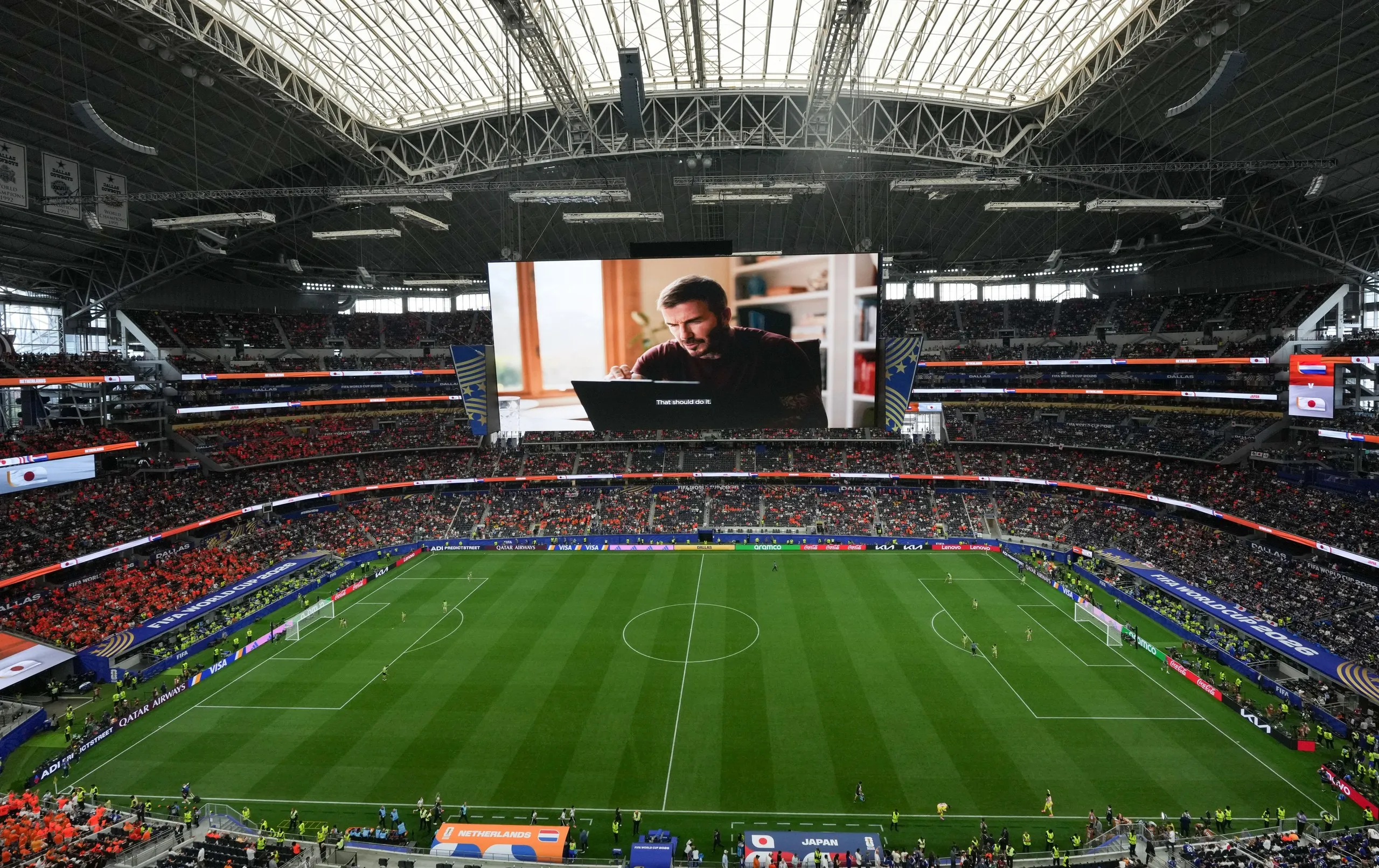
As the tournament progresses to Beckham’s Miami stronghold with England set to face Norway this Saturday, the sheer scale of his global presence feels monumental. During matches, Beckham often appears on three distinct planes simultaneously: on the big screen as part of the spectacle, in television advertisements munching on snacks and shopping for tools, and in real life, where the living Beckham seems almost surreal, like a pizza suddenly taking the wheel of a car.
This situation feels like Total Beckham saturation. Some even suggest we might be approaching a critical threshold. Forbes recently published an alarming article that warned of potential overexposure, questioning whether Beckham has become too famous. Are we witnessing a market collapse, akin to subprime Beckham, where the value of fame might plummet?
This seems improbable. Two key factors are at play here. First, the US possesses an extraordinary capacity to absorb such cultural phenomena. Second, Beckham’s relentless drive to establish himself as a living brand is remarkable. Warhol once expressed, “He’s rough, but he’s also soft.”
How has Beckham achieved this, and is there an end in sight? What stands out is that he has accomplished this feat despite arriving in America towards the twilight of his football career.
Although a skilled footballer, often underrated, Beckham’s diligence and artistry sometimes go unnoticed amidst his celebrity. Few in the States appreciate the impeccable precision of his corners or recall that iconic free-kick against Greece.
In this regard, Beckham is unique among Britons who have made their mark in America. He has succeeded by essentially doing nothing substantial in the traditional sense. Unlike the Beatles who exported rock ‘n’ roll or J.K. Rowling who penned bestselling books, Beckham excels at being famous, satisfying an insatiable public appetite.
One might attempt to dissect his success. Three primary elements emerge. The first is Beckham’s distinctive personal imagery, characterized by an extraordinary quality that draws attention. At first glance, one sees a handsome, tattooed man dressed in an expensive T-shirt. His smile possesses an indefinable star quality, reminiscent of old Hollywood charm. Yet, he could easily pass for a charismatic tradesman.
Now, you try replicating that. The Beckham phenomenon is meticulously calibrated—an intriguing blend that feels both stark and serene. There’s an apparent lack of energy, yet an immense reservoir of compact, still energy exists within him. His demeanor exudes a certain guilelessness, creating a blank canvas onto which various attributes can be projected. As one fond Miami hairstylist remarked, “He’s rough, but he’s also soft.”
At times, Beckham embodies a vaguely Latin persona. He embraces and reflects aspects of Black culture. Additionally, he holds the title of Sir, which he embodies adeptly. Despite America’s vast array of cultural influences, the nation still seeks affirmation of its identity. It craves, if not your approval, then at least validation from coast to coast. A supportive, handsome Sir who reciprocates love certainly feels reassuring and comforting.
Consider the contrasting nature of most public figures in the U.S.—the constant noise, anger, and chaos. Beckham stands apart. He communicates silently yet affirmatively. He has become a paternal figure, perhaps even America’s DILF. In many portrayals, he is depicted as quietly motivating, exuding a uniquely American, “you can achieve anything” ethos. Look at me; I’m just like you. I’m the exceptionally attractive billionaire version of you.
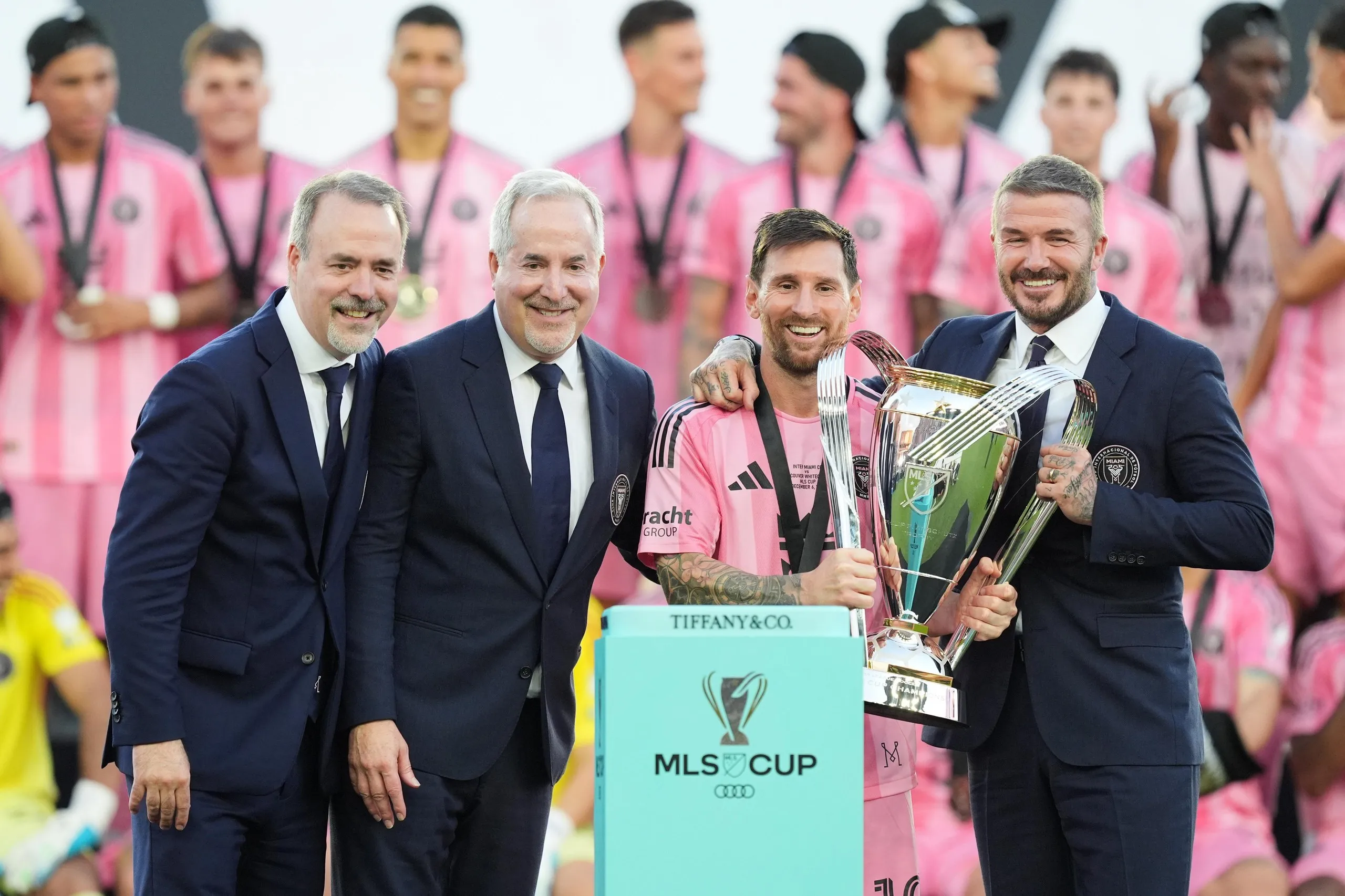
While soft power and subtle signals are noteworthy, let’s explore hard power and financial clout. Beckham’s pivotal moment came with his co-ownership of the Inter Miami franchise, facilitated by his billionaire business associates, the Cuban-American brothers Jorge and José Mas Santos.
The precise details of the ownership structure remain undisclosed. Beckham is undeniably the public face, while the Mas family functions as the driving force, deeply entrenched in Miami’s Cuban exile community. The most intriguing figure is their late father, Jorge Mas Sr., who fought alongside the U.S. during the Bay of Pigs invasion, later settling in Miami and engaging in various attempts to unseat Fidel Castro, earning him labels of terrorist and mafioso in Cuba until his death at 54.
Mas amassed wealth through communications and construction industries, became a benefactor of Boris Yeltsin, supported anti-Castro guerrilla leaders, and even famously challenged a former Miami mayor to a duel. At one point, he drove a bomb-proof Mercedes with a Magnum in the glove compartment.
He also passed on that influence. Navigating Miami’s landscape can be challenging without the right connections. Mastech Industries represents those vital connections. On a World Cup rest day, their office near the airport appeared nearly deserted, save for a few individuals sporting Inter Miami lanyards grabbing coffee before disappearing into the building. The pavement sizzles under the relentless sun. Here, power is exchanged within air-conditioned, mirrored conference rooms. A new stadium, the Freedom Park Arena, is rising nearby, solidifying the Mas-Beckham alliance and providing additional resources for generating wealth, influence, and prestige.
By harnessing Cuban-American dynamics and geopolitical strategies, Beckham’s ascent has been strategic. He identified the right individuals, and in turn, they recognized his potential. The estimated value of the Inter Miami franchise is nearly $1.5 billion (£1.1 billion), and Beckham has become a central figure in American soccer. His family enjoys celebrity status, resembling a modern-day royalty closely followed by the public.
One final element propelling his success is Lionel Messi, who joined Inter Miami in 2023 and is contracted until 2028. Messi’s presence has amplified both the commercial aspects and the overall excitement surrounding the franchise.
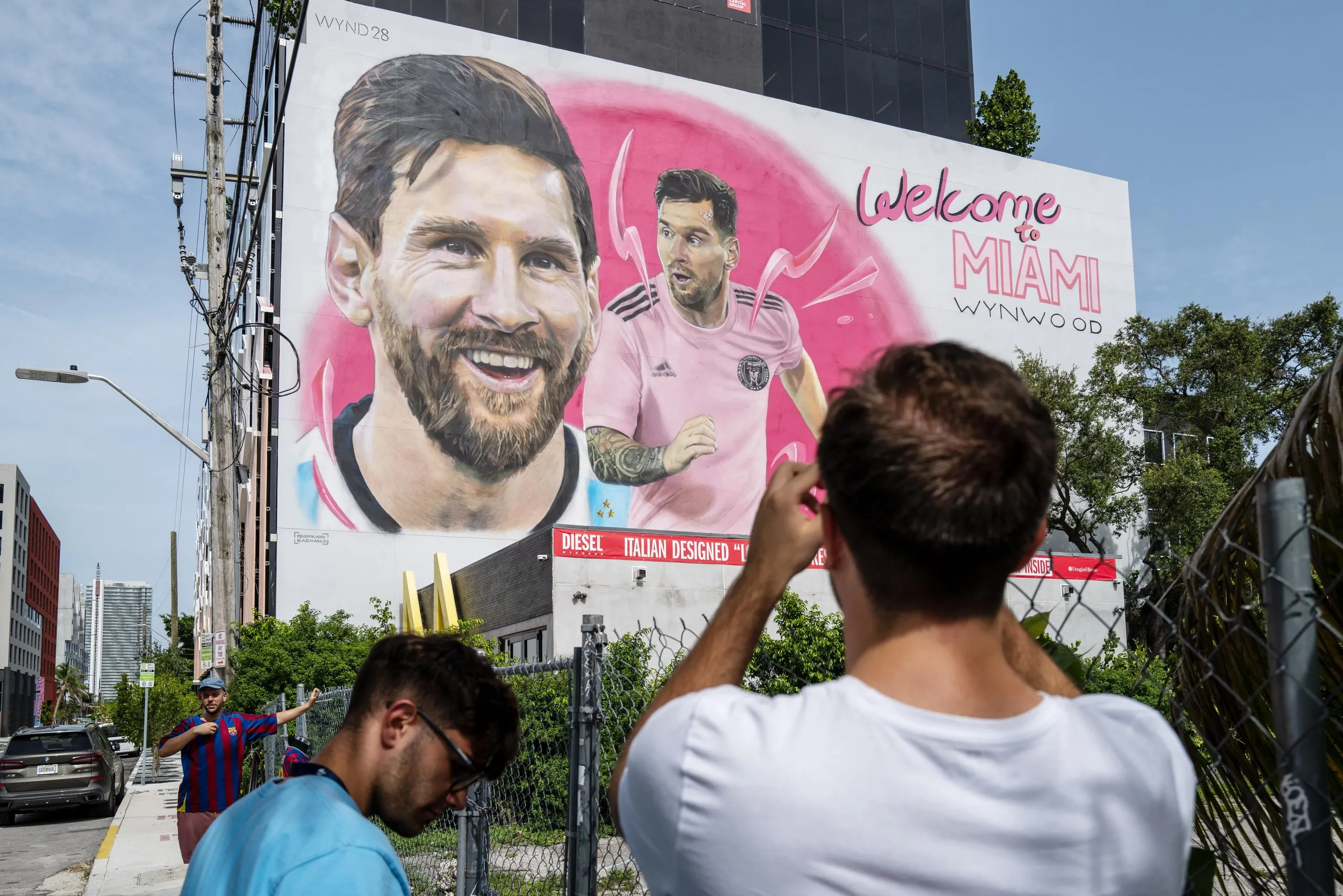
In Wynwood, central Miami, an enormous mural of Messi has turned into a pilgrimage site for sports fans, a must-see for tourists, and a testament to Beckham’s ability to create a blank slate for diverse appeal in a city rich with Central and South American influences. The Inter Miami jersey has risen to become the fourth most purchased in football, a remarkable achievement.
Interestingly, Beckham contributed to a small section of that Messi mural while operating a cherry picker. Messi has become inextricably linked to Beckham’s own rise, a phenomenon that continues as the World Cup progresses. Beckham has dedicated 30 years to this journey, with brand expansion efforts beginning even during his playing days.
No other English footballer will likely replicate Beckham’s level of influence and visibility. This is partly due to his pioneering efforts that have secured his position in the cultural landscape, as well as the extraordinary nature of his footballing journey, which commands a seemingly limitless power in an ever-consuming public eye.
- David Beckham
- World Cup
- World Cup 2026
- features