


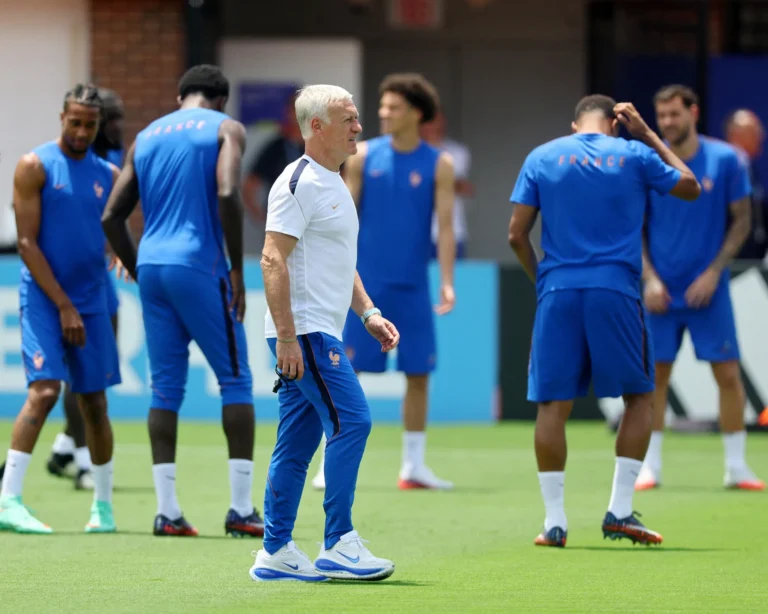
It was a moment that Didier Deschamps described as a turning point when the atmosphere shifted dramatically by half-time. A revamped French team faced a disheartening defeat against Italy in their Nations League opener, prompting an unhappy Parisian crowd to express their frustration. Just three days later, during a match in Lyon against Belgium, the head coach’s name was met with boos before the game commenced. Deschamps attributed the negativity to regional rivalries, but it was evident that his once illustrious reign was nearing its end.
Fast forward nearly two years, and Deschamps finds himself on the cusp of monumental achievement. If all goes according to plan in the coming days, he could become only the second manager in history to clinch the World Cup twice. France’s resurgence under his guidance has been remarkable and is set to reach new heights if they can assert their dominance against Spain.
Dallas presents a critical test for the kind of transformation that distinguishes the elite coaches in football. A Spain team, led by Lamine Yamal, had previously outperformed France in the Euro 2024 semi-finals, leaving the French side appearing sluggish and uninspired. With ten years having elapsed since their last major success, it seemed the time had come for a change in leadership. The new generation of French players required the freedom to express themselves.
Deschamps has granted them that freedom, proving he was sincere when he vowed to rejuvenate the national team after the disappointing outcomes in Germany. Known for his pragmatic approach, he has unleashed a new vigor within the squad. This summer, no other team has matched the speed, creativity, and overall quality of France’s attack.
The “I told you from day one, he’s on a mission,” a term used dismissively by Eric Cantona during his playing days, has forged a team that exudes passion and intensity. Throughout the years, it has been easy to regard Deschamps as merely a fortunate overseer of a conveyor belt of talent. Could it be that France was simply too talented to fail? Even during their triumphant 2018 World Cup campaign, he faced criticism for their perceived lack of flair. At the European Championship, he found himself on even shakier ground, accused of relying solely on Kylian Mbappé’s brilliance for offensive strategy. Deschamps has often been underestimated in terms of his influence.
That perception is likely to shift if he concludes his tenure with the sport’s most coveted title in New Jersey. Some in the France camp believe that Deschamps’ announcement in January 2025, regarding his intention to step down after this tournament, has fostered a sense of freedom. This decision has certainly alleviated scrutiny, especially with a new head coach, likely to be Zinedine Zidane, expected to implement a long-term vision. Deschamps has had 18 months to prepare for this grand finale without the burden of speculation about his future. Ending on a low note would benefit no one.
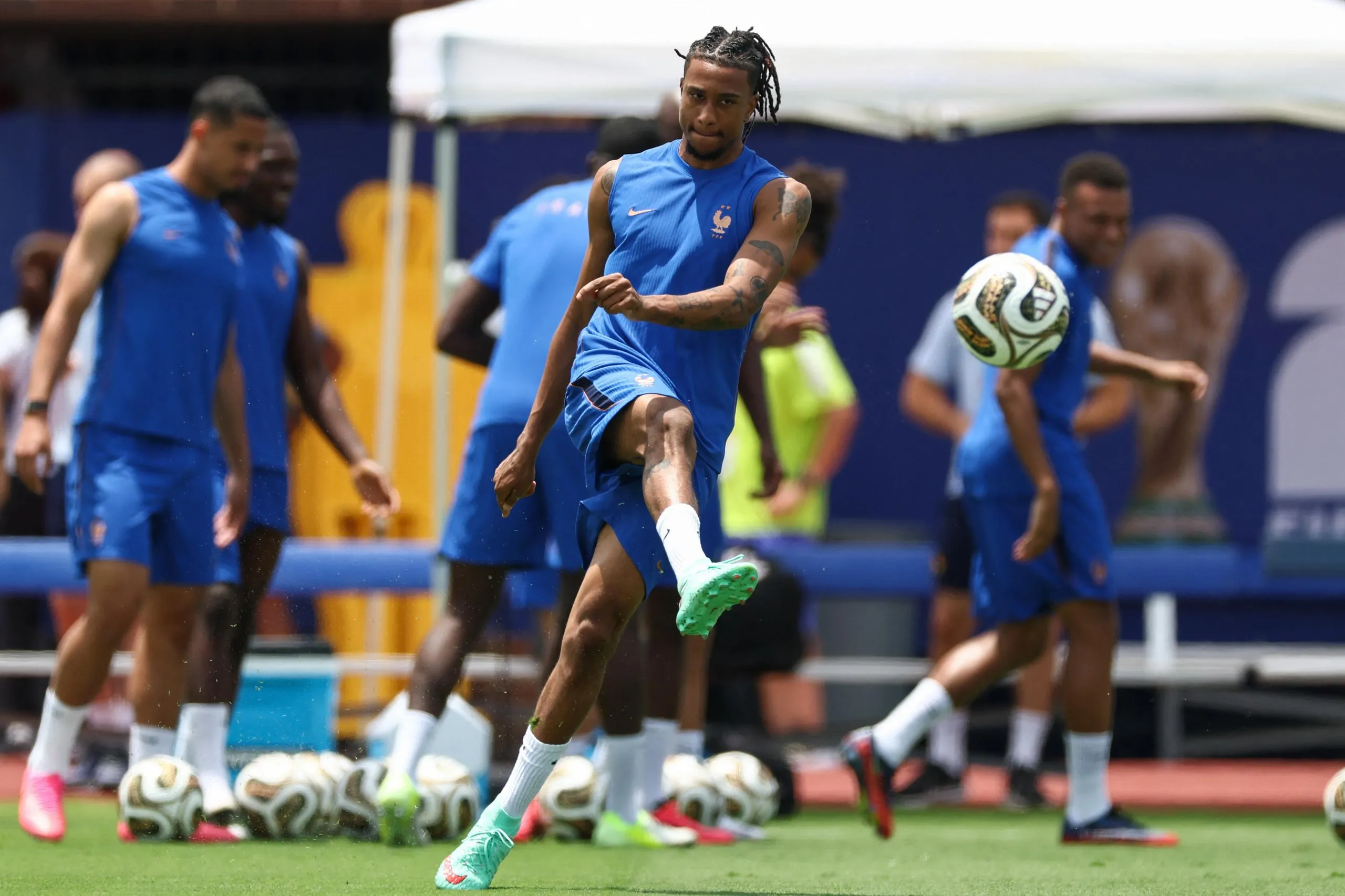
Spain recognizes they will encounter a transformed opponent this time. They were the first to experience Deschamps’ new strategy during a thrilling Nations League semi-final in Stuttgart in June 2025. By that point, Deschamps had made a pivotal adjustment, opting for a 4-2-3-1 formation that featured four forwards instead of three midfielders. This change was first tested during the lackluster match against Italy, where Michael Olise made his senior debut. The strategy was further refined when Olise, Désiré Doué, Ousmane Dembélé, and Mbappé united in the encounter against Spain. Although France lost 5-4, a promising framework was established.
The same attacking quartet is expected to feature prominently when the teams face off again on Tuesday. It’s worth noting that Deschamps has benefitted from the relatively light demands placed on his Paris Saint-Germain players, who have been rotated extensively during an unchallenging Ligue 1 season. A vibrant Bradley Barcola, who would be a sure starter for any other national team, adds depth alongside Doué and Dembélé. France appears rejuvenated, blending agility with finesse, and is capable of outrunning any rival.
Initially, it was uncertain whether Deschamps could effectively manage the transition away from established stars like Hugo Lloris, Raphaël Varane, Olivier Giroud, and Antoine Griezmann, all of whom enjoyed illustrious careers with the national team. Griezmann’s retirement in September 2024 was particularly significant, given his close bond with the coach.
However, Deschamps has connected with the younger generation. Team members acknowledge that he has become more approachable and relatable. France’s unity is palpable, and communication channels are open. It is no longer sufficient to simply assemble a squad of top players and hope for the best. Deschamps has discovered a way to motivate every individual within his lineup.
This includes Mbappé, who embraced Deschamps following his opening goal against Sweden in the round of 32. The coach had returned after missing the match against Norway due to the passing of his mother. “I told you from day one, he’s on a mission,” Deschamps stated about Mbappé, whose determination to move past the painful memories of Qatar 2022 is evident. Their relationship has drawn parallels to the one Deschamps had with Aimé Jacquet in 1998 when he captained France to their first World Cup victory on home soil.
Perhaps the echoes of history will resonate in New Jersey on Sunday. Spain will present France with their toughest challenge yet, following a lackluster performance against Senegal and a reserve Norway team that failed to push them to their limits during the group stage. The upcoming week may well determine whether Deschamps, now just 57, secures his legacy as an all-time great. Winning titles with diverse squads in distinctly different circumstances is the best measure of a coach’s greatness. Emerging from adversity, Deschamps and France are poised to grasp a brilliant reward at the culmination of their journey together.
- France
- World Cup 2026
- World Cup
- Kylian Mbappé
- features