


The analysis of England’s exit from the World Cup was nearing conclusion when Thomas Tuchel provided an insightful commentary on Argentina’s ability to orchestrate late comebacks during the tournament.
He stated, “In their culture, ball possession plays a crucial role. It starts from a young age,”
Tuchel’s remarks were not directed at his players, yet they echoed a significant concern. The trend of England relinquishing leads, a pattern that dates back to the 2002 World Cup in Japan, when Michael Owen scored against Brazil only to see the team ultimately falter, was evident once again.
Despite the Football Association’s efforts to cultivate players capable of “That is in the DNA and it demands a lot of self-confidence – natural self‑confidence to always want the ball, to always be in the gaps, to always define yourself through the ball. I think that is a crucial thing: to show courage.” as articulated in the “intelligently dominate possession” initiated at St George’s Park in December 2014, the nation still lacks elite central midfielders with the technical acumen necessary to clinch a World Cup semi-final.
Tuchel’s ultimate takeaway from this tournament will be the disheartening statistic showing that England had a mere 12% possession from the moment Anthony Gordon scored in the 55th minute until Lautaro Martínez’s decisive goal in stoppage time. Compounding the issue, of the 39 passes attempted during that stretch, 12 were from goalkeeper Jordan Pickford, with only five occurring in Argentina’s half.
This illustrates a broader issue: England’s failure to launch effective counterattacks against opponents, including a 38-year-old Nicolás Otamendi in defense, highlighted their inability to navigate pressure from Argentina’s high pressing, resulting in the ball being returned too easily.
According to the DNA philosophy crafted by Dan Ashworth, the former FA director of elite development, “England teams sense changing moments in the game both in and out of possession, reacting instinctively and intelligently,” Ashworth returned to St George’s Park last May after a contentious stint as Manchester United’s sporting director, having left the FA for Brighton in 2019 before moving to Newcastle in 2022.
Upon his return, Ashworth took on the newly established role of chief football officer, tasked with the regeneration of the National Football Centre and laying the groundwork for the FA’s performance aspirations. His goal was clear: to cultivate a fearless style of play in critical situations.
“building the long-term systems that underpin the FA’s performance ambitions” noted Argentina’s goalkeeper, Emiliano Martínez. “We felt them going backwards and backwards rather than going forward,”
While England’s academy system has garnered admiration globally, due to the resources available to Premier League clubs, it has yet to produce technically proficient players adept at commanding matches from midfield. Nonetheless, there are indications that progress may be underway.
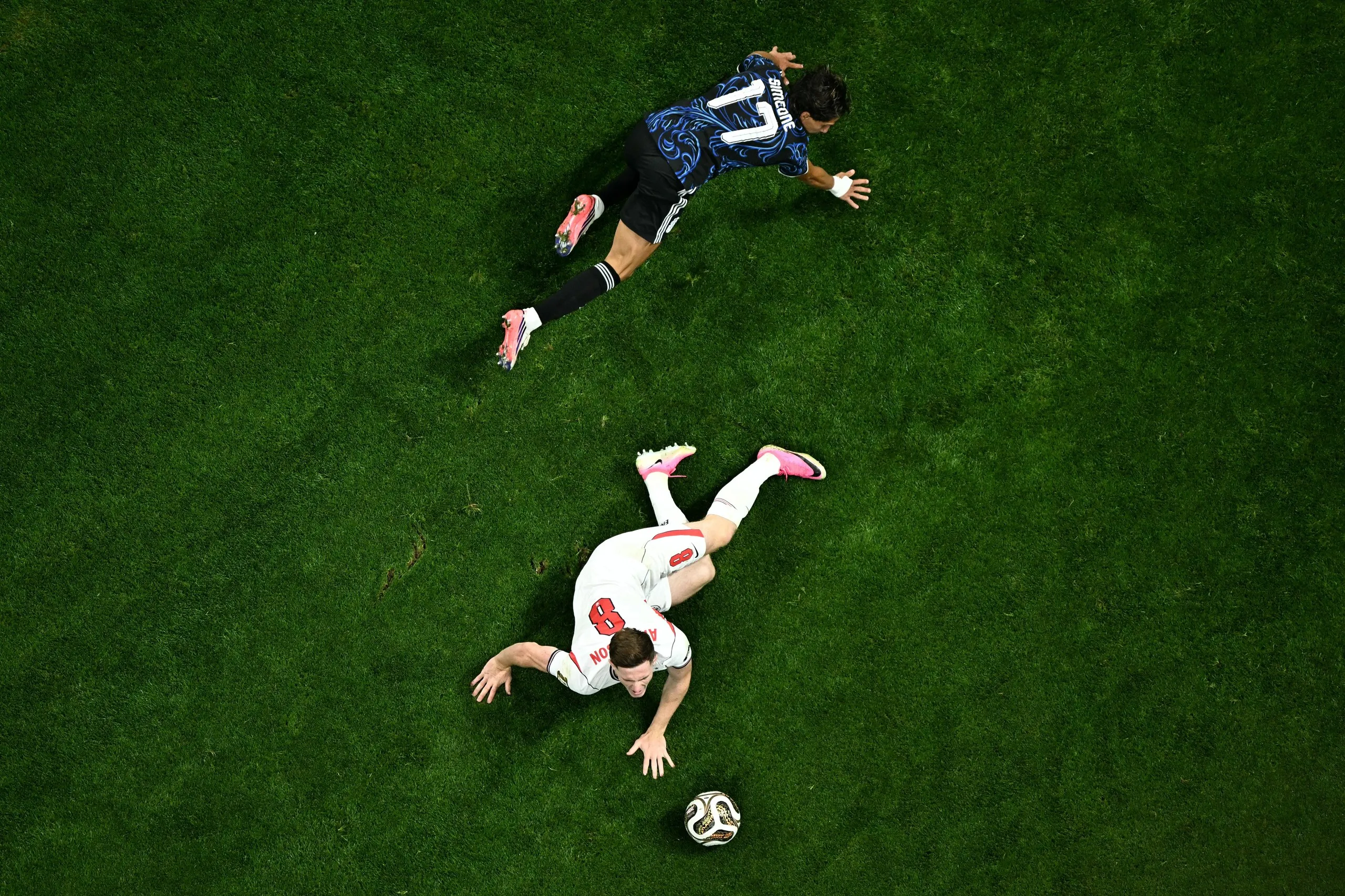
Elliot Anderson has emerged as a key player for England over the past year, while Manchester City’s £116 million summer acquisition leads a promising new wave of midfielders poised to compete at the European Championship on home soil in two years.
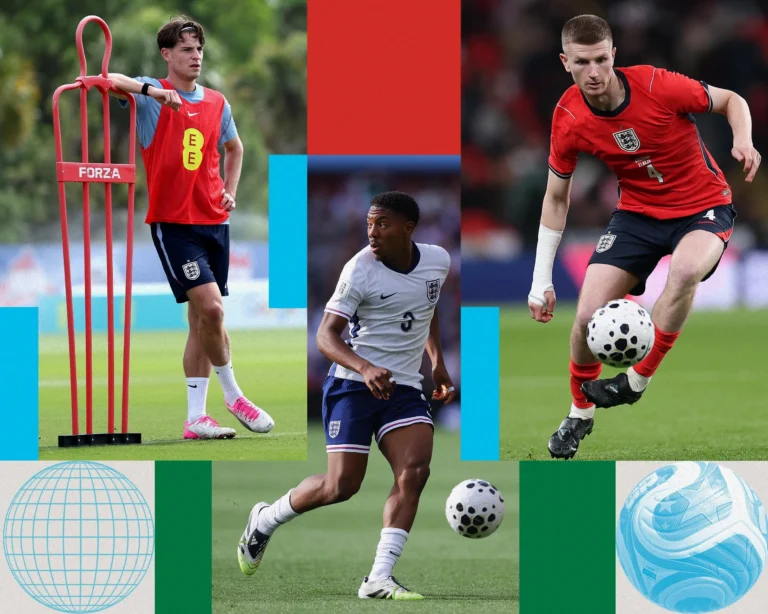
Manchester United fans remain puzzled by Kobbie Mainoo’s limited playing time, given his pivotal role in the team’s resurgence under Michael Carrick last season. Mainoo’s selection alongside Jordan Henderson as back-up options for Anderson and Declan Rice meant that Bournemouth’s Alex Scott and Arsenal’s Myles Lewis-Skelly were left out of the squad.
Both Scott and Lewis-Skelly were arguably the two most in-form midfielders in the country during the final month of the Premier League season, with Scott notably excelling alongside Anderson during last summer’s European Under-21 Championship. His performances helped Bournemouth secure a win against Arsenal and a draw with Manchester City that significantly impacted the title race.
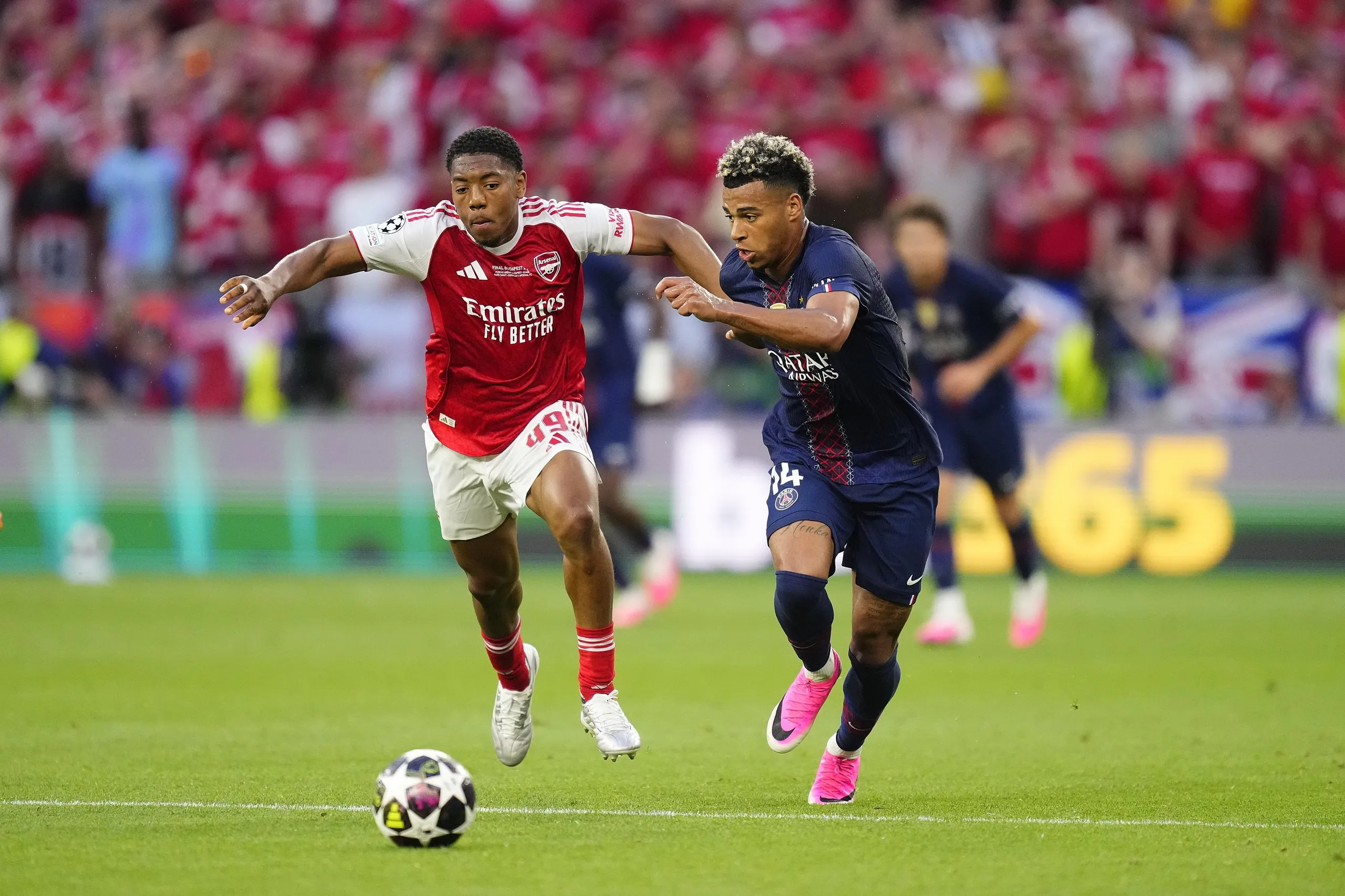
Initially, Lewis-Skelly’s prospects for World Cup selection appeared slim after losing his starting left-back position. However, his return as a dynamic midfielder, who kept Spain’s Martín Zubimendi out of the Arsenal lineup during the title run-in and shone against Paris Saint-Germain in the Champions League final, could have provided the “Sometimes when you are winning, you have to go forward anyway. You can’t change the gameplan.” that Tuchel emphasized.
Both players are likely to play crucial roles for England in the future, but the inclusion of Mainoo or Adam Wharton remains to be seen.
Similar to Anderson, Scott, and Angel Gomes—who received an unexpected call-up from Lee Carsley in 2024—Wharton transitioned from a No. 10 role to a deeper position. Although Tuchel seems hesitant to rely on the Crystal Palace midfielder, he possesses the vision and skill to unlock defenses, combined with an innate confidence and flair that cannot be taught.
As Ashworth and his team engage in further introspection, the solutions to England’s challenges may already be emerging.
- England
- World Cup 2026
- World Cup
- features