


The scorelines might have mirrored each other, but the stylistic differences in France’s knockout performances against Morocco were strikingly pronounced. In just one tournament cycle, Didier Deschamps has adopted a significantly different approach, emphasizing a fluid attacking strategy.
Kylian Mbappé and Ousmane Dembélé’s dynamic partnership propelled the team into the semi-finals this year, further validating the 57-year-old coach’s tactical evolution. In their 2022 encounter, Deschamps employed a more pragmatic setup, effectively neutralizing Morocco’s threats in a tightly contested semi-final in Qatar. France clinched victory by converting two of their three shots on target, while successfully containing the breakout team of that year.
Fast forward to Boston, three and a half years later, and France had already attempted four times as many shots at Yassine Bounou’s goal by the halftime whistle compared to their entire match in 2022. This time, however, France found themselves grappling with frustration.
An aggressive pressing strategy, a notable departure from previous French teams, kept Morocco largely on the defensive during the first half. With Ismael Saibari absent, the Atlas Lions struggled to mount an effective offensive response amidst relentless pressure from France.
Concerns arose that the physically demanding victory over Paraguay just five days prior might have disrupted France’s attacking rhythm, which had previously seen them score over three goals per game. The combative Paraguayan defense, aided by questionable officiating, seemed to have discovered a way to frustrate the French side.
The lingering disappointment from that match was compounded by the racist abuse and verbal attacks directed at Mbappé by Paraguayan senator Celeste Amarilla. On the eve of the match, Deschamps stated, “Morocco will be our opponent, not the referee,” Despite facing a more balanced officiating performance this time, Morocco’s defense still presented a formidable challenge.
As the first half progressed, a familiar sense of frustration enveloped the French side. Bounou thwarted efforts by Désiré Doué and other forwards, while the delay of three minutes before Mbappé’s ill-fated penalty added to the team’s irritation.
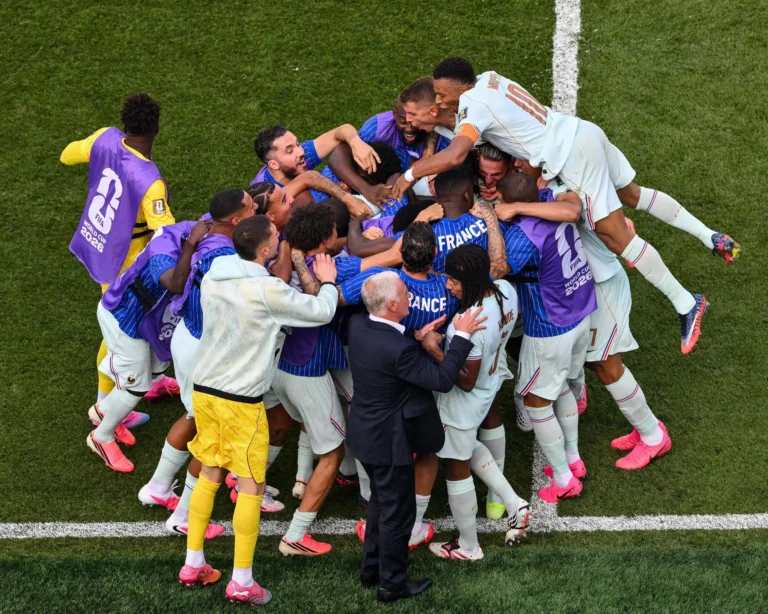
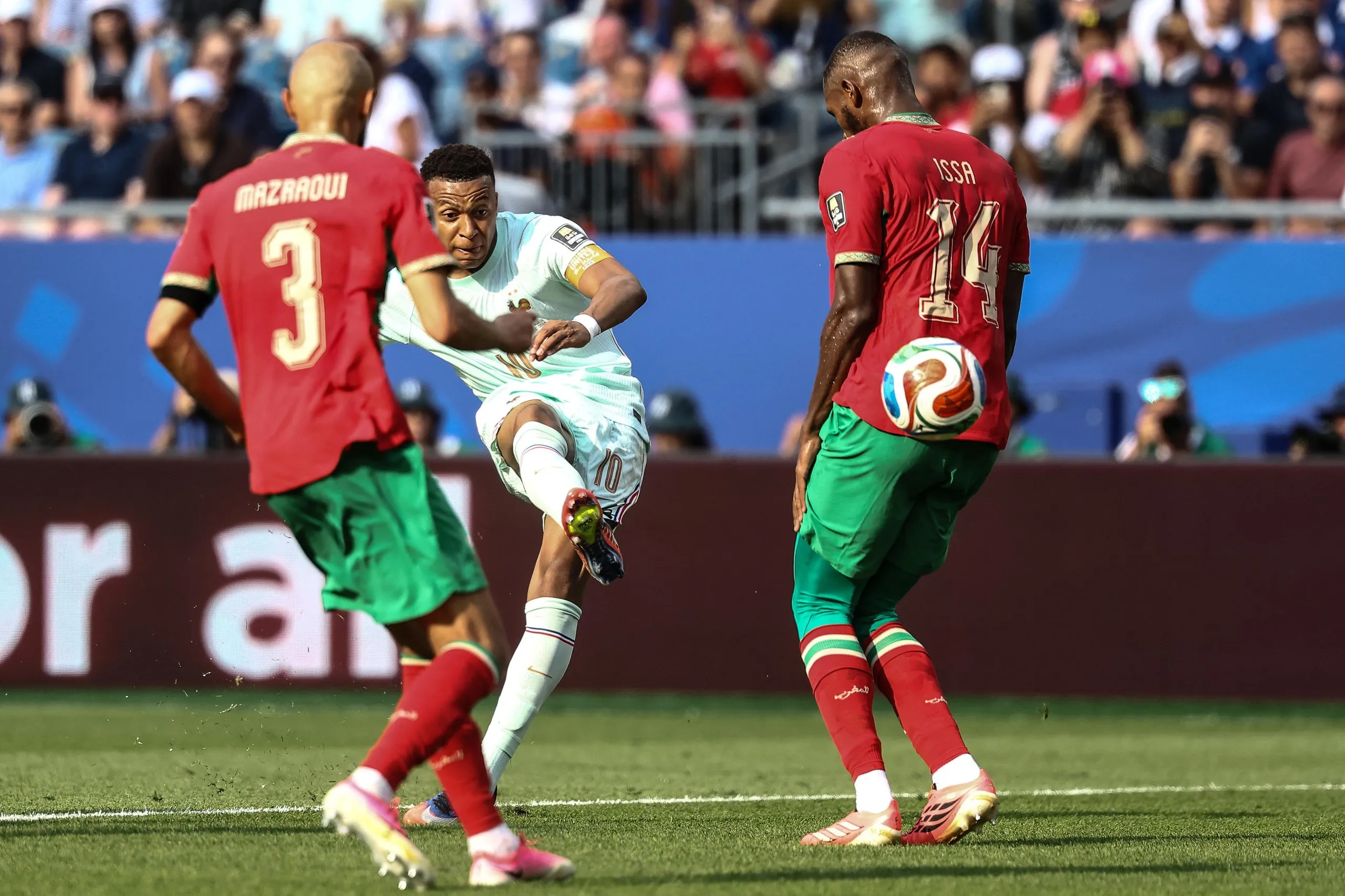
While Paraguay’s defense had afforded little space, Morocco adopted a less conservative strategy. Mbappé discovered an opening behind his former teammate Achraf Hakimi, leading to the penalty, before the captain created space on the edge of the box to score the opening goal on the hour mark.
Reflecting a repeat of his earlier performance against Sweden, Mbappé’s unexpected strike broke the deadlock after a frustrating first half. Dembélé’s subsequent goal suggested a potential surge in scoring, though an ankle injury prematurely ended Mbappé’s night, disrupting France’s attacking flow.
Ultimately, Les Bleus concluded the match with less possession than their opponents, mirroring their previous encounter; however, the match’s momentum never appeared to shift against them. Manu Koné’s robust performance in midfield likely secured him a spot in the starting lineup, alleviating concerns over Aurélien Tchouaméni’s fitness issues.
France’s defense has faced minimal challenges over the past three hours of play, a situation that suits them well amid William Saliba’s ongoing back issues. However, they now confront uncharted territory in the semi-finals against either Spain or Belgium, whose attacks are expected to be sharper and more ruthless.
Throughout the match, Morocco found themselves pinned back as France dominated an opponent that had previously been their toughest test in the tournament. Despite their struggles in front of goal, Les Bleus rarely felt threatened. “We felt that they weren’t dangerous in the moments when we left them the ball,” Adrien Rabiot remarked to French broadcaster M6. “We felt as though we didn’t have to fear them.”
Not for the first time during this World Cup, France’s attack required multiple chances before finally finding the net. Although the coordination between Mbappé, Dembélé, and Michael Olise was evident, it became clear that their prolific chance creation masked their occasional lack of precision.
In his pre-match press conference, Deschamps acknowledged that improvement in finishing was still necessary. “The better the quality of the opponent, the more clinical you have to be,” he emphasized. As Les Bleus prepare to depart the east coast for their first semi-final in Dallas, they seem ready to embrace any challenge that lies ahead.
For now, though, they appear well-prepared to tackle whatever comes their way.
- World Cup 2026
- World Cup
- France
- Morocco football team
- analysis