


In the England locker room, the mood was serious as Harry Kane highlighted a crucial point: historically, the team has struggled in their second matches during previous tournaments. Draws against Scotland and Denmark in the European Championship, along with a disappointing tie against the United States at the last World Cup, were fresh in their minds. Kane’s message was clear: improvement was essential this time around.
However, England fell short of that goal. The team aimed to carry forward the momentum from their 4-2 victory over Croatia in their opening Group L match, but instead, they faced a lackluster performance. Attempts to break down a resolute Ghanaian defense yielded little more than frustration, with only a few heart-stopping moments occurring late in the game.
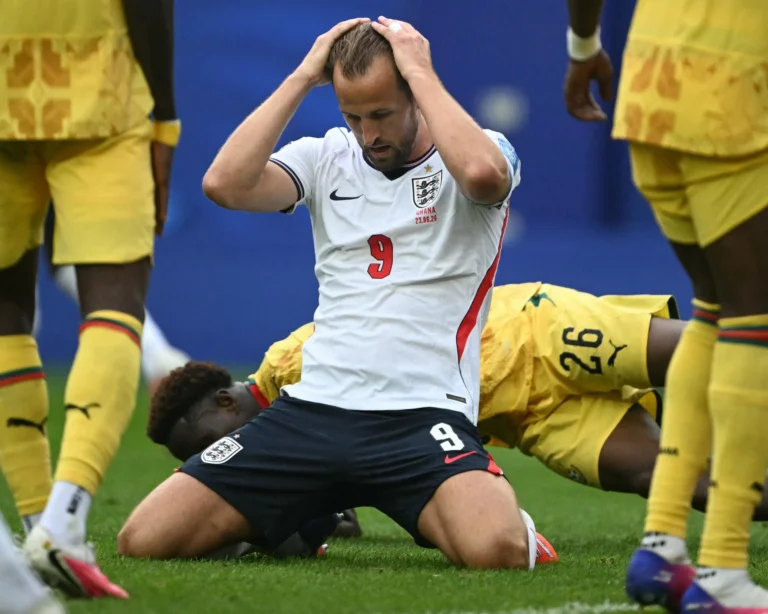
Thomas Tuchel’s tactical substitutions nearly sparked a breakthrough. Bukayo Saka forced Ghanaian goalkeeper Benjamin Asare into action with a low shot, while Nico O’Reilly’s header struck the crossbar after a well-timed cross from Reece James. Following the rebound, Kane squandered a golden opportunity by shooting high, and Marc Guéhi saw a header cleared off the line during stoppage time.
Despite the disappointing display, England managed to avoid defeat, and the stalemate was not the worst outcome. Taking a point rather than risking an all-out push for three was a more cautious approach compared to their earlier match against Croatia.
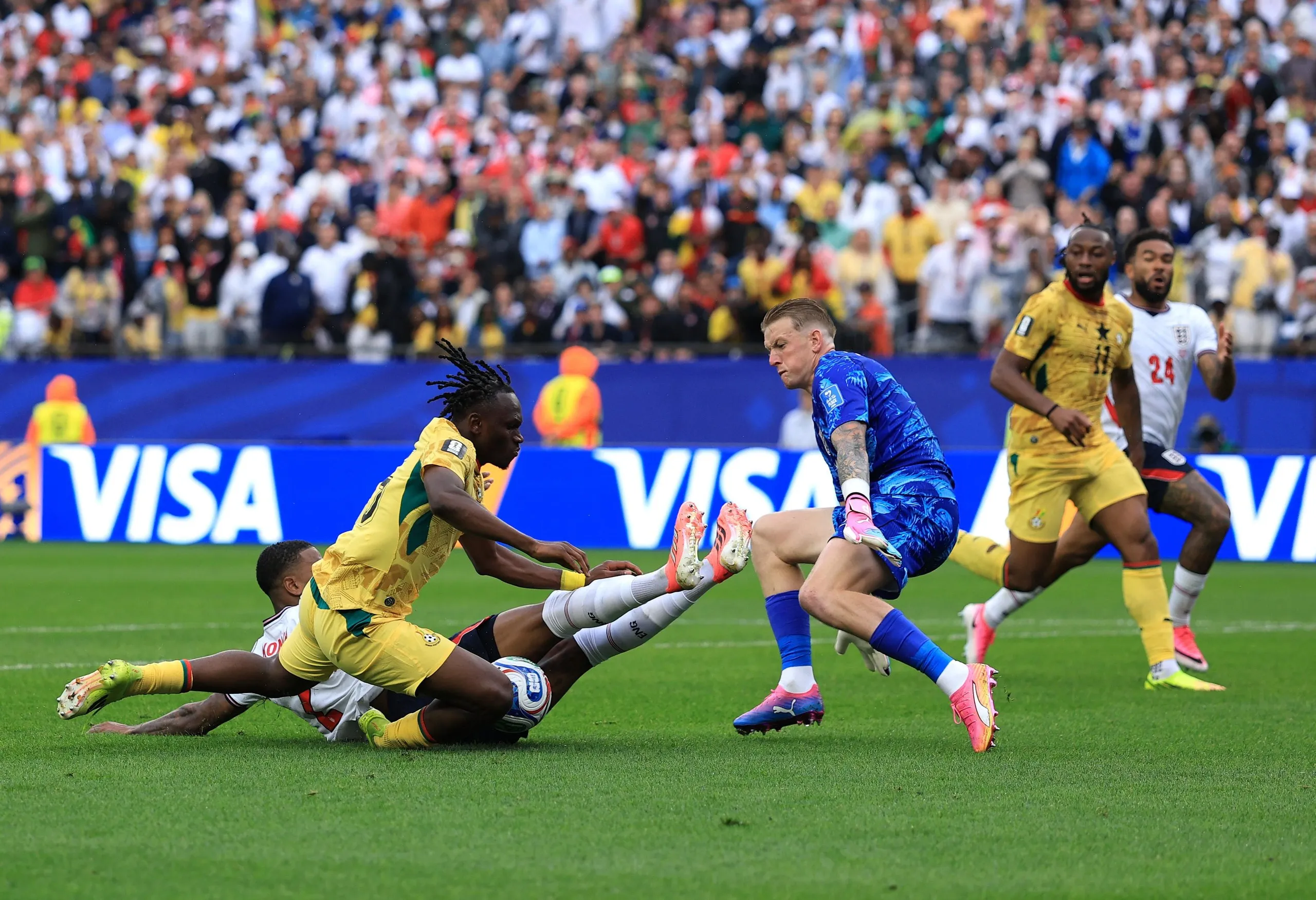
Defensively, England was sound for the majority of the match, though they faced a tense moment in the 79th minute. Substitute Prince Kwabena Adu broke through, and Ezri Konsa’s challenge in the box raised calls for a penalty from the Ghanaian side, but the referee deemed it a fair challenge.
The match unfolded on a dreary, rainy day, prompting speculation about England’s ability to perform under such conditions. This was a stark contrast to their warm-weather training sessions in Florida. The team struggled to adapt, reverting to their difficulties against a compact defense.
Tuchel anticipated a different challenge from Ghana compared to Croatia. Following a managerial change in March that brought Carlos Queiroz to the helm, this was only Queiroz’s fourth match in charge. With little footage available for England to analyze, his choice to deploy a tight 4-5-1 formation came as no surprise, suggesting he prioritized defensive solidity over offensive ambitions.
England needed to navigate through a sea of yellow shirts, requiring precise movement and quick passing. Tuchel aimed to replicate the rhythm and accuracy of their second-half performance against Croatia, but those hopes did not materialize.
Right from the first quarter of the match, the tone was set. When the first hydration break arrived — much to the crowd’s dismay — England had little to show for their dominance in possession. There were fleeting moments when they almost broke through the Ghanaian lines, but nothing materialized. Noni Madueke frequently checked back on the right wing, which played into Ghana’s hands as they focused on keeping England in front of them.
Ghana showed no remorse for their defensive strategy, and their supporters appeared to appreciate the approach. The team received enthusiastic applause from fans at halftime and again at the final whistle, despite managing only two shots throughout the match. Their progress was measured by the diligence and speed of their defensive efforts.
Before the break, England failed to create any significant excitement for their fans; statistics showed they had six shots, with none on target. Asare remained largely untroubled. Jude Bellingham’s clash with Jerome Opoku in the 45th minute illustrated the growing frustration, leading to a heated exchange with Queiroz, which did not escape the attention of Ghana’s bench.
Patience became the watchword for England. Tuchel’s assistant, Anthony Barry, noted during a halftime interview that Ghana’s defense was even more tenacious than expected. He described the first half as “absolutely OK from our point of view.” despite the lack of offensive success.
As the second half began, the strategy shifted towards a more optimistic approach. The management was acutely aware of the challenges posed by this type of game and wanted to avoid giving Ghana any incentive. Just after the restart, Bellingham made a crucial one-on-one tackle against Antoine Semenyo, while Djed Spence had to stay alert to thwart Marvin Senaya. A tense moment arose in the 67th minute when Adu advanced towards goal, and Jordan Pickford made a risky charge from his line, colliding with Adu but receiving a fortunate free-kick call.
Tuchel implemented attacking substitutions, starting with Saka, followed by Morgan Rogers and Eberechi Eze, the latter replacing Elliot Anderson in midfield — a bold move. Despite the changes, England struggled to create significant opportunities in the second half until a late flurry of activity. The match could have taken a different turn had Kane managed to control his shot when presented with a key chance. Ultimately, England’s performance fell short of what was required.
- World Cup 2026
- England
- Ghana football team
- World Cup
- match reports