


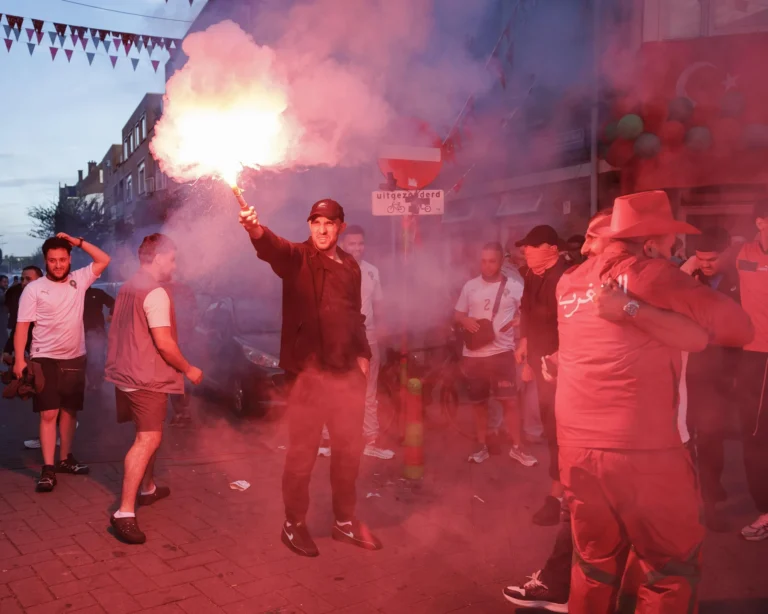
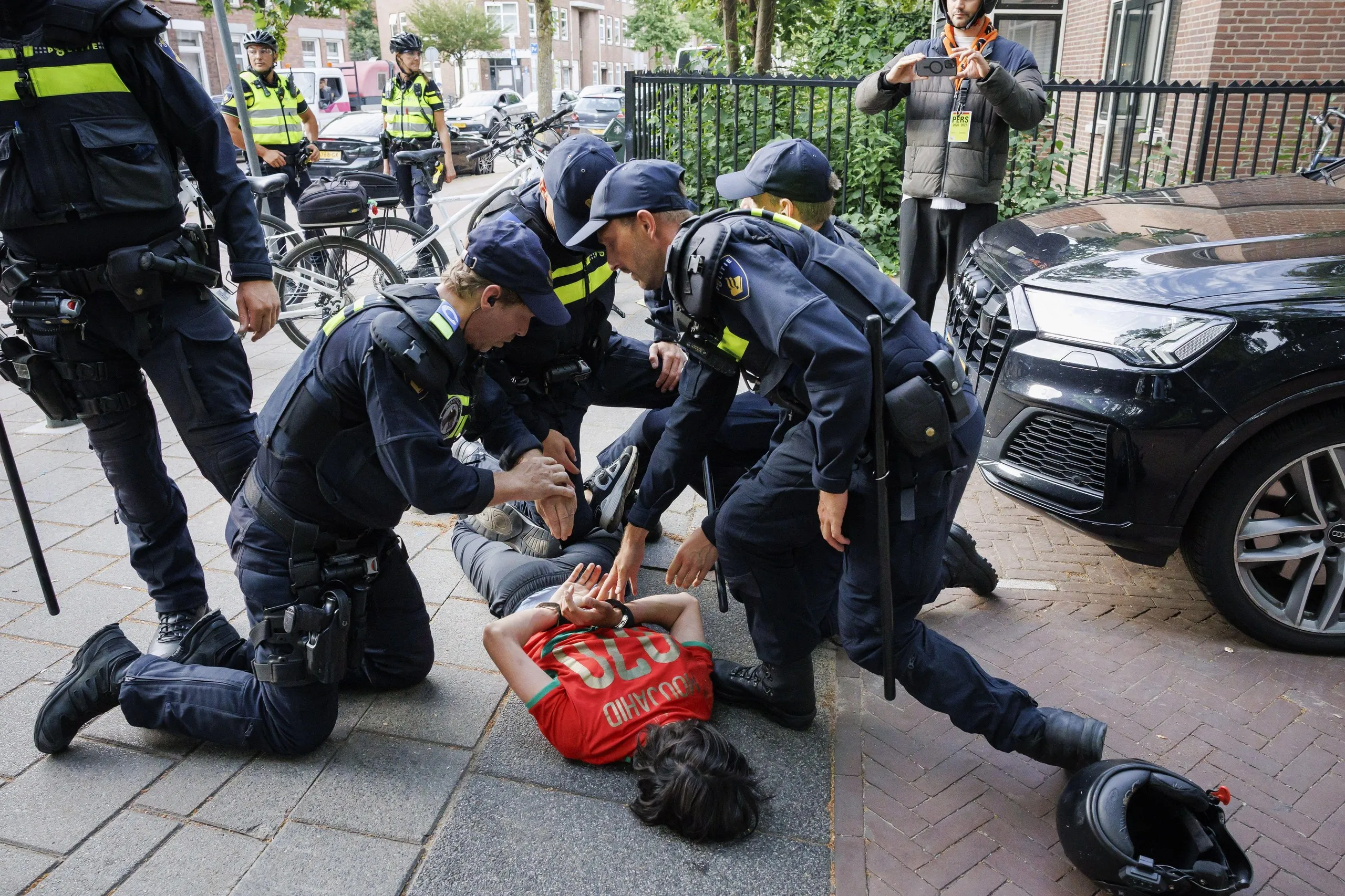
The Netherlands’ World Cup clash against Morocco transcended mere football as the Atlas Lions eliminated Ronald Koeman’s side in a gripping penalty shootout, igniting jubilant celebrations among the Moroccan community in Amsterdam. However, the atmosphere took a darker turn in The Hague.
An estimated 440,000 individuals of Moroccan descent reside in the Netherlands, and leading up to the match, many were posed the same question: “So who will you support, then?” Most responses were light-hearted, and former manager Ron Jans showed genuine curiosity when he posed the question to pundit Ibrahim Afellay on Dutch national television. Afellay, who has represented the Netherlands 53 times, articulated his support for Morocco. Generally, reactions leaned toward empathy and understanding, regardless of individual allegiances.
Online sentiments, however, have been fueled by far-right politician Geert Wilders, who has spent two decades targeting Muslims, particularly the Moroccan community in the Netherlands. In 2014, he vowed to reduce the number of Moroccans in the country and recently tweeted an anti-Islam remark in response to a photo of Morocco players praying on the pitch. Before the match, he shared an AI-generated image on X depicting himself as a referee issuing a red card to a Moroccan player.
The rise of Wilders and similar right-wing populist factions has led some Dutch-Moroccan players to increasingly support Morocco. While Afellay chose to play for the Netherlands, his successors have opted differently. Koeman’s current squad is notably multicultural, yet it has been over a decade since a player of Moroccan descent donned the national jersey. Three members of Morocco’s squad were born in the Netherlands, each grappling with their decision to represent Morocco. Noussair Mazraoui, Sofyan Amrabat, and Anass Salah-Eddine ultimately chose to play for Morocco, prompting right-wing politicians and commentators to express outrage over what they perceived as a lack of loyalty to their birth country.
An hour after Morocco’s victory over the Netherlands, reports emerged from the Dutch public broadcaster NOS indicating that police in The Hague faced bottle and firework attacks. Regional news outlet Omroep West reported that at least ten individuals believed to be Morocco fans were arrested following assaults on law enforcement. Additionally, the newspaper Algemeen Dagblad noted that four Morocco supporters were detained in Rotterdam, although the reasons were not disclosed.
Following the win, Wilders took to X to congratulate Morocco. The ongoing debate regarding social cohesion is likely to persist, yet the camaraderie evident among fans in Amsterdam serves as a reminder that reality can often be more harmonious than the online discourse.
In Amsterdam’s west end, where a significant Moroccan population resides, the mood remained calm. A Dutch-Moroccan-owned café was adorned with orange flags, and while some bars opted to remain open, others chose to close due to the early 3am kickoff. Approximately a quarter of the 200 spectators at Het Sieraad cheered for the Atlas Lions, fostering a friendly atmosphere with those supporting the Netherlands. Women in headscarves sang the Dutch anthem while fans in orange shirts applauded Morocco. As the match progressed, it became evident why players were drawn to represent Morocco: they have become a formidable team. Currently ranked sixth in FIFA standings, one position above the Netherlands, Morocco showcased their superiority throughout the match.
Morocco’s missed opportunities nearly cost them dearly. When Cody Gakpo scored for the Netherlands, emotions ran high. Gakpo’s recent personal loss—his unborn son passed away last week—was a poignant backdrop, yet Issa Diop’s powerful header equalized in stoppage time. Ecstatic Morocco fans stepped outside for a cigarette before extra time. Despite their team maintaining a clear edge over the Dutch, they could not seal the victory before the shootout, where Ismael Saibari, last season’s standout player in the Dutch league with PSV, successfully converted the decisive penalty, sending Morocco fans into a frenzy.
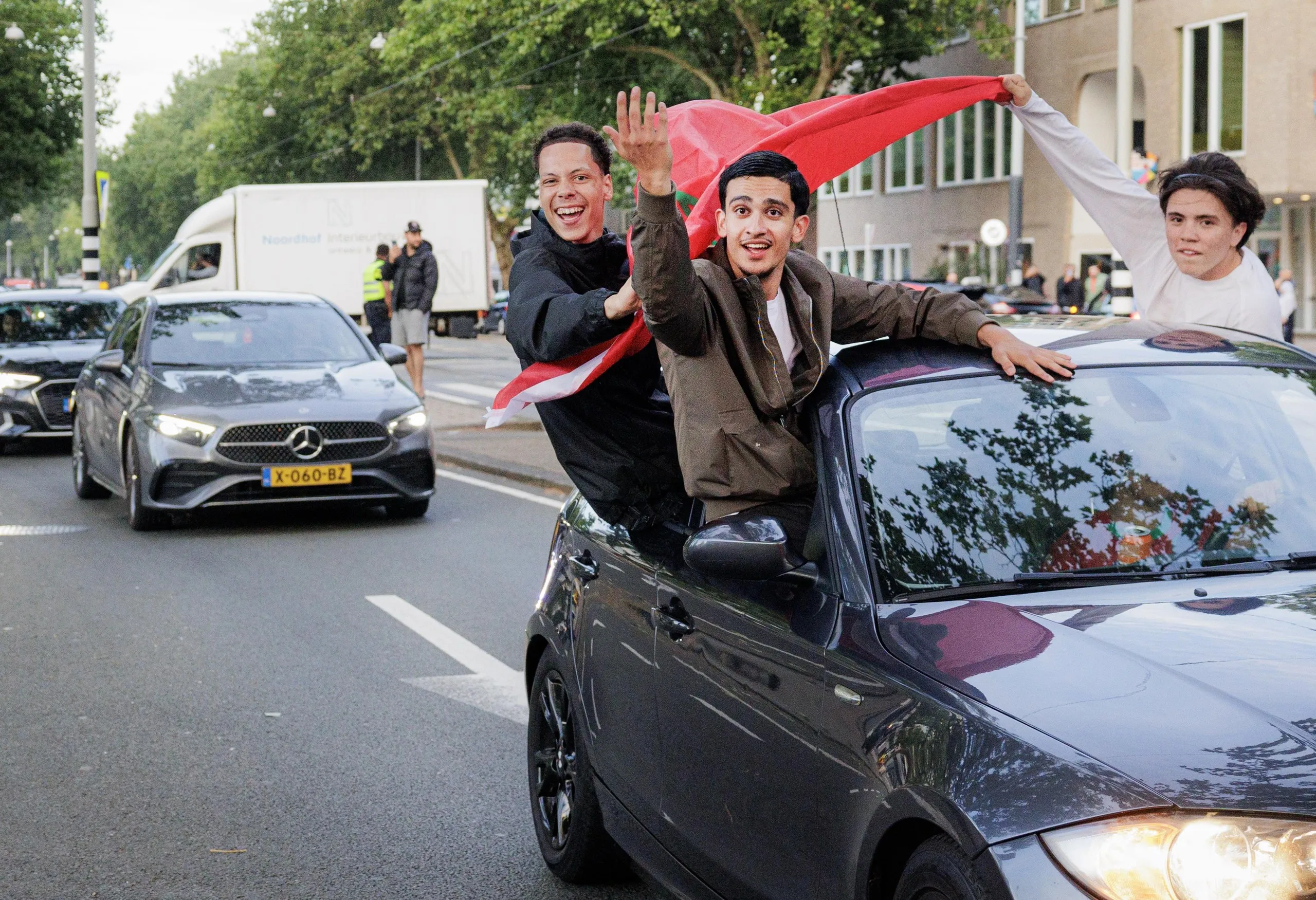
As pubs and venues began to empty, daylight broke over the city. Many individuals proceeded directly to work, while dozens of Moroccan fans hopped into their cars. Within moments, the sounds of honking horns filled the streets of Amsterdam as fans waved flags from their vehicle windows. Dutch supporters displayed grace in defeat, congratulating their opponents on a well-deserved win, exchanging hearty embraces, and expressing their intent to support Morocco for the remainder of the tournament. A few police officers were stationed at Mercatorplein square, a site of previous unrest after Morocco matches, but this morning there was nothing but pure, unrestrained joy in Amsterdam following an exhilarating football match.
- World Cup 2026
- Netherlands
- Morocco football team
- World Cup
- features