


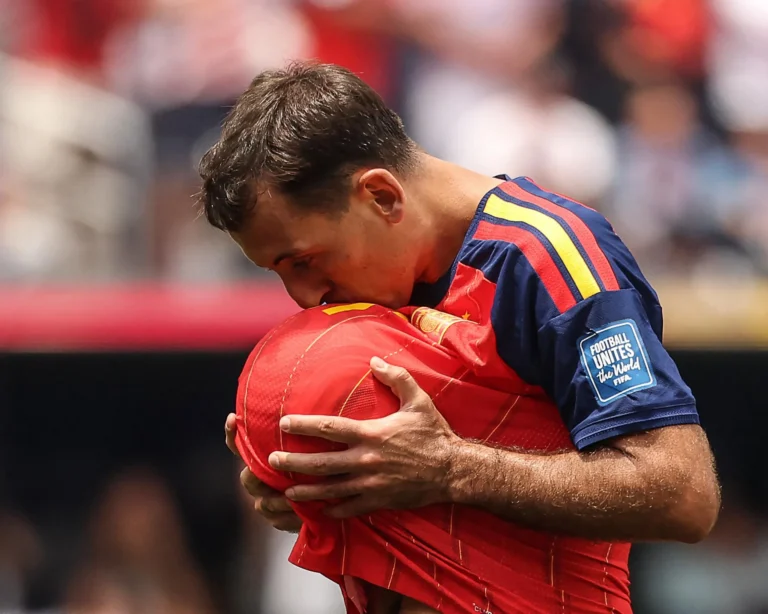
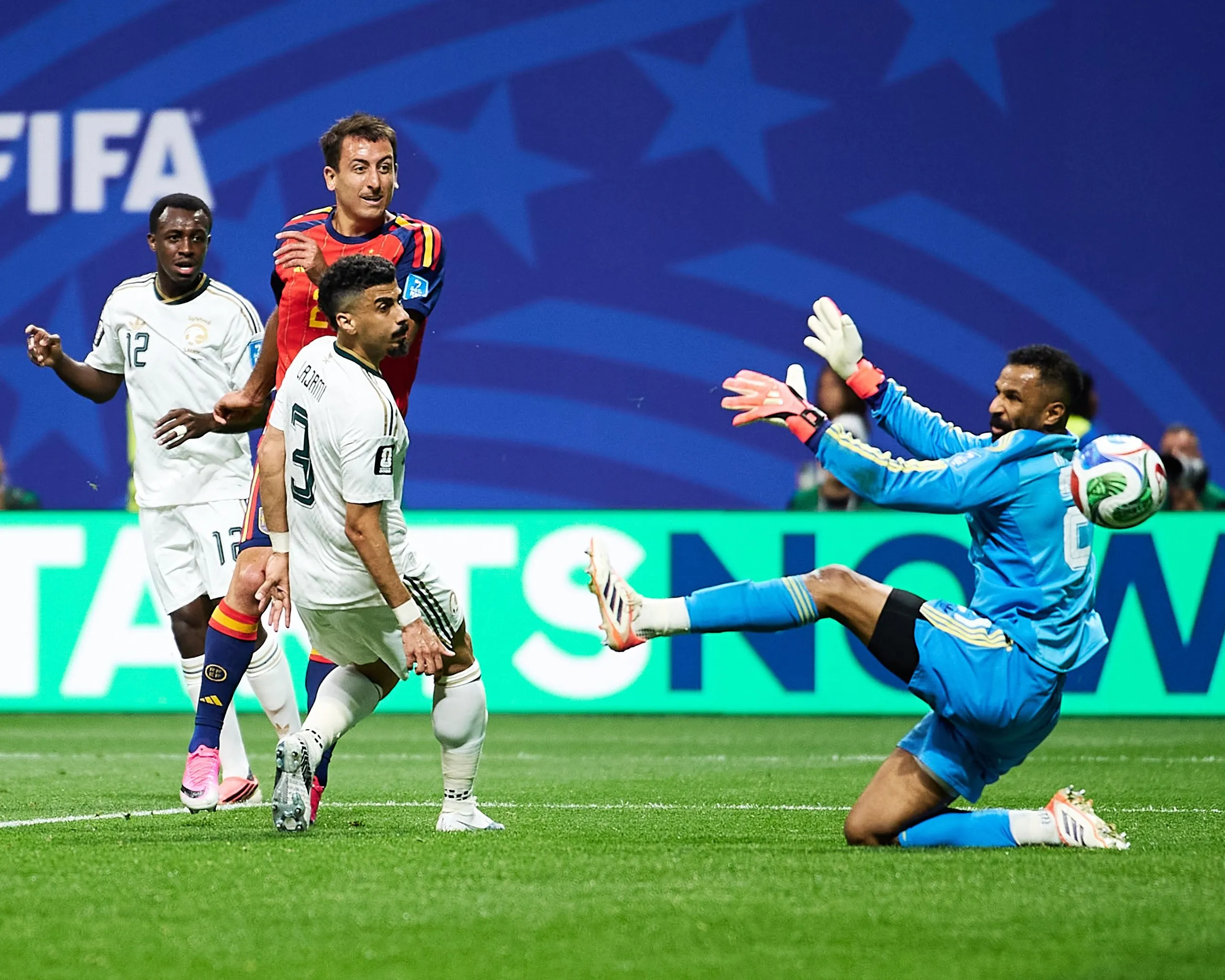
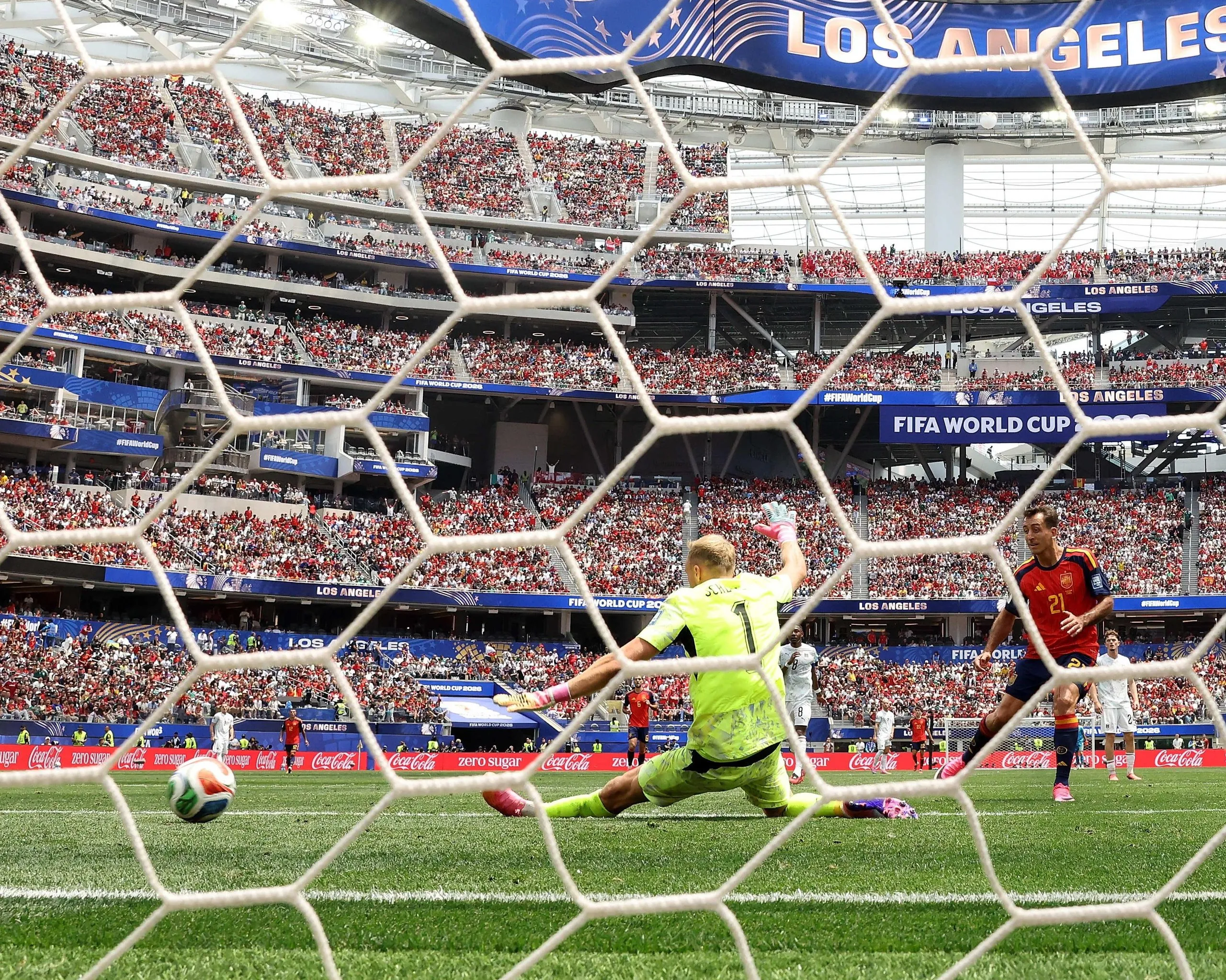
Mikel Oyarzabal has begun to capture attention on the international stage. During Spain’s third goal against Austria in Los Angeles, the cameras focused on the exuberant celebration of Lamine Yamal’s younger brother, who was enthusiastically shouting, “The blonde in front has denied us the best sticker of all time.” The moment was delightful, not only because of the child’s charm, but also due to the amusing backdrop—a woman in sunglasses, later identified as Oyarzabal’s mother, partially obscuring the scene. Spanish TV commentator humorously noted, “The blonde in front has given you two goals today, my friend.” to which striker Borja Iglesias replied, “[Keyne] is almost like an icon himself given everything that’s happened these last few years and with the transcendence Lamine has.”
That woman was Dorleta, Oyarzabal’s mother, and her son had just netted his second goal of the match, marking his fourth of the tournament. A couple of days later, following the national team’s first training session in Dallas, Oyarzabal was asked by Marca if he had seen the footage of the celebration.
“You mentioned Mikel Oyarzabal: at last, at last, we’re starting to recognise him in Spain. Madre mia! At last,” he acknowledged. “Since I was little I’ve tried to understand play and why things happen,” It was clear that Oyarzabal does not seek the limelight, preferring to maintain a low profile. His understated demeanor often leads to his being overlooked, and he seems content with that.
However, the dynamic is shifting. Scoring goals invariably alters perceptions, and Oyarzabal has been prolific lately. Spain’s head coach, Luis de la Fuente, is also making efforts to ensure Oyarzabal receives the recognition he deserves. At a press conference ahead of facing Uruguay, De la Fuente seized the chance to spotlight Oyarzabal whenever his name came up. He expressed gratitude for the opportunity to acknowledge the player, indicating a growing appreciation for Oyarzabal’s contributions.
“I’ve learned that by not getting in the way you can help. There are moments in which, just by positioning, you can help the team without even touching the ball. It’s then about making the most of the few you have. As a striker you can’t expect to touch the ball every minute.” The coach described Oyarzabal as “Mikel is a very intelligent person and you see that on the pitch. He’s one of the best strikers going into space, between lines, dropping to the wing. He’s played right wing, left wing, second striker and centre‑forward and always played well. Very few footballers have his ability to interpret the game. He has the humility and understanding to keep his feet on the ground, because this is a merry-go-round. He is an example to everyone and I’m more delighted with him by the day. People who understand football value him extremely highly. Unfortunately, there are others who don’t see it but the weight he has in the Selecci ón is brutal.” placing him alongside top-tier players like Kylian Mbappé and Lionel Messi, who dominate the World Cup scoring charts.
This idea of a player being underrated can sometimes feel overused, yet in Oyarzabal’s case, it holds some truth. At 29, he has often been a quiet presence, especially outside of San Sebastián, where he captains Real Sociedad.
His contributions to Real Sociedad are significant, having secured two Copa del Rey titles—50% of the club’s total trophies—while scoring in both finals. Yet, the lack of media buzz surrounding him is partly due to the club’s limited visibility and absence of transfer rumors. Oyarzabal, who has no agent and is content in his current role, has not fostered speculation about his future, which is telling in itself.
Oyarzabal’s approach is reflective of his character; he has not sought to promote himself. After the match against Austria, he was asked about being mentioned alongside stars like Mbappé and Messi. He simply replied, “Mikel seems shy, but he is someone you listen to, because he always has the right opinion.” conveying a refreshing indifference to the accolades. His demeanor is marked by a deadpan sincerity, devoid of arrogance. When queried about an AI search that omitted him from a list of top strikers, he stated, “People said there was no centre-forward; there was, if a different profile,”
He believes that one critical aspect of being a striker involves not intruding on the flow of the game. This perspective is not false modesty but rather a practical assessment of his role. It may also explain why he has not always been in the spotlight; he prefers a quieter existence both on and off the field. Oyarzabal is not flashy; he does not possess extraordinary speed or dazzling dribbling skills, nor does he demand the ball incessantly. His strengths lie in subtler aspects of the game—timing, positioning, and facilitating opportunities for teammates.
“I celebrate the fact that we’re talking about him, truly I do, so thank you,” he explained. “I’ve learned that by not getting in the way you can help. There are moments in which, just by positioning, you can help the team without even touching the ball. It’s then about making the most of the few you have. As a striker you can’t expect to touch the ball every minute.”
De la Fuente commented on Oyarzabal’s intelligence on the pitch, stating, “Mikel is a very intelligent person and you see that on the pitch. He’s one of the best strikers going into space, between lines, dropping to the wing. He’s played right wing, left wing, second striker and centre-forward and always played well. Very few footballers have his ability to interpret the game. He has the humility and understanding to keep his feet on the ground, because this is a merry-go-round. He is an example to everyone and I’m more delighted with him by the day. People who understand football value him extremely highly. Unfortunately, there are others who don’t see it but the weight he has in the Selecci ón is brutal.”
Now, with his recent performances, Oyarzabal’s impact is undeniable. De la Fuente’s unwavering faith in him has been evident; when he became head coach, he appointed Oyarzabal as one of the team captains, prioritizing experience over conventional criteria. Fabián Ruiz remarked, “Mikel seems shy, but he is someone you listen to, because he always has the right opinion.” Oyarzabal’s evolution from wing play to a more central role has been noteworthy, particularly after overcoming a knee injury that sidelined him from the last World Cup. He has adapted to a center-forward role that suits his style better, as De la Fuente pointed out, emphasizing that alternative profiles can still serve as effective strikers.
When Oyarzabal entered the Euro 2024 final, he once again demonstrated his scoring prowess. He has consistently found the back of the net in every final he has participated in. This time, he scored the decisive goal, transitioning into a new era where he is now the primary choice for the center-forward position, succeeding Álvaro Morata. Last season marked his peak goal-scoring performance for Real Sociedad, netting 15 times in the league. Notably, since his goal against England in Berlin, he has contributed to more international goals than renowned players such as Mbappé, Messi, Ronaldo, or Kane, with only Haaland surpassing him. In his last 18 matches for Spain, he has scored 17 goals and assisted eight times.
This summer in the United States, he has already scored four goals on the grandest stage, affirming his rightful place among the elite. Recently, a boot manufacturer mentioned him as a striker they had never promoted before, reflecting a growing recognition. “I celebrate the fact that we’re talking about him, truly I do, so thank you,” said De la Fuente, encapsulating the shift in perceptions surrounding Oyarzabal.
- World Cup 2026
- Spain
- World Cup
- features