


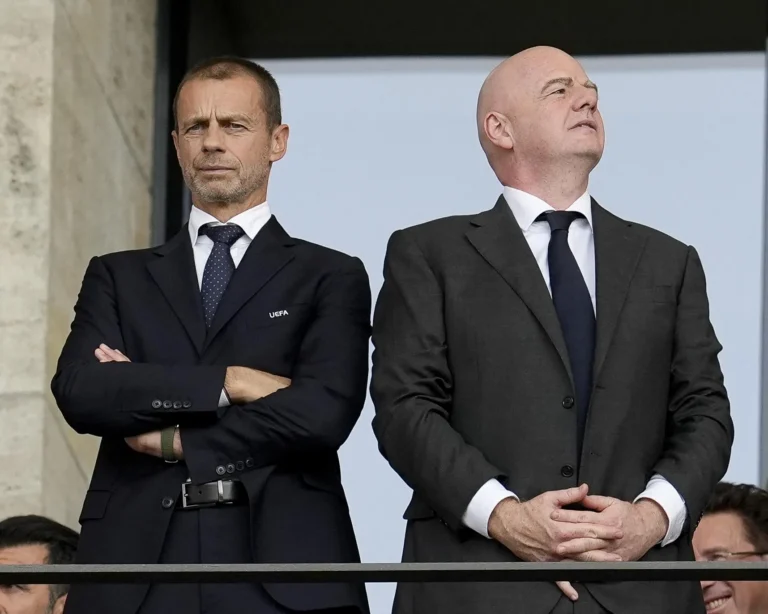
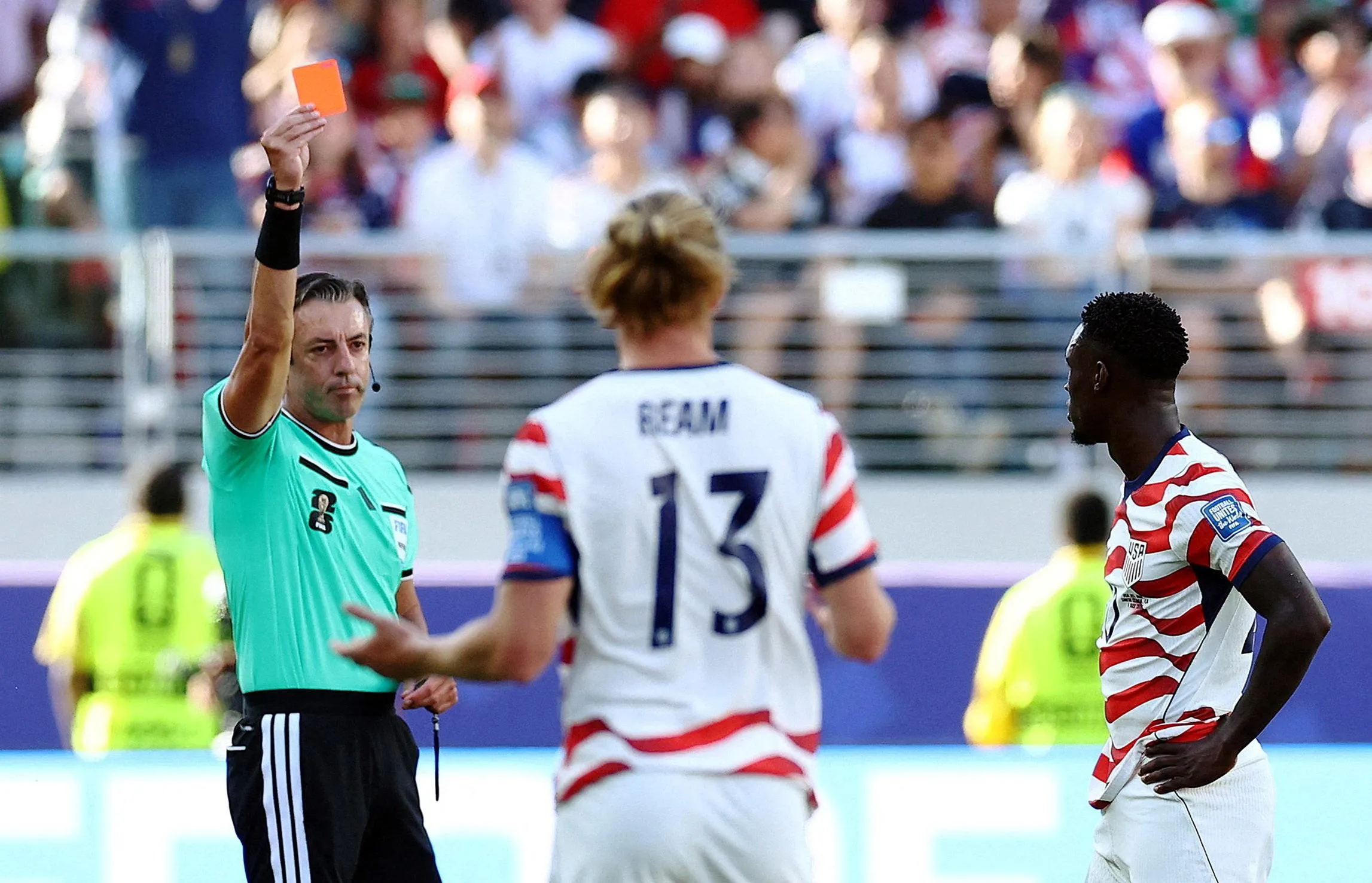
Uefa president Aleksander Ceferin has been noticeably absent from the World Cup, much like Donald Trump, but both have made headlines recently. Uefa’s recent statement accused Fifa of crossing a critical line by overturning the suspension of USA striker Folarin Balogun for Monday’s last-16 match against Belgium, describing the decision as ‘incomprehensible and unjustifiable.’ This bold stance signals a significant escalation in tensions between Uefa and the global football governing body.
Ceferin, an active participant in football discussions and media, is well aware of the implications of Uefa’s actions. This escalation follows years of friction, particularly since Fifa’s proposal in 2018 to expand the Club World Cup, which materialized in the United States last year. Current strains between the two organizations stem from Fifa’s intention to increase the Club World Cup from 32 to 48 teams for the 2029 edition.
Uefa generates approximately €5 billion (£4.27 billion) annually from the Champions League, with projections indicating a 20% increase next year due to new media rights and commercial deals. In contrast, Fifa, which derives a significant portion of its $14 billion (£10.5 billion) revenue from the World Cup, seeks to capitalize on club football’s financial success.
The tension between Uefa and Fifa was publicly highlighted during the Fifa Congress in Paraguay last May, when Ceferin and other European delegates left in protest of Infantino’s tardiness, as he was engaged in discussions in the Middle East with global leaders, including Trump and Saudi Arabia’s crown prince, Mohammed bin Salman. Although some semblance of peace had returned, attributed to both leaders’ upcoming re-election bids, the fragile truce was disrupted by Fifa’s unexpected decision regarding Balogun.
Uefa’s headquarters in Nyon has expressed disbelief at the operational methods of Fifa, which appears less structured and more ad-hoc in its decision-making. While Uefa faces its share of criticisms for bureaucratic processes, it remains a highly organized entity, unlike Fifa, which seems to make policy changes impulsively, as seen when they utilized Article 27 of their disciplinary code to clear Balogun and Cristiano Ronaldo last year.
Following their critical statement, Uefa officials engaged in emergency discussions throughout the day. The lack of attendance at the World Cup indicates growing resentment towards Fifa. Despite both organizations occasionally aligning for mutual benefits, Ceferin and Infantino are seldom seen together. Notably, Ceferin skipped this year’s Fifa Congress in Vancouver, while Infantino made a brief appearance at a European Football Clubs (EFC) meeting in Rome last year in Ceferin’s absence.
Uefa’s plans regarding Balogun’s situation remain uncertain, hinging partly on the outcome of Belgium’s appeal against Fifa’s decision. Sources from the Royal Belgian Football Association (RBFA) have indicated that they do not anticipate a reversal and are exploring alternative legal avenues, including the potential for a case before the Court of Arbitration for Sport (CAS) in Lausanne post-tournament.
Should Uefa support Belgium’s legal action, their expertise in Swiss law could be advantageous, and they might also find ways to complicate matters for Fifa in other respects. Although many top European clubs support the expansion of the Club World Cup for financial gain, Ceferin opposes it, fearing that a larger tournament would further entrench the dominance of elite clubs and threaten the Champions League’s status.
As Fifa prepares to negotiate with continental confederations, domestic leagues, and player unions regarding the global calendar post-2030, Uefa holds significant leverage. The impending decision on the 2034 World Cup in Saudi Arabia could spark a Uefa-led protest involving European associations, leagues, and player unions, enhancing their negotiating power with Fifa. However, with Trump and Prince Mohammed seemingly aligned with Fifa, the fairness of this battle remains questionable.