


Thomas Tuchel urged his England squad to seize the moment at the critical juncture of the World Cup, emphasizing the need to fully engage and avoid any regrets against a Norway side many expected them to defeat. Was this a case of English overconfidence or a pragmatic perspective?
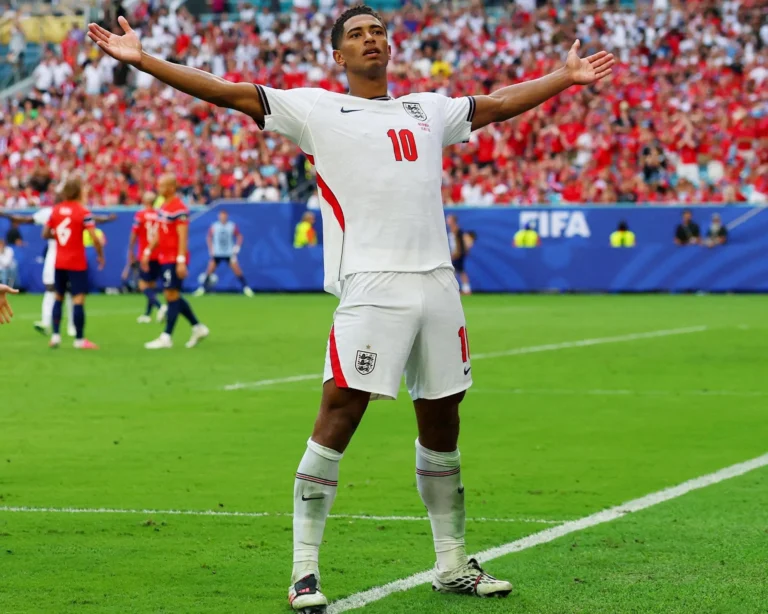
Fortunately for Tuchel, Jude Bellingham answered the call, elevating his performance when it was most crucial. He had already showcased his talent earlier in the tournament, but this match marked a significant leap in his contributions.
As the first half progressed, England faced the threat of being derailed, with Norway taking the lead through Andreas Schjelderup’s shot that appeared more like a cross. Bellingham, however, would soon provide a brilliant equalizer. Despite England’s struggles, Norway looked like the stronger side in the second half of regulation time, raising concerns about England’s fate.
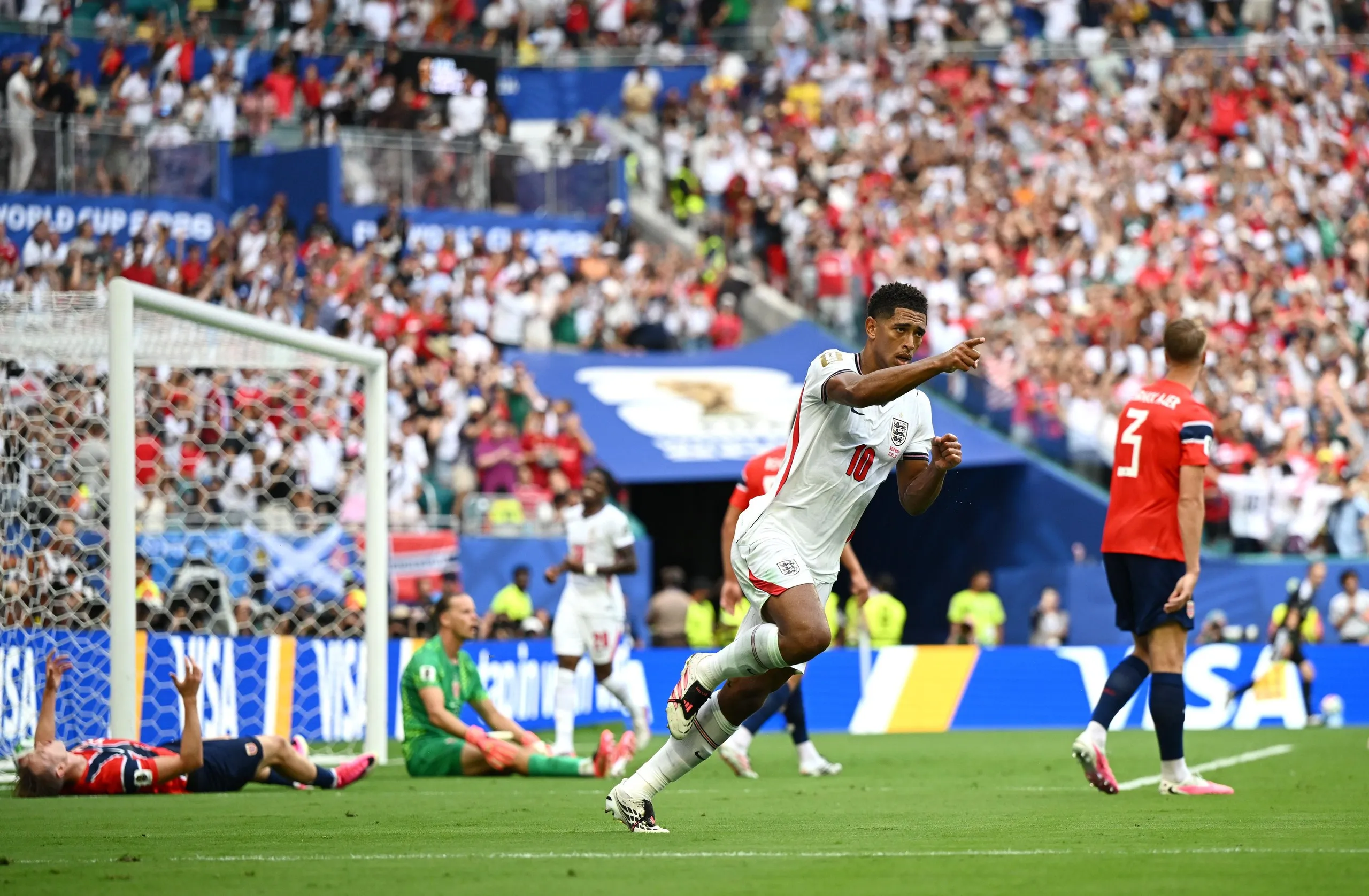
Yet, Bellingham ensured that England’s journey continued by exploiting a shift in momentum to score early in extra time. His opportunistic finish came after Norway’s goalkeeper, Ørjan Håskjold Nyland, mishandled a shot from substitute Morgan Rogers. This error marked Bellingham’s sixth goal of the tournament, positioning him as a contender for the Golden Boot and solidifying his status as a potential player of the tournament. More importantly, he propelled England into the semi-finals.
Norway, making their debut in a World Cup quarter-final, played valiantly throughout the match. They remained determined, showing glimpses of hope after Bellingham’s second goal, with substitutes Antonio Nusa and Oscar Bobb coming close to equalizing.
England effectively neutralized Erling Haaland, who was substituted out after the first extra period. In the end, a fresh perspective on a classic statement emerged: Edvard Munch, Henrik Ibsen, Ole Gunnar Solskjær — your boys didn’t suffer a heavy defeat. England, nonetheless, found a way to win.
The match conditions were grueling, with the temperature at kick-off reaching 33°C and humidity at 65%. Neither figure improved significantly, leading to sweat pouring off the fans in attendance. For England, this was their first real endurance test of the tournament, having previously played in air-conditioned stadiums or more temperate climates. The team had prepared for these conditions during a hot-weather training camp in Florida, but it still felt like an uncharted challenge.
For much of the first half, Tuchel’s team struggled to break through Norway’s well-organized defense, their tempo hindered by the heat. A pivotal moment came in the 33rd minute when John Stones, recalled to central defense, misplayed a back-pass toward Jordan Pickford with Haaland lurking. Fortunately for England, Pickford managed to avert disaster.
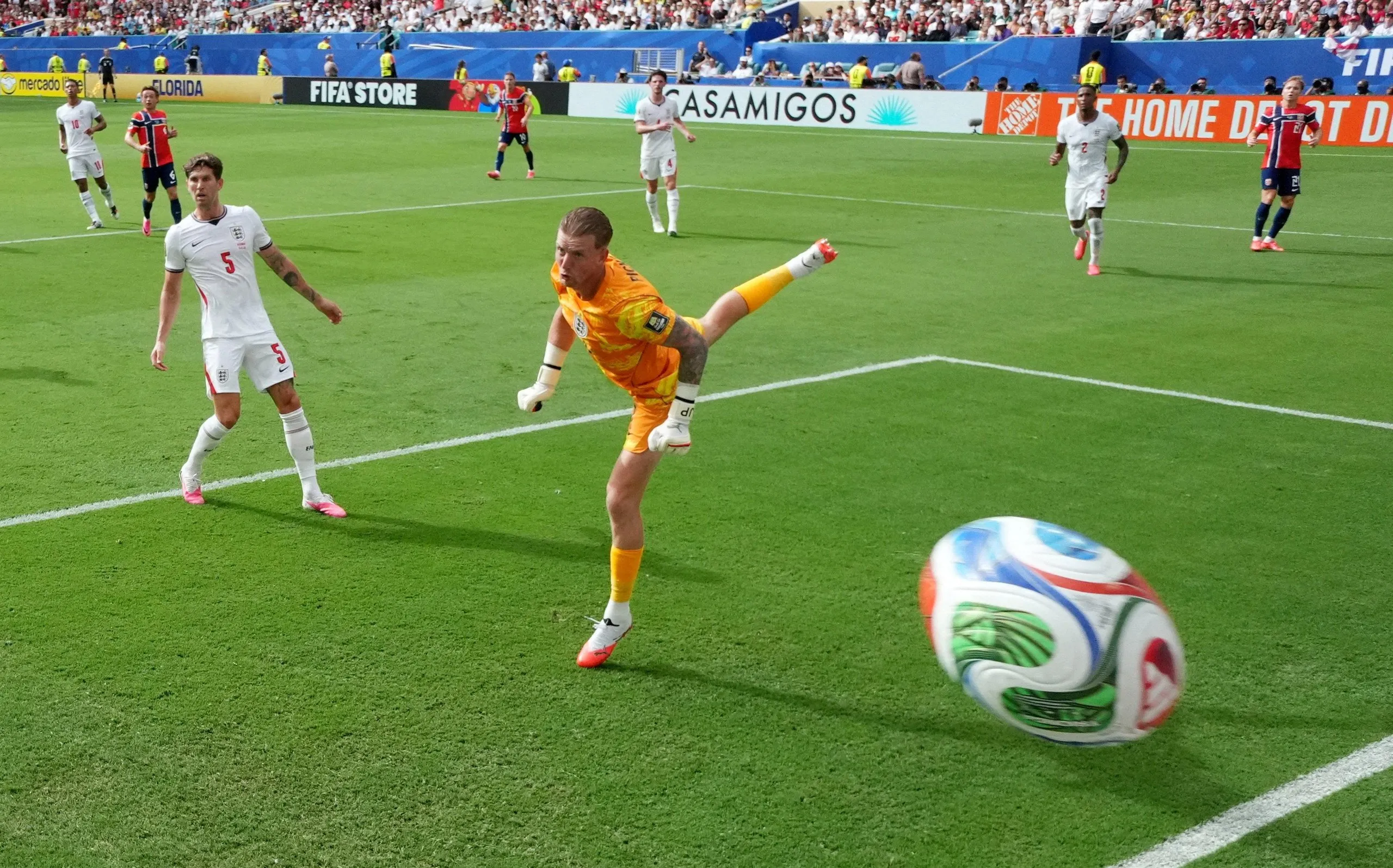
Norway began to assert themselves offensively, with Haaland forcing a save from Pickford. They took the lead when Patrick Berg intercepted Harry Kane’s pass. Although Kane sought a foul, play continued, leading to Schjelderup’s unexpected shot that found the back of the net. Pickford could have performed better on that occasion.
This setback initiated a challenging phase for England. Norway’s Alexander Sørloth fired high, while Martin Ødegaard tested Pickford after a careless pass from the England goalkeeper. However, Stones exhibited solid defending to avert a potential goal while Haaland was in a favorable position.
Bellingham, however, halted Norway’s momentum with a stunning goal. He made an explosive run into space after receiving a pass from Anthony Gordon, deftly maneuvering past Torbjørn Heggem and delivering a low shot that beat Nyland.
There was some controversy regarding whether the ball had touched an overhead cable before the setup, but FIFA later confirmed it had not. This incident added to the match’s chaotic nature.
England could have taken the lead in the first half, as Bellingham set up Kane, only for the latter’s chip to be ruled offside.
In the second half, Tuchel made notable changes, bringing Bukayo Saka on for the ineffective Noni Madueke and Eberechi Eze for a sick Declan Rice. Eze moved into a No. 10 role, with Bellingham positioned alongside Anderson, who was impressive but had the freedom to advance.
Norway regrouped and the match became increasingly tense. Pickford had several shaky moments, almost conceding after failing to track a Haaland header. Shortly after, Norway thought they had scored from a corner, but a VAR review revealed Haaland had fouled Anderson, resulting in the goal being disallowed.
Tuchel reacted during the second hydration break, bringing Reece James into the midfield and shifting Eze to the left. Bellingham returned to a more advanced position, sacrificing a quick outlet in Gordon.
Norway appeared more likely to score in the latter stages of normal time, hitting the crossbar through Kristoffer Ajer’s header. England struggled to clear the danger.
The atmosphere was thick with tension, with players aware of the immense scrutiny and potential consequences of any mistakes.
In the dying moments of regulation time, Nyland nearly committed a blunder when he took too long on a clearance, leading to Djed Spence charging it down. The ball went wide. By this point, Tuchel had made further tactical adjustments, introducing Rogers and moving James back to right-back.
The pendulum shifted again as England started extra time on the offensive. Saka’s cross for Kane was expertly deflected by Nyland, but the goalkeeper would soon falter when he spilled Rogers’ shot, allowing Bellingham to finish confidently and make the closing stages less nerve-wracking for England.
Spence seemed to win a penalty after being fouled in the area, but referee Clément Turpin overturned his original decision following a VAR review, leaving many puzzled. Nyland later denied Saka before making a crucial double save against both Spence and Saka. Ultimately, England had done enough to secure their place in the next round.
- World Cup 2026
- Norway
- England
- Jude Bellingham
- World Cup
- match reports