


About a quarter-century ago, I found myself in a sports newspaper office in Bucharest on a Saturday afternoon, discussing the Premier League with local journalists. As Chelsea trailed 2-1 with only minutes remaining, a colleague revealed his betting slip predicting a Chelsea loss. When Chelsea scored, followed by a quick second goal, he discarded the slip. I perceived excitement; for the Romanians, it was a sign of corruption.
This highlights the critical importance of integrity and its perception in sports. I firmly believe that game was not rigged, as no evidence supports such a claim. With players’ lucrative salaries and sophisticated systems monitoring unusual betting patterns, the likelihood of match-fixing in the Premier League is minimal. However, for those who experienced the decline of the Ceaușescu era or the chaos that ensued, skepticism is an understandable reaction.
This skepticism can be detrimental. The essence of sports lies in their unpredictability. Unexpected events can occur: a team can score twice in quick succession, a player can perform brilliantly or erratically, or a referee can make an inexplicable call. Football, being a low-scoring game, often defies expectations. A weaker team can defend for the entire match, hoping to secure victory through a counterattack or a set piece. It’s possible for a team to have numerous chances yet still lose. Miracles and remarkable comebacks happen, and these moments resonate deeply because they feel authentic.
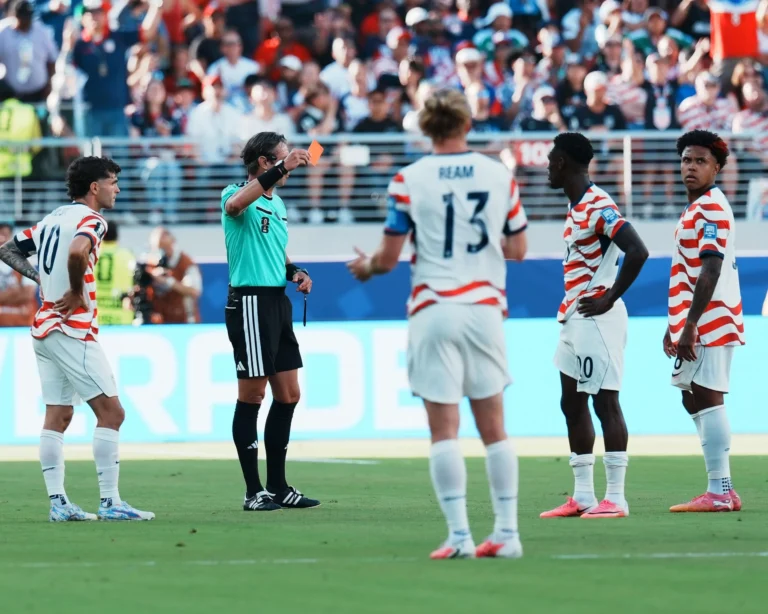
However, if these scenarios were scripted, they would lose their charm. Imagine a play where Dan Burn heads the ball to secure a 3-2 victory for England in the Azteca despite a red card, or a novel where the USA, gaining respect, is despised due to their president’s actions and loses to Belgium. These scenarios would be tedious if fictionalized. Yet when they unfold in reality, they become the pinnacle of drama.
This is why Gianni Infantino’s decision to lift Folarin Balogun’s suspension is perilous. Eroding trust in sports could ultimately destroy their essence.
This tournament has been somewhat unusual. The seeding of four top teams has led to a more balanced draw than previous competitions, yet the absence of genuine upsets is striking. While major teams have been held to draws, the only notable surprise has been Paraguay’s penalty shootout victory over Germany, with Norway’s win over Brazil only surprising in terms of world rankings.
This situation has, however, resulted in an intriguing lineup of quarter-finalists: prominent teams, renowned players, and Switzerland. If one were to curate the list, including Colombia and Senegal for diversity and support would be ideal. Still, the final selections closely mirror what we have seen.
The race for the Golden Boot has become a marketer’s fantasy, with favorites continually on the edge yet managing to advance. Although it would have been exciting to see countries like the Democratic Republic of the Congo, Cape Verde, or Egypt progress, their potential viewership pales in comparison to that of England or Argentina.
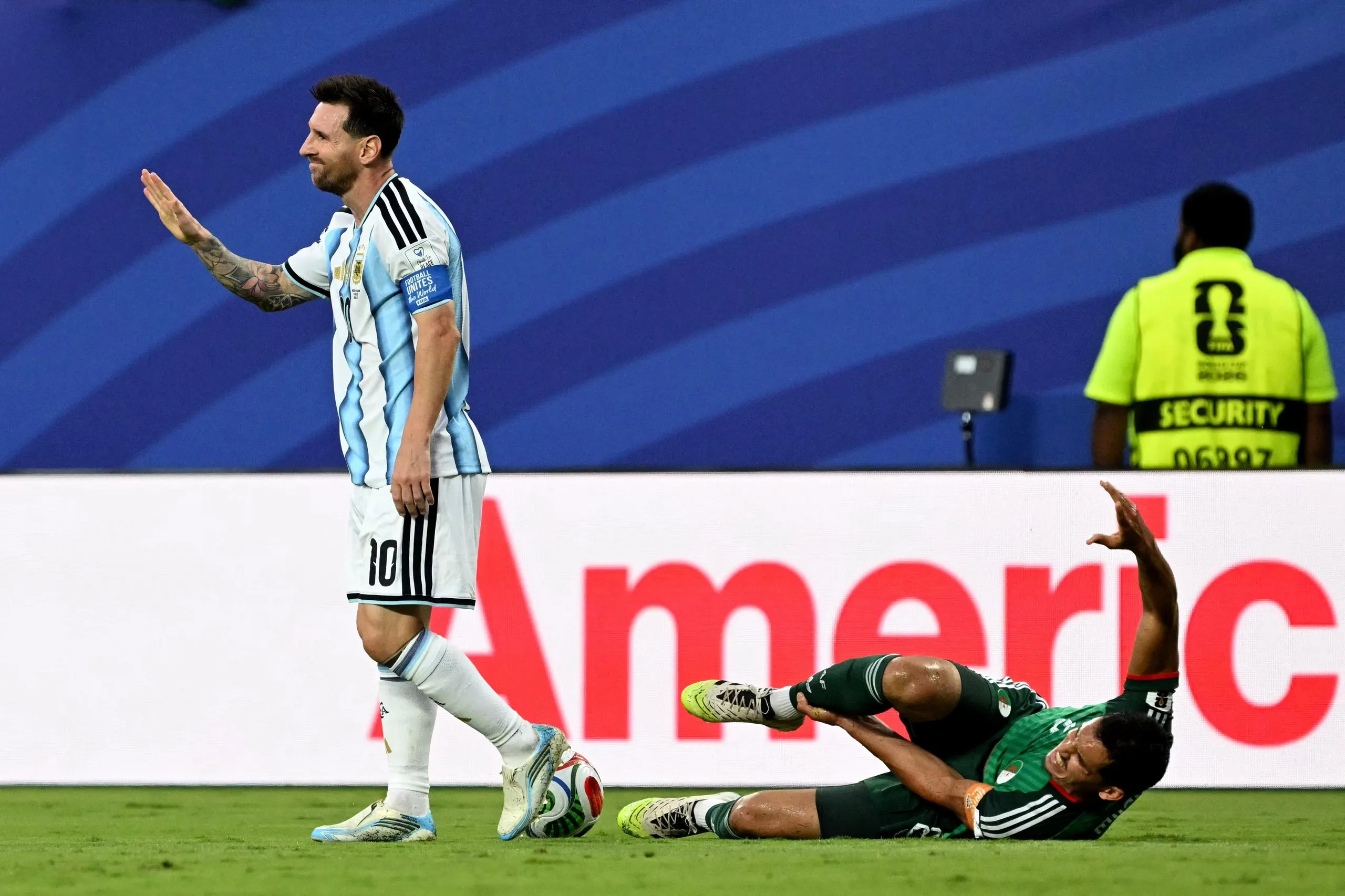
But here lies the growing concern: Are the larger teams being favored for financial gain? Should Lionel Messi have received a red card for his challenge on Aissa Mandi during the match against Algeria? If he had been penalized, would the subsequent suspension have been lifted as Balogun’s was? Did Argentina truly deserve the penalty against Austria that warranted a video assistant referee review? Was Alexis Mac Allister’s involvement a foul leading to Messi’s goal? Why was a goal for Egypt disallowed for a foul, while Argentina’s winning goal faced no such scrutiny?
Refereeing throughout this tournament has been inconsistent; while much of it was satisfactory, there were occasions—such as in France’s match against Paraguay—where the effort to allow play to flow resulted in blatant fouls being overlooked. Efforts to combat simulation have similarly led to significant infringements being ignored. VAR has added to the confusion, at times being overly lenient and at others excessively pedantic.
Perhaps this inconsistency is merely human nature. Refereeing is inherently challenging, and establishing a uniform standard among 52 officials from various backgrounds is a formidable task. The conspiracy theories surrounding officiating, often stemming from a handful of contentious decisions against a team, are tiresome and largely driven by VAR frustrations. This creates an environment where perfection is expected, leaving no room for human error or uncertainty. Typically, such theories can be dismissed easily.
However, when the President of the United States boasts about persuading Infantino to suspend Balogun’s ban, doubts emerge. If there had been a proper appeals process determining the red card was incorrectly issued, complaints would be minimal. Yet, the absence of such a process renders justice seemingly arbitrary, suggesting that FIFA altered rules to benefit the USA. What, then, can be made of Infantino’s peculiar reaction to Cape Verde’s equalizer against Argentina? What does it imply that many contentious calls have favored Argentina?
Previously, the outburst from Egypt’s manager, Hossam Hassan, regarding the need to keep Messi in the tournament could have been dismissed as mere bitterness. Yet, one must recall FIFA’s manipulation of the Club World Cup qualifying process to ensure Inter Miami and Messi’s presence, as well as the suspension of Cristiano Ronaldo’s three-game ban to allow him to participate in all group-stage matches.
FIFA has a vested interest in prominent players remaining in the tournament. What if entertainment considerations and an insatiable desire for growth have taken precedence over sporting integrity?
This is the precarious ground Infantino is treading. The value of sport is diminished when it lacks credibility: football devoid of faith is meaningless. Marketing must never overshadow the integrity of the game. Once the perception of fairness dissipates, doubt will linger—much like it did for Romanians in the late 1990s. If such doubts persist, the sport faces a grim fate.
- World Cup 2026
- Inside football
- World Cup
- Gianni Infantino
- Fifa
- Football politics
- comment