


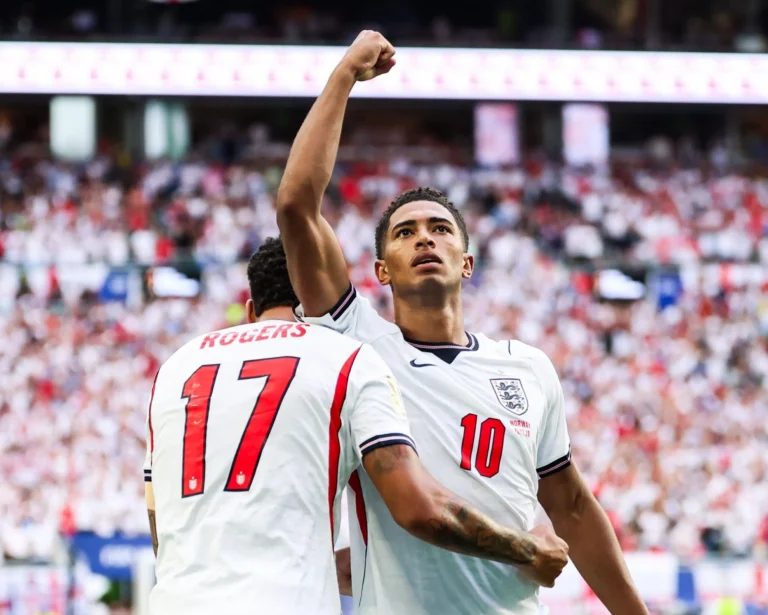
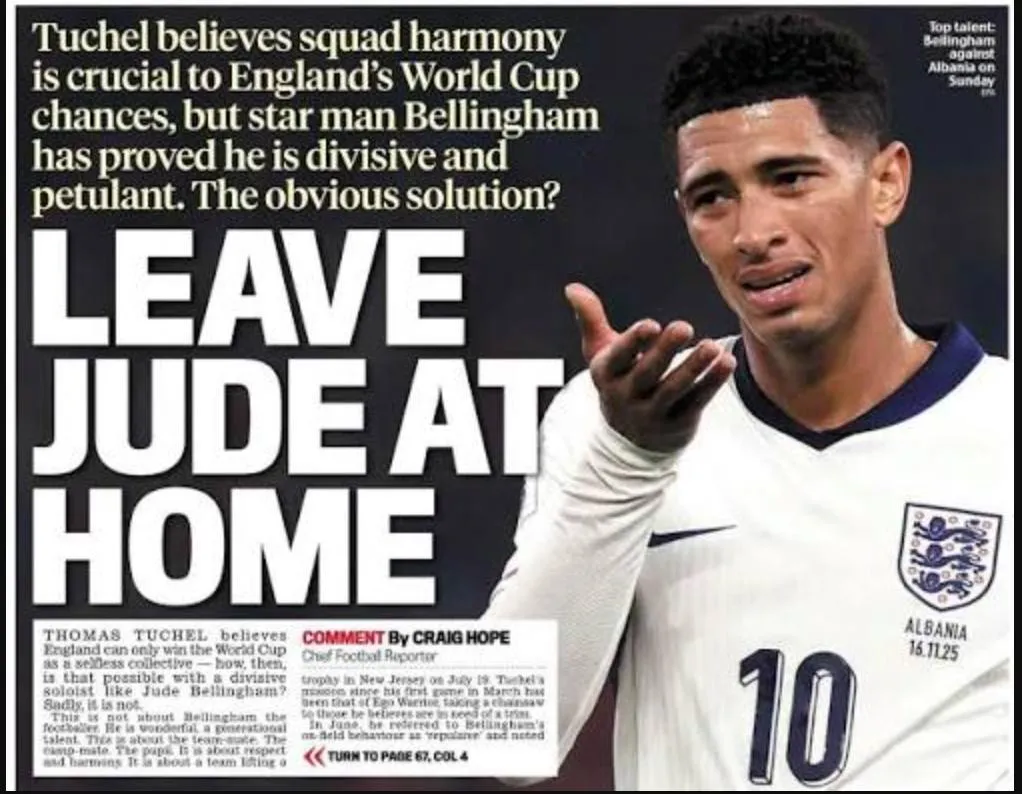
As the World Cup approached, the familiar wave of criticism surrounding Jude Bellingham intensified. Various writers, pundits, and ex-players began to question whether this talented young footballer could disrupt the harmony within the English squad. The peak of this backlash was encapsulated in a Daily Mail article from November 2025, which bore the infamous headline: “Someone like Jude, for some reason, frightens these people,”
In the midst of this storm, Ian Wright took to the airwaves to defend Bellingham during an episode of Stick to Football. His comments quickly gained traction across social media, resonating due to both his honesty and the historical context of the scrutiny faced by Black athletes. Wright articulated, “It’s something you’re taught as a Black man … to keep your head down and be, for want of a better word, a humble fucking slave.” adding, “a matter of national honour”
Several factors contribute to the backlash against Bellingham, who appears to be on a collision course with the entrenched norms of English football. His first perceived misstep was having Birmingham City retire his shirt number before he turned 18. Next, he opted for Borussia Dortmund over England’s elite clubs. Real Madrid subsequently acquired him for an initial €103 million (£88 million), entrusting him with the iconic No. 5 jersey previously worn by Zinedine Zidane. Throughout these transitions, Bellingham has demonstrated a remarkable confidence that many English players abroad often lack. Yet, rather than being a source of national pride, his achievements in Madrid are often viewed as a challenge to the Premier League’s status as the pinnacle of football.
While these elements shed light on the negativity directed at Bellingham, Wright’s perspective on his treatment is even more compelling. The cultural nuances of Bellingham’s demeanor resonate with many Black Britons, yet they are interpreted differently elsewhere. As a child, my aunt taught me to walk with confidence, shoulders back, and head held high, aiming to project an image that society often overlooks. This lesson echoed her own experiences upon arriving from the Caribbean, where she faced a society that questioned her right to belong.
It’s unclear whether Bellingham received similar guidance, or if we are simply witnessing the unwavering self-assurance of a top-tier footballer. Given the prevalence of such cultural teachings within Black families, it seems entirely plausible that he did.
English football has a long history of reaching into its past for meaning, often reflecting on its singular victories and numerous near misses. This history also revisits players who embody its evolution: Bryan Robson, David Beckham, and Paul Gascoigne. The latter remains particularly significant, with Jack Grealish briefly seen as his successor, while before Euro 2020, Phil Foden dyed his hair to mimic Gascoigne’s iconic look from Euro 96, consciously aligning himself with that legacy.
Bellingham challenges the limitations of this recognition.
Although England has celebrated exceptional Black players over the years, there has been a reluctance to recognize a Black figure as its defining icon. This reluctance has roots in social biases, as noted by Paul Gilroy in his analysis of John Barnes’s exclusion from the pantheon of British sporting greatness, which became a point of national pride for some fans and pundits. Similarly, Andrew Cole was overshadowed by Alan Shearer, and Raheem Sterling has faced ongoing criticism. Despite this, Bellingham’s extraordinary performances in recent tournaments have rendered him not only tactically crucial but also the emotional and symbolic centerpiece of the national team.
The enthusiastic chorus of “Hey Jude” that now accompanies England’s victories is telling; it signals a Black footballer whose identity and heritage do not hinder immediate English identification.
Each new generation of Black individuals born and raised in England is influenced by the nation, just as they contribute to reshaping its identity. While it would be imprudent to claim that a single footballer can resolve the complex tensions between Blackness and Englishness, Bellingham evidently perceives no conflict between the two. His most significant legacy may lie in demonstrating to future generations that they need not see any contradiction either.
- Calum Jacobs is the author of A New Formation: How Black Footballers Shaped the Modern Game and the founder of CARICOM magazine.
- If you wish to share your thoughts on the themes discussed in this article, please consider submitting a response of up to 300 words via email for potential publication in our letters section.