


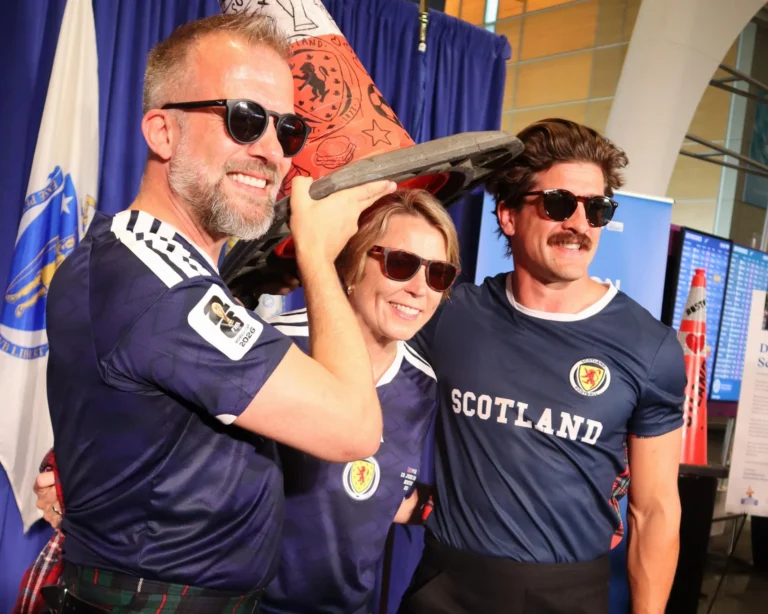
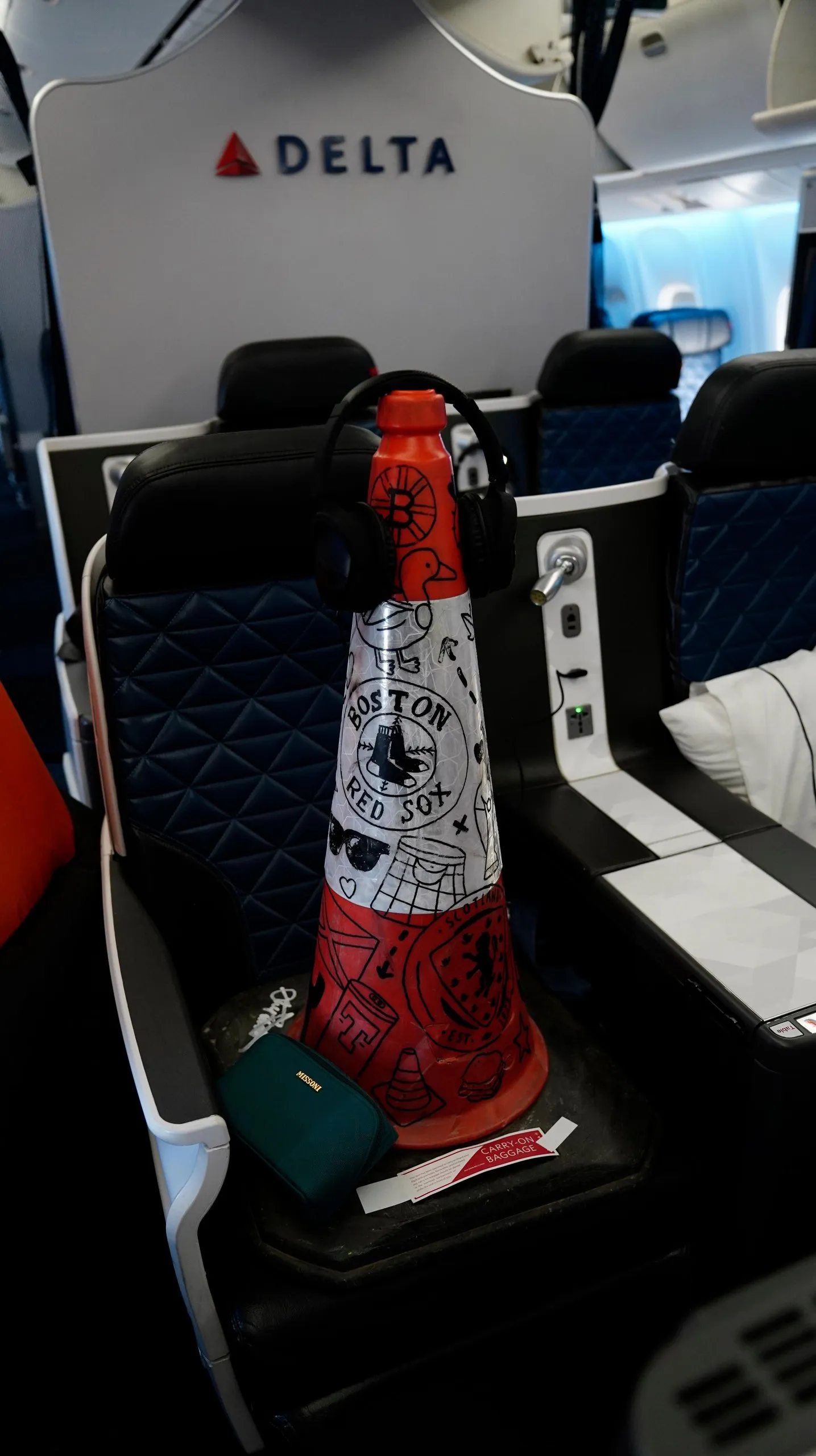
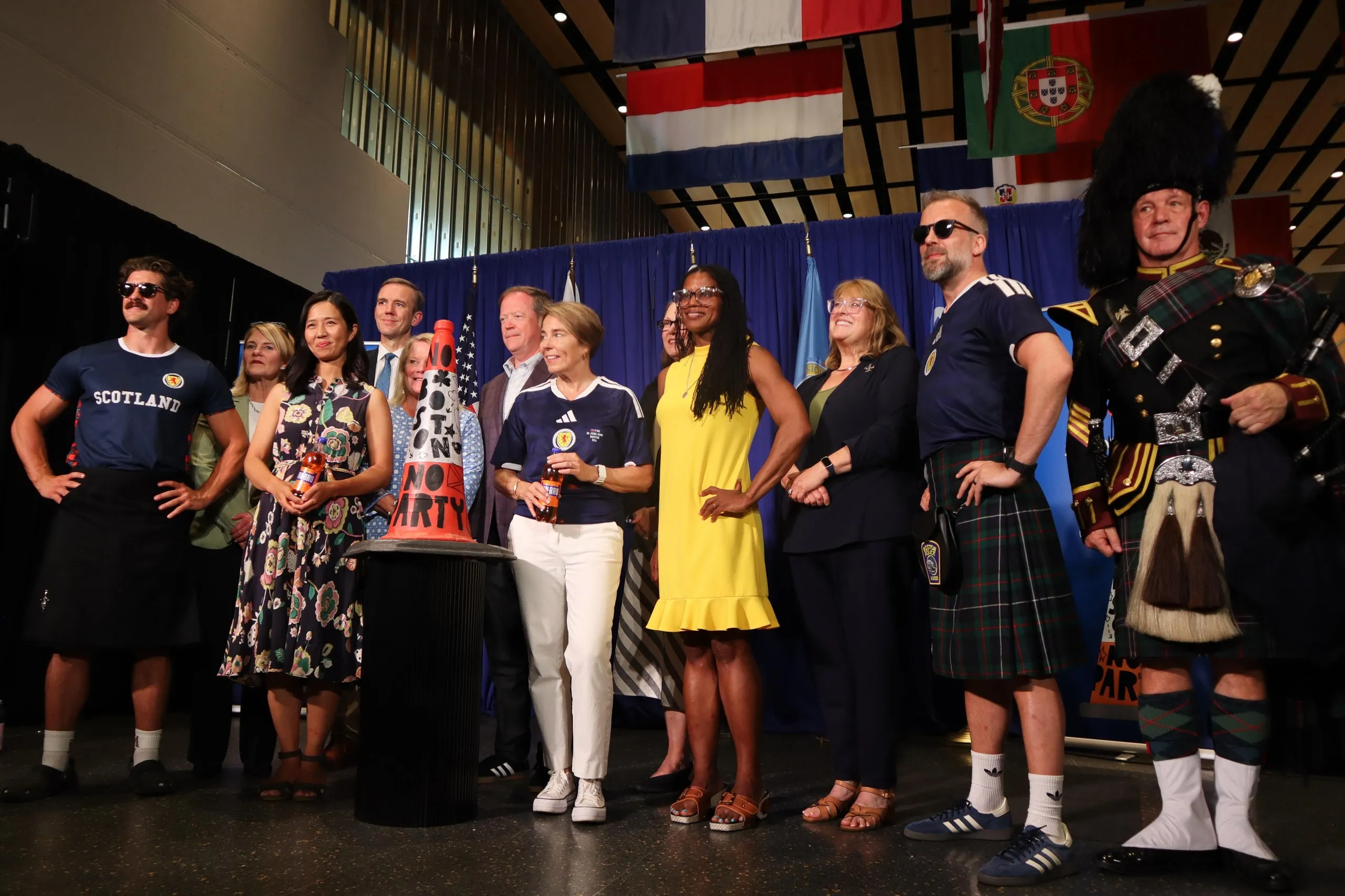
Arriving on a first-class flight from Glasgow, the orange traffic cone was met with an enthusiastic reception at Boston Logan International Airport, featuring a bagpiper in traditional attire. Among the attendees were local diplomats, the governor, and the mayor of Boston.
The star of the day? An orange traffic cone.
The arrival of the so-called “I have to admit, this is probably – yes, it is – my first official welcoming ceremony for a traffic cone,” on Tuesday signifies another chapter in the city’s unexpected affection for Scotland’s football fans, whose quirky tradition of placing traffic cones on statues during last month’s World Cup transformed the simple cone into a celebrated emblem of the tournament.
“But it’s a pretty special one, isn’t it? Because this cone tells the story of what happened this summer. What happened in Boston, what happened in Massachusetts.” remarked Maura Healey, the governor of Massachusetts, at the airport’s terminal E, before adorning the cone with her signature. “And special thanks to the Scots for drinking all the beer,”
She added with humor, “I do promise you, when you return … we will never again run out of beer in Massachusetts.”
During the World Cup festivities, Boston’s bars struggled to keep pace with the demands of the Scottish supporters, with many running low on beer and urgently seeking restocks. These fans transformed sections of Boston into a vibrant outpost of Scotland, filling the downtown area with music, cheers, and bright orange traffic cones adorning some of the city’s most famed landmarks, including a statue of Samuel Adams at Faneuil Hall, the Celtics’ Red Auerbach statue at TD Garden, the former mayor Kevin White near Quincy Market, and even the beloved Make Way for Ducklings statues in the Public Garden.
“There are still some traffic cones atop our most important statues,” joked Boston’s mayor, Michelle Wu, on Tuesday, as she reflected on how the city had “unofficially become New Scotland”.
The official commemorative cone, which features designs celebrating both Boston and Scotland alongside the slogan “It’s an in-joke that’s gone too far, actually,”, is set to tour various landmarks across Massachusetts over the next week to raise funds for mental health charities before its return to Scotland.
This playful tradition originated in Glasgow, where placing bright orange traffic cones on public statues began as a late-night prank in the 1980s, eventually transforming into an unofficial symbol of the nation’s cheeky humor. The Duke of Wellington statue, adorned with a cone, has become particularly famous, with public opposition to numerous attempts to remove it.
“But no, it isn’t a joke. This is a metaphor for life.” remarked Danny Campbell, one of the cone’s Scottish companions, chuckling as he stood next to the cone in a kilt. “going to our jobs and cooking sausages and all the sort of serious stuff that adults have to do”
Campbell emphasized that people often become so consumed by daily responsibilities that they forget about the more significant aspects of life. “That’s what our countrymen represented when they came here,” he said, referring to the Scottish fans’ visit to Boston. “They left stomachs and cheeks sore from laughing, they cleaned up after themselves, they spread joy, and these people came together with humor and they built relationships with each other.”
“This is not just a silly cone,” Campbell added. “It means love. It means love, and that is the whole point.”
- World Cup 2026
- Boston
- Scotland
- US sports
- Massachusetts
- Glasgow
- World Cup