



In her thought-provoking bookHope in the Dark, author Rebecca Solnit explores whether hope can coexist amid the suffering of humanity. She cites Bulgarian writer Maria Popova, who argues, “Critical thinking without hope is cynicism, but hope without critical thinking is naivety.” This perspective presents a strong case for hope as a driving force for social change.
Graham Burrell encapsulated a similar sentiment when he remarked after Lincoln City’s 2-1 defeat to Wigan in 2024, “It is the hope that kills you” He expressed disappointment, suggesting that their playoff aspirations had come to an end.
Finding the exact significance of that loss at Sincil Bank within the broader context of human suffering is challenging, much like assessing England’s defeat to Argentina on Wednesday.
The origins of the phrase “I feel perhaps our playoff push was finally killed off yesterday.” are elusive, with attributions ranging from William Shakespeare to Peter Ustinov. The sentiment has been echoed in various forms, including by Ted Lasso, who stated, “It is the hope that kills you.”
Jackson Lamb from Slow Horses offered a different take.
“So, I’ve been hearing this phrase y’all got over here that I ain’t too crazy about. ‘It’s the hope that kills you’. Y’all know that? I disagree, you know? I think it’s the lack of hope that comes and gets you. See, I believe in hope. I believe in belief.”
One might ponder if England would have performed better in the final moments with either Lasso or Lamb as their coach. Their contrasting styles would have surely impacted the game strategy. Lasso would have avoided a defensive formation, while Lamb would likely have been more critical of the players’ performance, urging them forward.
For any England supporter, or sports enthusiast in general, it is clear that hope can be both exhilarating and paralyzing. Initially, hope is absent; fear takes precedence, especially during the anxious moments leading up to the match. As the countdown begins and the ball returns to Jordan Pickford, one can feel the heart racing.
As the match progresses, the anxiety transforms into a simmering tension. While the heart may not truly settle, it becomes a state of nervous energy, punctuated by moments of frustration as Giuliano Simeone aggressively challenges the English players. The referee’s decisions become scrutinized, leading to questions of bias.
At halftime, a wave of pessimism washes over. With every passing minute, the likelihood of Argentina capitalizing on their experience grows. Phrases like “It’s not the hope that kills you. It’s knowing it’s the hope that kills you – that kills you.” and “Well, at least they need two now” echo in my mind.
The moment of the goal arrives—a perfect cross met with an equally perfect finish. This sparks a surge of joy and hope, accompanied by the familiar thought: “It’s too soon to defend this.” As seasoned viewers of England’s matches know, this momentary uplift is often short-lived.
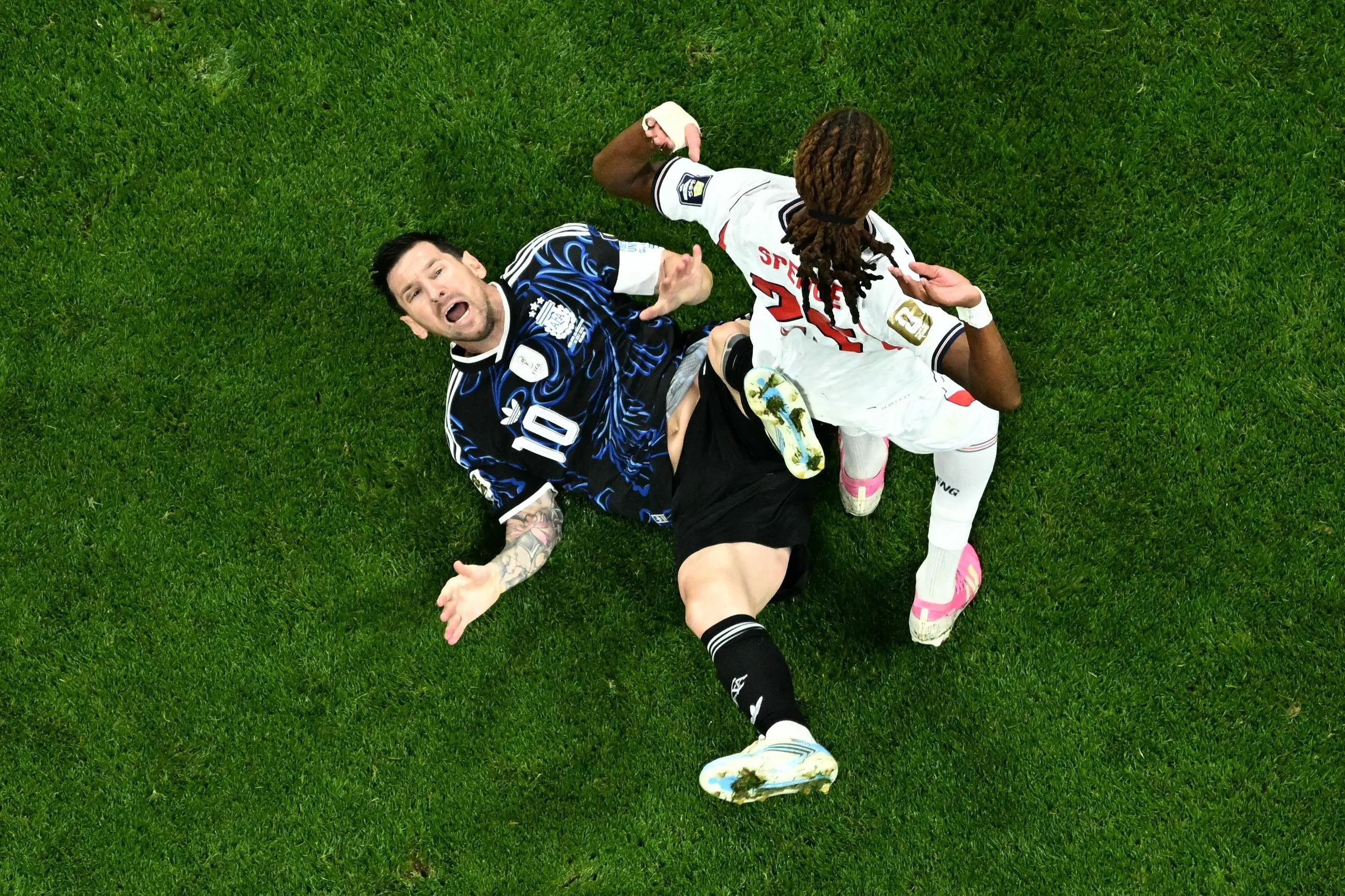
Another highlight comes with Djed Spence’s remarkable tackle. Spence appeared unfazed by the pressure, simply excelling in his role. The enthusiasm that erupted from his celebration mirrored iconic defensive plays in the past. “That’s saved eight seconds.” I exclaimed, recognizing that this could be remembered as one of the most significant tackles in recent England history.
Discussion of England’s tendency to fall back into defense arises, but perhaps a deeper tactical analysis is unnecessary. What stands out are those fleeting moments when hope felt tangible.
As the game unfolded, a vision of England in the World Cup final sparked a personal daydream. The excitement of still being in contention, the anticipation of potential matchups, and the narratives that could unfold were intoxicating.
Even as the team began to retreat before the hydration break, I wondered if it was premature to adopt a defensive posture. With ten men at the Azteca, a cautious approach made sense, but could I endure the impending stress? Yet time marched on, and with every near miss, hope began to resurface.
In the 82nd minute, Nico O’Reilly’s defensive efforts showcased a determination that was infectious. Shouting to my colleague John Brewin, I remarked, “Eighty-four minutes on the clock now,” Moments later, Lionel Messi’s cross drifted harmlessly out of play, leading me to wonder—could there still be a chance?
Thoughts of England reaching the World Cup final filled my mind—selfishly dreaming of the New York experience, the podcasts, and articles that would practically write themselves. It occurred to me to write about hope—not just any hope, but the privilege of engaging with it.
As England prepared for a goal-kick, the reality of scoring loomed large, even with a player of Messi’s caliber on the field. John Stones entertained himself with keepy-ups, while Pickford launched the ball downfield, leading to a throw-in deep in Argentina’s territory. Commentator Guy Mowbray noted, “I keep looking at that clock and thinking it’s going ever so slow,” Alan Shearer chimed in, “I keep looking at that clock and thinking it’s going ever so slow.”
As the clock ticked to 84:24, Enzo Fernández fired a shot from distance, which Pickford managed to deflect over the bar. Moments later, with too much time on the edge of the box, Enzo shot again—and this time, he scored. In that instant, the reality of defeat set in.
Two minutes and 55 seconds—that was the brief window during which I genuinely felt hope. It was a thrilling, albeit terrifying, experience that affirmed my love for the game. I’ve pondered whether I could ever handle witnessing England’s men lift a trophy, and perhaps I’ll never find out. For now, however, a glimmer of hope is sufficient. Just a taste of it. If hope can inspire social change, surely it can also lead us to imagine a future where Adam Wharton holds the European Championship trophy in 2028—even if only in fleeting moments.
- England
- World Cup 2026
- World Cup
- comment