


In the United States, it’s common to hear the notion that American athletes would dominate global soccer if not for their commitments to sports like football and basketball, alongside other distractions. Such conversations often come with detailed statistics about height, weight, and speed that can leave one pondering whether Lionel Messi, standing at 5ft 7in, has ever lifted weights. While Rodri likely has, he doesn’t fit the mold of a conventional athletic superstar. Tall yet unassuming, he may not be the fastest player on the pitch, but he has an uncanny ability to position himself effectively during matches.
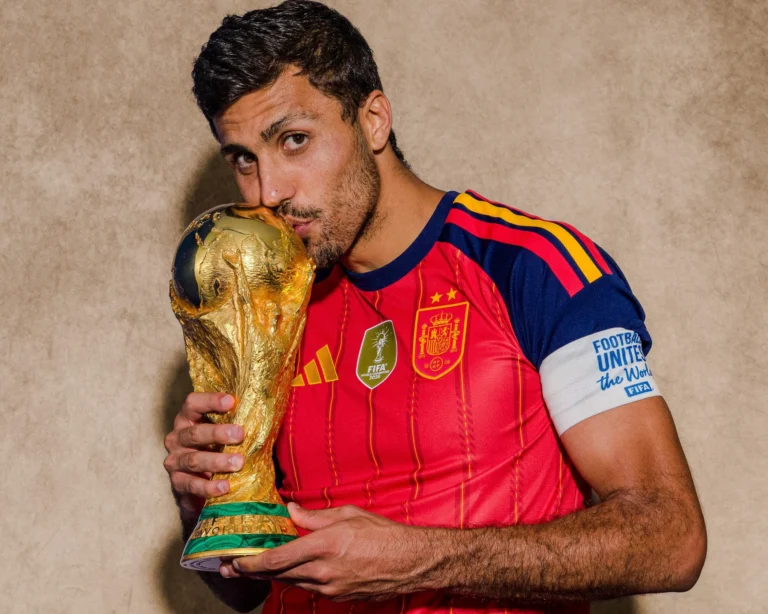
Rodri’s understated presence belies his impact; despite a lack of highlight-reel moments, he was undeniably pivotal in Spain’s World Cup journey, earning the title of player of the tournament. This World Cup has seen various individual talents shine, with Kylian Mbappé leading the scoring charts, trailed by names like Messi, Jude Bellingham, and Erling Haaland. However, the focus on these celebrated scorers often overshadowed the brilliance of Spain’s midfield maestro.
Last year, Mauricio Pochettino highlighted two significant issues with the US system that drives parents to pay substantial fees for youth soccer clubs. Firstly, this financial barrier excludes many potential players from participating. Secondly, it creates pressure on coaches to demonstrate tangible progress, often leading to an emphasis on physical metrics rather than the nuanced skills essential for elite performance. Carli Lloyd and several youth coaches have echoed this sentiment, pointing out that the most critical attributes for a top footballer—technical skill and tactical acumen—are hard to quantify.
Currently, there is no equivalent to Rodri in American football, nor in English, French, Argentinian, or German styles—Rodri exemplifies a distinctly Spanish footballing archetype. He is a successor to Sergio Busquets, and in today’s game, Martín Zubimendi is his closest counterpart. As the sport becomes increasingly physical, players like Rodri have carved out a vital role that values intellect over brute strength.
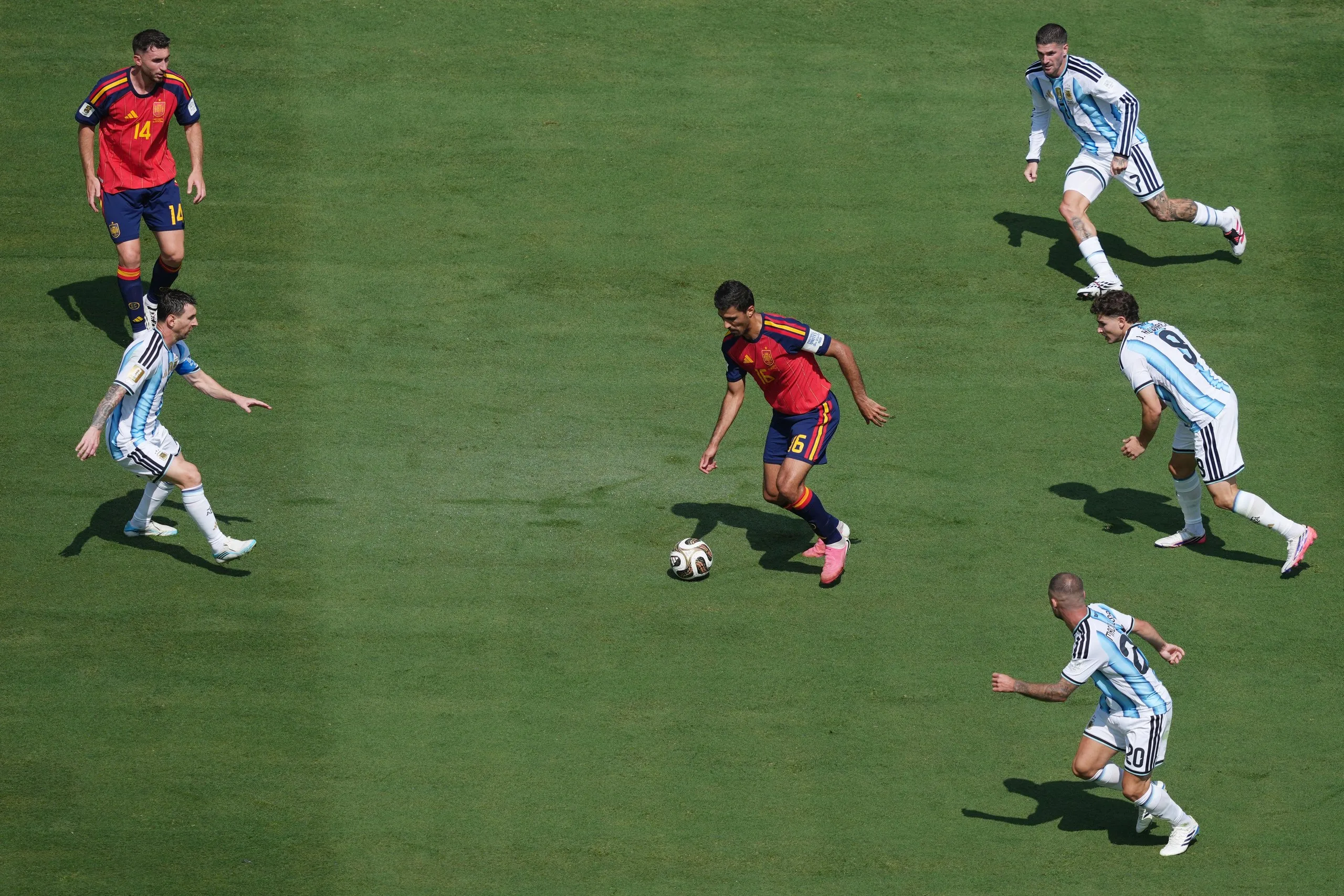
Rodri’s contributions are often subtle and difficult to quantify. He didn’t score or assist during the World Cup, and while his pass completion rate of 93.2% is commendable, it ranked only 44th in the tournament. Filtering out center-backs, he still placed 18th in pass completion. In terms of tackles per game, he was 22nd, and for interceptions, he ranked 450th. Even in fouls committed—a category in which he has excelled, following the tradition of Manchester City’s Fernandinho—he was just 97th. His record of 756 passes showcases his ability to control the game, as his presence in key areas often discouraged opponents from attempting to penetrate his zone. His influence was significant in limiting Lionel Messi’s involvement in the final match.
However, doubts lingered about Rodri’s future performance just months after he was named player of the tournament at Euro 2024, following an injury to his anterior cruciate ligament that sidelined him for the entire 2024-25 season. His absence was telling, as it coincided with a downturn in Manchester City’s performance.
Rodri’s comeback was not without challenges; his performance during the Club World Cup was less than stellar, and he was forced off during a defeat to Al-Hilal. He managed to start only 17 league matches last season. Pep Guardiola noted that fans might not see the best of Rodri until the World Cup, a sentiment echoed by many who observed that the tournament’s standout players often had avoided the rigors of a grueling club season.
Ultimately, Rodri’s narrative is one of remarkable resilience—a player who has triumphed against the odds, adding World Cup accolades to his European achievements. Ironically, in a nation that idolizes individualism and amidst a World Cup that has prominently showcased celebrities, the standout performer turned out to be a team-first player, marking the first time in 24 years that a non-creator received the Golden Ball.
- Spain
- World Cup 2026
- World Cup
- analysis