


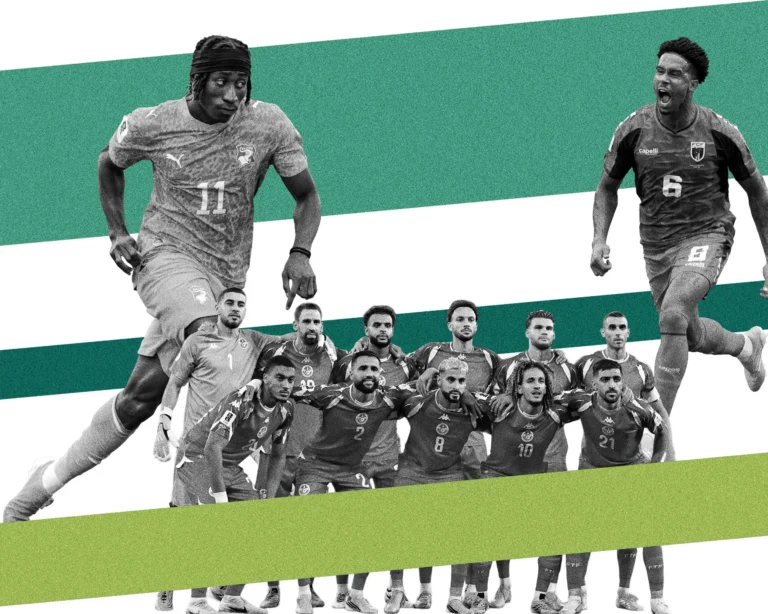
On Monday evening local time at New York New Jersey Stadium, Senegal takes on Norway in a pivotal match that not only affects qualification from Group I but also shapes the perception of African teams’ performances at this World Cup. While Senegal is undoubtedly a skilled team, and may soon be recognized as the reigning African champions by the Court of Arbitration for Sport, the pressure is on for Africa to deliver a standout display.
No continent has benefited more from the World Cup’s expansion than Africa. At the 2022 tournament in Qatar, the Confederation of African Football (CAF) was allocated five of the 32 spots, accounting for 16% of the field. This year, nine slots were automatically assigned to CAF, with a tenth secured through DR Congo’s victory over Jamaica in an interconfederational playoff in March. For years, CAF lobbied for increased representation, arguing that it was unjust to have only five slots for its 54 member nations, especially compared to Conmebol, which had four slots plus a playoff for its 10 members (21% of the field). The justification for this disparity was based on Conmebol teams winning the World Cup nine times, whereas CAF teams had reached the quarter-finals only three times. By the end of the last World Cup, Conmebol teams had achieved 10 victories, while CAF celebrated its first semi-finalist.
CAF’s rationale for additional slots was that greater representation would enhance the opportunity to showcase talent, reducing the risk that African contenders would be hindered by injuries, poor form, or bad luck. To validate CAF’s increased allocation, at least five of its teams need to advance to the knockout stage. So how has the situation unfolded?
Struggles and Setbacks
Starting with the negatives, Tunisia has struggled significantly, hampered by poor leadership. They dismissed coach Sabri Lamouchi following a 5-1 defeat to Sweden, only to suffer a 4-0 loss to Japan under Hervé Renard, their seventh coach since qualifying began. South Africa exhibited puzzling tactics by employing a back five in their opening match, leading to a heavy defeat against Mexico. A late penalty salvaged a draw against Czechia, but they can still progress to the knockout round with a win against South Korea in their final group match. However, South Africa’s passive approach not only hinders their performance but also feels like a departure from the progressive football that characterized the team under Hugo Broos.
Algeria’s defensive frailties, previously exposed by Nigeria in the Africa Cup of Nations quarter-finals, were again evident in a 3-0 defeat to Argentina. If a defense struggles to contain Akor Adams, it is unlikely to manage against Lionel Messi. The upcoming match against Jordan represents a critical opportunity to regain stability and confidence.
Promising Performances
On a brighter note, Morocco and Côte d’Ivoire have shown glimpses of potential. Both teams took early leads against former World Cup champions but were unable to secure victories. Morocco performed admirably against Brazil, dominating play before the first-half hydration break, and should have scored more than just one goal. Their 1-0 win over Scotland also reflected a game they could have won by a larger margin.
Côte d’Ivoire held their own against Germany for most of the match, even taking the lead in an exciting and competitive encounter. While they adopted a defensive posture and sought to counterattack through players like Amad Diallo and Yan Diomande, they did not merely bunker down; it was a well-matched contest. Ultimately, Germany’s greater depth proved decisive, with Deniz Undav scoring twice as a substitute.
Senegal might reflect similarly after their match against France. Although a 3-1 loss is not dishonorable, they played well against the 2018 world champions in the first half before fading in the final stages. This late-game decline is a troubling trend for African teams, potentially indicating a lack of depth compared to the top teams globally, or perhaps tactical issues, mental barriers, or doubt regarding their ability to compete with elite European and South American sides.
Other Notable Performances
In contrast to the trend, Ghana secured a late victory over Panama. Despite not playing exceptionally well, they demonstrated resilience typical of a Carlos Queiroz team. Queiroz’s former squad, Egypt, after failing to maintain a lead against Belgium, showcased their strength by overwhelming New Zealand in the second half, placing them at the top of Group G.
Other African nations have lower expectations. The two underdogs, Cape Verde and DR Congo, have performed admirably. DR Congo initially fell behind to Portugal but responded strongly, equalizing and managing to hold their highly regarded opponents in check. The challenge remains whether they can replicate this performance against Colombia and Uzbekistan. Cape Verde, having held Spain to a draw, then engaged in a thrilling match against Uruguay.
So, where does this leave us? Egypt, Morocco, and Côte d’Ivoire appear poised to advance. Ghana has a strong chance, while Cape Verde and DR Congo exceed expectations; Algeria must secure a result on Monday, Senegal may be vulnerable to a harsh draw, South Africa retains a slim opportunity, and Tunisia’s chances are over.
The anticipated total to advance may hover around five or six teams, necessary to justify the expanded representation. The next critical step is converting leads against prominent teams into actual victories.
- This is an extract from Soccer Desk: World Cup edition, a newsletter that will run regularly during the tournament. Subscribe for free here.