


How long can the wounds of football rivalry last? Historical events like Brazil’s Maracanazo or England’s memories of Diego Maradona’s ‘Hand of God’ linger in the collective consciousness. For Algeria, the hurt stems from the 1982 World Cup, an episode dubbed ‘the Shame of Gijón.’ Nearly 44 years later, the opportunity for vindication arises as Algeria prepares to face Austria in a crucial group match that could secure their place in the knockout stage.
In the summer of 1982, Algeria was a nascent nation, emerging from 132 years of colonialism just two decades prior. The World Cup in Spain represented a rare opportunity for the country to showcase its identity on the global stage, and the national team seized this moment with gusto.
Algeria commenced their campaign with a stunning 2-1 victory over West Germany, the reigning European champions. Following a loss to Austria, they rebounded emphatically by defeating Chile in their final group match. This sequence of results set the stage for a fateful encounter, as West Germany and Austria were aware of the outcome they needed to qualify for the next round.
Salah Assad, who participated in all of Algeria’s matches during the tournament, recalls the atmosphere leading up to that decisive game.
“In truth, we knew they would do it beforehand,”
he told Competition in a recent interview. “We knew they were going to conspire against us and ensure Algeria didn’t qualify. So we went out shopping, buying gifts for our loved ones, fully expecting to be on a plane home the next morning.”
His foreboding prediction came to fruition when Horst Hrubesch scored for West Germany in the 10th minute, after which both teams appeared to agree silently to ensure the match would end in a predetermined manner. The integrity of the competition faded, with players seemingly stalling for time. At one moment, Uli Stielike hesitated before passing, while Paul Breitner leisurely dribbled in his own half.
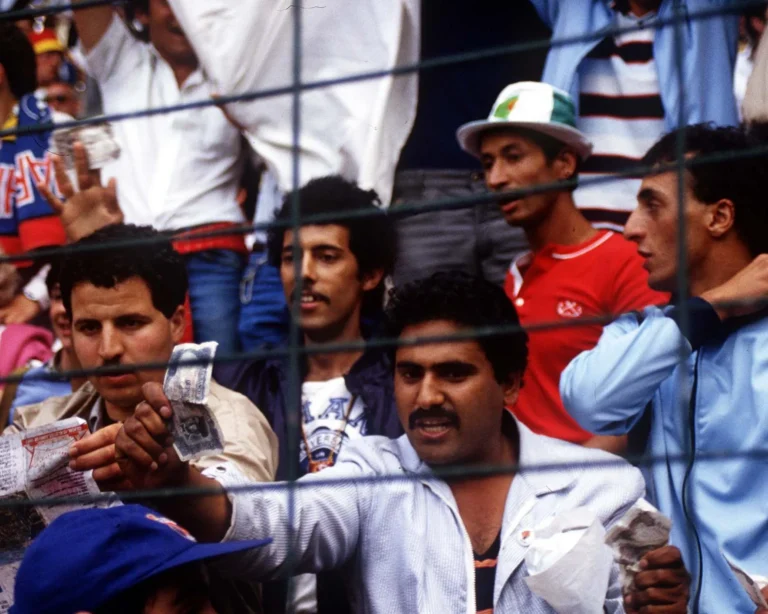
Fans in attendance expressed their frustration vocally. An Algerian supporter attempted to storm the pitch, while the crowd began chanting,“¡Que se besen!”
– “a grave and serious insult” – as the match progressed. The Gijón audience, siding with the aggrieved Algerians, shouted“¡Argelia, Argelia!”
The tension was palpable as the local supporters turned against the unfolding farce.
Statistical reviews later revealed what many had suspected; in the second half, neither team recorded a shot on target despite both completing over 90% of their passes.
West Germany’s coach, Jupp Derwall, dismissed allegations of collusion asa grave and serious insult
, while Hans Tschak, the Austrian delegation head, had a far less measured response.
“If 10,000 ‘sons of the desert’ in this stadium want to manufacture a scandal,”
he stated, “it only proves they lack education. Some sheikh crawls out of an oasis, gets a whiff of World Cup air after 300 years and thinks he has the right to open his mouth.”
Algeria’s football federation lodged formal complaints with FIFA, but these efforts yielded no results. However, the incident prompted FIFA to implement a rule requiring that final group matches be played simultaneously to prevent similar situations.
“My father’s generation was traumatised by that game,” shares Ghiles Sahnoun, a passionate football supporter from Algiers.They turned it into a disgrace, and I don’t think his generation ever forgave either of those teams.
A generational divide exists among Algerians as they approach Saturday night’s match in Kansas City, which kicks off at 3 AM BST on Sunday. For older supporters, defeating Austria would symbolize more than just securing three points; it represents an opportunity for revenge. In contrast, younger fans inherit the grievance but experience it differently.
Ihab Fridj, a 25-year-old fan from Algiers, explains,
“They turned it into a disgrace, and I don’t think his generation ever forgave either of those teams.”
Assad, however, encourages a different mindset.
“My friends and I are all on the same page. We want to beat Austria. It isn’t about hatred or nursing a long grudge. But everything that happens in the world is connected to history and what came before. This would be a way of righting an old wrong.”
the former winger remarked. “Every generation has its own story,”
Interestingly, a draw in the upcoming match would likely see both teams progress, as they are currently positioned second and third in Group J, trailing Argentina. If a single point guarantees Algeria’s advancement, they might prefer a draw over a victory, with the runners-up set to face the Group H leaders, likely to be Spain. Yet, Sahnoun expresses a desire for a decisive win, stating,I think everyone wants a clear victory, precisely to avoid repeating what happened in 1982.
While nothing can truly erase the pain from June 25, 1982, a favorable outcome on Saturday night could offer a sense of closure to a nation deeply passionate about football.