


With a historic roster of 10 African nations participating in the first-ever 48-team World Cup finals, the lingering question remains whether any of them can surpass Morocco’s groundbreaking semi-final run in Qatar.
The dream of an African team clinching the World Cup seemed feasible when Cameroon achieved the incredible feat of defeating the defending champions, Diego Maradona’s Argentina, during the opening match of the 1990 tournament. This remarkable journey ended with a narrow quarter-final loss to England. However, in the eight tournaments since then, African teams have consistently fallen short of their potential.
Legendary player Pelé famously predicted that “An African nation will triumph at the World Cup before the year 2000.” The fact that we are still awaiting this moment is not due to a lack of skill, but rather the result of self-inflicted setbacks, as Joseph-Antoine Bell, a former goalkeeper for Cameroon’s 1982, 1990, and 1994 World Cup squads, bluntly states.
“Our football is stagnating… we fail to push ourselves toward excellence,” Bell asserts, known for his insightful critiques of Africa’s football shortcomings. “Even before the 1960s, Africa produced talented players in Europe, indicating we have the necessary talent. What have we achieved at the World Cup? Now that the tournament has expanded to 48 teams, are we naive enough to believe we have better odds?”
“During the 2010 World Cup, some claimed that an African nation would win simply because the tournament was hosted on the continent. Nonsense. When it comes to winning [the World Cup], our chances are not increasing.”
This summer, Algeria, Cape Verde, Côte d’Ivoire, DR Congo, Egypt, Ghana, Morocco, Senegal, South Africa, and Tunisia will represent Africa, with notable absences from Cameroon and Nigeria. “While many view Cameroon as the frontrunner in African football, Morocco is the true leader, being the first to reach the knockout stage in 1986 and the first to make it to the semi-finals in Qatar,” Bell points out.
“I believe they stand the best chance for Africa this World Cup, alongside Senegal, Côte d’Ivoire, and possibly Egypt, which has shown consistency in qualifying. If you consistently qualify and improve each time, you can aspire to advance further.”
However, it’s crucial to remind all these teams that simply advancing past the group stage can no longer be the goal, especially with 48 teams involved, as it differs significantly from the previous 32-team format. The aim must now be winning [the World Cup], and the gap to the trophy has shifted.”

There has been no shortage of off-field drama, highlighting the farcical mismanagement affecting several African nations heading into the tournament, which starkly reflects the incompetence of football federations tasked with showcasing the continent’s talents.
Pape Thiaw, the head coach of Senegal, initially abstained from boarding the flight in Dakar to the World Cup, protesting the Senegal Football Federation’s failure to pay several months of wages and his lack of a contract since leading the team to the Africa Cup of Nations final in January. It required a last-minute intervention from the Senegalese government to resolve the deadlock.
“Achieving status as the world’s best team requires not only skilled players and a competent coach but also effective governance to support them,” Bell emphasizes. “The entire framework must be in place. When your team hails from a country that neglects to pay the coach’s salary, it’s an affront to nations where hard work leads to success. We must begin to take this seriously.”
“Winning the World Cup demands more than just talented footballers; it requires people and managers who think strategically, allowing players to perform effectively on the field.”
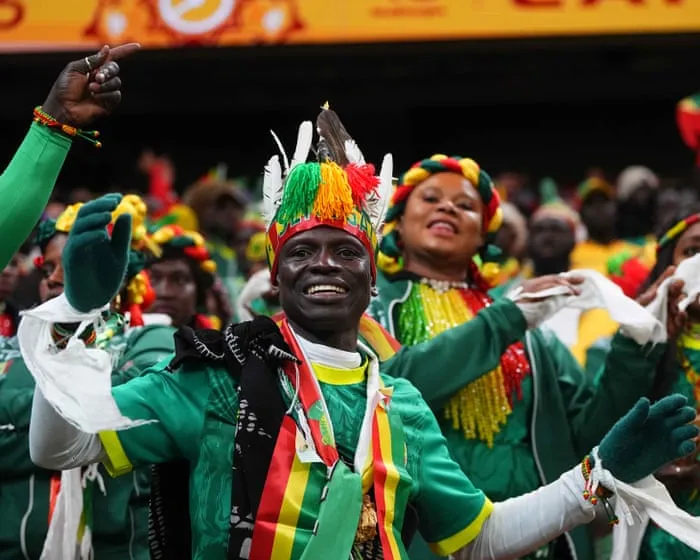
Amid the uncertain prospects for Africa’s squads, the inability of countless fans from qualifying nations to secure travel visas has created a bitter sense of exclusion from what should be a celebratory event. “The absence of vibrant, enthusiastic African supporters due to travel challenges, soaring costs, and visa complications for the United States is a significant factor,” notes Segun Odegbami, a former captain of Nigeria and 1980 Africa Cup of Nations champion.
“I have been waiting for 14 months to secure an interview date at the US embassy in Abuja… I am not a first-time visitor. I’ve had to forgo the chance to attend.”
Given that Odegbami was present in the US for the 1994 World Cup as the Super Eagles’ administrative manager, his situation is particularly poignant. Yet, he remains optimistic about what the next five weeks could signify for Africa’s World Cup journey. “We have evolved beyond merely participating; we are now contenders aiming for a top-four finish. We are on the brink of something great.”
Opening that door to the final – and ultimately the trophy – presents a formidable challenge, especially in matches decided by narrow margins, demanding a high level of professionalism. Nevertheless, nothing would bring joy to the continent’s 1.5 billion people more than having a chance to celebrate at the MetLife Stadium on July 19.