


Following the exhilaration of their earlier performance, England faced a sobering reality in their match against Ghana. The exhilarating energy witnessed in Dallas after half-time seemed a distant memory as England struggled to find their rhythm against a resolute Ghanaian side.
Despite the draw, England’s aspirations for the tournament remain intact. Yet, the match felt akin to having one’s enthusiasm gradually drained, as Ghana’s defensive tactics stifled England’s creativity throughout the game.
The decisive moment nearly arrived when, in the closing stages, England discovered a rare opening in Ghana’s defensive wall. With just minutes left on the clock, Reece James delivered a precise cross to Nico O’Reilly, whose header struck the crossbar. The rebound fell invitingly for Harry Kane, who had a clear sight of goal.
As Kane prepared to shoot, one could almost envision the childhood dreams he harbored of scoring in this iconic stadium, home to the New England Patriots. Instead, his shot soared well above the bar, leaving the ball to bounce away into the distance.
A scoreless draw is not a death knell for England’s ambitions, but Ghana posed significant challenges throughout the match. Under the tactical guidance of Carlos Queiroz, Ghana’s defense was formidable, effectively neutralizing England’s offensive efforts.
Queiroz’s strategies successfully thwarted England, who initially displayed promise but soon fell into a pattern of cautious play, losing their creative edge. Questions linger regarding whether this performance is indicative of deeper issues.
This match offered little insight into how England would perform in knockout stages or against teams willing to engage in open play, rather than employing a suffocating defensive strategy.
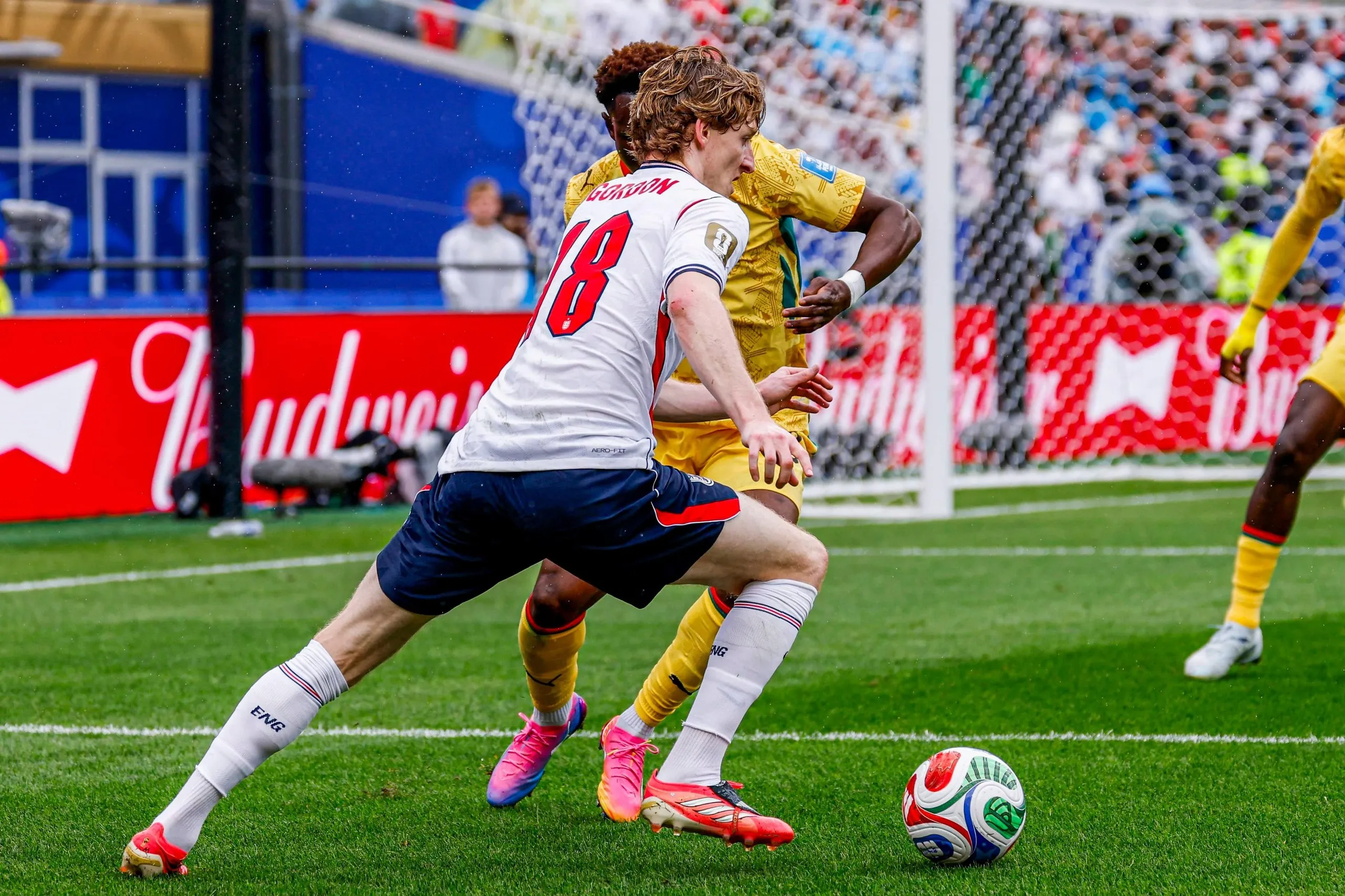
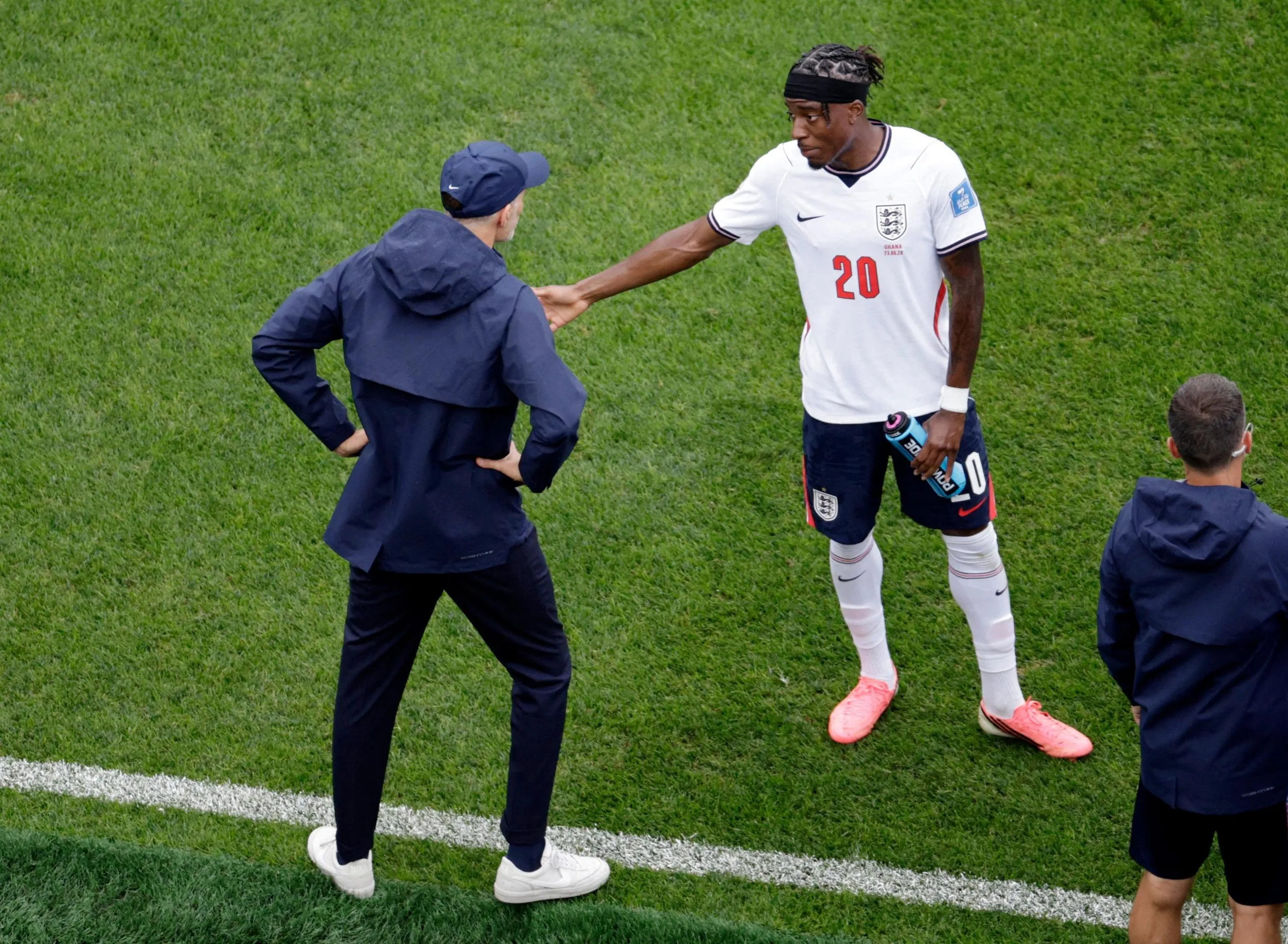
Concerns abound for manager Thomas Tuchel, particularly regarding his choice of wingers. Anthony Gordon and Noni Madueke were revealed as limited contributors, repeatedly relying on the same predictable movements and failing to adapt to the evolving dynamics of the match.
Despite the wealth of talent available, England’s starting wingers have combined for only four goals across 34 appearances. This statistic raises questions about their selection and effectiveness, especially when considering players like Cole Palmer and Phil Foden who were absent.
It’s essential to recognize that creativity in football is often a collective endeavor, relying on movement and teamwork rather than individual brilliance. England must find ways to enhance their offensive play, introducing unpredictability rather than sticking to familiar patterns.
The atmosphere in Foxborough was reminiscent of a quaint countryside, marked by mist and greenery. England’s supporters donned shorts and ponchos, displaying banners representing their clubs from across the country.
The stadium, characterized by its wide-open design, created an inviting yet slightly whimsical ambiance. Prior to the match, the surroundings felt festive, reminiscent of a community fair.
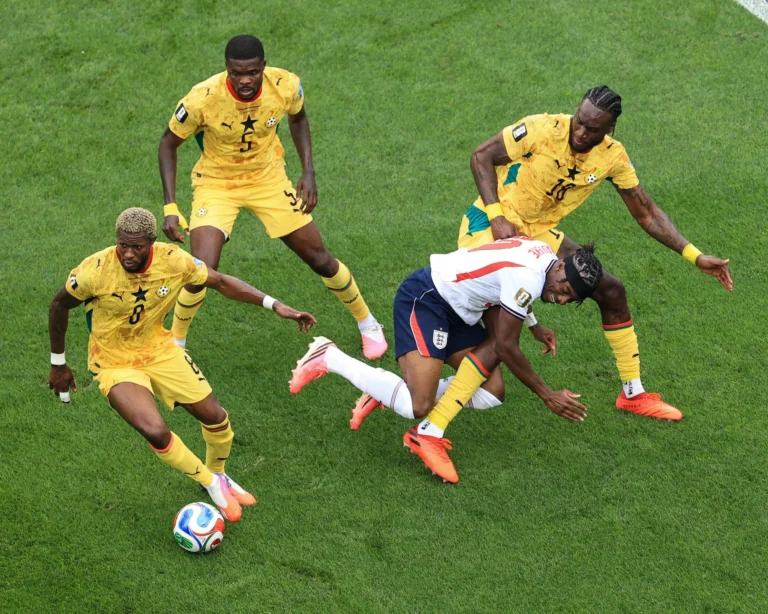
Initially, England appeared lively, maintaining possession for an impressive three minutes before launching an attack down the right flank for Madueke. However, the anticipated breakthrough never materialized as Madueke hesitated, opting not to utilize his right foot, which allowed Ghana to regroup.
With just 14 minutes played, England dominated possession at 86%, completing 138 passes compared to Ghana’s mere 13. Ghana’s defensive setup resembled a thick, cohesive barrier that stifled England’s attempts to penetrate.
The first half was marked by England’s inability to capitalize on their dominance, as Ghana resorted to passive play, hoping to frustrate their opponents.
As the match progressed, England lacked the necessary urgency or tactical flexibility, allowing the game to drift without any decisive action.
After 65 minutes, Tuchel introduced Bukayo Saka, who has the potential to enhance England’s attacking options. While the team will gain valuable insights from this experience, they depart without a clearer path towards improving their performance in the tournament.
- England
- World Cup 2026
- World Cup
- analysis