


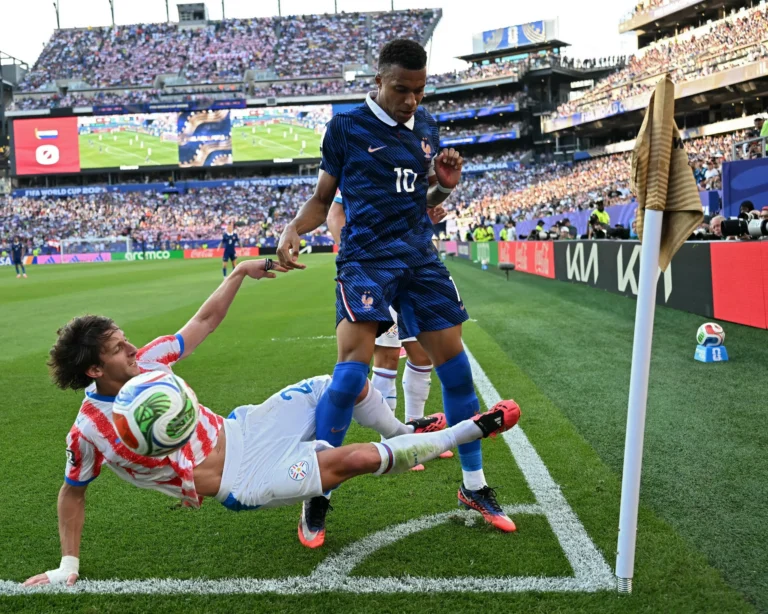
The atmosphere was electric when France secured their spot in the quarter-finals, as the squad rushed from the center circle to celebrate with their fans at Philadelphia Stadium. An exuberant pile-on ensued, marked by shouts and triumphant chest-thumping, led by the ever-energetic Kylian Mbappé.
Once the celebrations faded, the French captain addressed the cameras and framed the game as more of a struggle than a standard match. He remarked on the challenge posed by Paraguay, a team that persistently disrupted their rhythm. “We knew what kind of match we were going to have,” Mbappé stated. “But we know how to get our hands dirty.”
In a more subdued tone, coach Didier Deschamps analyzed the encounter, acknowledging its difficulties. “It was a tough game but, as I said to the players, we’ve had easy games so far. It is good to face a tough one,” he explained.
Deschamps emphasized that his players were prepared for a challenging match, adding, “I have prepared the players, they were expecting this game. I do not want to criticise Paraguay; each team plays the way they want. We looked at playing football but the opponent did what they wanted to do. Playing low block requires less effort. But even in today’s heat we should have played faster in transition.”
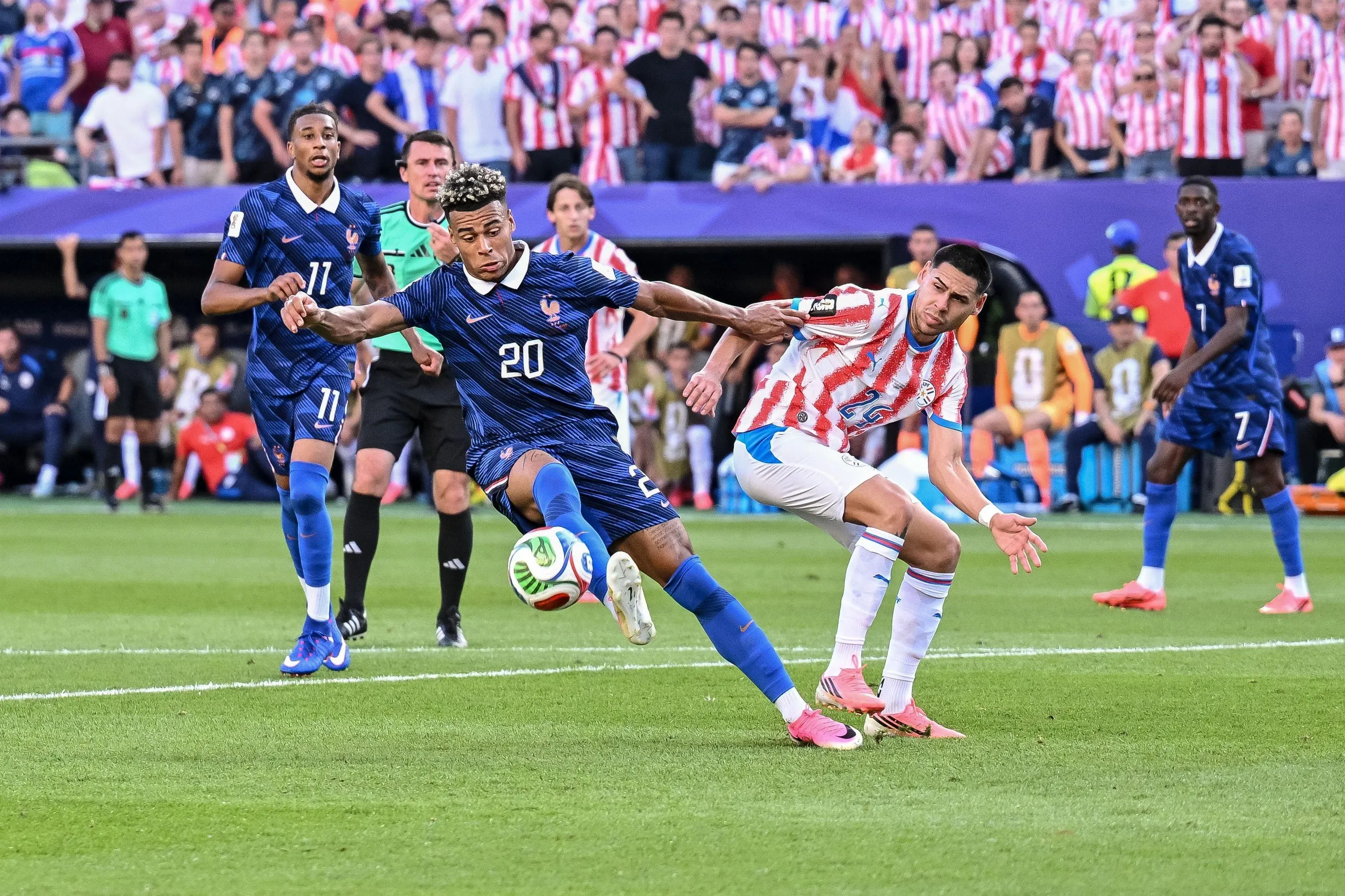
While acknowledging Paraguay’s tactical disruptions, particularly the frustrating performance of Matías Galarza, it became evident that the match was primarily about France’s struggle. This marked their least convincing performance in the tournament, as they failed to manage a shot on target until the 55th minute, with only one additional shot— the penalty that secured their win—coming before a late surge where Mbappé was thwarted by Paraguay’s goalkeeper, Orlando Gill, multiple times during added time.
France recorded the fewest shots on target and the lowest expected goals (xG) of their World Cup run. Paraguay’s strategic shift to a five-man defense, alongside a compact midfield, effectively stifled France’s attacking options, leaving even talents like Michael Olise unable to penetrate. Ousmane Dembelé and Bradley Barcola also faced significant struggles, contributing to a collective sense of disarray that will likely intrigue Morocco, their next challengers, who are similarly adept at shutting down games.
There were indeed external factors affecting the game’s dynamics. The intense Philadelphia heat, with temperatures soaring to 38C, likely played a significant role, overshadowing Paraguay’s attempt to disrupt. The conditions made it difficult for France to find their rhythm, particularly under the blazing sun.
Ultimately, France was reduced to relying on individual brilliance. Key players, notably Mbappé, sought to resolve problems on their own, and it was in this manner that they clinched the victory. Désiré Doué’s impressive maneuvering created a chance that resulted in a foul by Paraguay’s captain, Gustavo Gómez. Although the referee, Ilgiz Tantashev, missed the infraction, VAR intervened to award a penalty, which Mbappé converted with poise.
Doué, a standout for PSG, delivered his best performance of the tournament, despite only being on the pitch for the final 30 minutes. This game highlighted a crucial takeaway: France faced a significant tactical challenge and frustrating opponents under tough conditions. While they did not play well or create many opportunities, they also managed to keep a clean sheet. For the first time in this World Cup, they turned to their bench for solutions, and it paid off.
Through various tactics, Paraguay effectively neutralized France in Philadelphia, reminiscent of Cape Verde’s performance against Argentina the previous night. This removal of an aura of invincibility may benefit the tournament overall. Deschamps’s squad will need to elevate their play against Morocco in Boston on Thursday. However, in overcoming this challenge, France has reaffirmed their versatility; they can triumph in style or grit, with decisive moments emerging from unexpected sources.
- World Cup 2026
- France
- Paraguay
- World Cup
- analysis