


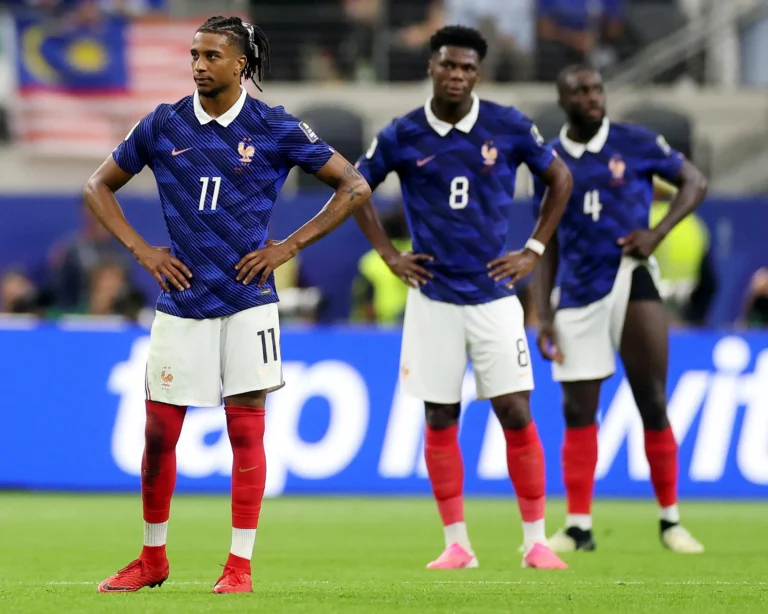
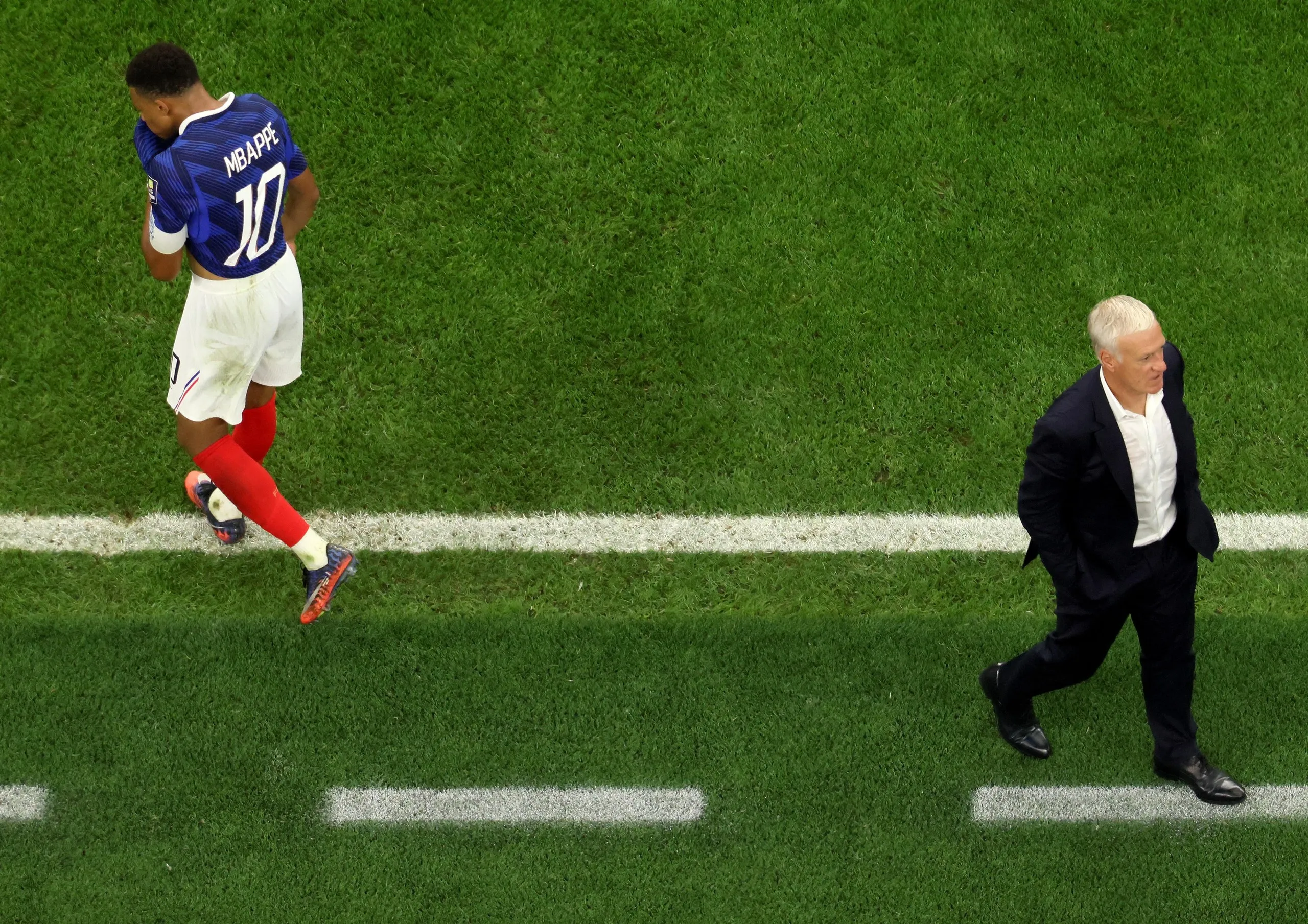
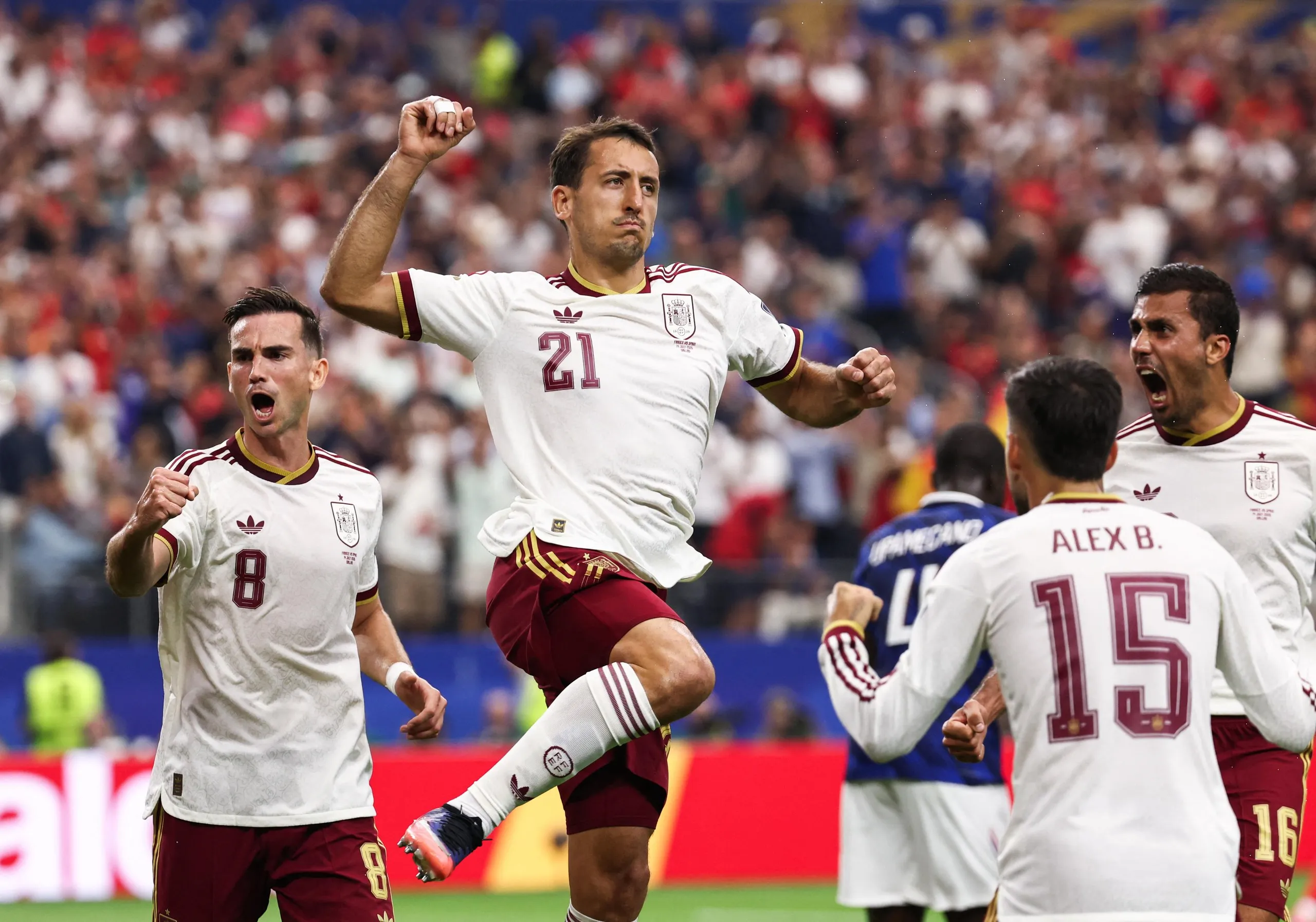
In recent weeks, France appeared poised for a third consecutive World Cup final appearance, but their ambitions were thwarted by a tactically superior Spain in the semi-finals. After falling behind to Mikel Oyarzabal’s penalty in the 22nd minute—the first time France had trailed in the tournament—Didier Deschamps’ team struggled to mount a meaningful response. The match unfolded predictably, with no dramatic resurgence from Kylian Mbappé, leading to a disappointing conclusion for the French side.
France’s Attack Lacks Cohesion
France’s star-studded offense had garnered widespread acclaim over the past six weeks, having netted 13 goals in their initial four matches. However, against Spain, the forwards failed to establish meaningful connections, exposing their lack of finishing prowess.
By the time they found their first shot on target, France was already down 2-0. Notably, Mbappé, who ranks as the second top scorer in World Cup history, was unable to register a shot on goal. As seen in previous matches, his effectiveness was diminished as he frequently dropped back into midfield, with his first attempt not arriving until well into the second half.
Michael Olise, who had drawn comparisons to Michel Platini for his playmaking skills in the group stage, lost possession 20 times and struggled to find his rhythm. Ousmane Dembélé didn’t challenge goalkeeper Unai Simón until the dying minutes of the match. Among the starting forwards, only Bradley Barcola made a notable defensive contribution, while Lucas Digne struggled to contain Lamine Yamal.
As the knockout phase progressed, France’s forwards, who had previously thrived on fluid positional interchange, became increasingly isolated. Spain effectively controlled the midfield, keeping the French attackers distant from one another and disconnected from the rest of the team.
Adrien Rabiot was the only player from France who consistently penetrated the Spanish lines, but a yellow card in the 10th minute hampered his effectiveness. Deschamps’ decision to substitute him at halftime significantly weakened France’s grip on the midfield. Alongside the recently injured Aurélien Tchouaméni, who often played too conservatively to influence the game, Manu Koné was unable to replicate his impressive display against Morocco.
Despite making several like-for-like substitutions, Deschamps could not alter the game’s momentum. Desiré Doué and Rayan Cherki found themselves trapped in isolated areas of the pitch, while Théo Hernandez’s performance was no better than Digne’s against Spain’s right flank.
Spain’s Midfield Dominance Persists
It is unlikely that France underestimated their opponents; Deschamps consistently referred to Spain as the tournament favorites. Whether this was a genuine appraisal or a tactic to alleviate pressure from his squad, it was supported by their prior encounters.
Including the last Olympic final, France has now suffered four straight defeats to Spain, all in knockout stages. The superiority of Spain’s midfield proved decisive in these clashes. For the second time in three years, France found themselves overwhelmed by a midfield trio of Rodri, Fabián Ruiz, and Dani Olmo.
This midfield dominance is not limited to senior matches; Spain has a clearly defined style replicated across all age groups as part of a cohesive strategy. Conversely, France’s teams often seem constructed in an ad hoc manner, responding to the available talent rather than adhering to a unified plan. Against Spain’s entrenched tactical framework, France’s individual talents struggled to make an impact.
Looking Ahead: The Zidane Era
Deschamps will conclude his 14-year tenure after Saturday’s third-place playoff in Miami. Securing a podium finish in three World Cups would solidify his status as France’s most successful coach, yet many will feel he could have achieved more given the talent at his disposal.
The freedom Deschamps granted his forwards in this tournament might signal a transition towards the Zinedine Zidane era. Zidane’s coaching style at Real Madrid was famously non-intrusive regarding his attacking players, and the rich talent in the France squad could allow for a similar approach.
Regardless, Zidane’s potential appointment promises a degree of continuity for the national team. Like Deschamps, Zidane is primarily a pragmatic coach. He is also a revered figure who commands respect in the dressing room—possibly even more than Deschamps. There are reasons for optimism; he will inherit a relatively young squad and enjoy goodwill from fans, players, and officials alike.
Deschamps’ tactics of control and pragmatism, honed over multiple tournaments, ultimately reached their limits by Euro 2024, prompting the need for change. While he successfully led the team to the later stages, they ultimately fell short against Spain.
This new iteration of the French national team may realize its full potential in four years under Zidane. If so, Deschamps’ legacy will encompass both his World Cup victory and the groundwork laid for the upcoming era.
This is an article by Get French Football News