


The World Cup’s arrival in North America, culminating in its final within the largest media market, naturally puts the spotlight on star players.
Fox’s coverage certainly enhances this focus. Each match is presented as a dramatic showdown between two highly skilled footballers rather than a collective effort from 22 players navigating 90 minutes. One semi-final has been distilled to a duel between MESSI and KANE (or MESSI and BELLINGHAM, depending on the broadcaster), while the other hopes Lamine Yamal’s hamstring fully recovers after his injury in April. Comparatively, the matchup of MBAPPÉ versus 600 PASSES PER GAME lacks a similar punch.
Despite being the reigning European champions, Spain has not received the same level of acclaim for their journey to a second World Cup final as their semi-final rivals. Many questioned their capability to compete with France, while online critics labeled Luis de la Fuente’s squad as dull.
Spain’s coach did not seek validation from the 70,176 fans in Dallas, nor did he demand their entertainment. While some viewers may perceive Spain as less exciting than their more frenetic counterparts at this World Cup, France quickly learned that their tactical approach can be deadly when executed effectively.
At Euro 2024, De la Fuente’s team adopted a similar strategy, ultimately securing their fourth continental title. They displayed a commitment to overwhelming their opponents by forcing them to endure without the ball. Rodri solidified his Ballon d’Or candidacy by anchoring the midfield, allowing his teammates to attack more freely through his adept shielding. Álvaro Morata silenced his detractors by converting key opportunities, finally embodying Spain’s potential as a leading scorer. On the flanks, two of the globe’s most talented young wingers, Nico Williams and Lamine Yamal, provided additional firepower.
Most of these elements returned for the World Cup. Unai Simón has stepped out of his box more frequently, as Spain positions themselves higher up the pitch. Rodri has displayed exceptional form this summer, a welcome sight following an injury-plagued 2025-26 season that followed a serious anterior cruciate ligament tear. Fabián Ruiz has emerged as a reliable double-pivot partner, effectively distributing passes up the flanks when options to Dani Olmo are not readily available.
Despite this, attention has focused on Spain’s struggle to convert their impressive teamwork into goals. Lamine Yamal and Williams returned from spring injuries; Williams has only managed 98 minutes over seven matches, while Lamine Yamal has yet to reach peak form. Morata’s absence from the World Cup squad due to poor performance with Como has compounded these issues. Overall, Spain’s brilliant buildup play often falters once they reach the final third.
A system like Spain’s appears less glamorous without a dominant forward. Much like Queen without Freddie Mercury or U2 lacking Bono, even the finest compositions become mere background noise without a standout performer drawing attention. A healthier Lamine Yamal might have filled that role, yet this World Cup has been characterized by a focus on strikers and goalkeepers rather than the inverted wingers who have thrived in recent Champions League and Premier League seasons.
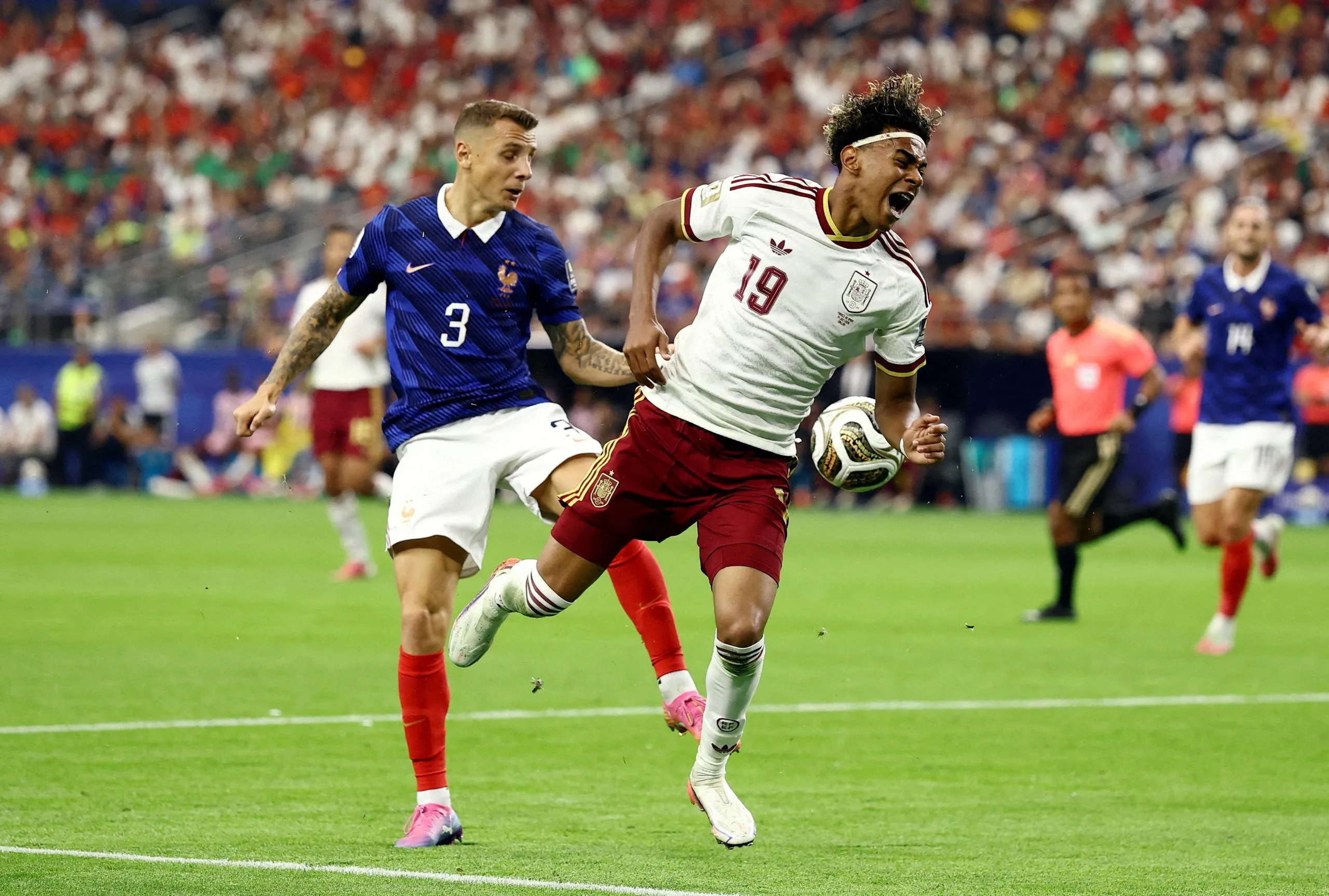
Nevertheless, Lamine Yamal made a significant contribution in the match against France. Attackers are trained to spot overcommitted defenders making careless clearances, as Mathys Tel demonstrated in May. As Lucas Digne prepared to side-volley a clearance, he inadvertently opened a path for Lamine Yamal to exploit off the ball. While there’s no assist credited to Lamine Yamal for the drawn penalty, his action created a critical 0.78-xG chance in a match where margins were razor-thin.
From that point, Spain’s control and precise execution dismantled France’s fluctuating chaos. Excluding their match against Paraguay, a team perceived as less skilled, France had previously played against and triumphed over less organized opponents. Their ruthless performance against these teams had positioned them as tournament favorites, despite an ostensibly easy route to the quarter-finals. Morocco was expected to provide a substantial challenge but appeared bewildered and unprepared before the match commenced in Foxborough.
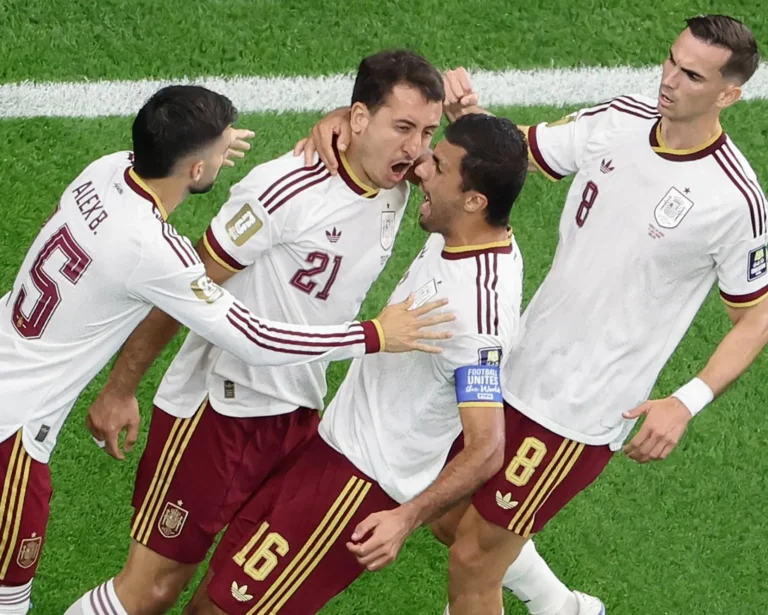
Spain, in contrast, showed no signs of timidity, having defeated France in the same round during Euro 2024 and the 2025 UEFA Nations League. Few national teams possess the chemistry that Spain has, with many players having developed under the post-Guardiola era. This is the style of football they aimed to embody. These are the matches they envisioned winning. Thanks to their extraordinary dedication to defensive duties, they succeeded in stifling a previously goal-hungry France.
However, the case for De la Fuente’s pragmatic approach weakens if Spain fails to capitalize on the opportunities they create. Had Lamine Yamal not drawn that penalty, France might not have found themselves under pressure before the break. If Olmo hadn’t delivered that precise pass into Pedro Porro’s stride while being challenged, Spain would lack a two-goal advantage. Their draw against Cape Verde represented a worst-case scenario, yet De la Fuente remained steadfast in his principles. After all, a team of Spain’s caliber can typically break through if everyone is aligned.
Spain is structured to make opponents suffer when they are not at their best, a strategy that can effectively challenge any team in international football. Even, especially, against formidable France.
- World Cup 2026
- Spain
- France
- World Cup
- analysis