


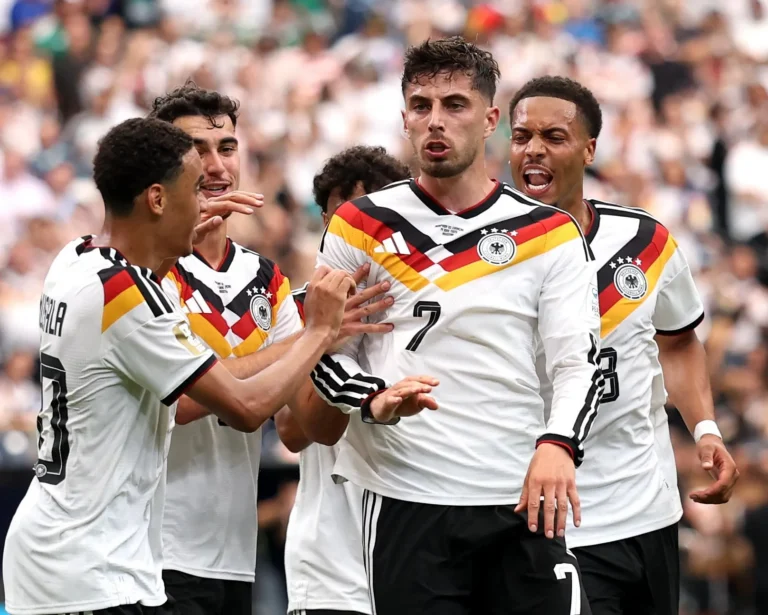
The World Cup 2026 opener saw Germany deliver a resounding 7-1 victory over Curaçao, showcasing their offensive prowess and setting a strong tone for the tournament.
As the match concluded, Nick Ames reflected on the game, thanking viewers for their engagement and comments. He encouraged fans to continue sharing their thoughts as the competition progresses.
“but did you really say if Curacao keep their composure against Ecuador you never know? The same Ecuador that finished second to Argentina in the South America qualifiers, ahead of Brazil, Uruguay and Colombia? Hmmm… I highly doubt it…” begins John Donnelly, “It would have been interesting to see how Germany would have coped without the first-half water break,”
While Donnelly questions the prospect of Curaçao challenging Ecuador, he notes that Quito’s high altitude presents unique challenges. Despite this, Ecuador remains a clear favorite.
“They were actually reeling a little before that, and totally regrouped and regained momentum after the break. It’s crazy how we have accepted three-minute quarter breaks as just a routine part of the game. This game was played inside with climate control!” reckons Luke Jones. “Despite the scoreline, Curaçao continue to work hard and see out the match with intensity and desire. Lovely to see”
Jones highlights the disruption caused by the break, suggesting it offered Germany an unexpected advantage. The match was played indoors with climate control, raising questions about the necessity of breaks in cooler environments.
Rob Smyth is gearing up for the upcoming Netherlands vs. Japan match, which many anticipate will be a highlight of the group stages. Meanwhile, the tournament has begun to reveal promising talents, such as 18-year-old Lamine Yamal, who is already making waves.
Despite the absence of peak players, nations like Brazil and the Netherlands still boast exceptional talent, such as Vinicius Jr. The depth of skill across the board has sparked discussions about the variety of potential champions this year.
Germany’s performance has sparked debate about their status as contenders. While they displayed strong capabilities, the best teams often evolve throughout the tournament. Players like Musiala and Pavlovic have the talent to tip the scales, yet concerns linger about their ability to compete against formidable teams like France, Portugal, and Spain.
“Comenencia has now scored more goals against Germany than Messi, CR7, Zlatan, Henry, Iniesta and Wayne Rooney… combined,” writes Peter Oh.
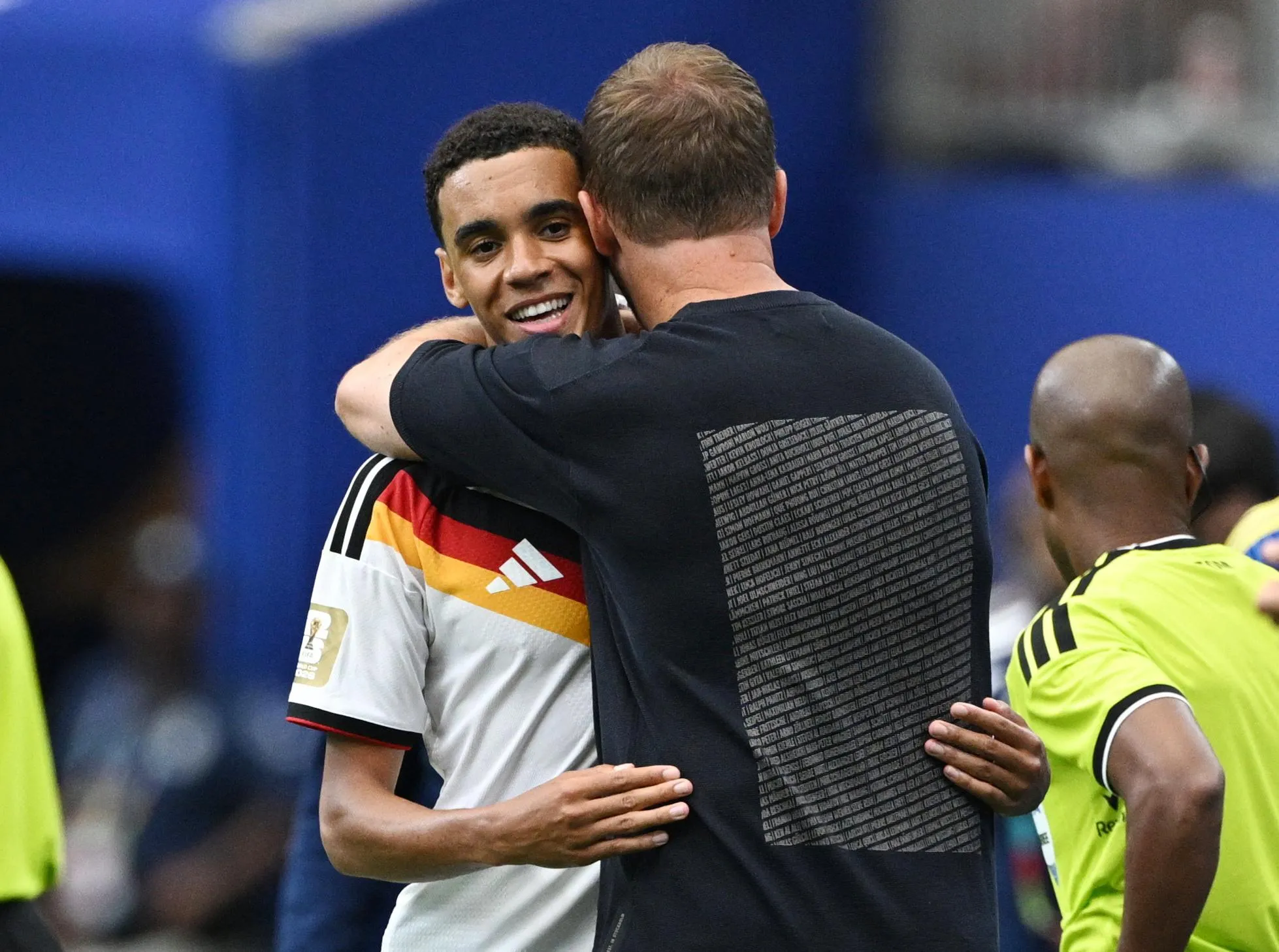
Oh’s observation emphasizes Curaçao’s determination throughout the match, illustrating their resilience despite the overwhelming scoreline. If they manage to maintain this composure against Ecuador, surprises could await.
Germany’s journey continues, and fans hope for more memorable moments as the group stages unfold. The expectation is high, especially after Curaçao’s unexpected equalizer earlier in the match.
With the match nearing its end, Raum, eager to find the net himself, attempted a free-kick that ultimately went over the wall without finding its mark. The game is set to conclude shortly.
Germany pressed on for an eighth goal, intensifying their attacks. A foul resulted in a free-kick just outside the penalty area, further demonstrating their dominance.
The rematch against Brazil in 2014 lingers in memories, especially the surreal moment when Brazil returned to the field despite trailing 5-0. Many pondered whether a tactical retreat might have been wiser.
As the additional five minutes were announced, the intensity of the match remained palpable.
Goretzka’s decisive challenge set up a brilliant assist for Havertz, who skillfully evaded the defender to score with finesse, reminiscent of his Champions League final goal.
Though the score was lopsided, the match proved entertaining, with Curaçao managing to hold their own for a significant portion of the game. Germany’s goals came at well-timed intervals, maintaining an engaging pace throughout.
Undav, showing his versatility, made an impressive pass to Raum, who aimed for the goal but was thwarted by Room’s quick reflexes.
With substitutions being made, the match provided insights into manager Nagelsmann’s preferences for the tournament. Goretzka replaced Kimmich, signaling a shift in strategy.
Looking ahead, the upcoming clash between Germany and Cote d’Ivoire promises to be a significant test as both teams prepare to face off this Saturday.
Havertz delivered a low cross from the left, which Kimmich intercepted, despite a misstep in his initial touch. He then set up Undav for a precise finish, marking his seventh goal in as many international matches.
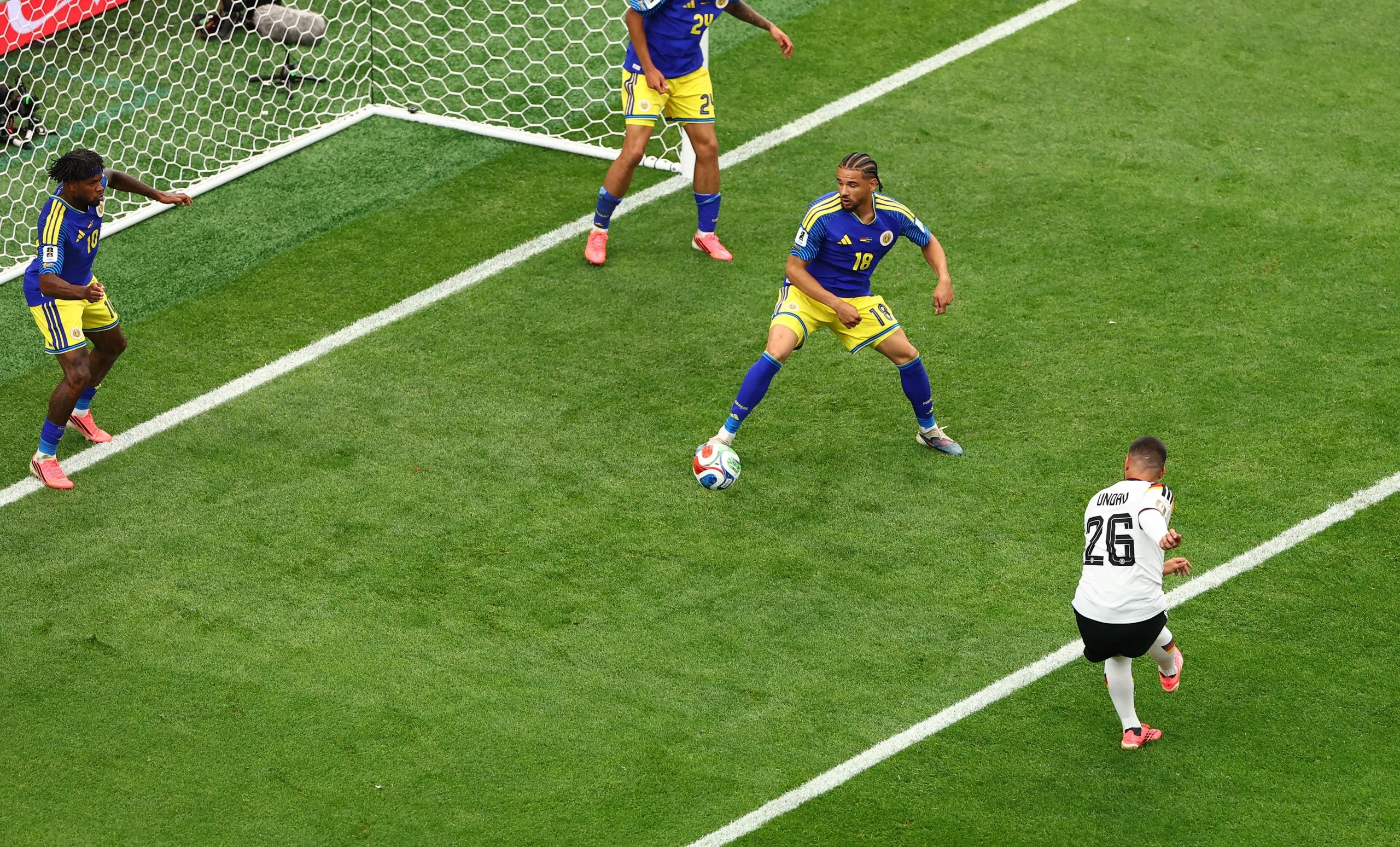
“including WC, Euro, and friendlies.” says Waw Waw, “Nagelsmann changed his shirt at half-time! Was he reading the MBM?”
On the other end, Curaçao attempted to respond, with Margaritha narrowly missing the far post with a curling shot.
Germany made a trio of substitutions, bringing on Tah, Nmecha, and Schlotterbeck, while Rudiger, Raum, and Goretzka entered the fray.
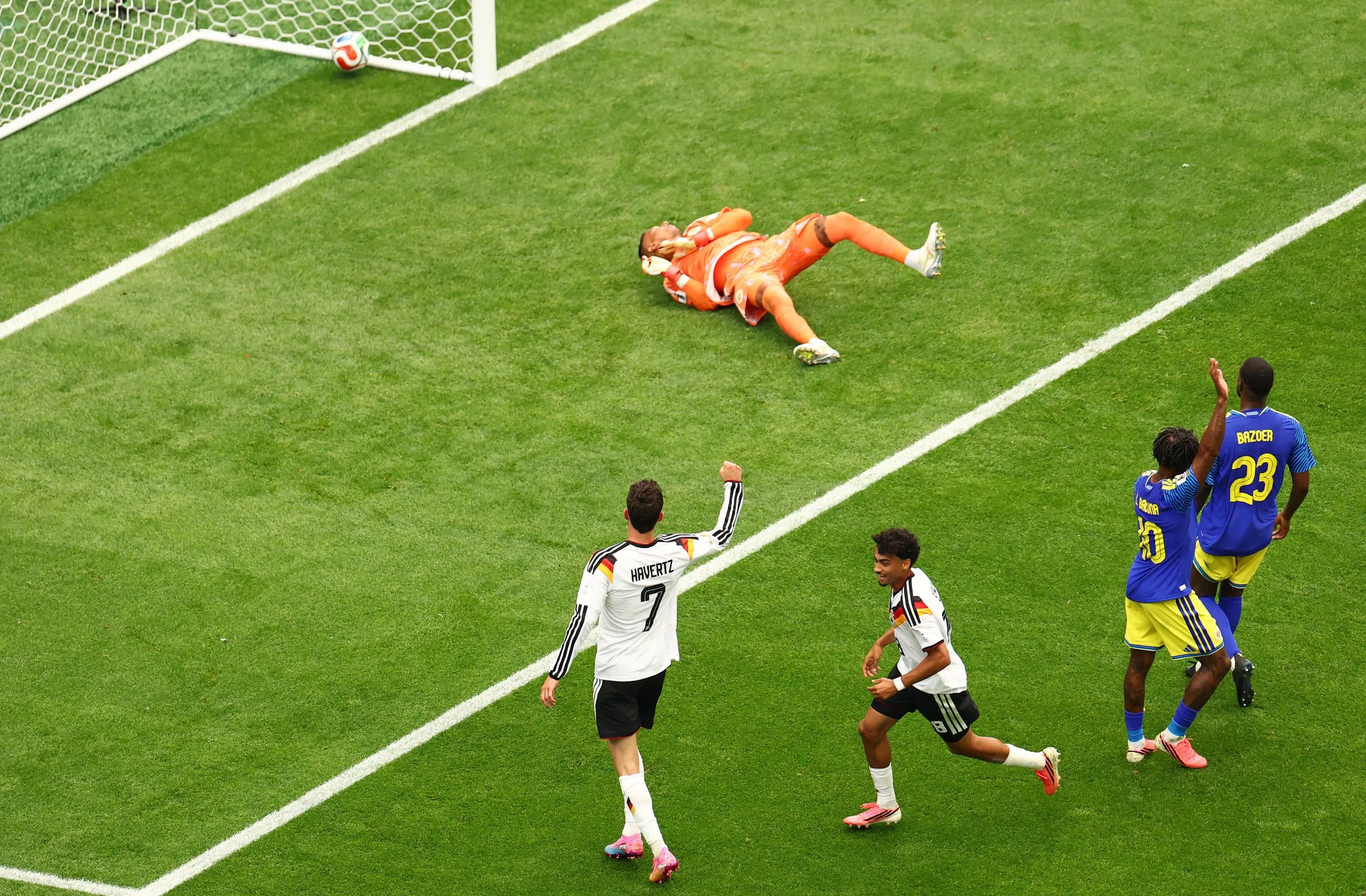
As the match progressed, Michael Meagher noted Nagelsmann’s shirt change at halftime, humorously speculating on whether he was influenced by the match commentary.
Following the goal confirmation, the teams took a brief water break, a moment welcomed by Curaçao as the match continued.
Discussions of offside arose as Brown’s goal was scrutinized, but the VAR ruled in his favor, allowing the score to stand.
Wirtz’s clever assist placed Undav in a prime position, leading to Brown’s remarkable finish into the far corner, further extending Germany’s lead.
Despite a disallowed goal for Curaçao, optimism remained in the air as they prepared for their next match against Ecuador, hoping to replicate their spirited performance.
Germany’s tactical decisions and player rotations continue to draw attention, especially as they gear up for matches against formidable opponents.
This tournament is shaping up to be an exciting showcase of talent and competition, raising the stakes for every team involved.