


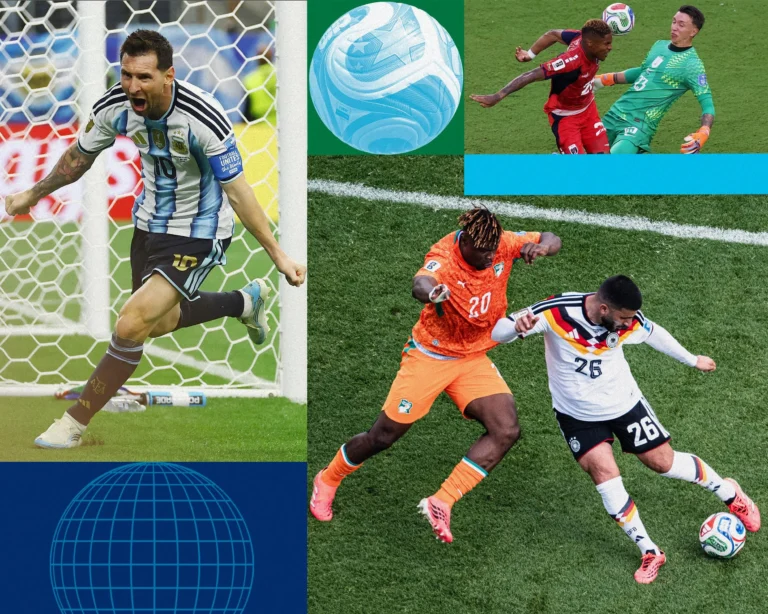
The 2026 World Cup has kicked off with an exhilarating start, showcasing thrilling matches. By Wednesday, every one of the 48 participating nations had already played twice, and remarkably, only four games ended in a 0-0 draw.
In those scoreless matches, teams like Cape Verde, Curaçao, and Iran managed to secure surprising points against stronger opponents such as Spain, Ecuador, and Belgium. In contrast, England’s uninspired 0-0 draw with Ghana left some spectators longing for more excitement.
This summer, the tournament has averaged 2.94 goals per match, marking it as the most thrilling World Cup since 1970 based on this metric. While one might expect goal rates to decline as the competition intensifies, history suggests otherwise; the goal tally increased after the group stage in both the 2022 and 2018 tournaments. Should this trend continue, spectators can anticipate one of the most memorable international competitions ever.
What factors are contributing to this surge in goals?
Several elements are driving the increase in scoring. The competition for the Golden Boot among top players is likely one of the most significant influences. Within just 25 hours during the opening fixtures, Kylian Mbappé, Lionel Messi, Erling Haaland, and Harry Kane all netted at least two goals each. The trio of Mbappé, Messi, and Haaland repeated this achievement earlier this week, while Cristiano Ronaldo also joined the scoring party against Uzbekistan. The rivalry among these elite forwards seems to be motivating each of them.
Numerous other players are eager to keep up with their peers. Already, there have been 21 instances of players scoring twice in a match during this World Cup, surpassing the total of 20 recorded in 2022. When multiple players have standout performances, it naturally contributes to the overall goal tally.
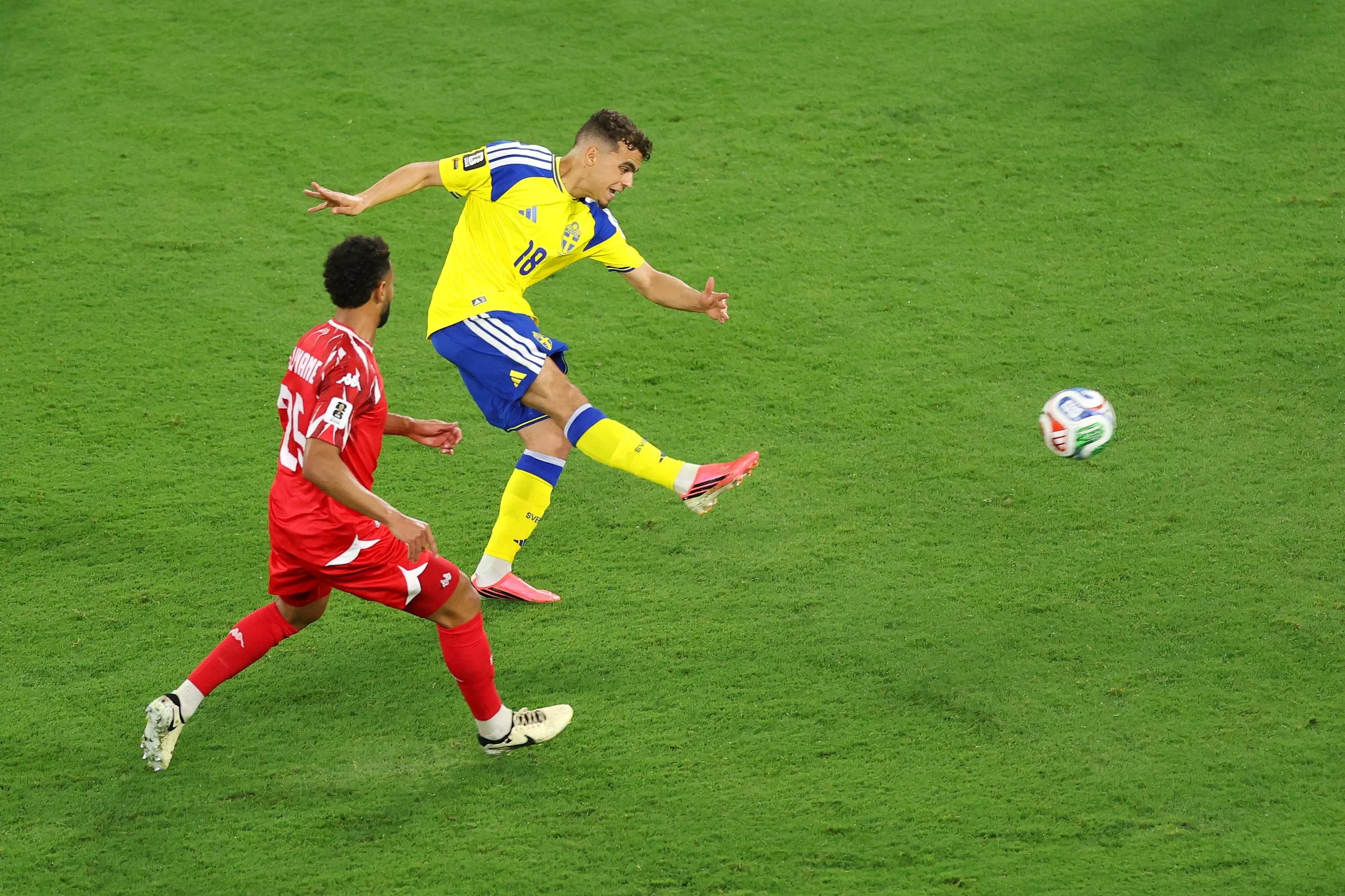
Yasin Ayari, a midfielder for Brighton, exemplifies this trend, achieving the rare feat of scoring twice in a match during Sweden’s 5-1 victory over Tunisia, despite never having done so in English league football. Notably, both of his goals came from outside the penalty area, showcasing the diversity of scoring methods.
Long-range goals have significantly bolstered Mbappé’s Golden Boot ambitions. He found the net from beyond the 18-yard box against both Senegal and Iraq, a stark contrast to his previous two World Cups, where he scored from distance just once. So far, this tournament has already seen six more goals scored from outside the box than in the last edition.
This trend contradicts the common belief that data analysis has led to fewer low-probability shots in football. While this may hold true in club competitions, international teams often lack the extensive training time required to implement complex attacking strategies.
The expansion of the World Cup to include 48 teams has likely played a crucial role as well. With a 50% increase in participants, it’s probable that relatively weaker teams have qualified, which may have struggled in a smaller tournament. Consequently, elite forwards often find themselves facing defenders and goalkeepers who are not accustomed to the caliber of finishing they present. Therefore, it makes sense for them to seize shooting opportunities as they arise.
Goalkeeping errors have also contributed to the rising goal count. Not every goalkeeper can replicate Eloy Room’s remarkable 15 saves to preserve a clean sheet for Curaçao against Ecuador.
Opta defines defensive errors as mistakes that lead to shots, and these can take various forms. For instance, Uruguay goalkeeper Fernando Muslera made notable errors against Saudi Arabia and Cape Verde, allowing goals from rebounds and ineffective clearances.
Additionally, two different Iraqi goalkeepers have inadvertently assisted top scorers Haaland and Mbappé, indicating that even the best finishers can benefit from such blunders. In total, there have been 25 Opta-defined errors this tournament resulting in goals, compared to just 37 across the last two World Cups combined.
While own goals are categorized separately from errors, they too have seen a rise since 2022. The Qatar tournament recorded two own goals, matching the total the USA has already achieved in the current competition.
The mounting pressure on defenses is resulting in more costly mistakes than ever before, regardless of how they are categorized. The World Cup record for own goals, set at 12 in 2018, is now at risk.
Substitutes are also making significant contributions. Since the 2022 World Cup, teams have been permitted to make up to five substitutions—an increase from the two allowed until 1998, and none prior to 1970. Deniz Undav has already been involved in five goals after coming off the bench, marking the highest tally for a substitute at a World Cup since records began in 1966. Collectively, substitutes have contributed to 28 goals, just two shy of the total from the entire 2022 tournament. Notably, eight goals have been scored and assisted by substitutes, marking a record for this competition.
England’s head coach Thomas Tuchel recognized the vital role of substitutes, stating this has transformed their perception from secondary options to crucial finishers. “We needed this quality to bring it over the line,” he remarked, referring to the impact of substitutes following England’s victory over Croatia. “I know they are all starters. So it is new for them. But they also know it is a period of time that is so special and they buy into this idea that we do it as a team. This is the only way.”
Tuchel’s comments also highlight Marcus Rashford’s contribution, who scored after coming on for Anthony Gordon in England’s opening match. His goal came from a straightforward position in the center of the penalty area, devoid of any defensive errors. In contrast, various factors elsewhere are contributing to the 2026 World Cup becoming the highest-scoring tournament since England held the title.