


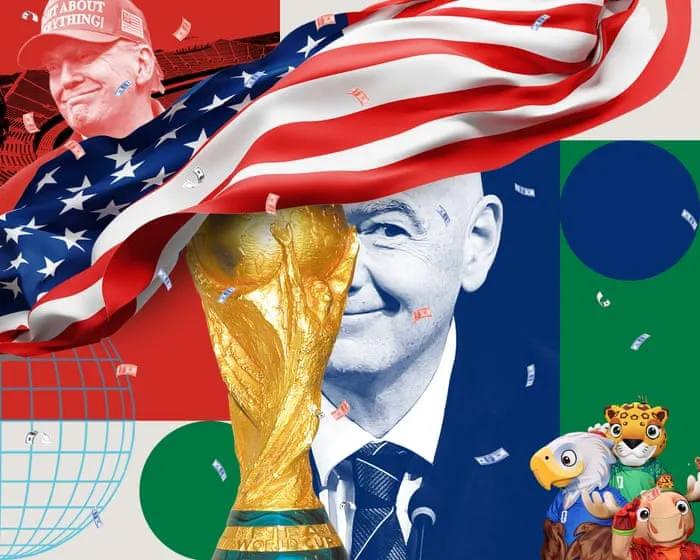
As the curtain prepares to rise on football’s grandest stage, a sense of finality permeates the atmosphere. The 2026 World Cup, set to unfold across the United States, Mexico, and Canada, promises to be a breathtaking spectacle, but perhaps also a farewell to the sport as we have known it.
The tournament is slated to commence on June 11 at the iconic Azteca Stadium, embarking on a 39-day journey that will encompass 16 host cities, 104 matches, and a sprawling 6,000-mile stretch from Mexico City to Vancouver, extending to Boston. This colossal event is not merely the largest sporting gathering in history; it stands as an unparalleled occurrence in global events.
Economists predict that the World Cup will generate an astonishing $80 billion in worldwide economic output throughout its duration, a figure comparable to the GDP of Belarus. If the World Cup were a nation, it would command immense global attention. This spectacle represents the pinnacle of sports today, albeit shaped by a singular opportunistic figure.
Gianni Infantino reigns over this landscape, a leader whose confidence often feels misplaced yet captivating. He navigates the corridors of power like a Las Vegas magician, dispensing favors with theatrical flair while spouting rhetoric about joy, love, and unity, even amidst global turmoil.
The summer of 2026 promises to be a whirlwind tour through a politically charged America, a place rife with contradictions and the epitome of a high-tech sporting extravaganza. It invites spectators into a complex and sometimes dark narrative.
Interestingly, despite its modernity, the 2026 World Cup may symbolize the conclusion of an era. It marks the waning of football as a grassroots game, now overshadowed by corporate interests.
This transformation signifies the demise of any remaining modesty in the way such events are staged. The traditional enjoyment of football is evolving away from thoughtful analysis and dissent to a cacophony of vibrant distractions. The World Cup offers a lens into America at the century’s close, a country still central to global culture yet exhibiting signs of exhaustion and frenetic energy.
As the tournament nears, a familiar pre-event excitement engulfs the nation. Yet, a critical examination reveals numerous flaws in this scenario. The previous World Cup in Qatar highlighted a disconcerting shift toward authoritarianism and propaganda, setting the stage for a similar experience in the U.S.
Just three months ago, the U.S. government executed the leader of a competing nation, an act that seems to have evoked little public outcry. The ongoing border policies under Donald Trump’s administration continue to affect the population, potentially impacting the tournament atmosphere. The World Cup itself represents economic exploitation, with exorbitant travel expenses and ticket prices for the final nearing $33,000.
In the context of human rights abuses, football has not merely aligned itself with populism; it has actively participated in the narrative. Infantino appears to idolize Trump’s leadership, offering him tokens of camaraderie.
In any typical non-profit organization, such alliances with tyrants would lead to dismissal. However, in the realm of FIFA, Infantino is likely to utilize the financial windfall to solidify his position ahead of next year’s presidential elections, representing a brand synonymous with greed and vanity.
This scenario illustrates a remarkable evolution, where an unremarkable Swiss bureaucrat has seized power, exchanging traditional corruption for a lavish lifestyle among autocratic leaders. Under Infantino’s regime, FIFA has transformed into a one-man enterprise, where the interests of the organization align with those in authority.
So, why even attend the World Cup? Why does the media continue to cover this event? If there are discontentments, why not stage a boycott?
This question deserves thoughtful consideration. Dismissing the event does not alter the actions of Trump or FIFA. Ignoring football is an impractical notion; the sport’s significance remains too vast and visible.
By turning a blind eye, one relinquishes the opportunity to challenge or critique the existing power structures. Infantino would relish an absence of dissenting voices in the audience. For this World Cup, FIFA has already enlisted influencers to generate uncritical coverage. Without independent media present, voices of dissent are silenced, leaving only commercialized noise. Financial motivations are steering us in this direction, but not yet completely.
Moreover, someone must narrate the other side, highlighting the beauty and excitement of this global event, still regarded as one of the greatest spectacles on Earth, even amid the complexities surrounding it.
As the tournament approaches, the competition remains fierce. France boasts a formidable squad and exemplifies excellence in player development. Spain possesses talent and a cohesive strategy. Portugal features not only a robust team but also the iconic Cristiano Ronaldo, eager to showcase his prowess once again.
Historically, every World Cup held in the Americas has culminated with at least one South American team in the finals. Brazil and Argentina remain top contenders, given their historical significance and talent pool. Brazil, in particular, has a strong goalkeeper, solid defense, and outstanding attacking elements, along with manager Carlo Ancelotti, who knows how to nurture elite players.
Surprises may still emerge, with teams like Morocco showing considerable promise. Norway boasts a talented striker with impressive statistics, making them a formidable opponent in the knockout stages.
England, currently positioned as third favorites in betting markets, faces expectations that may not align with past achievements. While they have a solid chance of progressing to the latter stages, they need to address some gaps in their lineup.
England benefits from a competent overseas manager, a departure from previous uninspired leadership. This tournament will likely see less emphasis on national pride and more tactical adaptability from the coaching staff.
The dynamics of this tournament could favor England, as games are expected to be grueling and strategic, with frequent stoppages for hydration. The style of play may evolve into clear phases, leading to complaints about the quality of matches during the group stage.
Nevertheless, England’s strengths may shine through, particularly with Harry Kane coming off a notable season. With a focus on set pieces and video assistant refereeing, they might navigate through to the later stages once again.
The tournament will feature an array of captivating personalities. Lionel Messi, now residing in Florida, continues to dazzle, while Cristiano Ronaldo brings his global appeal to a nation that has seen little of him in recent years. Additionally, the U.S. has a burgeoning football culture, embraced by its immigrant communities.
As the World Cup unfolds, the underlying questions about America’s identity come to the forefront. Is the nation still a beacon of hope and optimism? Has it strayed from its role as the cultural epicenter of the last century?
Ultimately, the spectacle promises to be as captivating as it is complex, drawing our attention to a star that may be fading, yet remains impossible to ignore.