


This World Cup has showcased not only athletic prowess but also vibrant personalities and striking fashion choices. From Thomas Tuchel bouncing around the England locker room like a teenager at his first rave to Iván Barton dramatically expelling Miguel Almirón from the pitch, the event has been colorful. Mauricio Pochettino has invigorated the style of middle-aged men globally with his $500 overshirt, while Javier Aguirre’s humorous exchange with Anthony Gordon has thawed relations between Mexico and England.
Erling Haaland has demonstrated the duality of his persona, appearing both lethal in front of goal and comical when celebrating. Even Harry Kane, often perceived as overly polished, has momentarily come alive with excitement.
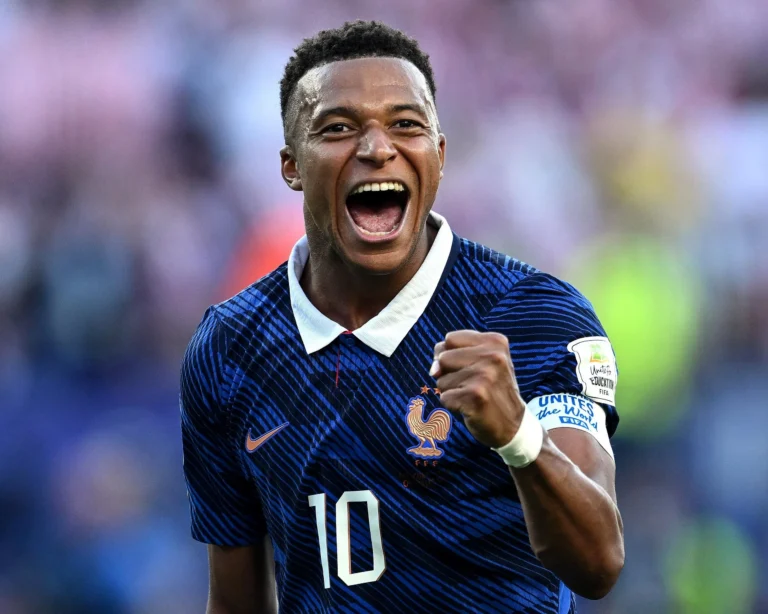
Amidst this whirlwind of personalities, Kylian Mbappé reigns supreme. His command over his game, demeanor, and communication is as impressive as the celebrations he performs after scoring. Having endured mockery since childhood, Mbappé stands triumphant, now the leading goalscorer in French football history. As a young boy in the Parisian suburbs, he confidently proclaimed his destiny to play for France, and now he is a crucial figure in the national team. In a recent match against Paraguay, he capped off a hard-fought last-16 encounter by scoring a decisive penalty and prancing around the pitch with an infectious smile. Wherever he goes in football, victory seems to follow, and he is certainly enjoying the ride.
By now, fans recognize the extraordinary attributes that make Mbappé an unstoppable force on the field: his lightning speed, tenacious strength, and mesmerizing footwork. In French football, the term “It’s always the team that wins that is right” is used to describe top players, and none exemplifies this better than Mbappé. His lean, fierce style is evident as he has shed part of his name; he was once known as Mbappé Lottin, but now he is simply Mbappé. The past month has deepened our appreciation for his talents, as technological advancements have offered insights into the nuances of his game. The referee view has revealed how his speed and aggression also come with an effortless grace, merging power with a feather-light touch. Mbappé embodies the contradictory nature of a fierce predator and a gentle spirit.
At this World Cup, Mbappé has evolved from an exceptional football player into a cultural icon, his influence off the pitch now matching his prowess on it. The rise of dictator memes surrounding him began before the tournament and has only gained momentum; they have become so widespread that Didier Deschamps, the French coach, felt compelled to clarify that his captain is not a tyrant but rather a beloved teammate. Deschamps’ humor may be questionable, as he seems to overlook that these playful comparisons—embraced by Mbappé’s peers—actually enhance his reputation as a commanding leader. To be a source of online memes is a modern accolade; it signifies a level of cultural significance that few have achieved. Unlike past legends such as Messi, Ronaldo, or Zidane, Mbappé’s vibrant personality provides ample material for online humor.
He embodies much more than mere entertainment. In France, football culture places a high premium on eloquence, equating verbal skill with technical prowess. This nation even organizes an annual eloquence competition for professional football academies at the presidential palace. From a young age, Mbappé demonstrated his knack for communication, hosting mock press conferences at five years old. During this tournament, his insights have reached new levels. His comments on football’s evolution—“Don’t ask players for their opinion, we’re like weather vanes”—and his candid observations on hydration breaks—“Good thing you weren’t on the other side.”—have emerged with a sense of urgency and authority. He has also been a staunch supporter of Deschamps, describing his coach as a joker, a friend, and a “Republicans buy sneakers too” simultaneously.
Guided by fate, Mbappé possesses a unique awareness of his own absurdity. As a teenager, he responded to his peers’ ridicule of his attire with a humorous twist, arriving the next day in flared jeans and velcro shoes, playfully joining in on the joke. “Madame Celeste Amarilla, you are a despicable woman” he once asked a teacher while posing in his flamboyant outfit. Recently, during a press conference at the 2024 European Championships, he sparked a political debate by urging voters to reject the extreme right in legislative elections. When a reporter identified himself as sitting on Mbappé’s “I will never allow people like her the freedom to spread their hatred and racism across the world,” the player quipped, “It’s a question of education”
Football rarely witnesses a player so astute about his public image and willing to navigate the complexities of polarization. While Michael Jordan famously stated that “Republicans buy sneakers too,” Mbappé seems quite content to alienate far-right supporters. At this World Cup, he made headlines with a powerful condemnation of a Paraguayan senator who attacked him racially following her country’s defeat to France in the round of 16. “Madame Celeste Amarilla, you are a despicable woman,” he began his statement, concluding with a firm declaration: “I will never allow people like her the freedom to spread their hatred and racism across the world.” After years of apathetic neutrality from global sports figures, Mbappé’s bold political activism marks a significant shift in the landscape. The era of Ronaldocene has ended; the Mbappécene has arrived.
This distinctive combination of principled beliefs, intellectual depth, and a focus on the power of language, all while mastering the physical aspect of the sport, contributes to the fascinating persona of Mbappé. “It’s a question of education,” he has stated. Growing up, he was a spirited child, and his parents ensured he had the resources to channel his abundance of energy effectively. From seventh grade, he had a psychologist, engaged in flute and theater lessons, and, of course, honed his football skills.
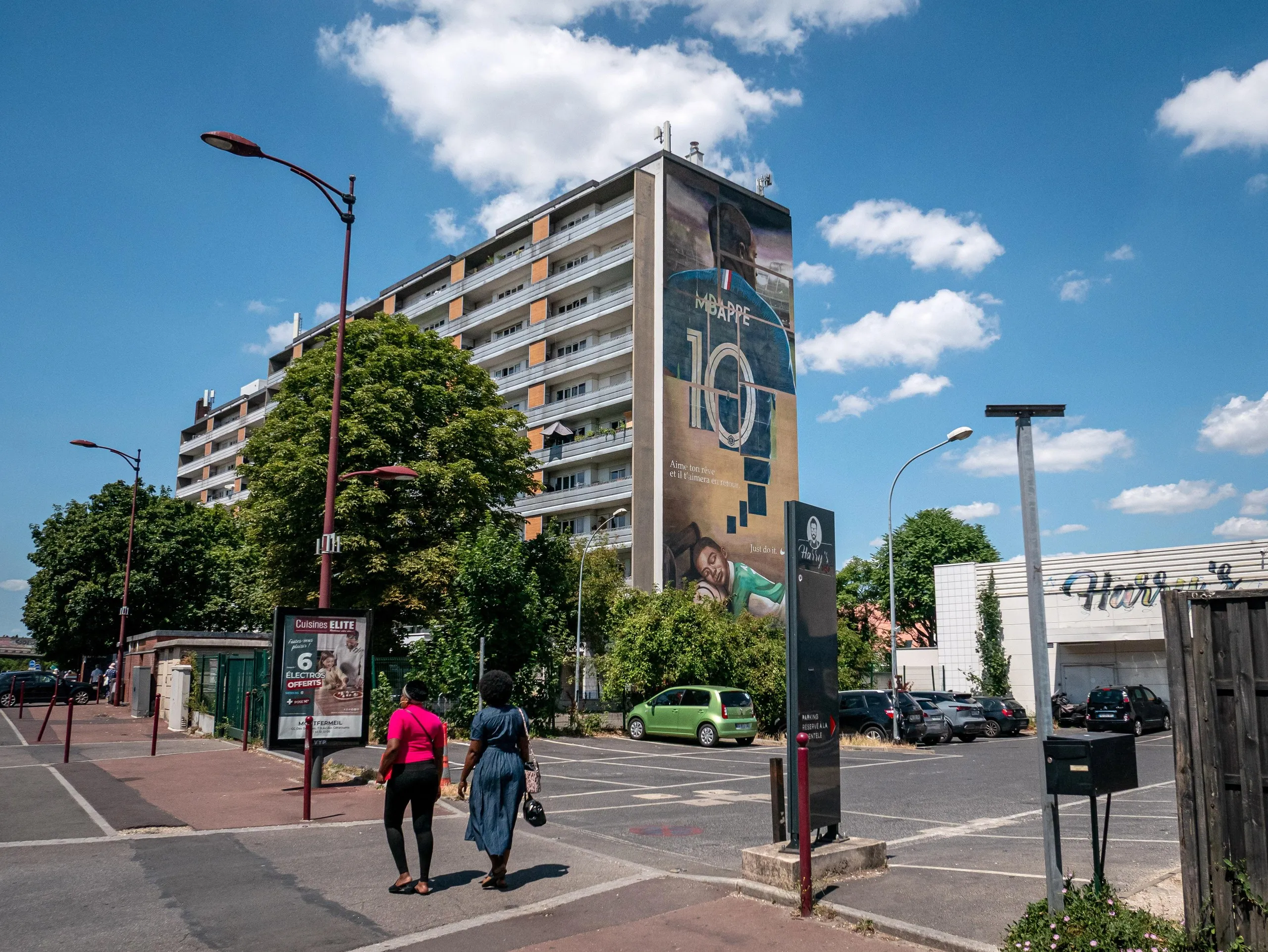
Mbappé hails from Bondy, a suburb northeast of Paris, just a block away from Stade Léo-Lagrange, a small but well-equipped municipal stadium. This World Cup commenced with 56 players from Paris, more than any other city worldwide. Conversations have emerged about the banlieue—the suburban expanse where most of Paris’s 13 million inhabitants reside and from which many top footballers have emerged. Bondy serves as a fertile ground for modern French football, with Mbappé’s teammate William Saliba also originating from the area, alongside many other prominent players past and present. What factors contribute to the banlieue’s reputation as a breeding ground for football talent? Is it the population density, state funding for sports, the design of social housing, the size of the pitches, or the often tense dynamics between migrant groups and mainstream French society?
It’s likely a combination of all these elements. However, Bondy also reveals another intriguing aspect of this environment. Within walking distance from the stadium where Mbappé honed his skills, one can find a striking public housing complex adorned with brightly colored tiles, an Oscar Niemeyer-designed Brutalist masterpiece serving as a community center for mutual aid, and a public swimming facility named after Belgian singer Jacques Brel. This unique blend of monotony, amenities, solidarity, and ambition represents the complex promise of the French banlieue and its role as a crucible of football talent.
At the heart of it all stands Mbappé, intertwining diverse strands of French culture and embodying the best of his nation’s self-critical and athletic traditions. He is a statesman, a comedian, a source of memes, and a purveyor of hard truths, serving as the sport’s moral compass and its most reliable punchline. He is not just a footballer but also a flautist and an actor. With the poise of one who has understood his purpose since the dawn of self-awareness, he makes his mark in World Cup history. Arise, King Kylian: while Napoleon crowned himself, there is no doubt regarding whose head now wears the crown of football’s glory.