


In a dramatic showdown beneath Atlanta’s expansive dome, England faced the culmination of their World Cup journey, ultimately falling short against Lionel Messi. The match saw England, despite taking an early lead, unable to maintain their momentum as Messi showcased his enduring brilliance.
With 55 minutes elapsed, England held a narrow 1-0 advantage, courtesy of Anthony Gordon’s strike, which marked their only real moment of clarity throughout the match. However, this lead quickly dissipated as they faded from contention.
England’s performance was lackluster, with substitutions failing to make a significant difference. Harry Kane appeared to merely engage in light running close to the World Cup semifinal’s intensity. A pivotal moment occurred as Messi began to assert himself, drawing the focus and energy of the stadium onto him, transforming the match’s dynamic.
Fast forward to the 91st minute, with the score somehow still 1-1, it was Messi who orchestrated the decisive play. By this stage, England’s defense resembled that of shipwrecked sailors, depleted and desperate.
After Alexis Mac Allister struck the post, Djed Spence momentarily interrupted Messi’s rhythm but only delayed the inevitable. Faced with two defenders, Messi effortlessly maneuvered into space, ready to make his mark.
The cross from Messi was perfectly executed, drifting into the ideal spot, akin to a teacher methodically explaining a complex concept. For a brief moment, the ball seemed to hang in the air, as if the entire stadium collectively anticipated the unfolding moment.
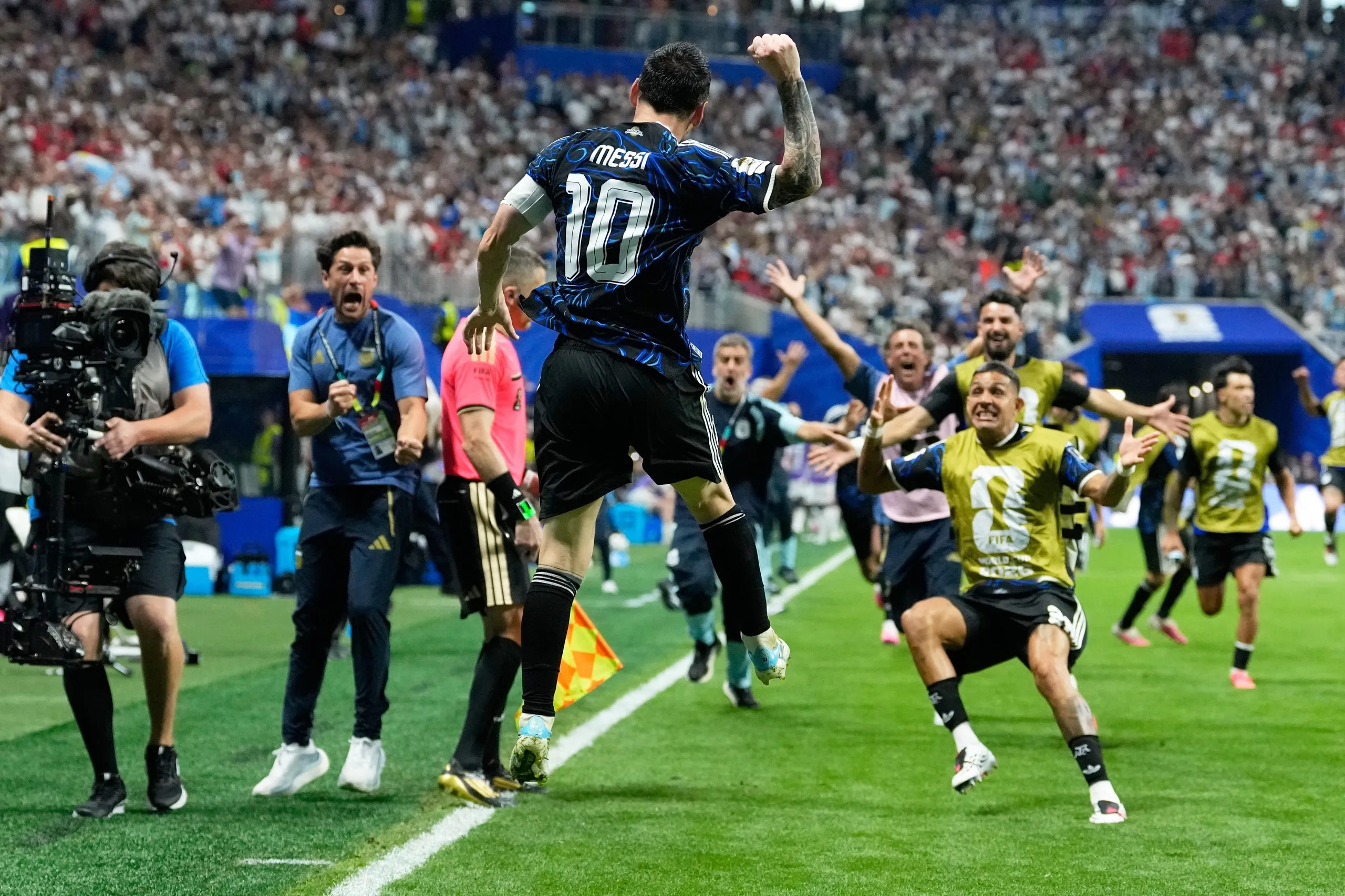
Time resumed its course as Lautaro Martínez headed the ball past a sprawling Jordan Pickford, sealing England’s fate. This outcome felt preordained from the moment Messi began to take control of the match, sensing the shifts and opportunities as they unfolded.
Despite some final attempts from England, this phase resembled a tired rehash of their footballing struggles, with Dan Burn flailing in the Argentina box, reminiscent of a mattress tossed from a window.
The match concluded with England shrinking under the pressure, failing to capitalize on their chances and ultimately being overshadowed by Messi’s prodigious talent, which even on subdued days, asserts itself.
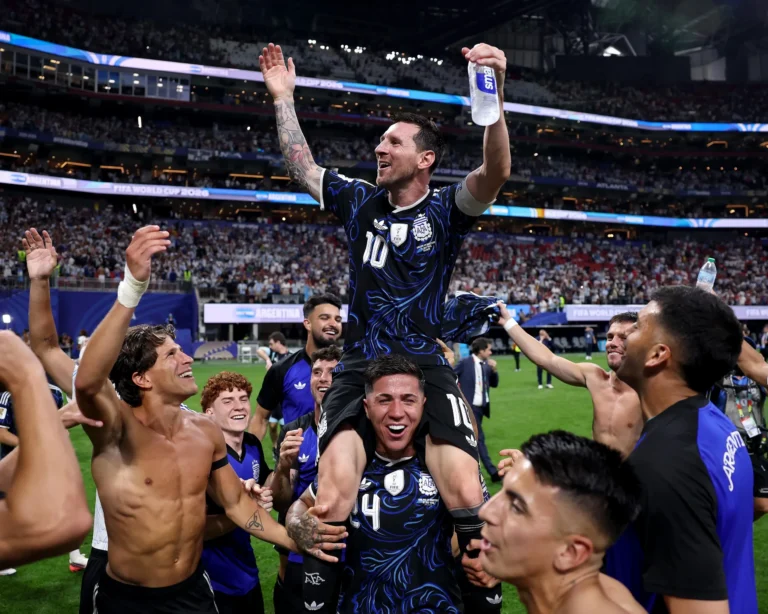
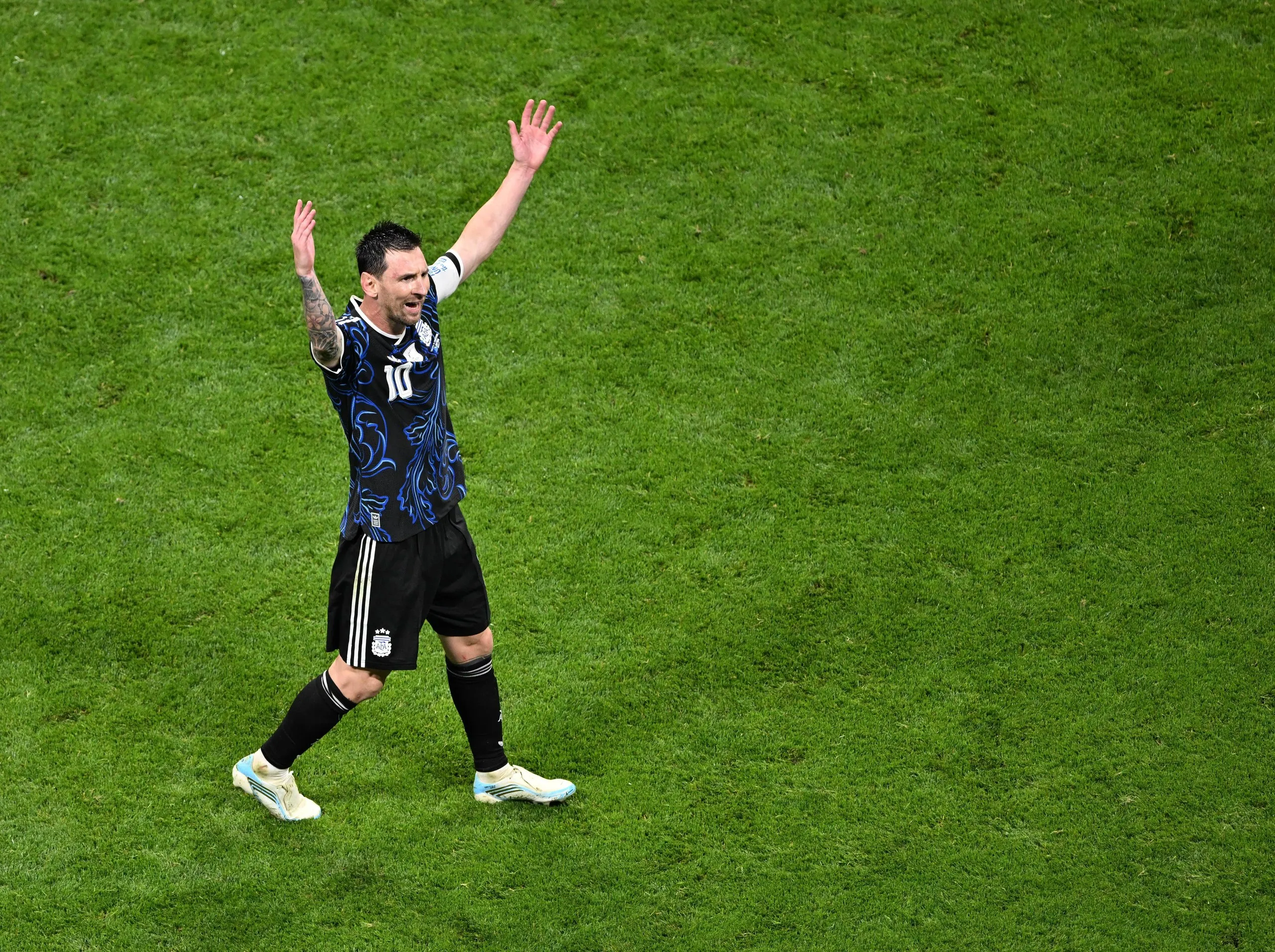
The final whistle elicited a resounding celebration, with Messi still in motion, finding space and pumping his fists in triumph amid the frenzy.
England’s performance was undeniably disappointing, as they squandered a golden opportunity in the semifinals. They failed to generate significant threats or energy, leaving room for reflection on their shortcomings and missed chances.
However, this day belonged to Messi, who now prepares for his third World Cup final, becoming the oldest outfield player to grace that stage, solidifying his legacy as the greatest. This tournament has revealed new facets of Messi, as he appears to be on the verge of something extraordinary.
Messi’s distinctive advantage lies in his ability to elevate those around him, creating a gravitational pull that enhances their performance. Every match is a testament to his influence, revealing why he cherishes the game so deeply. Observers might feel inclined to remind him that not every game unfolds with such magic.
As for England, they must find ways to counter Messi’s unique capabilities. Thomas Tuchel opted for a strategy combining power and speed, positioning Morgan Rogers on the right, while Spence took on the challenging task of marking Messi.
Atlanta Stadium served as a fitting backdrop, rising majestically among the city’s skyscrapers, resembling a massive silver meteorite that had crash-landed in the urban landscape.
The colors and formations at kickoff were captivating, with blocks of deep blue, white, and red gold harmoniously arranged. The anthems resonated with an electrifying energy that filled the air.
Just over a minute into the match, Jude Bellingham was brought down by Leandro Paredes, a moment that felt almost ceremonial, akin to the opening of a parliamentary session.
Messi’s initial play involved deftly weaving through a cluster of players, moving in a realm all his own. He fell, yet no foul was called, igniting outrage among spectators. Almost immediately, Paredes fouled Anderson, earning a booking, marking the match’s early physicality.
From that point on, the game struggled to gain momentum. England had an opportunity during the first half to apply pressure, yet Messi continued to operate at the fringes, embodying a figure for whom the game often seems to wait.
Despite taking an early lead, England faltered as Messi began to assert his influence, gliding past defenders and delivering incisive passes.
In the end, the match encapsulated two narratives: an England side that faltered under pressure, unable to heed their manager’s calls, and a team consumed by the inevitability of Messi’s brilliance—an all-time great who continues to dominate the stage, unwilling to be denied.
- World Cup 2026
- Lionel Messi
- Argentina
- World Cup
- England
- analysis