


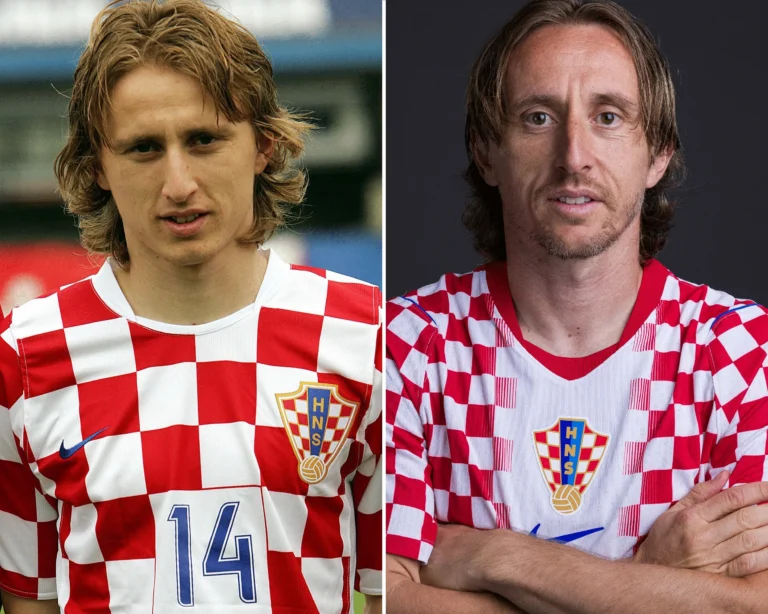
When Luka Modric first faced England, Tony Blair was still the Prime Minister. Arsenal had just transitioned from Highbury to the Emirates Stadium, Italy had recently been crowned world champions, and Pep Guardiola had retired as a player following a brief stint in Mexico with Dorados. At that time, Twitter was less than three months old, and Facebook had just become publicly accessible. Amy Winehouse’s acclaimed album Back to Black was on the verge of release, while the much-anticipated film Borat was preparing to hit theaters.
Football enthusiasts in both England and Croatia may recall the match thanks to that cultural reference: the European Championship qualifier held in Zagreb on October 11, 2006.
As Gary Neville sent a backpass to Paul Robinson, Borat’s image appeared on the advertising screens at Maksimir Stadium; the ball awkwardly bounced near the six-yard box, with the England goalkeeper missing it, resulting in a goal accompanied by Sacha Baron Cohen’s notorious grin and moustache, deepening England’s woes.
For Modric, who played the entire match that Croatia won 2-0, it was already his 11th cap; his debut had taken place earlier that year in a friendly where Lionel Messi scored his first goal for Argentina.
This marked the beginning of the Modric era for Croatia, although the impact was not immediately recognized. The young midfielder had not yet taken on a pivotal role within the team, a position he would assume in due time. In hindsight, the victory signaled the start of a transformative journey for the national team of a small nation, evolving into one of the world’s most formidable squads.
Indeed, it represents an era, as there is no specific Modric generation; players have come and gone, with Modric standing as a singular constant, much like a time traveler who connects the past and future, challenging the linear progression of time.
At some undefined point—one that seems to be in constant flux—he adopted ownership of the team, not just through his leadership but also due to his unyielding, never-give-up mentality. In the last two World Cups combined, Croatia triumphed in seven knockout stage matches without defeating or even outplaying their opponents in regulation before succumbing to the eventual champions on both occasions.
England has played a significant role in shaping the team throughout this timeline. Since that initial meeting in October 2006, the two teams have clashed eight additional times; outcomes have varied with wins, losses, and draws, and Modric has participated in all but one match due to a broken fibula sustained during a 5-1 defeat to Fabio Capello’s side in 2009. However, two matches have been especially noteworthy.
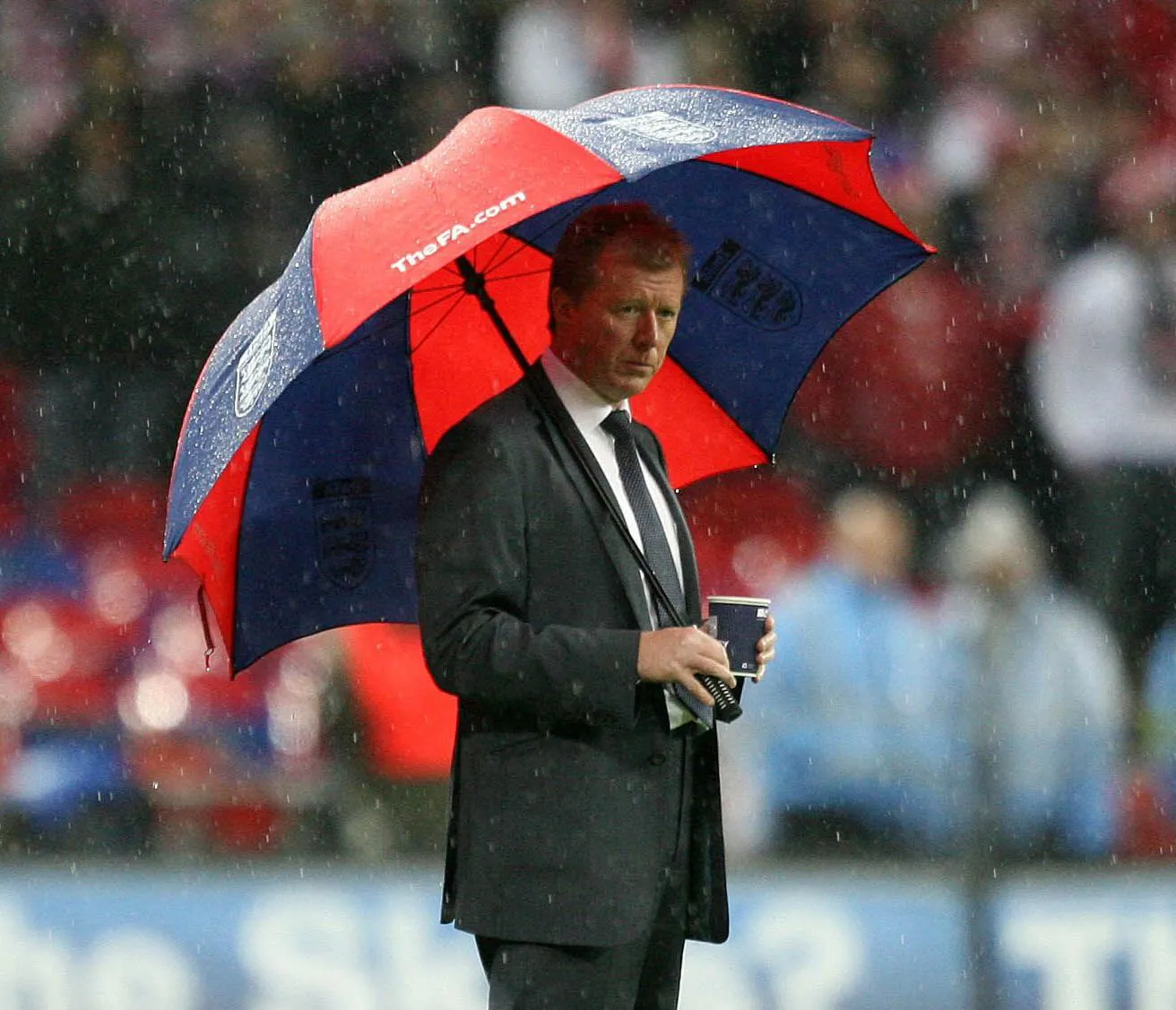
A year after the bizarre Borat incident, the infamous “wally with a brolly” match took place at Wembley. Croatia was already through to the Euros and had little at stake, while England only required a draw to advance. Nevertheless, the Croatian team, under Slaven Bilic’s leadership, won decisively, which became a legendary moment that psychologically shaped the team and significantly boosted their confidence.
Although Croatia performed admirably during the tournament, they still lacked the Modric mindset. Perhaps Modric himself, who had agreed to transfer from Dinamo Zagreb to Tottenham before the Euros, was still searching for that mentality. Croatia advanced through the group stage with three victories but faced a shocking quarter-final exit against Turkey, taking the lead in the 119th minute only to concede a last-minute equalizer and subsequently lose in penalties, with Modric missing a crucial kick.
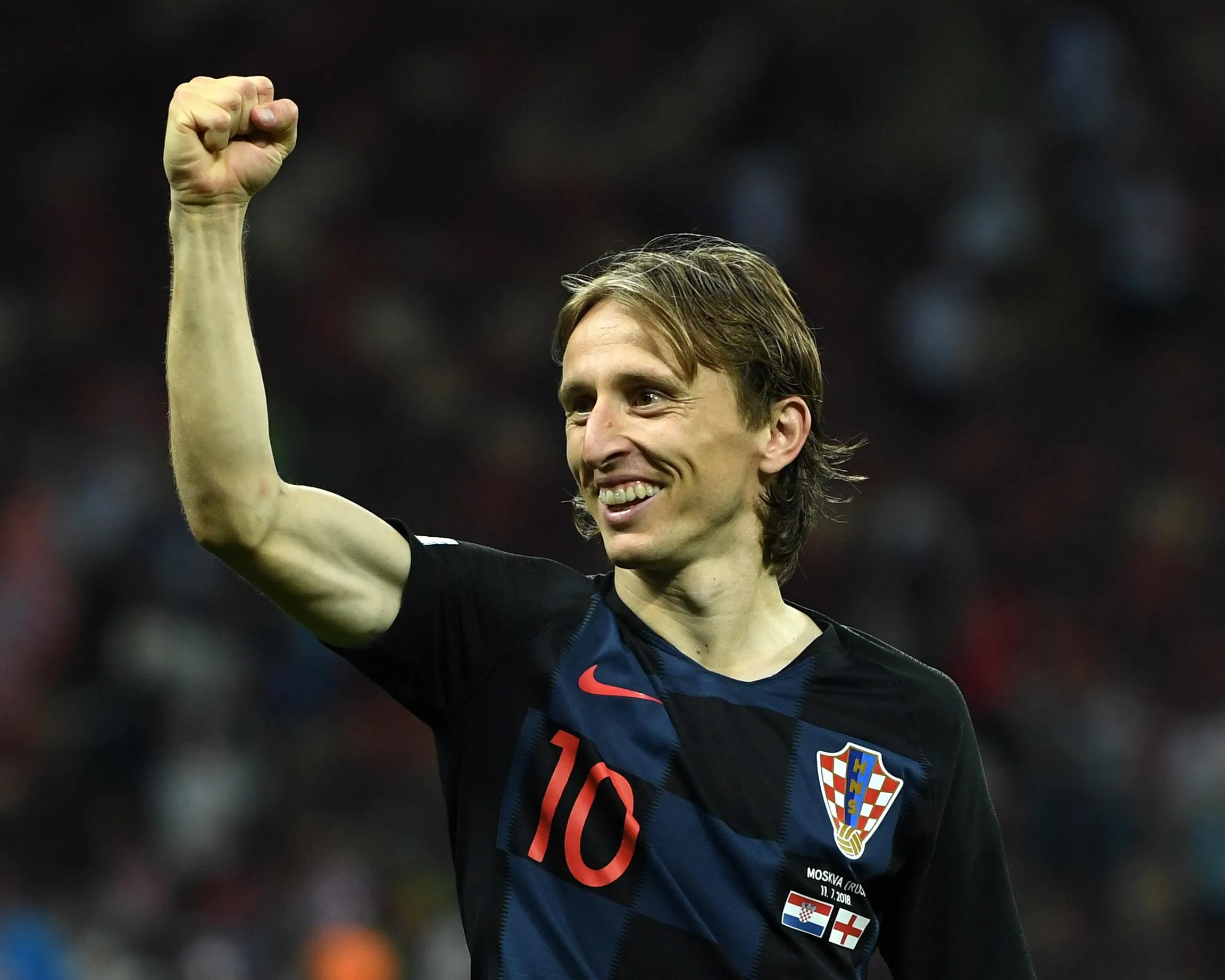
The other pivotal match occurred during the 2018 World Cup semi-final, where Croatia came from behind to defeat England in extra time at the Luzhniki Stadium in Moscow, securing a spot in the final against France. Modric may not have appeared to play a central role in that particular game, but by then, he had established himself as a prominent leader who had guided the team through years of poor coaching decisions and disappointing performances. Under Zlatko Dalic’s management, Croatia finally had a coach who effectively connected with Modric.
Nearly two decades after their first encounter, the 40-year-old playmaker is set to face England once more. This match will mark his 199th appearance for his country.
On the surface, Modric is not quite the player he once was, and neither is the Croatian team. If the recent World Cup warm-up loss to Belgium serves as any indication—they were specifically chosen as preparation for Thomas Tuchel’s squad—Croatia appears inclined to adopt a back three, sacrificing their offensive capabilities for defensive solidity. However, they are likely to struggle against England’s pace and energy.
Modric will turn 41 in September. While he may not voice it, retirement after the World Cup seems plausible. Can he inspire his teammates to deliver one last decisive blow to England in Dallas? Given his history against the Three Lions and his immense talent, few would bet against him.