


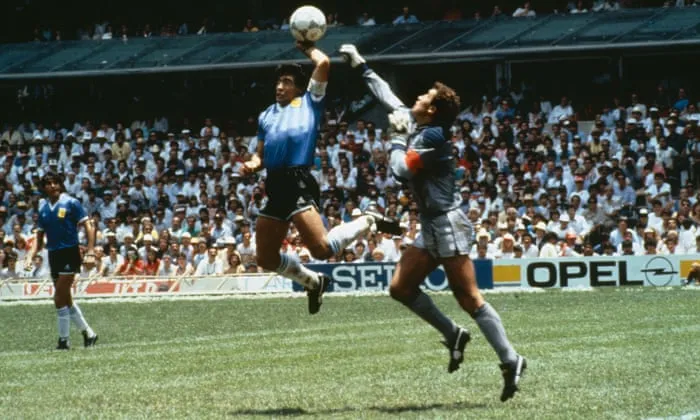
On a blistering Sunday in Mexico City, anticipation reached fever pitch as two historic adversaries prepared for a quarter-final showdown, marking their first World Cup encounter in two decades. Dubbed Rattín’s Revenge, or even Falklands II by some media outlets, this match was laden with historical significance. Here are ten crucial moments from a first half that may have faded from memory:
1) Just before the action commenced, instead of focusing on the players warming up under the relentless sun, a Mexican television crew chose to spotlight a shirtless man guzzling the last of his beer while puffing on a cigar. This amusing spectacle set the tone for the vibrant atmosphere at Azteca Stadium, where both sets of supporters were in high spirits, and the Argentine squad warmly presented each English player with a personal pennant, a surprising display of sportsmanship amidst the tensions stemming from the Malvinas conflict.
2) As kickoff loomed, the referee and his assistants took refuge in the shade of the center circle, likely wishing for a more powerful stadium PA system. The astute Tunisian referee, Ali Ben Nasser, was keenly aware that catching him off guard would be a formidable challenge, especially on a sun-soaked Sunday.
3) In the 13th minute, Glenn Hoddle unleashed a brilliant long pass aimed at Peter Beardsley, who raced to get it. Unfortunately, the pass was overly ambitious, and goalkeeper Nery Pumpido sprinted out to intercept. Misjudging his approach, he slipped and inadvertently deflected the ball off his shin. Beardsley, undeterred, swiftly seized the loose ball and executed a stunning feint, leaving Pumpido in his wake. He then aimed for the unprotected goal, only to see his shot hit the side netting, narrowly missing what would have been a remarkable individual effort.
4) As the first half drew to a close, a peculiar two-minute interruption ensued when Diego Maradona was set to take a corner, only to find his path obstructed by a group of hefty photographers stationed along the byline. Realizing that moving them would be impractical, he cleverly opted to adjust the corner pole instead. However, when he attempted this, linesman Berny Ulloa Morera insisted that he reattach the flag at the top, leading to a humorous scene. Maradona, keeping his cool, eventually managed to shift one of the photographers aside, but his corner kick ended up in Peter Shilton’s hands, leaving the crowd a bit disheartened.
5) Meanwhile, usherettes meandered through the stands, presenting trays brimming with pre-poured lagers, ensuring fans were well taken care of.
6) The BBC commentary duo of Barry Davies and Jimmy Hill struggled to find their rhythm in the first half. While Davies was renowned for his insightful commentary, Hill had become a caricature of himself over the years. Regrettably, they both missed the mark, spending too much time critiquing FIFA’s choice of Ben Nasser due to his Tunisian heritage, labeling Tunisia an emerging nation, a statement that would likely surprise the residents of its capital, Tunis, which was established in the fourth century BC. It’s worth mentioning that Ben Nasser did have a lackluster day, but his performance was not swayed by his nationality.
7) Despite their commentary shortcomings, Davies and Hill might be forgiven given the uninspiring first half. Argentina dominated possession, yet struggled to carve out significant opportunities, although Maradona’s threatening runs were notable.
8) Aside from a captivating moment from Peter von Teese, England’s display was underwhelming. Terry Fenwick sent one shot an astonishing 40 yards wide of the target. As the half neared its conclusion, Gary Lineker, England’s star forward, barely touched the ball, sending it out of play with a feeble attempt. Steve Hodge even managed to slice a high ball back into his own area while trying to clear—what a disaster!
9) Fenwick had a particularly challenging outing, receiving a yellow card for fouling Maradona just nine minutes into the match. He found himself on the ground as Maradona slipped past him, and just before halftime, he elbowed Maradona in a blatant off-the-ball incident that warranted a red card. Yet, he was allowed to remain on the pitch.
10) During the halftime break, news emerged that Tele Santana, Brazil’s visionary coach, had resigned following their classic quarter-final defeat to France the previous day. This moment encapsulated the ongoing struggle for the traditional beautiful game, raising concerns about the future of improvisational brilliance within international football.
Second Half Surprises
The first half concluded with a score of zero to zero, but the second half would take a dramatic turn, primarily due to one player’s outrageous disregard for the rules. Just five minutes into the restart, Fenwick struck Maradona on the head during a midfield challenge. He repeated this act on 66 minutes and, with only five minutes left, he tackled Jorge Valdano with a desperate slide. In total, Fenwick could have easily received four red cards on a different day.
Maradona, however, remained undeterred by the aggressive tactics. Some argue that relentless fouling serves as the ultimate compliment, elevating Maradona’s status among football’s greatest. Other legends like Pelé and Johan Cruyff faced similar treatment, but Maradona’s resilience allowed him to seize the opportunity to bend the rules himself. Unfortunately for England, he showcased his extraordinary skill just six minutes into the second half.
The Infamous Hand of God
No one emerged from this incident unscathed: Maradona, Shilton, Hodge, Fenwick, and particularly referee Ali Ben Nasser, who had just witnessed what many deem the greatest blunder in World Cup history. Understanding his error requires recognizing the challenge of interpreting the footage without bias. The initial commentary from the BBC sheds light on the confusion surrounding the goal.
“They’re appealing for offside but the ball came back off the boot of Steve Hodge,” Barry Davies commented, struggling to grasp the chaotic scene that was unfolding. It took nearly 32 seconds and two replays before it became apparent that something was amiss. “At what point was he offside?” Davies questioned. “Or was it a handball that England are protesting about?”
Despite the surrounding controversies, the scoreline was unmistakable: Maradona 1, Fenwick 0. This is the fate that befalls those who attempt to deceive a master.
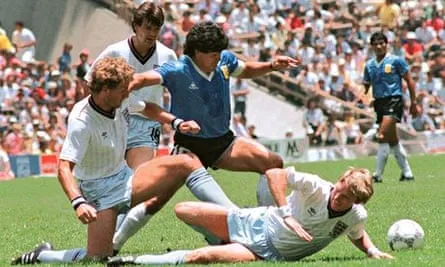
Ultimately, while Maradona’s audacity was undeniable, it’s essential to recognize the remarkable skill that paved the way for the goal. After receiving a pass from Julio Olarticoechea, he deftly navigated past several defenders, drawing them in before flicking a pass to Valdano, setting the stage for the ensuing chaos.
Football Genius Unleashed
That dazzling exhibition was merely the beginning. With England caught off guard, Hoddle lost the ball in midfield, allowing it to reach Maradona, who was positioned just right of the center circle. He spun away from Beardsley and Reid, launching a rapid counter-attack down the right flank. Skirting Butcher’s challenge, he raced toward the penalty area, skillfully avoiding Fenwick and coaxing Shilton out before rounding him and sliding the ball into the far side of the net. It was a goal so sensational that it erased any moral ambiguity and solidified his place among football legends at a time when the sport desperately needed a new hero.
In response to this extraordinary moment, Davies, fully recovered from his earlier commentary struggles, exclaimed, “You have to say that’s magnificent! Pure football genius.”
The remainder of the match unfolded oddly. Argentina eased their pressure, while England failed to capitalize on opportunities. Hoddle’s performance showed slight improvement, setting up a chance for Beardsley, but it was John Barnes’ entrance that ignited England’s best play. His run down the left culminated in a goal from Lineker with just nine minutes remaining, although Carlos Tapia struck the post right after the restart. The two nearly connected again, but a defender’s intervention denied Lineker a close-range tap-in.
In the end, Argentina secured a well-deserved victory, not just in a sporting context but also in the realm of national pride, despite England initiating the chaos. This match symbolized Argentina’s reclamation of national pride following the Falklands conflict. The 1986 encounter echoed the infamous 1966 match, culminating in Hodge exchanging shirts with Maradona—an ironic turn given the historical context. The old joke continued to resonate, highlighting Hodge’s minimal interaction with Maradona throughout the match.
Scott Murray co-authored “And Gazza Misses The Final,” chronicling the World Cup history through the lens of unforgettable moments.