


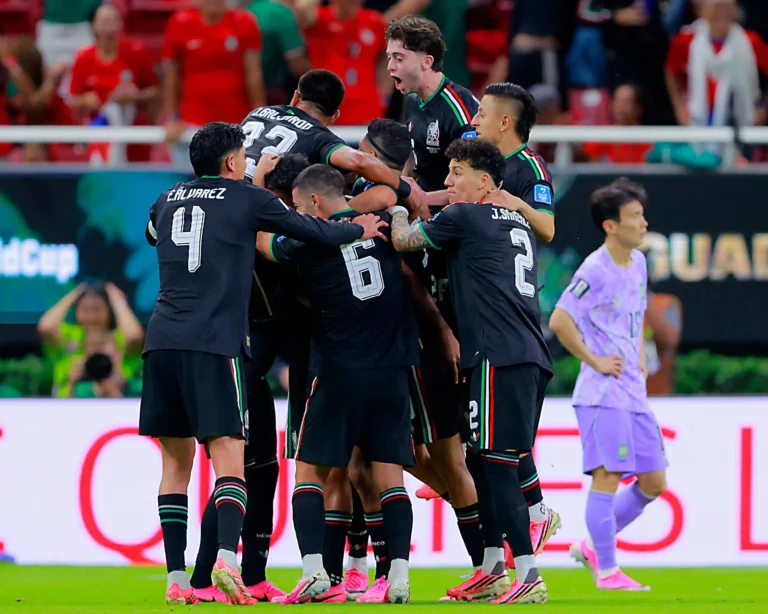
Despite lacking aesthetic appeal, highlighted only by its black and lilac colors, Mexico became the first team to secure a spot in the knockout stage of the 2026 World Cup. Should both Mexico and England top their respective groups, it could set the stage for an explosive clash at the Azteca in the round of 16. The opening victories of both teams raised questions about their quality, and this match leaned toward a clearer conclusion: neither side displayed significant creativity.
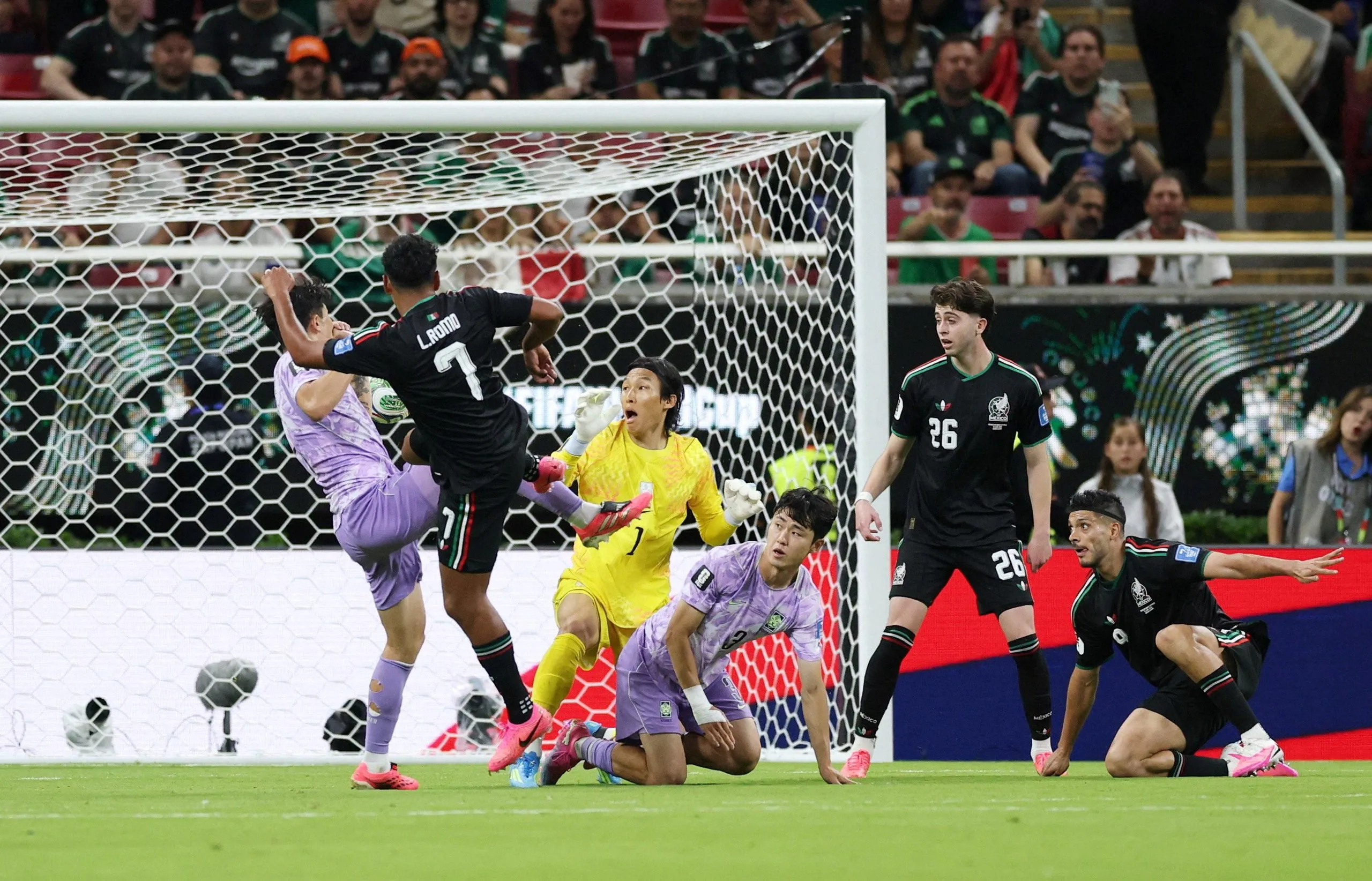
The sole goal of the match arrived in the 50th minute, courtesy of a blunder from South Korea. Kim Seung-gyu, the goalkeeper, attempted to claim a high ball but collided with defender Lee Ki-hyuk, injuring his elbow and dropping the ball for Luis Romo to score. This marked Romo’s fifth international goal in his 64th appearance. He was one of three players replaced in the Mexican lineup, taking the place of Álvaro Fidalgo, as Javier Aguirre opted against starting the much-talked-about 17-year-old Gilberto Mora. A crucial double save by Raúl Rangel in the dying minutes helped maintain the lead, as he deflected Cho Gue-sung’s header and exhibited remarkable agility to gather Yang Hyun-jun’s follow-up attempt.
This match marked Mexico’s first World Cup game in Guadalajara, yet the stands still showed some empty seats. Although the attendance was significantly better than during South Korea’s previous match against Czechia, there were still noticeable gaps, particularly in the corporate seating around the stadium.
The venue, unlike the historic 71,000-capacity Estadio Jalisco—where Gordon Banks famously denied Pelé’s header in 1970—was the Estadio Akron, opened in 2010. Its unpretentious exterior rises from a flat landscape near Zapopan, reminiscent of a venue an ambitious hobbit might construct on industrial land.
Both teams seemed to lack the urgency present in their initial matches, possibly due to the tournament format. With a victory already secured, a draw was sufficient for both to advance, barring a scenario where all four teams could end up with equal points. As a result, both squads played cautiously, with the crowd more patient than those at the Azteca, who had booed Mexico during their previous game despite a 1-0 lead against ten men. However, frustration grew, and a lengthy spell of South Korean possession drew boos from the fans just before halftime.
The match was played in the spirit of the strong ties between South Korea and Mexico. Efforts toward a free trade agreement began in 2012, though it is yet to be finalized. As of now, South Korea ranks as Mexico’s sixth-largest trade partner. Korean immigration to Mexico dates back to 1905, when the Ilford ship brought over 1,000 passengers, many of whom settled in the Yucatán Peninsula. A Friendship Pavilion, gifted by the South Korean government, stands in Chapultepec Park in Mexico City.
The goodwill between the nations was notably enhanced during the 2018 World Cup when South Korea, already eliminated, triumphed over Germany, allowing Mexico to progress to the knockout stage. In a display of appreciation, fans gathered outside the South Korean embassy in Mexico City, chanting, “¡Coreano, hermano, ya eres Mexicano!” – “Korean, brother, now you’re Mexican!”
However, the friendly atmosphere can only extend so far. When a team gifts a goal, as Kim did, Mexico was quick to accept the offer. Although Kim later made an impressive save from Raúl Jiménez, that moment is unlikely to linger in memory.
South Korea faced additional challenges leading up to the match, as footage surfaced of two people, believed to be journalists, making derogatory comments about Son Heung-min’s brief military service. In response, the players refused to participate in media duties two days prior to the game. Son, now 33, struggled again on the field, finding it difficult to navigate Mexico’s offside trap and failing to capitalize on scoring opportunities. He was substituted shortly thereafter.
Looking ahead, South Korea could still progress with a win against South Africa in their final match, while a draw might suffice as well. Yet, the limitations of this team raise doubts about their chances of advancing further. Conversely, Mexico, having won both matches, has yet to demonstrate anything beyond basic competence.