


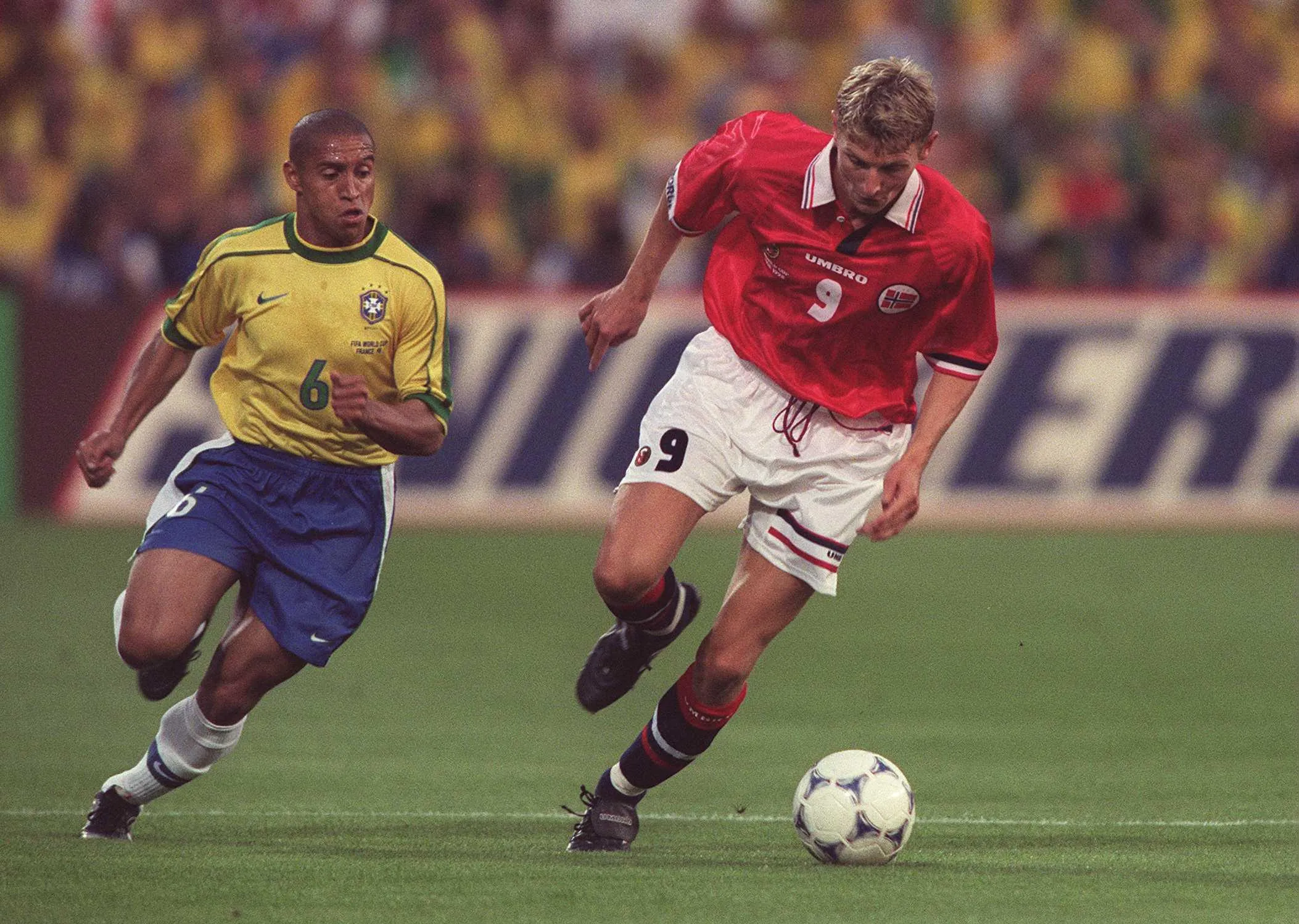
Norway, a nation of 5.6 million, boasts a remarkable history of competitive achievement. Our Winter Olympians consistently excel, our women’s handball team dominates, and we proudly celebrate the success of athletes like the Ingebrigtsen brothers. Additionally, Norway has produced the greatest chess player of all time. Yet, nothing unifies the country quite like football, and no match has captivated the nation more than the unforgettable 2-1 victory over Brazil in the final group stage of the 1998 World Cup.
The iconic call from commentator Arne Scheie, proclaiming “Vi har scoret i Marseille!” (“We have scored in Marseille!”), resonates in our memories as strongly as any words uttered by Norwegian poets or politicians over the past half-century. Known for his calm demeanor and factual accuracy, Scheie lost his composure when Norway was awarded a late penalty at 1-1, mistakenly referring to the Hertha Berlin midfielder Kjetil Rekdal as “Kjetil Reknett, of Werder Bremen” (Reknett is not a known surname in Norwegian or any language, to my knowledge).
Desperately searching for words to capture the gravity of the moment, Scheie declared that the impending penalty would be “the most important kick of a ball in the history of the Norwegian football federation” While an unusual statement, Scheie’s emotional outburst effectively conveyed the significance of the occasion. Rekdal converted the penalty, leading to a collective eruption of joy among Norwegians. This moment transcended mere sport, becoming a pivotal event in our national identity.
Numerous documentaries, books, and even an opera have celebrated the triumph over Brazil. However, little attention is given to the match that followed: a disappointing 1-0 loss to Italy in the round of 16. Norway’s first golden generation qualified for two World Cups, reached second in the FIFA rankings, and achieved victories against formidable opponents like England, Italy, the Netherlands, and Brazil, yet they never advanced beyond the knockout stage. Both the 1994 and 1998 World Cups ended with a lingering sense of regret and unfulfilled promise. The current players are acutely aware of this narrative; three of them have fathers who participated in the 1994 World Cup. Ståle Solbakken, the current manager, carries this history personally, having played over an hour in the defeat to Italy. “Historically in tournaments, Norway have played well in qualifying and then performed worse at the World Cup,” Solbakken reflected in a Netflix documentary prior to this tournament. “Now we have to see if we can raise our game”
This context is crucial as outsiders may view this squad merely as a collection of talent from elite European clubs. Expectations might lead them to assume Norway would triumph over Senegal and Côte d’Ivoire based solely on star power. Observers have witnessed Norwegian fans embracing their culture in America, delighting the global media with the “Shut up boys! This is the greatest Norwegian football win of all time, and you can quote me on that.” All of this has unfolded joyfully and according to plan. However, the players have had to contend with the weight of history, aware of the 28-year drought in tournament qualifications and the ultimate failures of the beloved 1990s team at both World Cups. This is why, after the victory against Senegal, a spirited Solbakken emphatically addressed Norway’s in-house media, declaring: “you are changing not only Norwegian football history, but Norwegian history in general. This is so big. This will never happen again, because we are going to qualify time and time again. Which means these 28 years of hurt, everything that is felt around the country, what I feel right here, what you feel, it will never come back.”
Following their triumph over Côte d’Ivoire, Solbakken told his players, “I think this will change Norway for ever,” Norway’s win against Côte d’Ivoire was not just a strong team overcoming a capable opponent but marked the first instance of a Norwegian team truly fulfilling its promise on the World Cup stage.
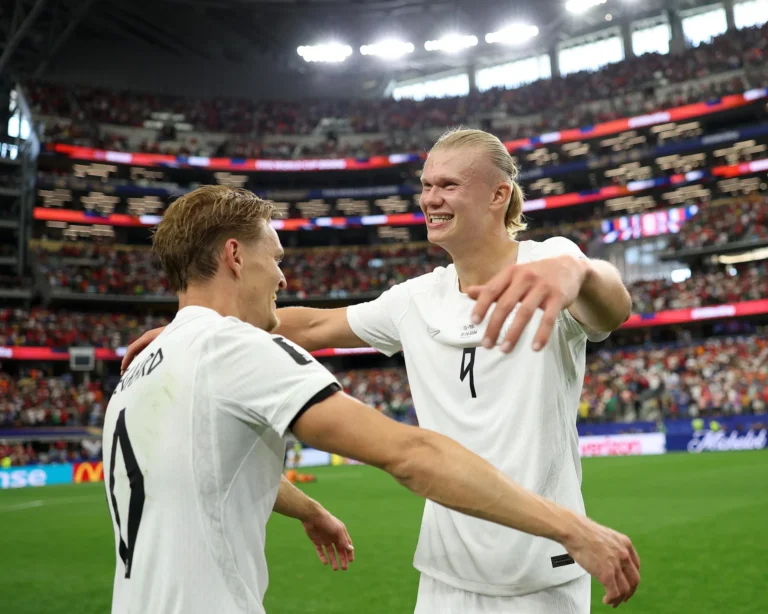
Having exceptional stars certainly aids the cause. Erling Haaland has emerged as a global sensation, achieving remarkable success at the club level, while Martin Ødegaard stands as a Premier League-winning captain. Each offers contrasting styles of leadership: Ødegaard’s thoughtful demeanor contrasts with Haaland’s insatiable drive. Both elevate standards in their own ways. However, the victory over Côte d’Ivoire was a collective effort, showcasing the entire squad’s talent. Patrick Berg, who fought to reclaim his spot on the team, delivered an outstanding midfield performance, while goalkeeper Ørjan Nyland, who faced skepticism, made a remarkable save in the dying moments. The agile Antonio Nusa scored a goal reminiscent of his idol Neymar at his peak.
“If I survive this I will survive anything,” stated Haaland, a player not typically prone to exaggeration, following the match. Solbakken remarked, “If I survive this I will survive anything,” a statement that carries weight given his previous health challenges, including a near-fatal cardiac arrest earlier in his career.
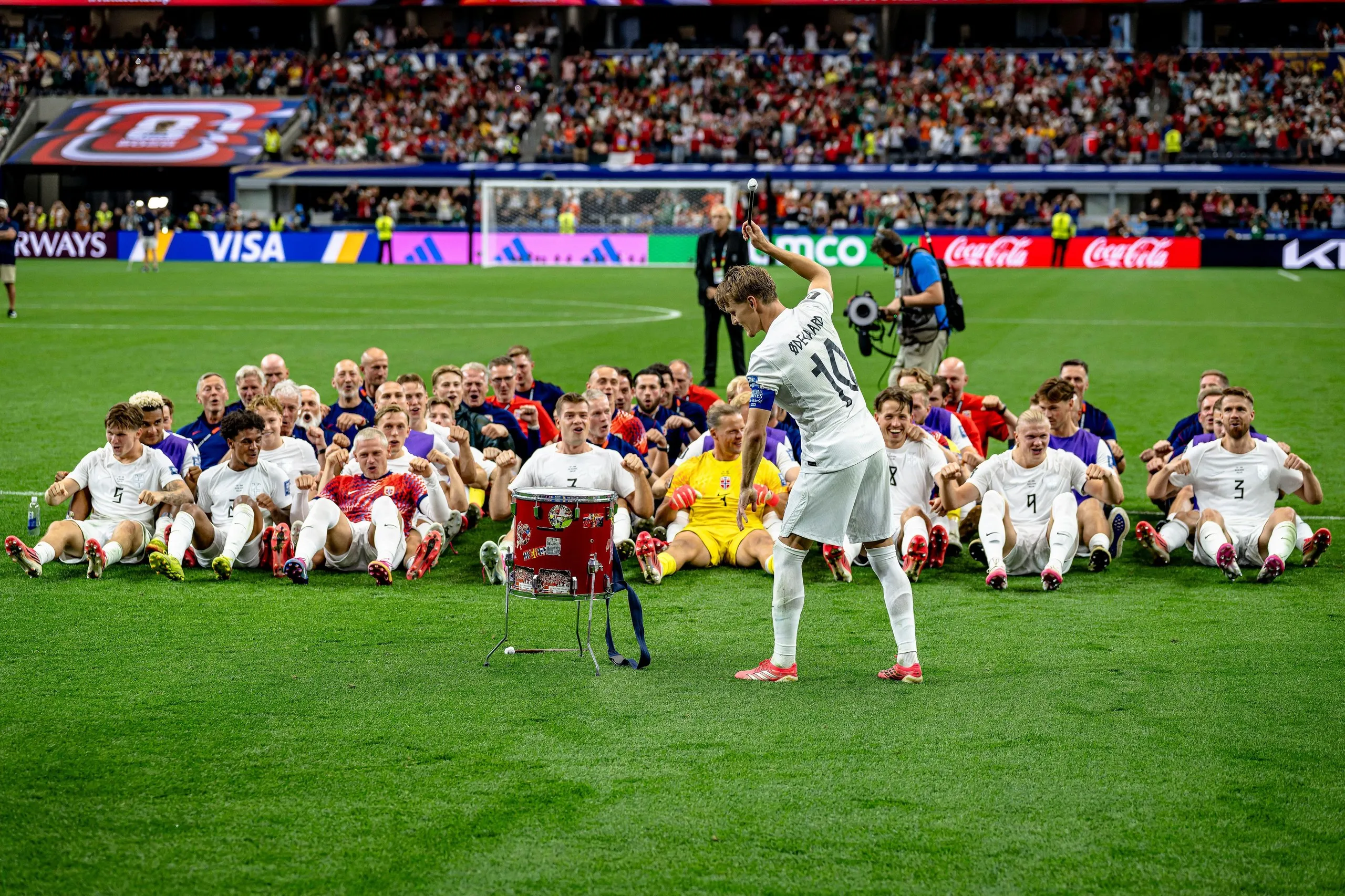
In a show of unity, Haaland and Ødegaard suggested that the team join fans in the now-iconic Viking Row after victories, reinforcing the genuine emotional connection they share. Whether this recent win against Côte d’Ivoire surpasses the victory over Brazil in 1998 remains open to debate. However, the narrative crafted by football’s storytellers is fitting, as Norway’s next opponent is none other than Brazil. It could be no other way.
- Norway
- World Cup 2026
- World Cup
- Brazil
- comment