





The impact of the climate crisis has reached the realm of football.
Analysis reveals that nearly 20% of the 104 matches held during this year’s World Cup occurred under heat and humidity conditions deemed unsafe by the football players’ union, prompting calls for potential delays or postponements. Additionally, 23 games were played in cities experiencing similar heat levels, but in air-conditioned stadiums that offered some relief.
Simon Stiell, executive secretary of the United Nations climate organization, commented via email, stating, “The climate crisis is hitting the things we all need, like a stable climate, clean air and affordable food, as well as the things we love, like football and other sports,”
This analysis examined conditions for all 104 matches played, including forecasts for the remaining two. The results underscore a growing challenge for the sport as global temperatures rise, raising concerns about the safety of conditions for both players and fans during major tournaments.
Joshua L DeVincenzo, assistant director at Columbia University’s National Center for Disaster Preparedness, noted, “The 2026 Fifa World Cup matches have introduced a true stress test of heat mitigation and preparedness,”
This report emerges as a record-breaking heat wave engulfs large parts of the United States, affecting over 125 million Americans from California to New England. The final match on Sunday is anticipated to occur under conditions with a wet bulb globe temperature estimated just below 26C (79F), where lower humidity will help offset the effects of high temperatures. However, another worrisome factor looms: wildfire smoke is expected to further deteriorate air quality, with New York City Mayor Zohran Mamdani cautioning about potential health risks.
Our analysis discovered that approximately 20 matches were conducted under conditions where the wet bulb globe temperature (WBGT) reached or exceeded 28C (82F). According to the players’ union, Fifpro, games should be postponed in such scenarios to protect athletes’ health. DeVincenzo also highlighted that other matchgoers face risks.
“Fifa, spectators, stadium operators, and others … were tested firsthand on the disruptions and complications that extreme heat and weather can pose.” he noted.
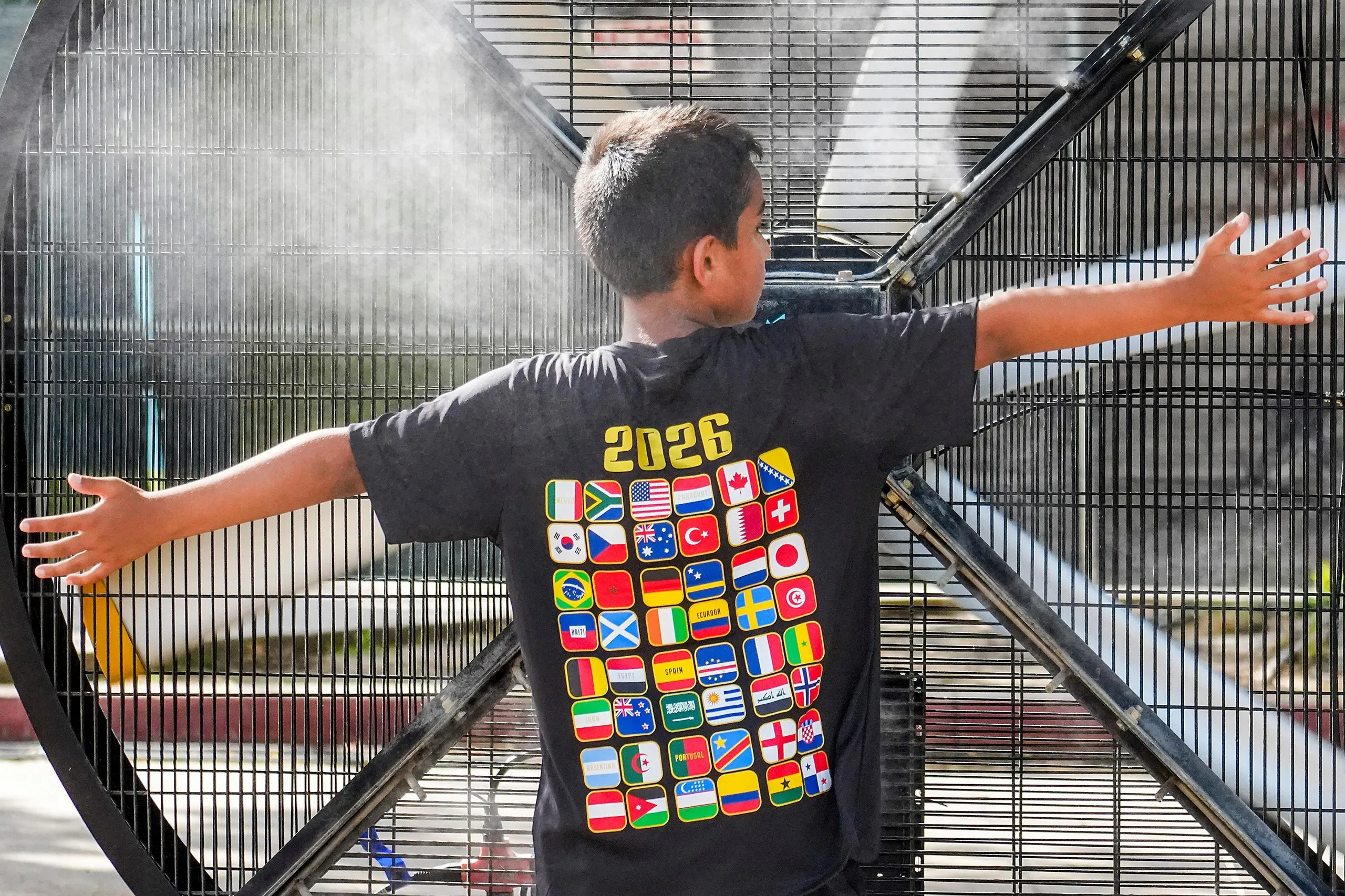
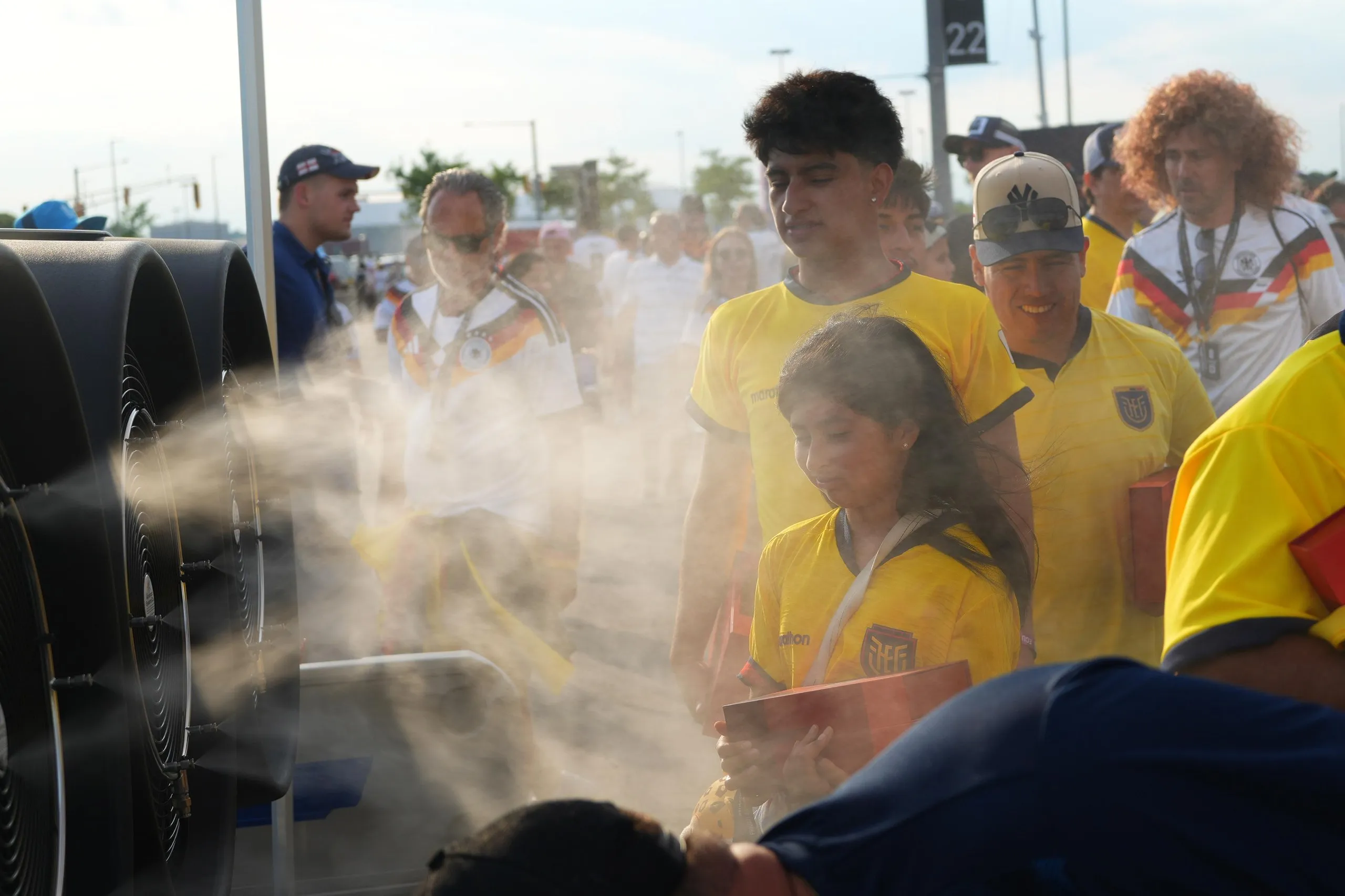
Fifa has not responded to requests for comment. The organization previously stated it has deployed meteorologists at match venues to assist with preparations for extreme weather, and that planning involves close collaboration with city organizers, stadium authorities, and national agencies. Players were provided mandatory hydration breaks and had access to water, electrolyte drinks, ice, cold towels, fans, mist, and shaded areas, according to Fifa.
Fifpro chose not to comment on the latest findings but had previously remarked, “We learned from this World Cup that, in addition to player safety and health, important precautions must be considered for spectators, volunteers, and stadium staff long before the day of the match,”
WBGT readings take into account humidity, sunlight, and wind, offering a more precise measure of heat stress and the body’s capacity to cool itself through sweating. When humidity and heat reach critical levels, the body can struggle to cool down, leading to rapid overheating, which can result in heat-related illnesses or even fatalities.
Although official WBGT measurements necessitate specialized equipment on-site, approximations were compiled based on air temperature and humidity data for each match, utilizing data from an open-source weather service called Open-Meteo. The estimates applied a formula developed by the Australian Bureau of Meteorology, which is also employed by institutions such as the Canadian military.
The most sweltering game in a stadium without air conditioning occurred on July 4 in Philadelphia. During the round of 16 clash between France and Paraguay, temperatures at Lincoln Financial Field reportedly soared to 38C (100F), with WBGT potentially surpassing 33.9C (93F), according to the analysis.
The hottest match overall took place when Argentina triumphed over Austria 2-0 on June 22 in Dallas, Texas. While this game was held in one of the three fully air-conditioned stadiums of the World Cup 2026 (the others being in Houston and Atlanta), the outdoor conditions remained oppressive. Outside the stadium, asphalt temperatures reportedly climbed to a dangerous 50C (122F).
DeVincenzo emphasized the need for improved protections for those entering and exiting World Cup venues, as well as those attending fan festivals. He stated, “The lesson for everyone in the industry is that with a warming planet, heat conditions will play a bigger part in tournament and league scheduling decisions in the future.” He added that measures could be implemented to train volunteers to recognize signs of heat stress and take appropriate actions when fans show symptoms like dizziness, fainting, or falling.
Every match held in Dallas, Houston, and Miami appears to have been played in conditions that exceeded the 33.9C (93F) threshold. At Miami’s Hard Rock Stadium, which lacks air conditioning, players, staff, and spectators endured WBGT readings of approximately 32.5C (90.5F) during Norway’s recent match against England. Temperatures reached 33C (91.4F) amidst 65% humidity, causing sweat to pour from attendees’ faces throughout the venue.
As record heat and humidity are set to envelop the midwestern and eastern United States this week, conditions may become even more difficult for players and fans at upcoming matches. Looking ahead, the situation could worsen as well.
The 2030 World Cup is scheduled to take place across Spain, Portugal, and Morocco, all of which are already experiencing increased instances of extreme heat due to climate change. Four years later, Saudi Arabia is expected to host the 2034 tournament during the northern hemisphere winter—a scheduling adjustment aimed at avoiding summer temperatures that frequently soar above 40C (104F).