


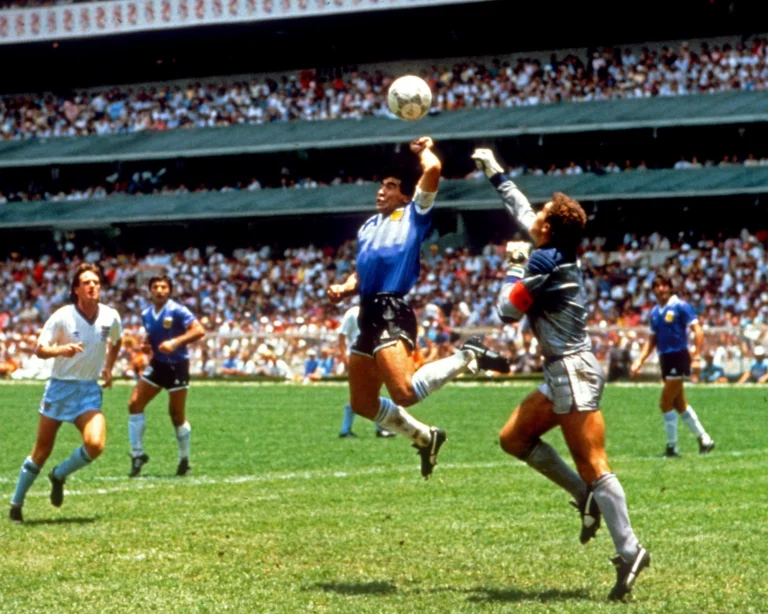
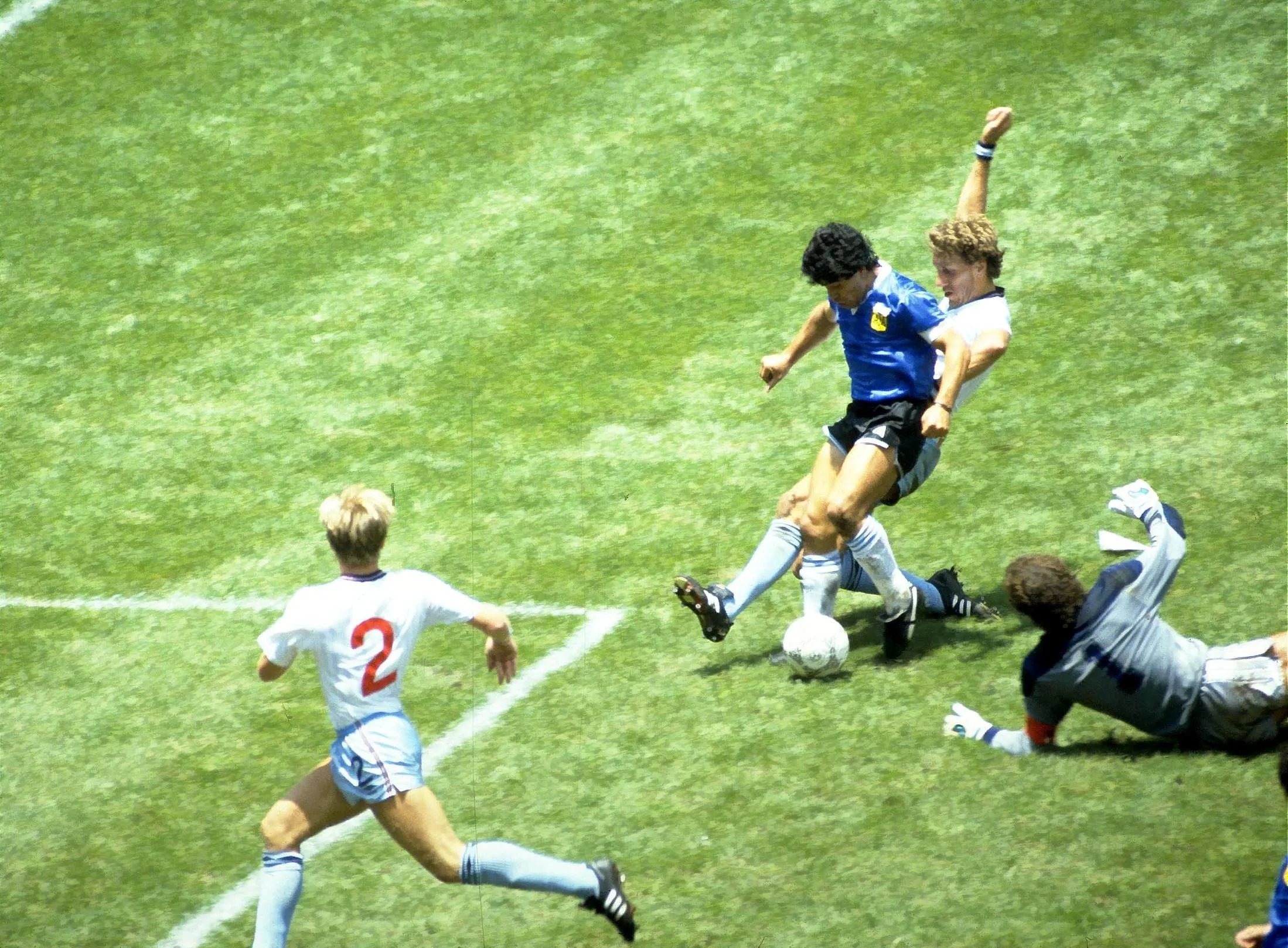
When I embarked on my first television assignment with ITV during the 1986 World Cup in Mexico, I didn’t foresee that I would witness a match that would become an unforgettable part of football history. The encounter between England and Argentina at the Azteca Stadium, attended by 114,000 spectators, showcased Diego Maradona’s brilliance, featuring both the most controversial goal ever scored in World Cup lore and, in my estimation, the best goal I’ve seen live.
The match remains etched in my memory, not just for the on-field action but also for the chaotic buildup. Navigating the congested streets of Mexico City proved challenging, with traffic crawling at a snail’s pace. Those unlucky enough to encounter corrupt local police faced confrontations demanding small bribes.
Long before the kickoff, the crowd had gathered, creating a continuous hum reminiscent of a large swarm of bees. Martin Tyler, ITV’s commentator, and I had to ascend to the high commentary gantry for our broadcast.
Having recently triumphed at the Azteca against Paraguay, England entered the match with a robust lineup, including Peter Shilton in goal, Terry Butcher in defense, Glenn Hoddle in midfield, and Gary Lineker leading the attack. However, our quality wingers, Chris Waddle and John Barnes, struggled to secure their positions on the team.
The altitude posed a challenge, and I worried about our midfield’s ability to recover quickly. In such conditions, making quick recovery runs after surging forward is extremely difficult, necessitating a focus on ball control and movement.
England performed admirably in the first half, but early in the second, the match was defined by those iconic Maradona moments. Regarding the “Maradona gets amazing elevation on his balls from the tightest of angles.” goal, while many believe it was deliberate, I contend that Maradona, fearing a collision with the approaching Shilton, inadvertently raised his arm, and the ball struck his hand before rolling into the net. With no linesman’s flag or referee’s whistle, he seized the opportunity, reveling in what was clearly an act of deception.
Immediately, England players rushed to protest to referee Ali Ben Nasser, who never officiated another World Cup match but amusingly took the ball home as a memento.
Just minutes after his first controversial goal, Maradona scored a breathtaking second, weaving past defenders like Reid, Peter Beardsley, Butcher, and Terry Fenwick before finding the net. There was no room for protest this time; it was one of the greatest goals ever scored, surpassing even Gareth Bale’s overhead kick for Real Madrid against Liverpool in the 2018 Champions League final and Son Heung-min’s remarkable run against Burnley.
In response, Bobby Robson brought on Waddle and Barnes, and a flicker of hope ignited when Barnes delivered a superb cross that Lineker headed in. However, England was eliminated, leaving players frustrated. Robson, typically composed, confronted the referee angrily in a post-match interview. For me, it was also a moment of embarrassment when Maradona, from the byline, delivered a cross to the back post, and I remarked, “Maradona gets amazing elevation on his balls from the tightest of angles.”
Reflecting on the quarter-finals, it’s notable that Argentina and England were joined by teams like Brazil, Mexico, and the European powerhouses of Spain, Belgium, France, and West Germany. While we are yet to see if any African teams will reach the last eight in this World Cup, their quality has undoubtedly improved significantly over the last four decades.
Several changes are evident from that era. Back in 1986, the English TV crew stayed at the same facility as the team in Saltillo, about an hour from Monterrey, a practice that would be unthinkable today. We interacted with the players daily during their leisure time by the pool and observed their training sessions.
The squad also lacked the modern amenities and setups available now, such as top-notch pitches, gourmet food, and extensive pampering. I recall some England players who enjoyed horse racing arranging for ITV to provide a feed of the Derby between their initial two matches, while others watched videos of US races and placed bets.
Initially, it seemed England’s stay in Mexico would be brief. The team started nervously, losing to Portugal and drawing against Morocco, prompting the English press corps to anticipate an early exit. At a sponsor’s reception after the second match, they were enjoying their complimentary gifts and drinks, believing their trip was nearly over.
Fortunately, Bobby and his trusted assistant Don Howe adjusted the tactics and formation for the subsequent match against Poland. It has often been suggested that it was the players who influenced this change. Regardless of who initiated it, Lineker secured his place in history with a hat-trick in a 3-0 victory.
Following that, confidence soared with a win against Paraguay, but Maradona thwarted England’s hopes of reaching the semi-finals. I hope this current team can return to the Azteca, overcome Mexico, and finally lay Maradona’s specter to rest.
- England
- World Cup 2026
- World Cup
- comment