


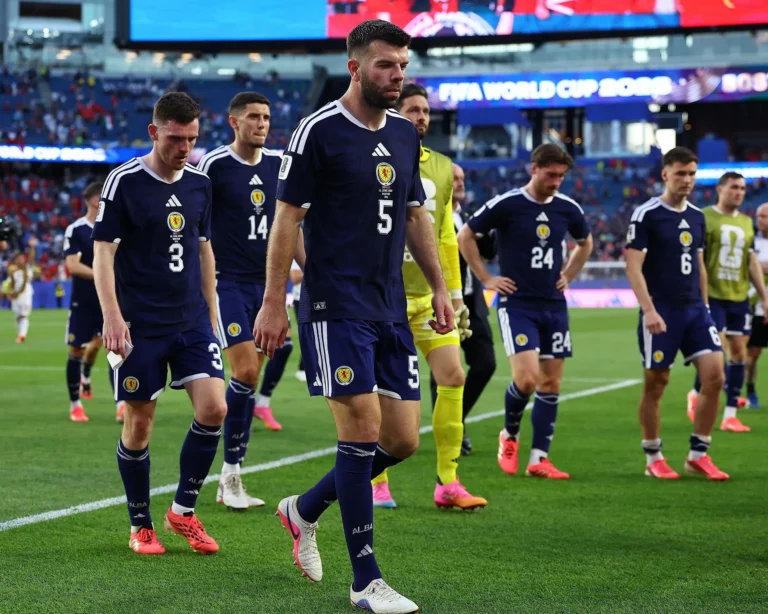
The potential scenarios that Scotland’s manager, Steve Clarke, seeks to avoid are already a focal point of conversation among supporters. Following Ismael Saibari’s quick goal for Morocco, the pressure on Clarke and his squad to create a historic outcome has intensified. As the Scottish side struggled to maintain possession in Boston, the looming threat of early elimination became apparent.
However, Scotland can take solace in their performance after the initial setback. Although Morocco dominated the first half, Scotland showed significant improvement after halftime, managing to control parts of the game. The narrow 1-0 defeat left Scotland’s goal difference intact, which could be crucial as they look ahead to their next match against Brazil.
Scotland finds itself in an unusual position. If they can avoid a heavy defeat against Brazil, which their previous match suggests is possible, they could still advance to the last 32. Yet, uncertainty looms over their group, particularly if Bosnia and Herzegovina wins against Qatar, potentially complicating things for Scotland. Group D poses additional challenges as Australia and Paraguay, both currently at three points, face each other in their final match.
“They will want to win the game. If they can’t win the game, they don’t want to lose it.” Clarke stated when questioned about how the group standings affect his players’ mentality. “It took him a little bit of time to get into the game. Once he gets in there, you know Ben is going to give you unpredictability at that end of the pitch. He gives us a threat that is different. Ben does something different, we know that. Brazil is a different game and probably a different approach.”
It’s essential not to overlook the broader context, especially if Scotland manages to escape Group C thanks to their 1-0 victory over Haiti. This match marked only their fourth goal across eight appearances under Clarke’s management. Unfortunately, their goal-scoring capabilities have been hindered by significant deflections and one consolation goal from a heavy defeat against Germany. At this level of competition, Scotland lacks the game-changing talent seen in teams of comparable size, such as Norway. While the team has demonstrated commendable spirit, having emerged from years of mediocrity, they remain significantly limited in their attacking prowess.
Reaching the last 32 would be a significant milestone for Scotland; however, comparing the current squad to teams from previous years would be misguided. The enthusiasm of Scottish fans during tournaments is palpable, but the team’s performance has not matched that excitement.
This issue extends beyond Clarke; it is a systemic problem within Scottish football that requires urgent attention. There is a pressing need for clubs to be incentivized to nurture homegrown talent, especially as this marks Scotland’s third tournament qualification in four attempts. The average age of the starting lineup against Morocco was closer to 30, highlighting the need for a new generation. Clarke has committed to another four years in charge, aiming to cultivate a younger squad, yet he faces a daunting challenge. Tyler Fletcher, the latest hopeful for a new era, has barely made his mark in the Scottish football system.
Clarke, along with the Scottish Football Association and the Scottish Professional Football League, must adopt a collaborative strategy to enhance the overall standards of the sport. The World Cup has further highlighted these deficiencies, as Premiership clubs continue to bring in players from abroad, which limits opportunities for emerging Scottish talent.
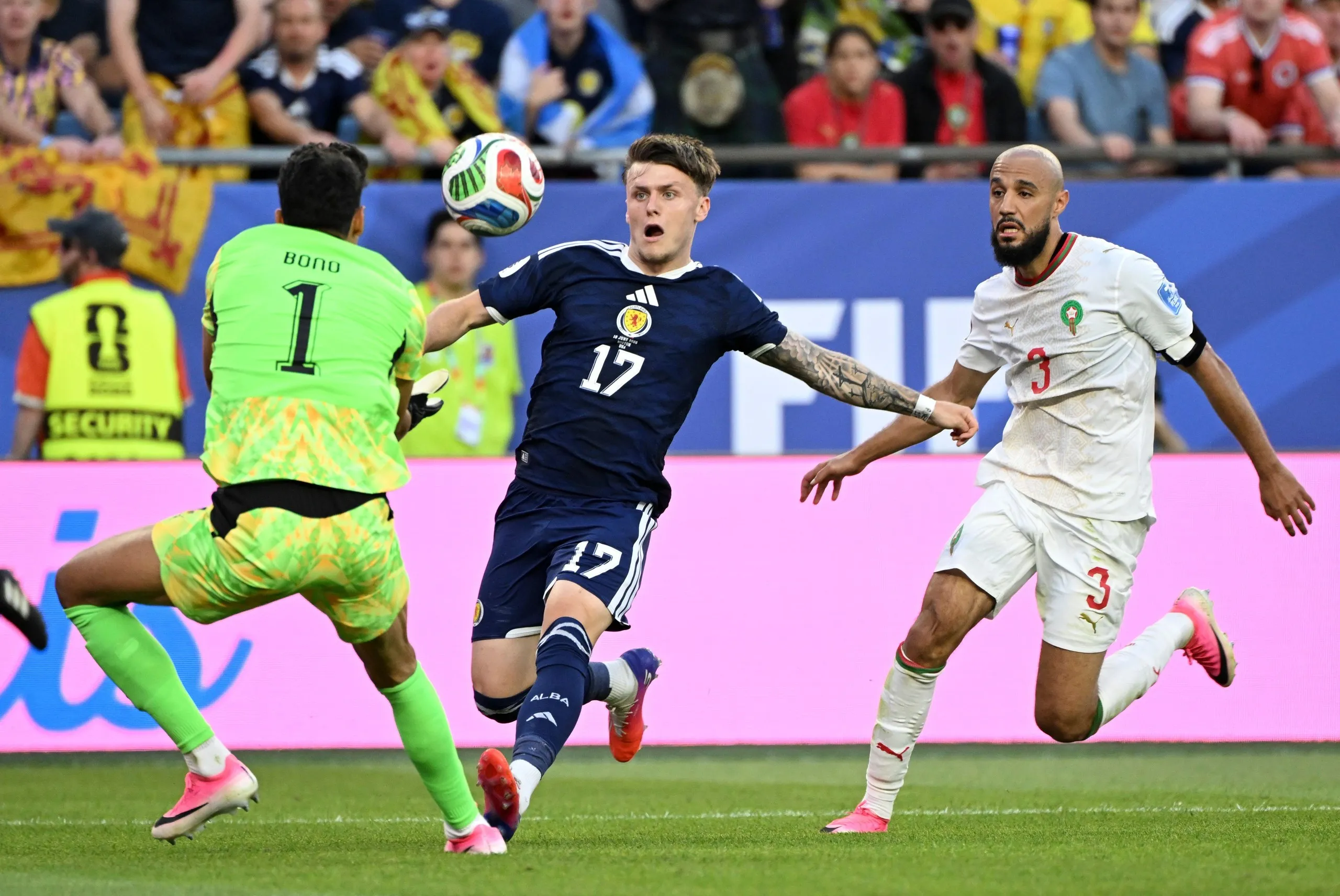
Ben Gannon-Doak remains a beacon of hope for the team. Although Clarke tends to downplay expectations surrounding the Bournemouth player, his potential is clear. At just 20 years old, Gannon-Doak has limited experience in club football, but the excitement around him reflects the fans’ desire for a standout player.
“He is a terrific player,” Clarke remarked after Gannon-Doak’s substitute appearance against Morocco. “It took him a little bit of time to get into the game. Once he gets in there, you know Ben is going to give you unpredictability at that end of the pitch. He gives us a threat that is different. Ben does something different, we know that. Brazil is a different game and probably a different approach.”
There is no need for overanalysis here; nations with fewer resources often rely on players with Gannon-Doak’s speed and directness. Scotland, in particular, should utilize him, as the team is in dire need of a game-changer. Clarke can alleviate some criticism regarding his ambition by giving Gannon-Doak a more significant role.
Following the match against Morocco, Scotland expressed dissatisfaction with two penalties they believed should have been awarded to John McGinn and Scott McTominay. While Clarke did not resort to anger, he suggested Morocco should have been reduced to ten men. The decision of video assistant referees not to intervene during this World Cup has been a deliberate choice, which, while beneficial in some respects, negatively impacted Scotland in this instance. Additionally, it prevented a penalty being awarded against Grant Hanley for handball during the Haiti game.
Scotland’s exit from Euro 2024 was met with complaints about a referee’s failure to award a penalty in their last group game against Hungary. This feeling of dissatisfaction persists now as well. The country faces significant football challenges that far outweigh any decisions made by officials.
Ultimately, Scotland’s fate lies in their own hands. A draw against Brazil would likely secure their passage to the knockout stage, while a loss could introduce uncontrollable factors into the equation.