


The curtain has fallen on Lionel Messi’s World Cup journey, leaving behind a bittersweet sense of loss. As Spain celebrates its well-deserved second trophy, Argentina struggled to provide anything beyond a fierce but ultimately fruitless resistance during the final match in New Jersey.
This Argentine squad relied heavily on faith and the remarkable, albeit sometimes fleeting, brilliance of their 39-year-old superstar. However, even the most magical moments can elude even the greatest of players, and Messi’s enchanting presence may now be a memory as he steps away from this grand stage.
Messi’s participation in his third World Cup final seemed destined to be his last, no matter the outcome. The atmosphere was charged with the realization that what unfolded over 120 minutes was merely a series of routines and movements, lacking the vital spark that often defines greatness. The echoes of England’s past struggles against Messi’s magic resonated, suggesting this might have been his final bow.
Determined to fight against fate, Messi found himself in a daunting position as the match entered the final moments, with Argentina trailing and a player down. With eight tournament matches behind him and six World Cups under his belt, the weight of expectation was palpable as Spain executed their methodical game plan, suffocating Argentina’s hopes.
Yet, Messi remained a presence, darting toward the corner flag with his characteristic agility, taking the final corners for Argentina and squeezing out every last ounce of effort.
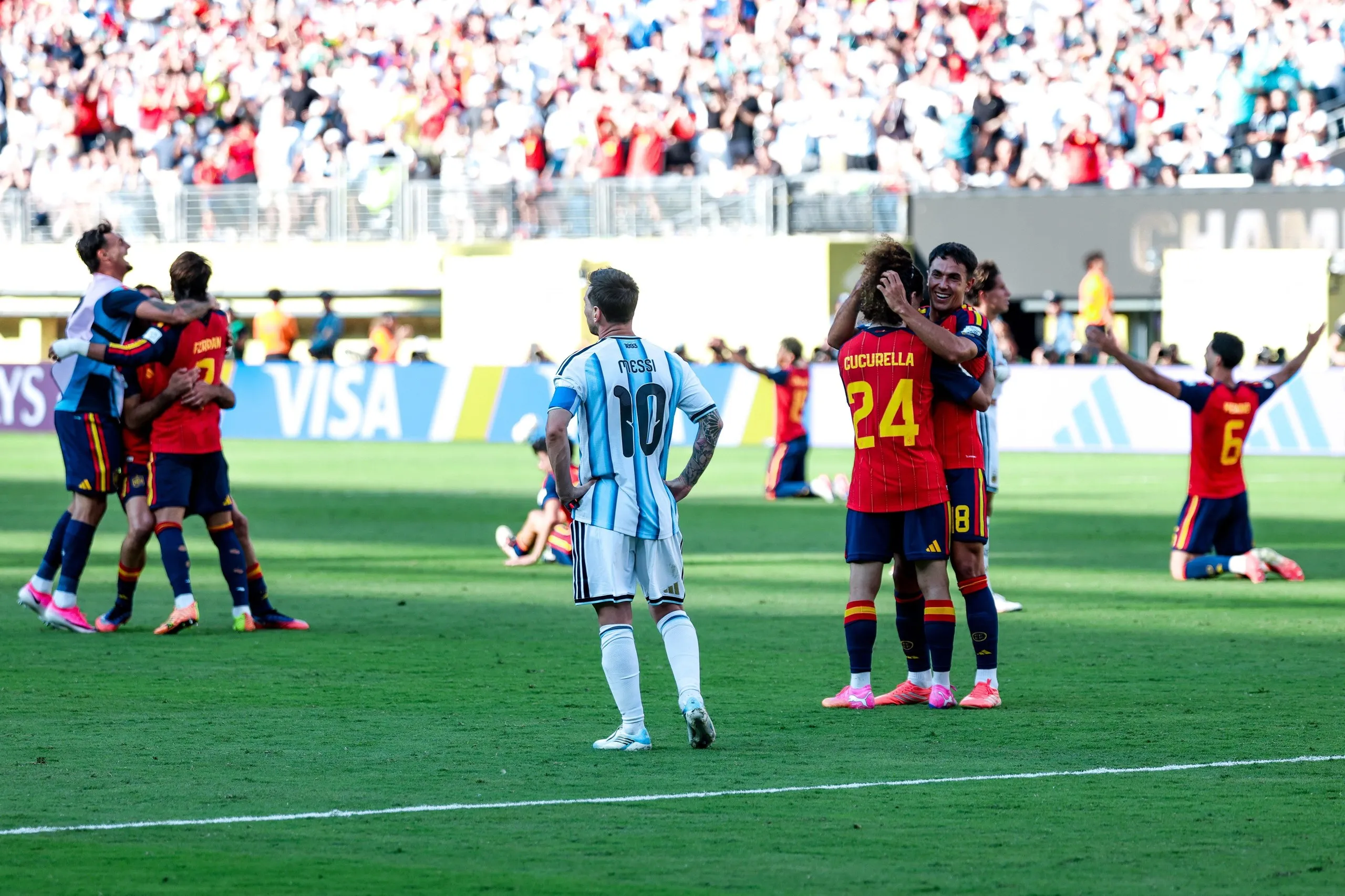
Just moments prior, Messi had observed from near the halfway line, his expression one of resignation as Ferran Torres struck the only goal of the match. The red shirts erupted in celebration while Messi, bent over, stared at the ground, a stark contrast to the jubilant scene unfolding around him.
Spain’s goal marked their 20th attempt, while Argentina had yet to register a shot on target. It was a testament to Spain’s dominance, showcasing their fluid passing and tactical superiority. By this point, Spain had not only claimed the championship but also established themselves as the epitome of a cohesive team structure, expertly neutralizing Argentina’s previous magic.
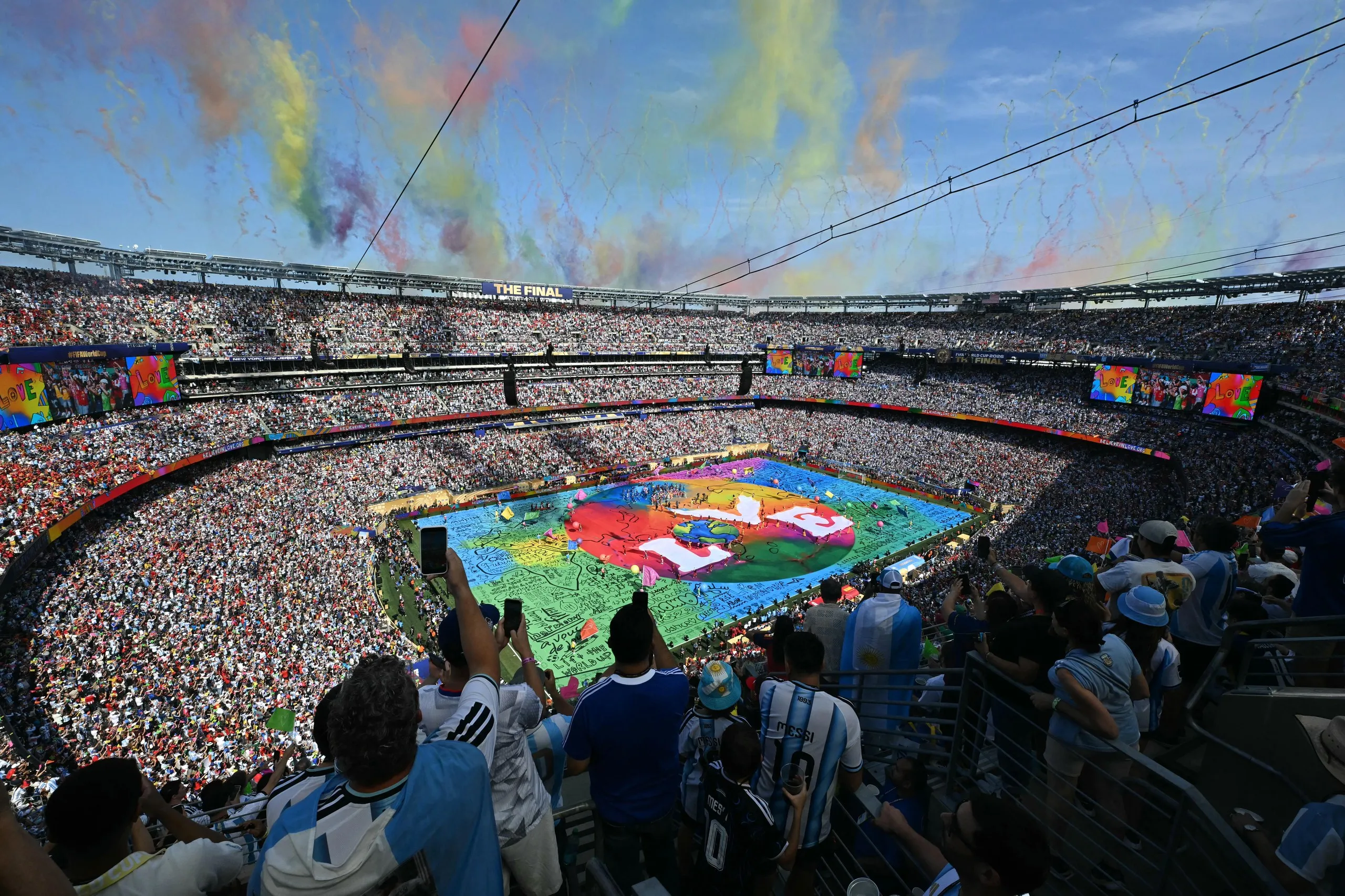
The atmosphere in New York that day was electric yet chaotic, mirroring the frenetic energy of a typical Sunday. However, the stadium seemed to embody a sense of finality, with long lines and disorganized crowds indicating a broader disarray surrounding the World Cup experience.
This venue, often overlooked during the tournament, stood out as a stark, ancient arena filled with anticipation. On this stage, one would expect a fierce tactical clash. Spain represented the pinnacle of systematic football, embodying a team ethos that seemed almost otherworldly.
Conversely, Argentina represented raw emotional nationalism, deeply rooted in their identity yet heavily influenced by European football. Messi, their talisman, had the potential to have been nurtured within Spain’s ranks, yet he emerged as the defining figure in modern European club football.
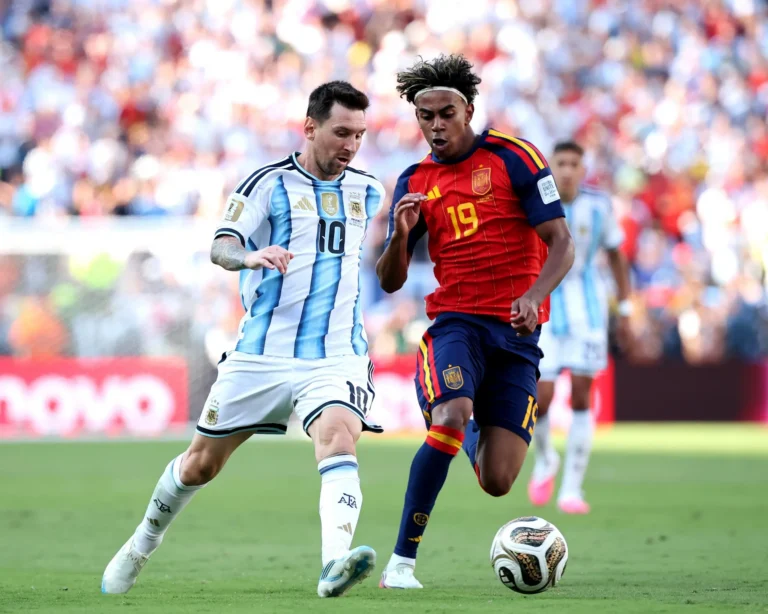
From the outset, Argentina appeared out of sync, mirroring their earlier performance against England. They aimed to control the tempo, reducing the game’s flow to give Messi manageable opportunities.
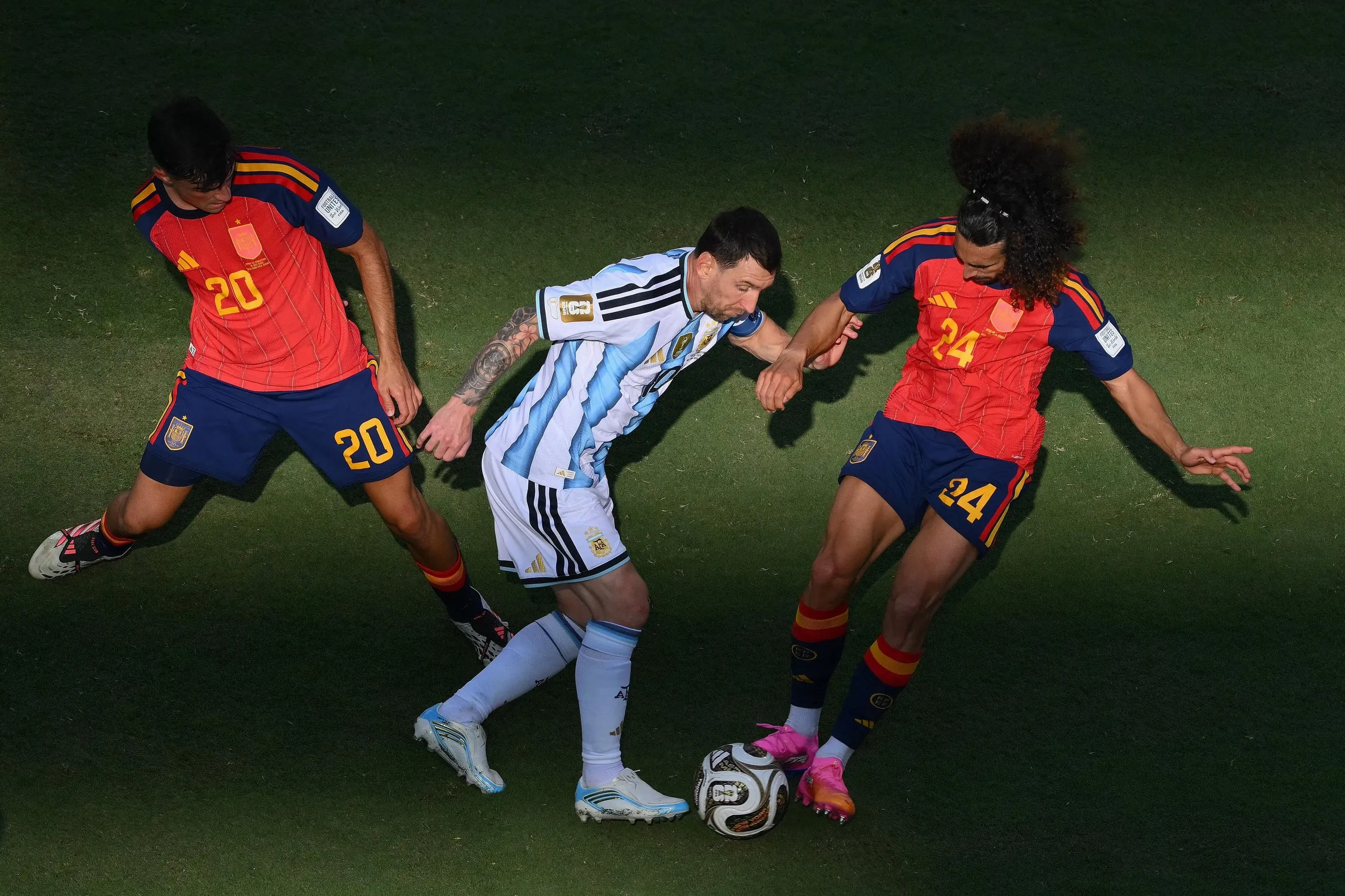
It took 35 passes before Messi engaged meaningfully, as he observed Spain’s intricate build-up from a distance, like a spectator at a wedding. Messi, known for his ability to read the game, found himself sidelined while Spain dominated possession.
By half-time, Argentina had begun to wither under the sun, resembling a desiccated version of their former selves. The match presented two contrasting narratives: a tense, scoreless battle of will and the vibrant spectacle of halftime entertainment.
Amid this, superstar performers like Madonna and BTS captivated the audience, while other entertainers added a layer of absurdity to the proceedings. Despite the lackluster halftime show, it seemed almost irrelevant as the primary spectacle unfolded on the pitch.
As the second half resumed, the match continued its inevitable decline for Argentina. In moments where Messi wasn’t in control, the team struggled to find their footing, losing sight of their purpose.
Spain, however, demonstrated their superiority, efficiently controlling the game and preventing Argentina from mounting any significant challenge. As the clock ticked down, Argentina’s chances evaporated, culminating in a crucial red card for Enzo Fernández, sealing their fate.
While Messi may continue his career with Inter Miami and potentially for Argentina, this World Cup feels like his final chapter. As the final whistle blew, he walked away, unfazed by the celebrations erupting around him, embodying the grace that defined his storied career.
Even in this twilight of his career, Messi remained a source of wonder, conjuring moments of brilliance that rendered the surrounding chaos almost serene. Though Spain may have outplayed him, they could not replicate the singular talent that is Messi. The world may never see another player quite like him.
- World Cup 2026
- Spain
- Argentina
- World Cup
- analysis