


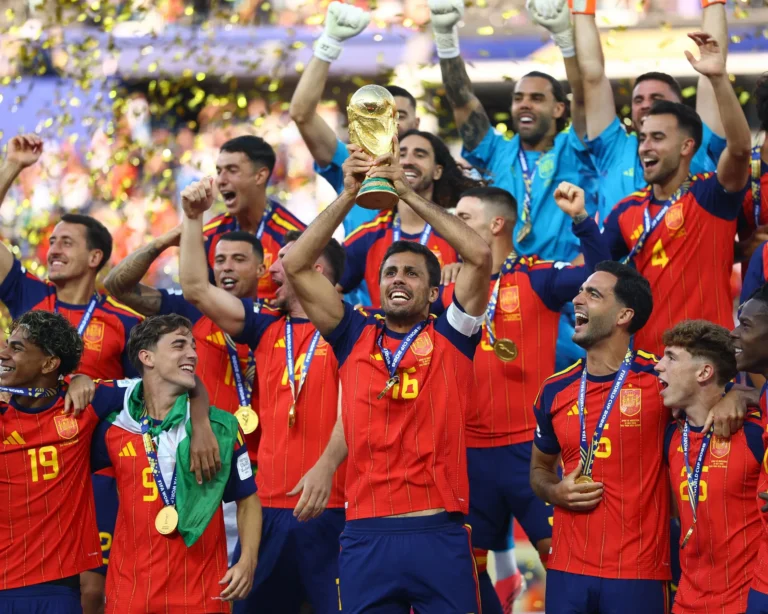
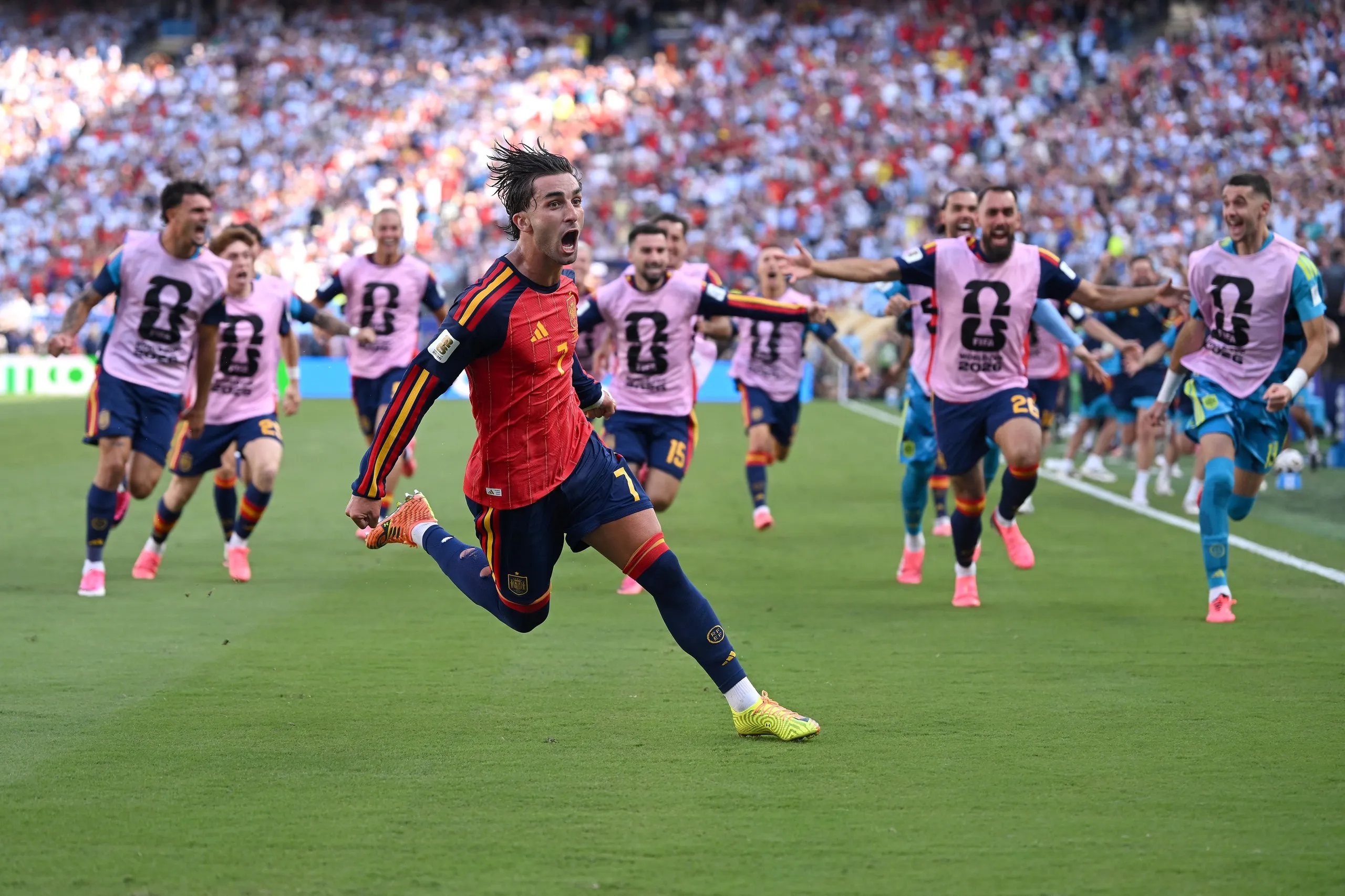
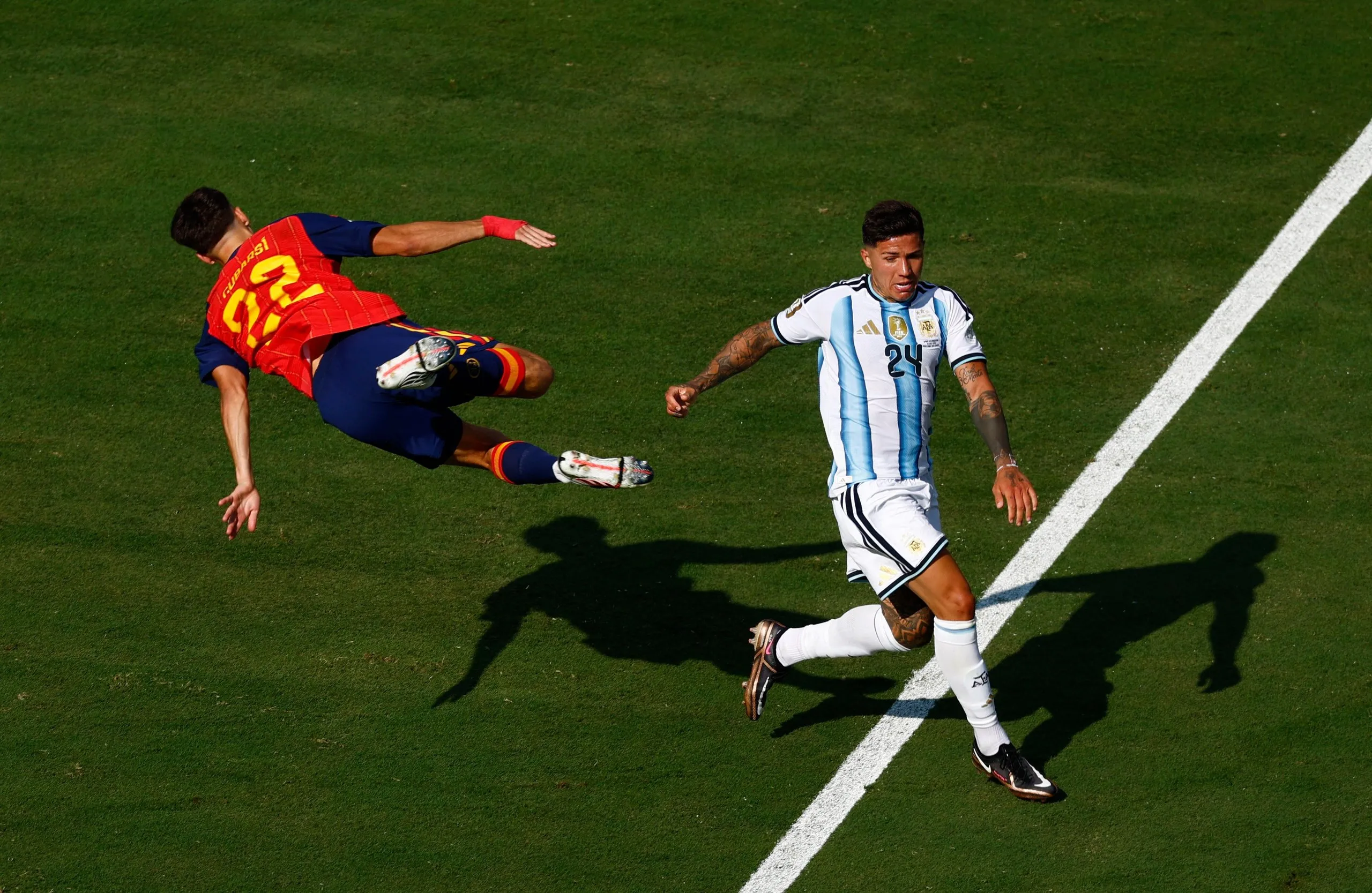
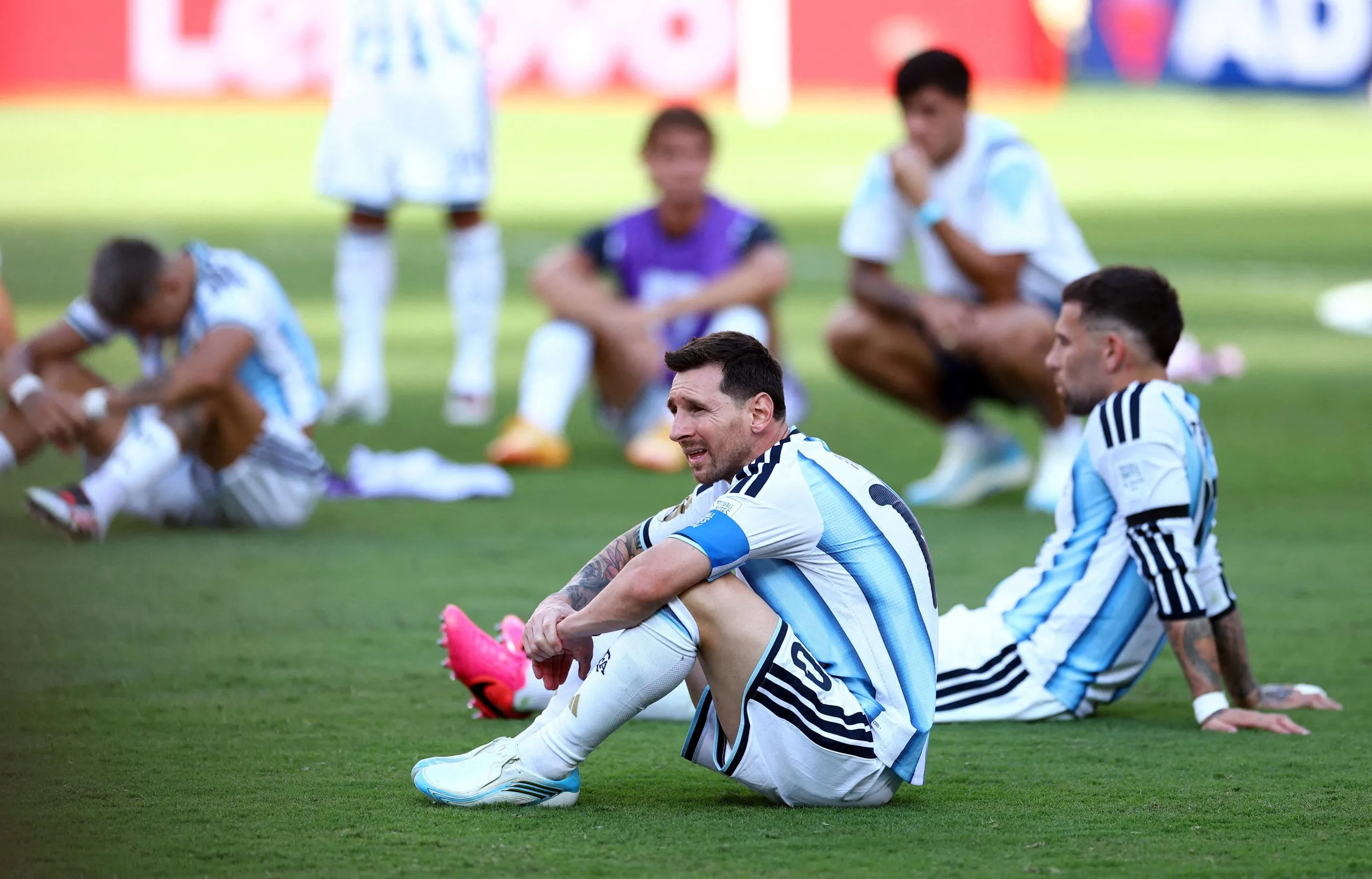
The culmination of a vision and steadfast belief culminated in Spain’s triumph, mirroring the legacy of their 2010 World Cup squad. The jubilation was palpable as the new generation of players matched the feats of their illustrious predecessors.
From the opening whistle to the end of extra time, Spain was the dominant force in the World Cup final. In stark contrast, Argentina’s lack of ambition was evident, especially after Enzo Fernández’s dismissal late in regulation. It was remarkable that Argentina did not register a single shot on goal until the 115th minute.
Spain’s strategy stifled any offensive efforts from Argentina, just as they had done throughout the tournament. Their staunch defense remained a critical element, as they had conceded only once in their previous eight matches.
The pivotal question was how Spain would breach Argentina’s defensive lines. They remained true to their core style, emphasizing possession, fluid movement, and control. When the breakthrough finally came, it signaled the impending reality of their second World Cup victory.
In the 106th minute, Spain found the net, a goal reflective of their relentless effort. Pedro Porro’s cross was expertly redirected by substitute Nico Williams, setting the stage for Ferran Torres to seize the moment. His finish was both powerful and precise.
Meanwhile, Argentina’s coach, Lionel Scaloni, appeared visibly distressed. His team’s journey to this final had been fraught with drama, characterized by late-game heroics. Throughout their knockout matches, they had never found themselves leading at the 90-minute mark.
In the closing moments, Argentina showed a flicker of hope. Substitute Guiliano Simeone had a chance to score but shot high. Ultimately, they could not defend their title from 2022, nor provide a fitting farewell for Lionel Messi, who struggled to hold back tears as he faced the Argentina supporters.
Messi and his teammates had previously claimed victory in their last three tournaments, including two Copa Américas and the last World Cup. They had not faced defeat in a knockout match since the 2019 Copa América. Their performance here reflected their shortcomings, as a troubling incident occurred post-match when Leandro Paredes received a red card for an altercation with Spain’s Eric García.
Argentina’s response to their loss was disappointing. They turned away from the Spain players during the trophy presentation, choosing instead to focus on their supporters behind one of the goals. The atmosphere was tense, with Donald Trump notably lingering on stage as Spain’s captain, Rodri, accepted the trophy, adding to the spectacle.
The entire event was a grand spectacle, beginning with a ceremony that marked the conclusion of a tournament filled with extravagant performances. Jennifer Hudson’s rendition of the US anthem before kickoff was memorable, as was Tom Cruise’s speech celebrating the beautiful game. The match itself kicked off six minutes late, and the halftime show added to the entertainment, although it struggled to match the intensity of the action on the field.
Early in the match, Argentina showed a brief glimpse of potential when Spain’s goalkeeper, Unai Simon, ventured out to intercept a through ball intended for Messi. The clearance fell to Julián Álvarez, but his touch let him down, marking a missed opportunity for Argentina.
The match was characterized by Spain’s masterful control of the ball. They excelled in maintaining possession, with Rodri orchestrating the midfield and Lamine Yamal showcasing moments of brilliance. Spain meticulously crafted their attacking patterns, aiming to wear down Argentina.
The halftime entertainment had its peculiarities; Madonna, one of the headline acts, was absent from the pitch, instead appearing on a big screen singing from a car driven by football legends Ronaldo and Ronaldinho.
Spain maintained high pressure, forcing turnovers and probing for weaknesses in Argentina’s defense. After a hydration break in the second half, Spain started to create more chances, with Argentina’s goalkeeper, Emi Martínez, proving to be a vital barrier with 11 impressive saves, some of which were particularly remarkable. It seemed as though Argentina was attempting to win the World Cup without taking a shot, as Scaloni’s tactics pushed them deeper into a defensive stance.
Lionel Scaloni made adjustments in midfield, bringing on Paredes to strengthen their defensive unit at the expense of winger Nico González. His intent was clear: to close the gap between his players and the Spanish attackers. However, Paredes quickly found himself booked for a foul on Rodri.
Fernández lost his composure under pressure, receiving a yellow card for dissent before committing a foul on Pau Cubarsí that sent the Spanish defender tumbling. Argentina managed to hold on until extra time, thanks in large part to Martínez, who denied Lamine Yamal’s free-kick and earlier thwarted efforts from Cubarsí, Aymeric Laporte, and Williams.
Spain intensified their efforts in extra time. Martínez continued to shine, making yet another critical save against Williams. A potential goal from Mikel Merino was ruled out for a foul on Nicolás Otamendi, a decision that seemed generous given Otamendi’s theatrics. Merino later squandered a great chance when he glanced wide from a Williams cross.
As Spain’s pressure mounted, it felt increasingly inevitable that they would score. Torres ultimately delivered the release that brought joy to the Spanish side. He later had another chance in the 113th minute but was flagged for offside. However, his initial goal was what truly mattered, solidifying Luis de la Fuente’s unassuming team as two-time World Cup champions.
- World Cup 2026
- Spain
- Argentina
- World Cup
- match reports