


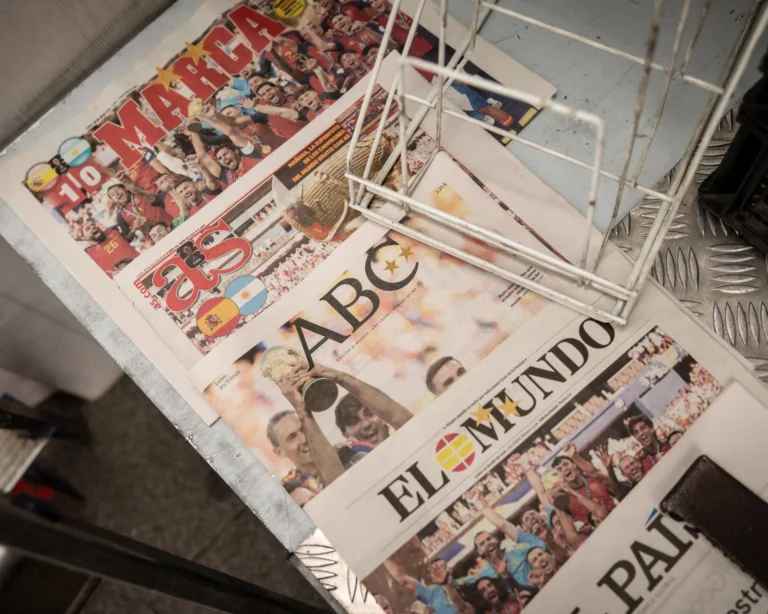
Football often transcends mere athletic competition, and this sentiment resonated throughout Spain’s media on Monday. The national team’s victory against Argentina in the World Cup final was not just about winning; it marked a significant moment that extended beyond discussions of tactics, hydration breaks, and unsportsmanlike conduct.
An editorial in El País hailed the achievement as a triumph for coach Luis de la Fuente and his remarkable squad. It underscored that, in an era dominated by individual stardom and social media personalities, this team has opted to focus on shared values, collective intelligence, and the spirit of hard work.
The piece further highlighted the importance of this success for Spain amid a politically charged atmosphere. It remarked, “It is the triumph of Luis de la Fuente and of an extraordinary group of footballers who – in a sport of stars and social media divas – have prioritised team values, joint intelligence, and the conviction of hard work,”
Media Reactions to Victory
El Mundo echoed this perspective, describing the match as a “It’s easy to see in this team, in its diversity of origins and regions, in the character of its stars, in its style of play, and in its ability to connect with fans and citizens alike, a reflection of what this country is, and what it can be, in the 21st century.” for the nation. Its editorial praised the youthful, relatable players who embodied the best qualities of a modern, forward-looking Spain.
ABC celebrated the victory with the straightforward headline “Our country has lived a unique collective experience,” while also taking a moment to critique Argentina’s conduct during the match, labeling it as “Thanks to a group of young people who are as dazzling as they are relatable, we have seen the finest values of a Spain that is modern, exciting and capable of looking to the future with huge confidence.”
Rubén Cañizares pointed out the disparity in sportsmanship, stating, “Unlike Argentina, De la Fuente’s team had the courtesy to give Argentina a guard of honour as the ‘worthy’ runner-up … and even Sergio Ramos, who was in charge of carrying the World Cup trophy to the stage where Infantino and Trump presented it, embraced Messi in a warm, consoling hug, as Messi began to dissolve in a sea of tears.”
Analysis of the Match
In the sports daily Marca, José I Pérez offered a clear analysis of Spain’s second trophy victory. He noted that Spain dominated possession, created more scoring opportunities, and appeared more threatening than Argentina throughout the match.
“Spain had more possession, created more chances, had more shots than Argentina, and looked more dangerous,”
Cultural Reflections
Writing for La Vanguardia, Jordi Basté examined Spain’s ability to remain focused despite the distractions surrounding the final, including celebrity appearances and the presence of political figures like Donald Trump. He remarked, “The team was the better side in the final … Argentina, like all the other teams in the tournament except Belgium, couldn’t score against Spain, who have only conceded one goal in their eight World Cup matches. It’s a spectacular record. It’s unprecedented in the World Cup for a winning team.”
Basté emphasized that while the fanfare surrounding the event may have suggested otherwise, “If a Martian had landed on Earth yesterday and turned on the television, he would scarcely have guessed that the World Cup final was about to begin,” He concluded with a powerful message about the essence of the game, noting, “He would have thought he was watching the opening of a casino or billionaires’ convention.”