


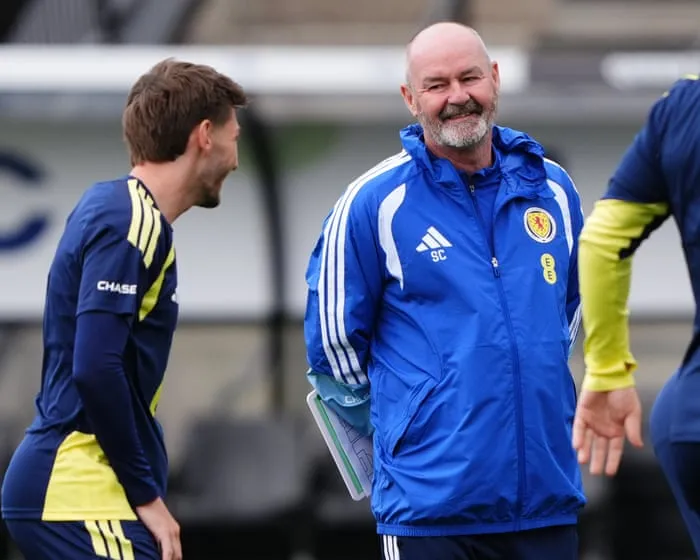
The pinnacle of Scottish football fosters an environment that appreciates long-term commitments. Neil Doncaster, the chief executive of the Scottish Professional Football League, joined the Scottish Premier League back in 2009. Meanwhile, Ian Maxwell, who was surprisingly recruited from the struggling Partick Thistle, has served as the chief executive of the Scottish Football Association since 2018. Notably, Scot Gemmill has held the position of under-21 manager for the national team for an impressive decade, despite less than stellar results.
Whether one views this as positive stability or as a sign of stagnation, it is clear that progress is not being made at a pace that attracts attention from larger leagues.
In this context, Steve Clarke’s four-year contract extension as Scotland’s manager comes as no shock. Maxwell remarked, “It’s quite remarkable to suggest that offering him a new deal is a risk.” The president of the Scottish FA, Mike Mulraney, expressed his confidence in the decision, stating, “I don’t require validation from others to justify my choice.”
Both Maxwell and Mulraney praised Clarke prior to Scotland’s struggles at Euro 2024, yet they seemed to vanish from the public eye amid the backlash following the team’s disappointing exit from the tournament.
Throughout his tenure, the Scottish FA has given the impression of being heavily reliant on Clarke, as if he controls his own destiny. Contrary to popular belief, granting Clarke a new contract just before the World Cup was a bold and potentially risky move. This decision implies that performance in the finals may not be as crucial as it should be, raising eyebrows about the lack of acknowledgment of this reality.
If Clarke’s record of qualifications was indeed enough to warrant a new contract, one would expect it to have been finalized right after the remarkable win over Denmark that assured their World Cup spot. Instead, the subject faded from discussions until Clarke revealed his discomfort regarding his contract status ahead of the friendlies in March.
At 62, Clarke had previously seemed inclined to depart after the World Cup but had a change of heart that may extend his tenure to an impressive 11 years. Skeptics might argue that both Clarke and the Scottish FA realized it would be more challenging for Scotland to miss out on Euro 2028, for which they will be a host nation, than to qualify for the event itself. Notably, Clarke has seen his salary double with each qualifying round exit.
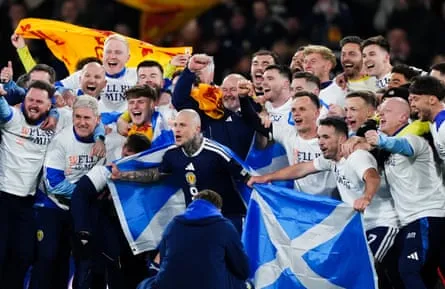
Clarke has proven to be an exceptional manager for Scotland, significantly raising the standards and expectations. He has achieved three tournament qualifications in four attempts, each in distinct manners, highlighting his versatility as a coach. In recent years, Clarke has become increasingly active on the training ground, with players responding positively to his approach.
When he eventually departs, the challenge will be finding a successor who commands the same respect among the Scotland squad. Identifying such a successor is not straightforward, which partially explains the Scottish FA’s tendency to stick with familiar faces. The narrow focus on hiring a Scottish coach limits their options, reminiscent of past hires like Berti Vogts.
Scotland’s World Cup hopes hinge on their opening match in Group C. A resounding victory against Haiti would likely secure their place in the knockout stage for the first time. Conversely, anything less would cast a shadow over their ambitions, especially with formidable opponents like Morocco and Brazil looming.
Haiti made headlines with a stunning 4-0 win over New Zealand recently. However, they remain ranked outside the top 80 teams globally, and their absence from the World Cup since 1974 makes Scotland’s 28-year wait seem brief by comparison. Scotland enters this tournament armed with top-notch facilities, a dedicated support team, and a squad that finds itself at a pivotal moment in their careers, making it imperative that they capitalize on this opportunity.
While Scotland is a solid team, they are not yet a great one. Their next test on the World Cup journey is a warm-up match against Bolivia in New Jersey set for Saturday evening. The memorable victory against Denmark was an exceptional moment, and other teams of similar stature—like Australia, the USA, Denmark, and Algeria—have successfully advanced from their groups in recent World Cups. The Tartan Army is right to celebrate their return to this stage, but they must remain focused on a serious competitive goal: to demonstrate that they have learned from their previous disappointments in 2021 and 2024.
Clarke has also signaled a forward-thinking approach by including Tyler Fletcher in his World Cup roster. The Manchester United midfielder possesses a far greater potential than those he surpassed for a spot on the team. Although Lennon Miller may feel overlooked, the Udinese midfielder has shown limitations in elite company. Fletcher represents a cornerstone around which Scotland can build their future, showcasing Clarke’s strategic thinking. His recent contract signing further underscores his positive outlook, and it’s clear why the Scotland manager appears to be in such high spirits.
It may have been wiser for the Scottish FA to adopt a wait-and-see attitude regarding the World Cup outcomes. The status of managers can fluctuate, making it unwise to base decisions solely on past accomplishments. If the tournament results are disappointing, those officials at the Scottish FA may find themselves in a precarious position, leaving everyone to ponder why they took such an unnecessary risk.