


This summer marks a significant shift in broadcasting as the traditional rivalry between the BBC and ITV for World Cup coverage takes a backseat. For the first time since their collaboration began in 1966, the competition for viewers will extend beyond classic television formats.
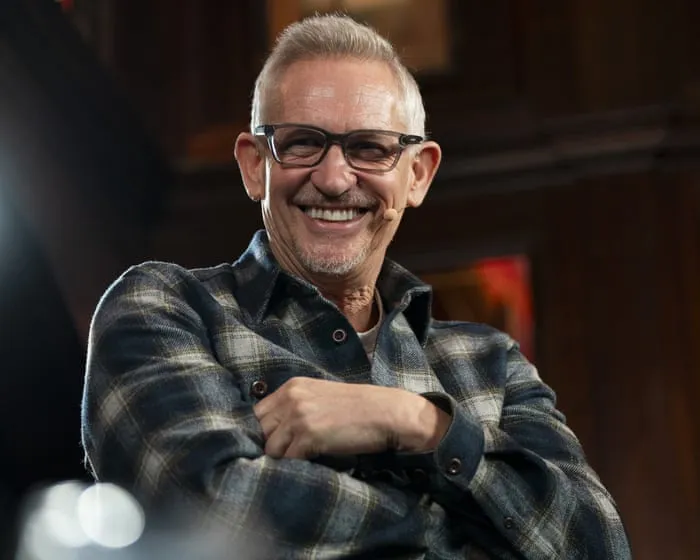
With the upcoming World Cup being hosted across three countries and featuring an expanded lineup of 48 teams, the event is set to transform into a global media spectacle. Platforms such as YouTube and TikTok will introduce live broadcasts for the first time, while Netflix plans to air a daily series titled “The Rest is Football,” hosted by Gary Lineker, who will take his show to Times Square for nearly six weeks.
The inaugural episode of Lineker’s program will air at 6 AM UK time on Wednesday and will feature regular co-hosts Alan Shearer and Micah Richards. Notably, the lineup will also include high-profile guests like Harry Maguire, Frank Lampard, and Patrick Vieira throughout the tournament.
Richards has humorously referred to the impending “podcast wars” in light of his colleague Gary Neville’s show, “Stick to Football,” also being filmed in New York during the tournament. However, Netflix’s involvement in Lineker’s podcast is poised to elevate its reach and enhance its audience engagement.
Netflix has committed a substantial £14 million for 40 episodes, which will combine interviews and reporting from various venues with the usual football commentary. This investment stems from concerns about potentially losing their audience to the World Cup.
In contrast, Neville’s “Stick to Football” appears to be scaling back its scope. Following its airing of some episodes on ITV during Euro 2024, the show will now be restricted to 12 episodes available solely on YouTube due to ITV commitments.
The broader context of these podcast battles highlights Netflix’s increasing interest in live sports, particularly since they have secured exclusive rights for the next two Women’s World Cups from FIFA.
“Netflix didn’t have a way to capture a World Cup audience because they don’t have the live games,” explains Tony Pastor, co-founder of Goalhanger, the production company behind “The Rest is Football” and several other successful podcasts that collectively attract over 70 million downloads monthly.
“They want to be part of the World Cup conversation and have a daily offering, to give their audience a reason to turn on each day and not park the channel for six weeks.”
With the significant financial backing from Netflix, Lineker and his team face the challenge of delivering impressive viewership numbers. Fortunately, Lineker’s extensive experience includes covering six World Cups and participating in two as a player.
The entire media landscape will be observing closely, as Netflix’s decision to expand its football content could reshape its sports programming strategy, which has largely focused on standalone events like Major League Baseball’s season opener and NFL’s Christmas Day game.
“The Rest is Football on Netflix is fascinating,” remarks Alex Kay-Jelski, the BBC’s director of sport. “If a show like that can do well on a big streaming platform then it will be a significant development.”
Meanwhile, the BBC’s plans for the tournament are more subdued. Their coverage will originate from Salford until the final week, with hosts Kelly Cates, Gaby Logan, and Mark Chapman sharing presenting responsibilities.
Financial constraints, accentuated by a redundancy program that will see around 2,000 staff members let go, have played a role in the BBC’s scaled-back approach. Additionally, the organization is prioritizing sustainability and long-term investments.
The BBC aims to create a legacy from the World Cup by launching a new studio this week and offering various digital services to connect with a younger audience.
Star pundits like Wayne Rooney are expected to add excitement to their broadcasts, and Thomas Frank’s initial media appearances post-Tottenham will likely draw attention.
“We’ve built a 24/7 World Cup content machine, which is better connected and integrated than ever before,” Kay-Jelski asserts. “There will be something for everyone, whether that be live TV coverage, Radio Five, YouTube shorts, news and analysis, or interactive World Cup games.”
Kay-Jelski adds, “If we had £200 million to spend then maybe we would have done things differently, but we’re very happy with where we’ve ended up. We cannot just focus on a six-week tournament; we have to invest for the long term. So we’ve built a new studio which will be used by Match of the Day, providing a real legacy from the World Cup.”
As for ITV, they are taking a more traditional approach, with a team led by Laura Woods and Mark Pougatch based in New York. Niall Sloane, the director of sport, is attending his 11th World Cup, 40 years after his debut when he operated a camera at the Azteca Stadium during Diego Maradona’s infamous “Hand of God” goal.
“That was a frantic 20 minutes,” he reminisces with a smile.
Sloane expresses concerns about the current saturation of football on television, particularly with the expansion to 48 teams and the increase from 64 to 104 matches.
ITV is set to broadcast 51 matches compared to the BBC’s 54, with both networks sharing the final. ITV is poised for a strong start, featuring the opening match between Mexico and South Africa, along with England’s first game against Croatia. The BBC seems to be banking on Thomas Tuchel’s team advancing far in the tournament.
ITV holds rights to three quarter-finals and the BBC will select the first semi-final and feature England’s matches in the knockout stages, provided they qualify.
Although the BBC is likely to dominate the viewership ratings, the World Cup presents a significant commercial opportunity for ITV, especially as it nears the completion of its acquisition by Comcast, the parent company of Sky.
Last year, ITV attracted an audience of 10.2 million for England’s Women’s Euro 2025 semi-final triumph over Italy, a number that is expected to be surpassed this summer.
“We will be producing lots of shorter content, but it will still be a while before we lose the significance of two lots of 45 minutes,” Sloane notes. “As sport has grown in popularity, the importance of live events has increased. There are not many TV programmes that deliver double-digit viewing figures these days, but major football tournaments are definitely one of them.”
Despite the anticipated excitement, Sloane shares his skepticism regarding the value added by the additional 16 teams, suggesting that some matches may not meet the high standards expected at a World Cup.
Given the extensive schedule, with 40% of matches kicking off after midnight in the UK, FIFA’s new social media strategy appears well-timed. YouTube and TikTok have acquired the rights to livestream the opening 10 minutes of selected games, though many viewers might find themselves dozing off before the action truly begins.