


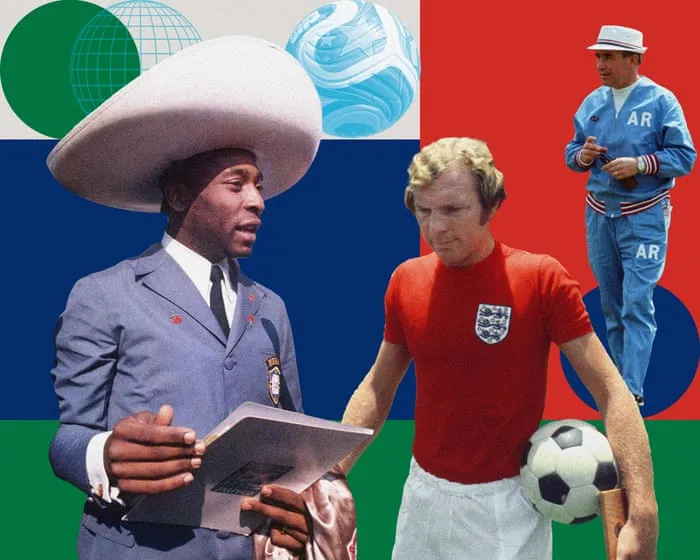
The intense heat and high altitude posed significant challenges for teams at the 1970 World Cup in Mexico. Anticipating these conditions, Bulgarian officials relocated their squad to the Pirin Mountains, believing it would help them acclimatize. However, the temperature was closer to freezing, creating a stark contrast to the expected warm climate of Mexico. To complicate matters further, they limited players’ water intake to simulate dehydration during matches.
This strategy turned out to be ineffective. Bulgaria suffered defeats in their first two matches and was eliminated before managing a draw against Morocco. Clearly, the training tactics for this World Cup are likely to be far more advanced compared to those used 56 years ago. In that era, many teams assumed altitude training was the best preparation for competition in cities like Mexico City, Monterrey, and Guadalajara. For instance, Israel trained in Ethiopia and Colorado, while Uruguay opted for Quito and Bogotá. Mexico even organized a five-month training camp, featuring 13 international friendlies before playing two matches against Dundee United.
The reigning champions, England, were particularly anxious about the upcoming tournament. Team doctor Neil Phillips took a course on heat, altitude, and tropical diseases, advising players to use salt tablets. He also enlisted the help of Dr. Griffith Pugh, a physiologist who had been part of the expedition led by Edmund Hillary to summit Everest. Unfortunately, some of their preparations were less than logical.
Manager Alf Ramsey, despite his coaching skills, had deep-seated prejudices. Having experienced a humiliating defeat against the USA in 1950, he was haunted by memories of the unappetizing Brazilian cuisine. His trips to Brazil in 1964 and a subsequent tour of Latin America in 1969 reinforced his mistrust. Therefore, Ramsey insisted that the team transport their own bus, food, and water. This decision infuriated local authorities, already annoyed by Ramsey’s previous comments, leading them to confiscate and destroy all frozen meat brought from the UK due to a foot-and-mouth disease scare. Consequently, the team was left with only Findus fish fingers and pre-packaged meals.
As tournament preparations unfolded, the England squad spent three weeks in Mexico City. Ramsey maintained a strict regimen, timing players’ sunbathing sessions with a stopwatch to ensure they flipped over after 20 minutes. They then proceeded to play friendlies at high altitudes in Bogotá and Quito. During a layover in Colombia, captain Bobby Moore faced an unexpected crisis when he was arrested for allegedly stealing a bracelet from a jewelry shop in their hotel. After days of diplomatic intervention, he was released just in time to participate in England’s opening match, where they secured a 1-0 victory over Romania, eventually proving his innocence.
In stark contrast, Brazil’s preparation was unparalleled. In late 1969, coach João Saldanha met with two military officers, Cláudio Coutinho and Lamartine Da Costa, at a churrascaria near Sugarloaf Mountain to devise the optimal training strategy. Coutinho later became Brazil’s coach and worked with the LA Aztecs until his tragic death in a diving accident in 1981. Da Costa, an expert in biometeorology, had attended the 1968 Mexico Olympics, where he meticulously observed and sought to apply scientific methods to enhance performance.
The traditional perception of Brazilian football as instinctive players casually emerging from beaches to win tournaments is a myth. The golden era of Brazilian football, which saw them clinch three World Cups in four tournaments from 1958 to 1970, was deeply rooted in rigorous preparation. In the lead-up to the 1970 World Cup, players underwent 100 days of training at military facilities, with every detail monitored meticulously. Their uniforms were custom-fitted, and collar designs were intended to minimize sweat accumulation. There was talk of employing NASA’s training programs, although this primarily involved the Cooper test, which measures fitness based on distance covered in 12 minutes. Arriving in Mexico City 32 days before their first match against Czechoslovakia proved beneficial, as they scored 12 of their 19 goals in the second half, showcasing their endurance and skill.
As we look towards 2026, there is a crucial takeaway: preparation alone does not guarantee success, especially given the demands of the domestic calendar that will prevent any team from isolating themselves for four months of training. However, being well-prepared for the unique conditions and having a strategic game plan will provide a significant advantage. Football is unpredictable, with outcomes often determined on the day of the match, but a solid foundation increases the likelihood of success. Relying on pre-packaged meals has never been a recipe for World Cup victory.
Memorable Moments: Cameroon’s 1990 Journey
Cameroon’s preparation for the 1990 World Cup in Italy was a chaotic affair. Their coach, Russian Valery Nepomnyashchy, had initially been appointed to oversee youth development and found himself in charge of the senior team. With limited French proficiency and a lack of rapport with players, the team had a disappointing exit from the 1990 Cup of Nations. When they relocated from Bordeaux to Yugoslavia for training, they encountered logistical issues, including missing equipment. Grégoire M’Bida was sent home for missing the bus, while veteran forward Roger Milla, who had been semi-retired, was called back at the request of President Paul Biya.
In the lead-up to their opening match against Argentina on June 8, 1990, goalkeeper Joseph-Antoine Bell made headlines by suggesting that a 3-0 loss to the reigning champions would be acceptable. This comment led to his being replaced by Thomas N’Kono, who was drafted in so late that his wife missed the match, mistakenly believing he would be on the bench. Remarkably, Cameroon managed to win the game 1-0 despite having two players sent off, marking the first victory for a sub-Saharan African nation in World Cup history. The team advanced all the way to the quarter-finals that year.
- This article is adapted from Soccer Desk: World Cup edition, a newsletter that will continue to provide insights throughout the tournament. Sign up for free here.
This content is part of the Soccer Desk: World Cup edition, a newsletter that will maintain regular coverage during the tournament. Sign up for free here.