


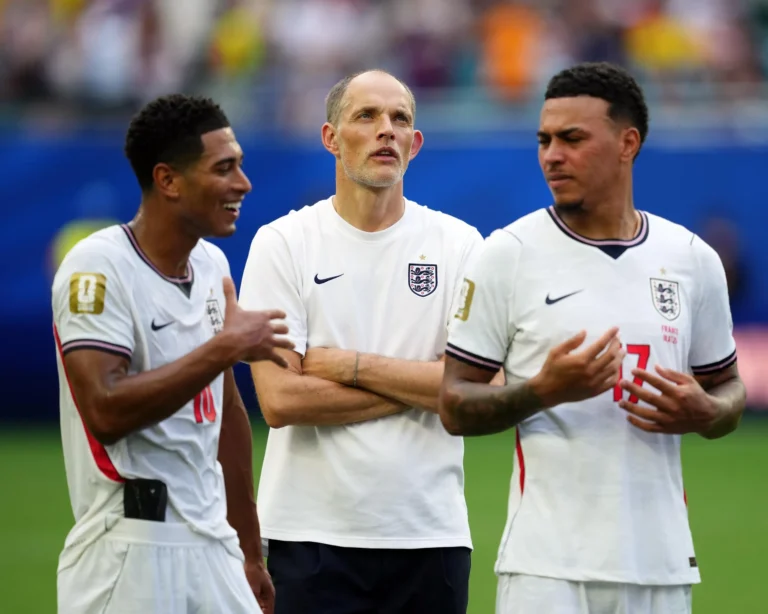
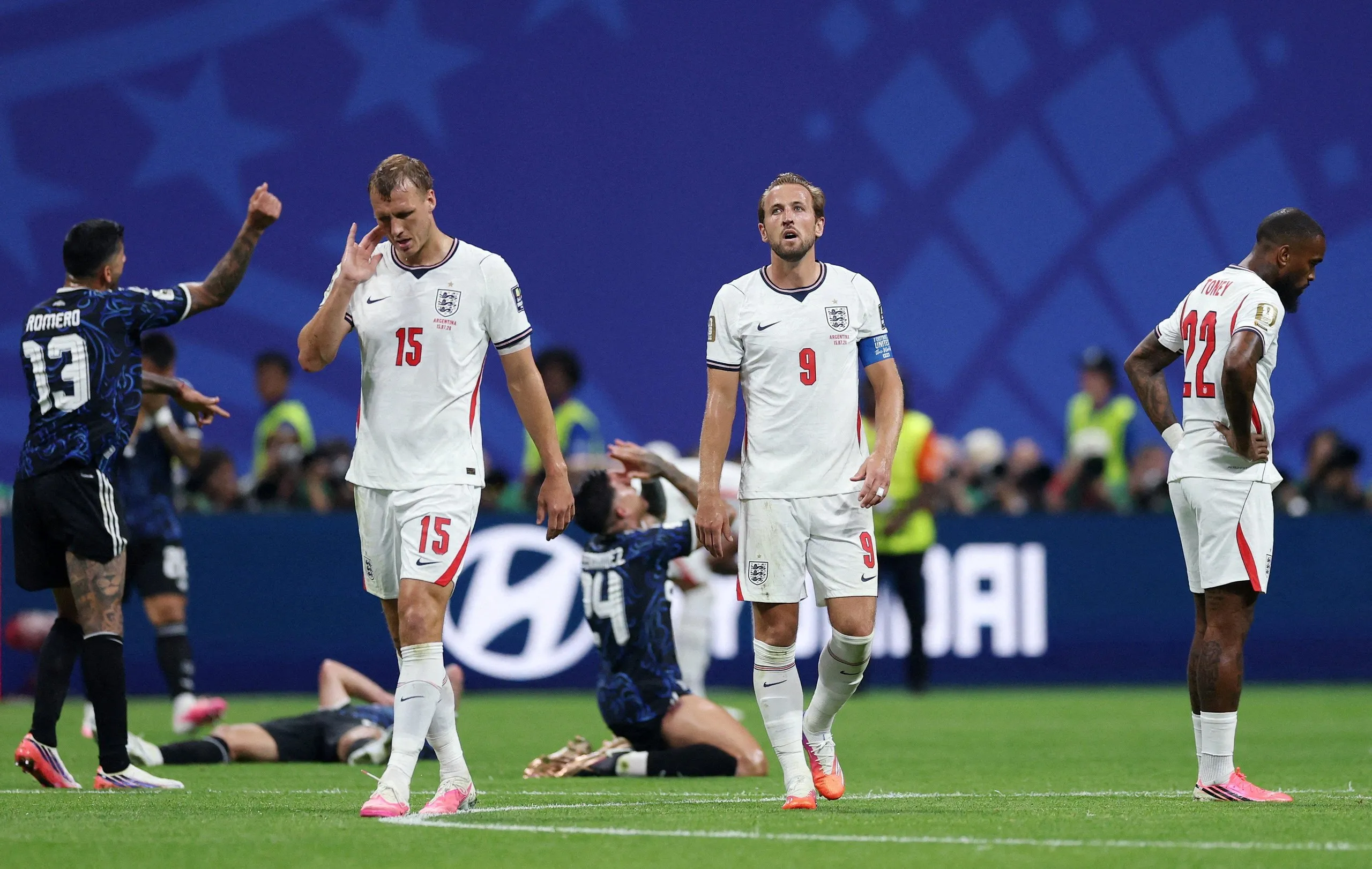
Despite securing a bronze medal at the World Cup by defeating France in a thrilling 10-goal match, dissatisfaction with manager Thomas Tuchel continues to simmer. The aftermath of England’s disappointing loss to Argentina last week has left emotions running high, making it clear that a mere victory in a low-stakes encounter won’t quell the growing criticism.
The decision to hire Tuchel was predicated on the belief that he would excel in crucial matches. However, when this expectation was not met, frustration ensued. This situation revealed the hollow nature of the appointment, with the Football Association (FA) attempting to mask its coaching development shortcomings by investing in an expensive foreign coach.
What exactly is the vision of the Football Association? Initially, the hope was that Tuchel would inject a jolt of energy into the team and leverage his tactical skills to help England succeed. However, after a successful qualifying campaign against weaker opponents, the FA altered its focus, granting Tuchel a contract extension and diminishing the urgency of winning the World Cup.
During the bitter fallout following the defeat to Argentina, the notion of Tuchel as a builder of a cohesive project appeared unrealistic. Criticized for his conservative substitutions while England was ahead, Tuchel expressed disdain for the concept of English football identity, lamenting the team’s poor ball retention. While this criticism may hold some merit, one must question whether Tuchel contributed to the problem by excluding several skilled ball players from his squad. Would the inclusion of talents like Adam Wharton, Trent Alexander-Arnold, and Cole Palmer have made a difference in Atlanta? Perhaps not, but considerable resources have been devoted to nurturing a different breed of English player over recent years.
It seems Tuchel may be envisioning a dated English football identity. His desire to emulate a Premier League style, characterized by speed and physicality, has frequently faltered with the national team. England has struggled to maintain possession in high-stakes knockout matches, leading to an emphasis in youth development on players who are more comfortable with the dominant Spanish passing approach.
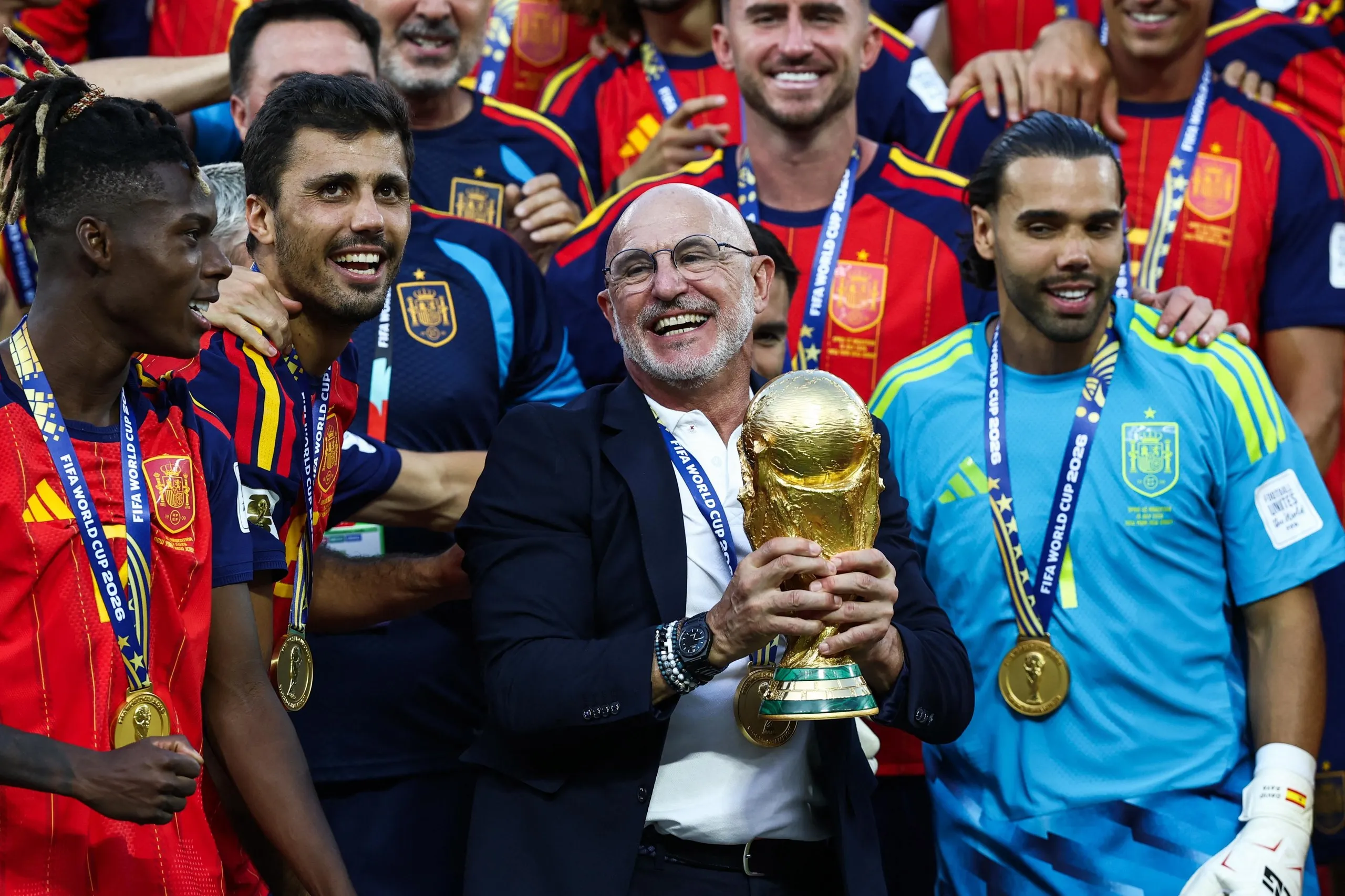
Spain recently clinched another World Cup title, demonstrating that their methodology was too sophisticated for Argentina in a lackluster final. For observers, a significant takeaway is that both finalists were guided by homegrown coaches.
Luis de la Fuente and Lionel Scaloni have progressed through their respective national systems, nurturing a deep connection to their countries and understanding their football identities. Tuchel, on the other hand, was brought in to compensate for the FA’s inability to cultivate its own coaching talent. Historically, no national team led by a foreign coach has achieved World Cup success, which should raise concerns for the FA as they employ an outsider with a win-at-all-costs mentality, resulting in a senior team that plays a style markedly different from younger age groups.
Within youth coaching circles, there is a belief that Tuchel has regressed England’s development during this tournament. The under-21 team has triumphed in the last two European Championships by embracing bravery on the ball, defeating Spain in successive tournaments. Lee Carsley, the under-21 manager, has emphasized the importance of risk-taking in possession. In contrast, Tuchel’s approach saw him resort to launching high balls towards Dan Burn, adopting a conservative style that inhibited England’s ability to take risks. This World Cup experience underscores the idea that hiring celebrated club coaches does not guarantee success on the international stage.
Brazil’s appointment of Carlo Ancelotti ended in a last-16 exit, while Roberto Martínez struggled with Portugal after sticking with Cristiano Ronaldo. Mauricio Pochettino faced humiliation as the USA coach against Belgium.
Scaloni’s journey through the national setup culminated in a World Cup victory for Argentina in 2022. Likewise, De la Fuente led Spain to the European Under-19 Championship in 2015 and the Under-21 Championship in 2019 before guiding the senior team to European success in 2024.
Spain exemplifies a seamless progression, with players who triumphed over Argentina in the final having honed their skills under De la Fuente at youth levels. However, this does not imply that England’s next logical step is to appoint Carsley, who did not exhibit the temperament needed for the senior role when he served as caretaker between Gareth Southgate’s exit and Tuchel’s arrival. Nonetheless, Carsley aligns more closely with the Spanish style and has demonstrated that English teams can indeed embrace a risk-taking mentality.
This situation presents important considerations for the FA as it evaluates England’s World Cup performance. Currently, Tuchel is set to lead the team through another tournament. While there are challenges to overcome, finishing third does not warrant dismissal. In any case, the FA lacks a clear alternative. Tuchel was not nurtured within the system; he was acquired. There is hope that he will adapt during the Nations League. A shift away from a physical style is necessary, but it would be unwise to underestimate how Tuchel’s perception of English identity may leave him disconnected from the realities of the game. This is something that would be unlikely to occur with Spain, where De la Fuente embodies their footballing ethos.
- England
- Thomas Tuchel
- The FA
- World Cup 2026
- World Cup
- analysis