


The outcome was clear: soccer triumphs once again. This was all but expected on a pleasant Friday afternoon in the Pacific Northwest, during a rare matchup where both teams could agree on terminology.
The style of play had also been anticipated by players and coaches alike, characterized by a tightly contested match that ended in a 2-0 victory for the United States. The win delighted a sellout crowd of 66,925, securing the host nation’s advancement to the World Cup knockout stage.
With this victory, the US stands poised to claim the top position in Group D, contingent on the result of the Turkey versus Paraguay match later that day.
Unlike many nations competing in the tournament, both the US and Australia carry the burden of their sport’s future on their shoulders, facing stiff competition for soccer’s popularity against other sports.
The importance of this match was never in doubt, particularly at the World Cup and in a group as evenly matched as Group D, with both teams coming off impressive opening victories.
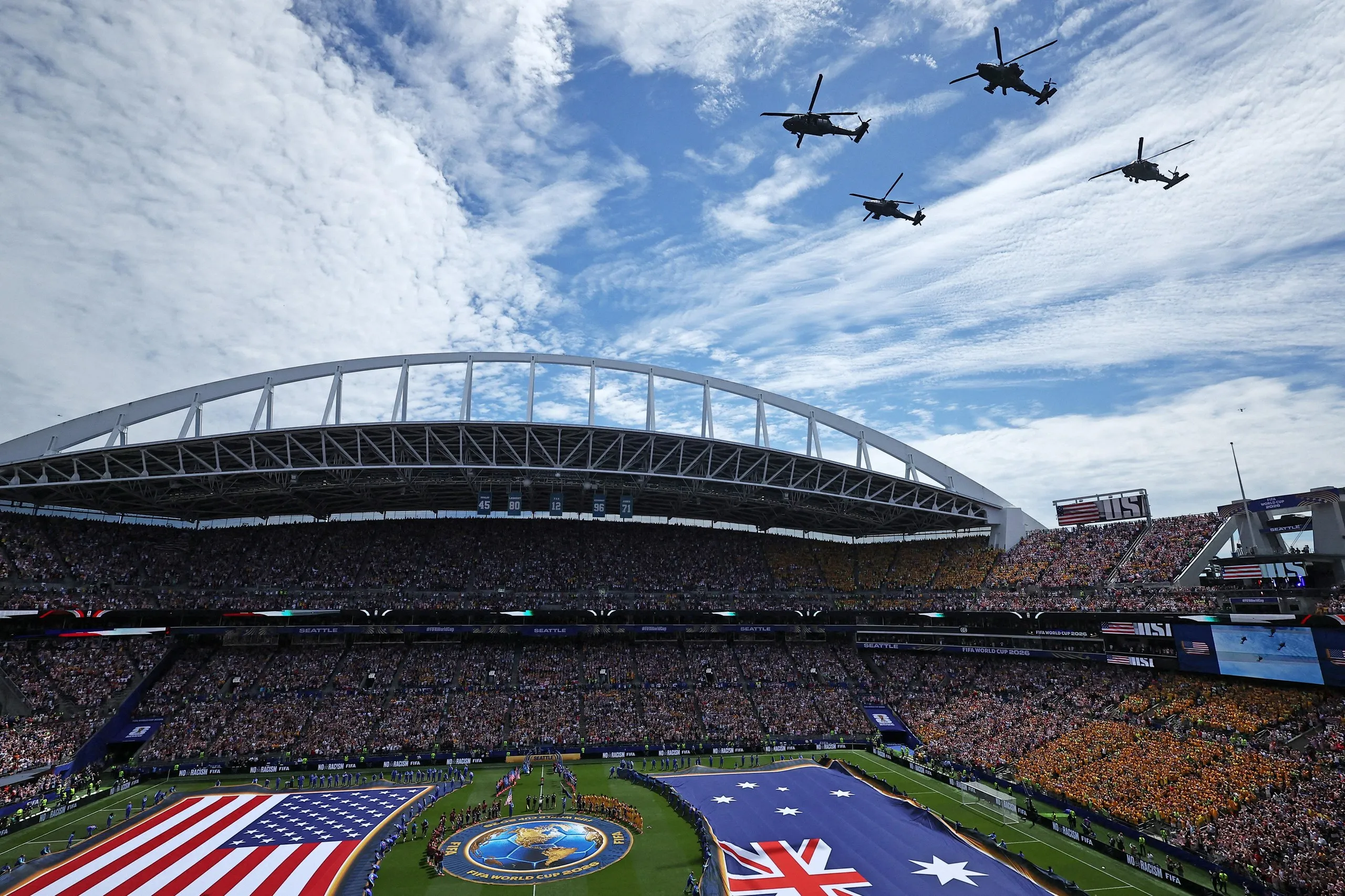
Fans of Australia, predominantly dressed in yellow, made their presence felt throughout the game, gathering in three large sections of Seattle Stadium’s south end. Ultimately, however, the atmosphere was vibrant and heavily favored the home side in a city regarded as a stronghold of the sport in the United States.
A dramatic flyover by four military helicopters, perfectly timed with the conclusion of the US national anthem, added to the occasion’s grandeur, stirring patriotic excitement before the on-field action began.
Leading up to the match, much discussion revolved around the status of Christian Pulisic. The US star had exited his team’s World Cup opener the previous Friday after just 45 minutes due to a calf injury and practiced separately from the squad all week. Just before kickoff, Mauricio Pochettino announced that Pulisic would not be available, raising concerns about the US’s ability to penetrate Australia’s defense.
Australia entered the match with something to prove, having been labeled “a layup” by various US commentators, reflecting a dismissive attitude towards a team that performed well in its opener. In contrast, US players and coaches consistently praised Australia’s quality, recognizing the challenges they would face.
The US team demonstrated their resolve right from the first minute, as Alex Freeman’s errant pass was intercepted by a vigilant Mohamed Touré, who was thwarted by Chris Richards and could only manage a low shot from a difficult angle that was comfortably caught by Matt Freese.
Shortly afterward, the Americans seized control of the game, effectively probing an organized Australian defense. The breakthrough came when Antonee Robinson sent a pass forward to Folarin Balogun, who had moved wide instead of occupying Pulisic’s usual position. Outpacing Jacob Italiano, Balogun delivered a low cross that Cameron Burgess inadvertently deflected into his own net.
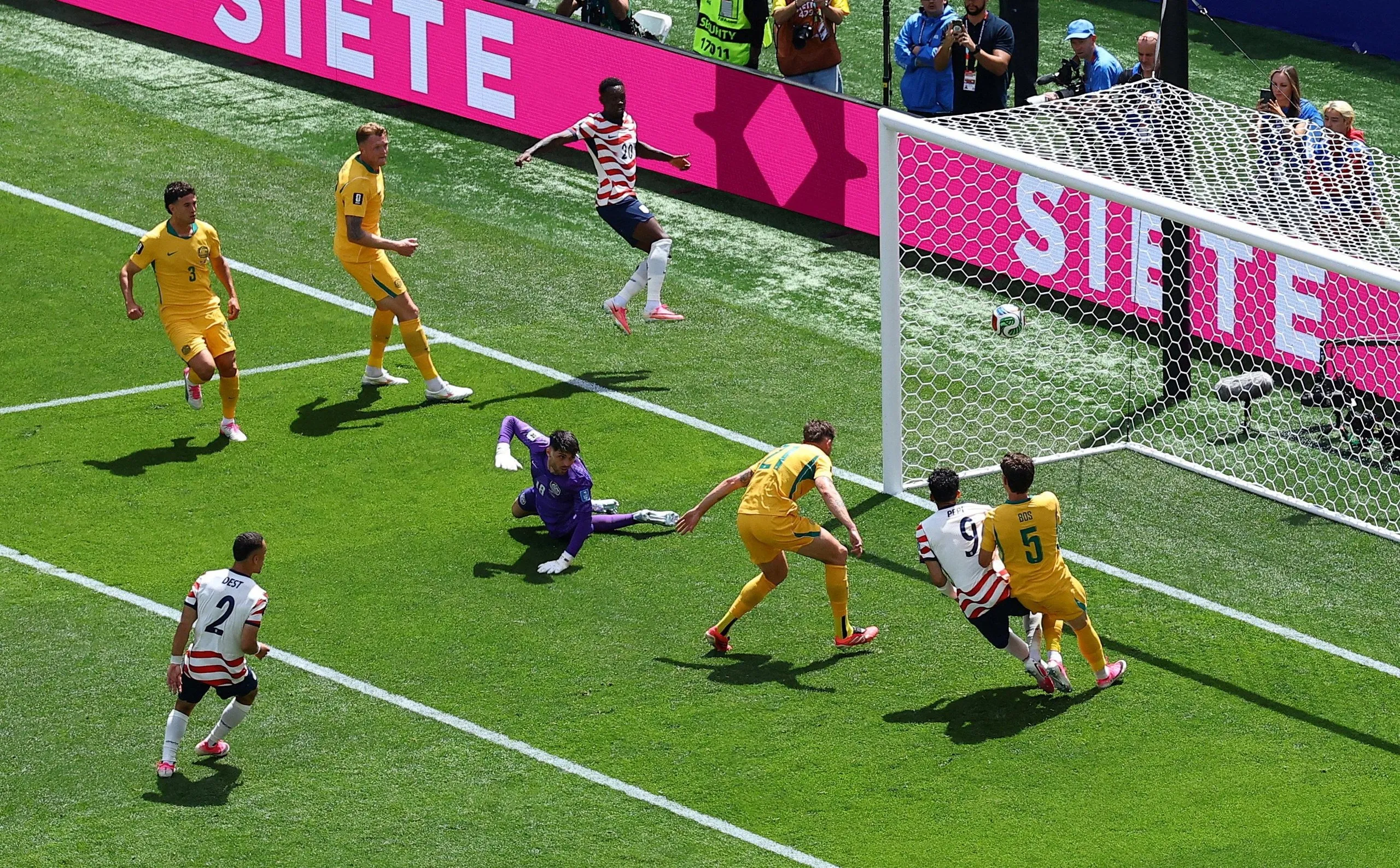
This marked the second straight match in the tournament where the US benefitted from an early own goal. Unlike Paraguay, who faltered under pressure, the Australian defense remained steadfast even as the US pressed relentlessly.
Australia nearly responded just two minutes later, with Touré holding the ball against a tight US defense. Mathew Leckie attempted a daring shot from outside the box, which flew high and wide.
The anticipated physicality of the matchup began to emerge, though only sporadically. Nishan Velupillay ignited the US fans with a hard tackle on Tyler Adams near the US bench. Jordan Bos earned the first yellow card for striking Weston McKennie in the face, followed by another card for Alessandro Circati for clipping Malik Tillman as he surged towards the Australian box; the resulting free-kick was courageously cleared.
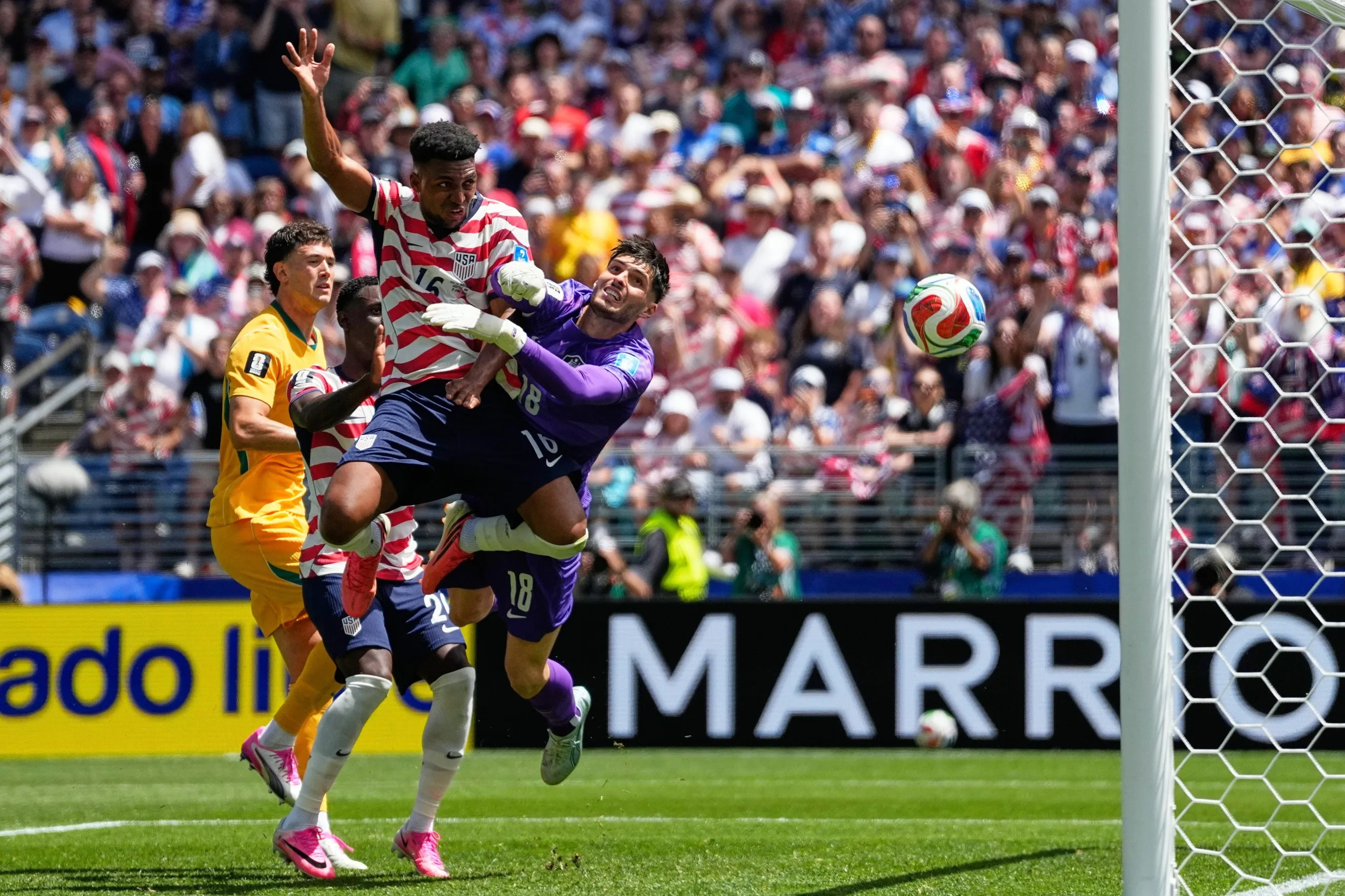
In the 39th minute, a head collision between Freeman and Paul Okon-Engstler left both players requiring medical attention. Both players continued, with Freeman going on to double the US lead moments after.
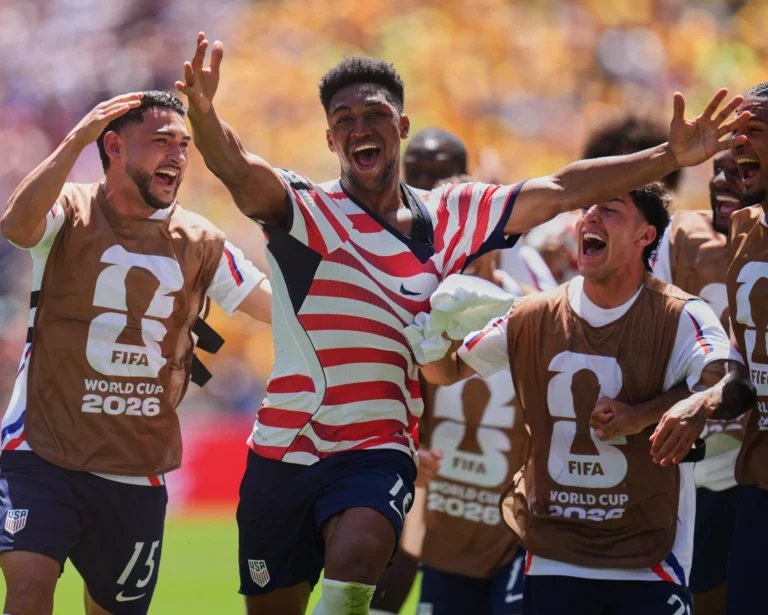
The build-up to that goal stemmed from Tillman, who battled with Velupillay to retain possession along the Australian endline, earning a dangerous free-kick. Robinson set up the kick for Sergiño Dest, whose shot was deflected by a leaping Harry Souttar. Freeman was quickest to react, nudging the rebound into the net, which was initially reviewed for offside but ultimately confirmed. Freeman celebrated at the opposite end, surrounded by teammates racing from the bench.
In response to a lackluster first half, Tony Popovic made several substitutions and altered his tactical approach. Jason Geria replaced Burgess, and the two goal scorers from the last match, Nestory Irankunda and Connor Metcalfe, took the places of Touré and Velupillay. This shift led to a more aggressive 4-3-3 formation when in possession, while still reverting to a five-man defense when out of possession. This strategy was tested just seven minutes into the second half when McKennie seized the ball and sent Balogun through on goal, but Souttar managed to block the shot.
Popovic’s changes began to yield results. Robinson received the US’s first yellow card of the afternoon in the 56th minute for a tactical foul to halt a developing play.
Another substitution for Australia occurred just after the hour, with Cristian Volpato coming on for Leckie. The Sassuolo player made an immediate impact, but his shot from inside the box went over the bar following a strong run from Irankunda on the right flank. Metcalfe also had a chance shortly after, but his attempt was easily handled by Freese.
Popovic continued to make attacking adjustments, introducing Jackson Irvine for Okon-Engstler, while Pochettino opted for defensive swaps, substituting Robinson, Dest, and Ricardo Pepi for Sebastian Berhalter, Auston Trusty, and Joe Scally.
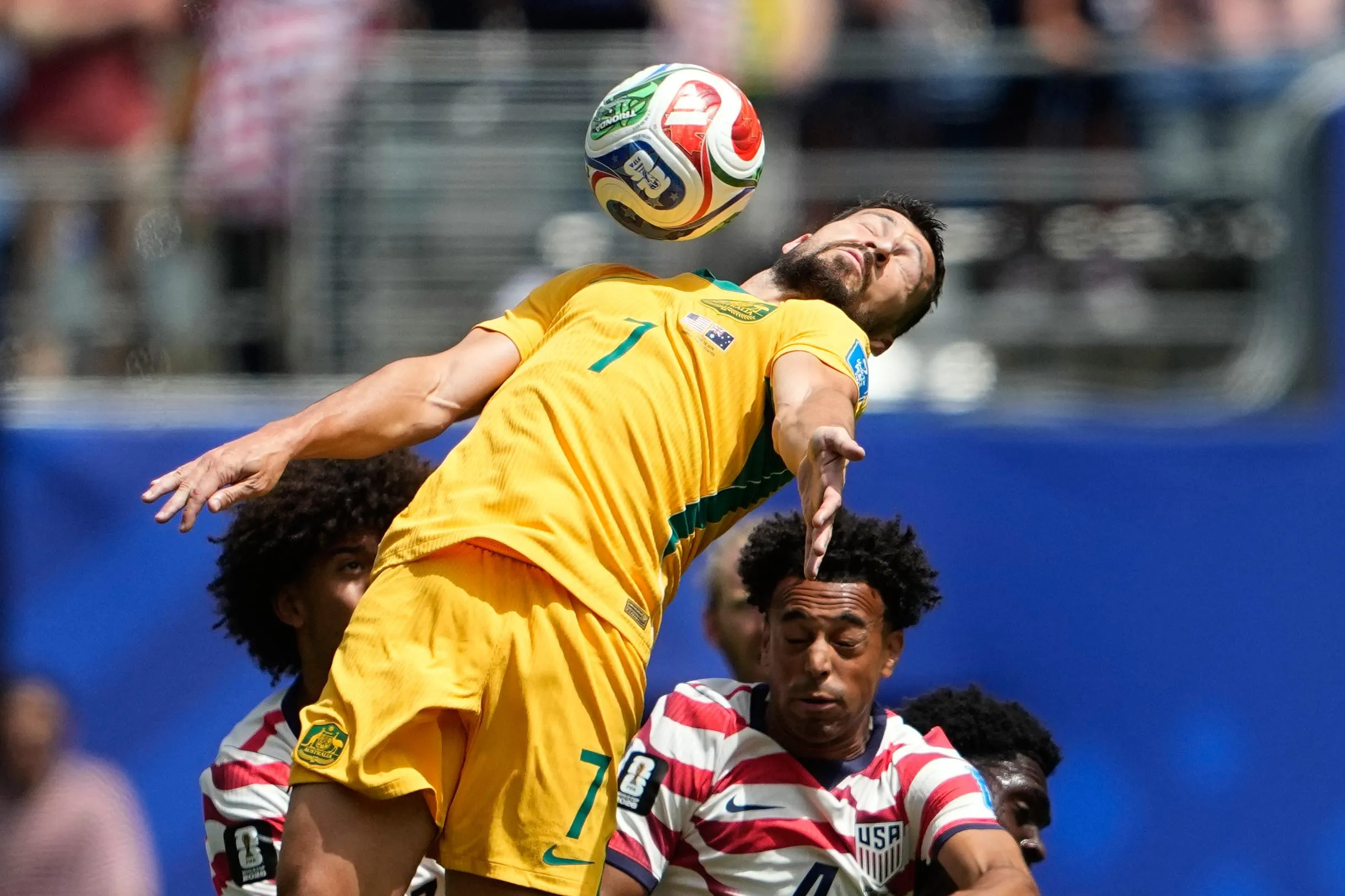
The substitutions allowed the Socceroos to gain momentum, creating several desperate chances, including attempts by Circati and near-misses by others. The physical nature of the contest threatened to escalate as the crowd chanted “USA.” Late yellow cards were handed out to Souttar, Balogun, Italiano, and Richards for various infractions.
The match concluded with a slight delay due to an unusual injury to referee Felix Zwayer, who managed to finish the game. Sensing the atmosphere shifting, Balogun gestured to the crowd to ignite a celebration in what was, for the moment, Soccer City, USA.