


The encounter between the USA and Australia unfolds with significant implications, as both sides compete for advancement in the knockout stages. Early exchanges highlight the Australians’ offensive capabilities, notably through Touré, who emerges as a considerable threat to the US defense.
Chris Paraskevas remarked, “Match going pretty much as anticipated, but Vellupilay is not providing an outlet and needs to work so much harder. Ditto the three central midfielders, who have to wrestle a bit of momentum back here and put their foot on the ball. Critical that we get to half time without conceding again…” He emphasized the necessity for the midfielders to regain their momentum before halftime, asserting, “Who needs Christian Pulisic when the USA have the prolific Own Goal?”
Justin Kavanagh humorously noted, “My prediction is that USA score within the first 20 minutes and conduct a “lay up” as tensions began to rise on the pitch.
As the match progressed, Australia earned a corner kick, allowing Souttar to flick the ball on. Although the US defense managed to clear the danger, a foul was called after a collision with Freese, resulting in yet another corner for Australia.
Players took a hydration break as the game continued.
With 22 minutes gone, Australia executed their most extended possession phase, pushing the USA back. Leckie seized control on the right flank, delivering an excellent cross that forced Freeman into a crucial defensive slide.
In the 21st minute, a long pass directed towards Balogun went astray, as the young Australian goalkeeper Beach swooped in to claim the ball. The US’s aggressive pressing began to diminish as Australia countered, with Freese experiencing a tense moment when his clearance remained in play after a long ball to Touré.
A free kick was awarded to Australia just short of midfield, reflecting a cautious strategy as they selected their moments to advance. This approach appeared prudent, considering the USA’s ability to exploit available space.
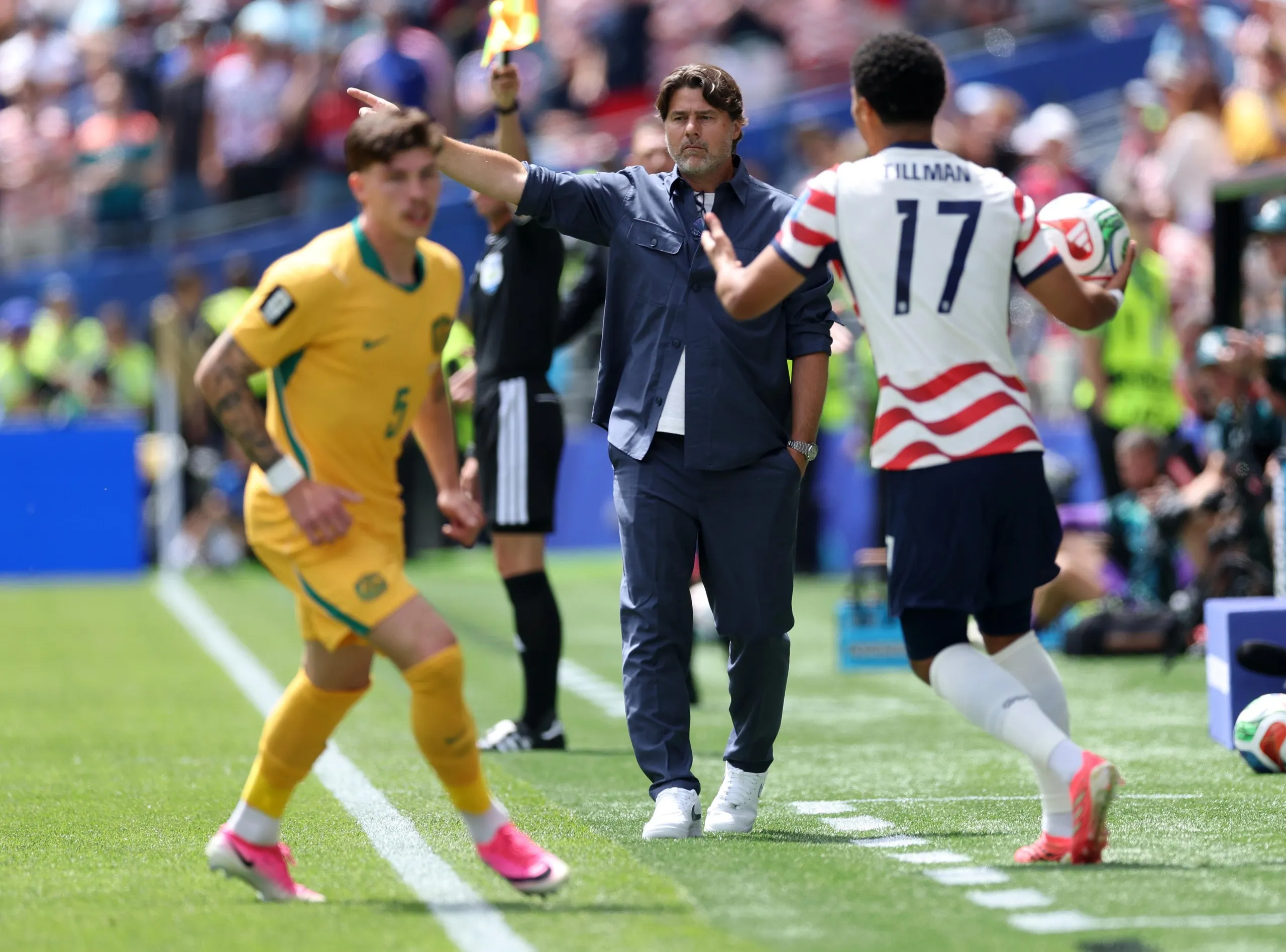
McKennie attempted an ambitious flick following a free kick, though it ultimately proved ineffective. Tensions escalated when Adams was fouled hard for the second time, this time by Velupillay, eliciting a frustrated response from Pochettino.
McKennie advanced the ball up the wing, only to be struck in the face by Bos, resulting in a yellow card that arguably should have gone to Velupillay instead.
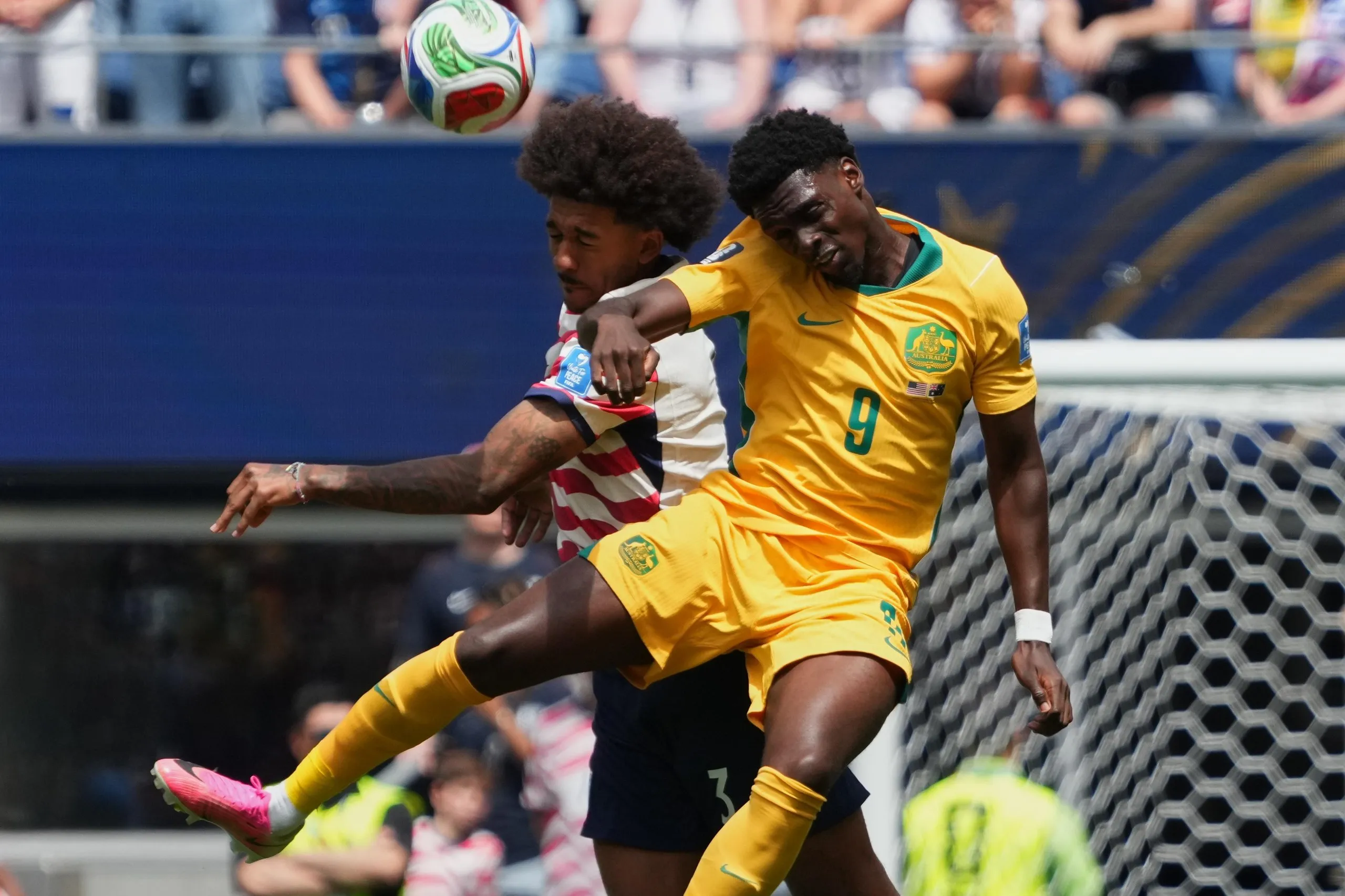
A corner kick for the USA led to some grappling in the box between Richards and Okon-Engstler, prompting the referee’s intervention before play resumed. McKennie managed to powerfully head the ball down, but Bos blocked it, causing a rebound off McKennie’s arm that awarded Australia a free kick.
Australia nearly responded immediately as Leckie made a clever run, receiving a well-placed pass. His shot, executed with the outside of his boot, narrowly missed the target.
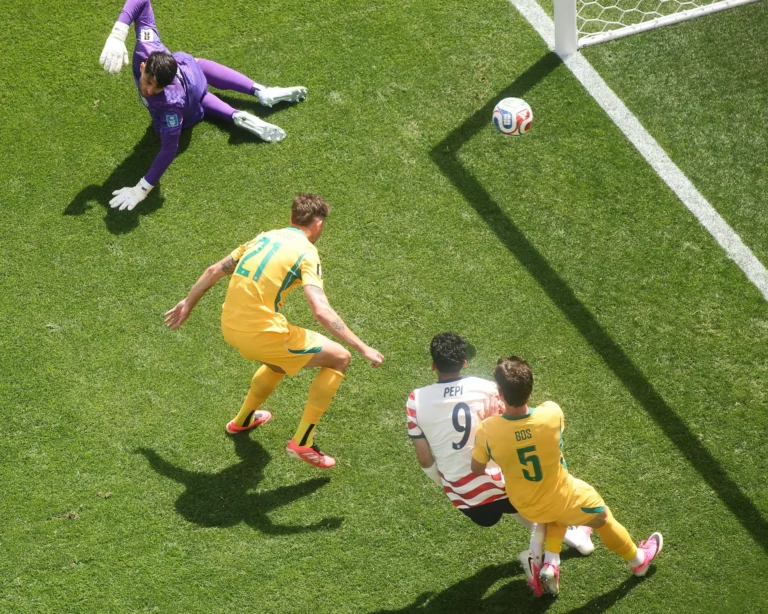
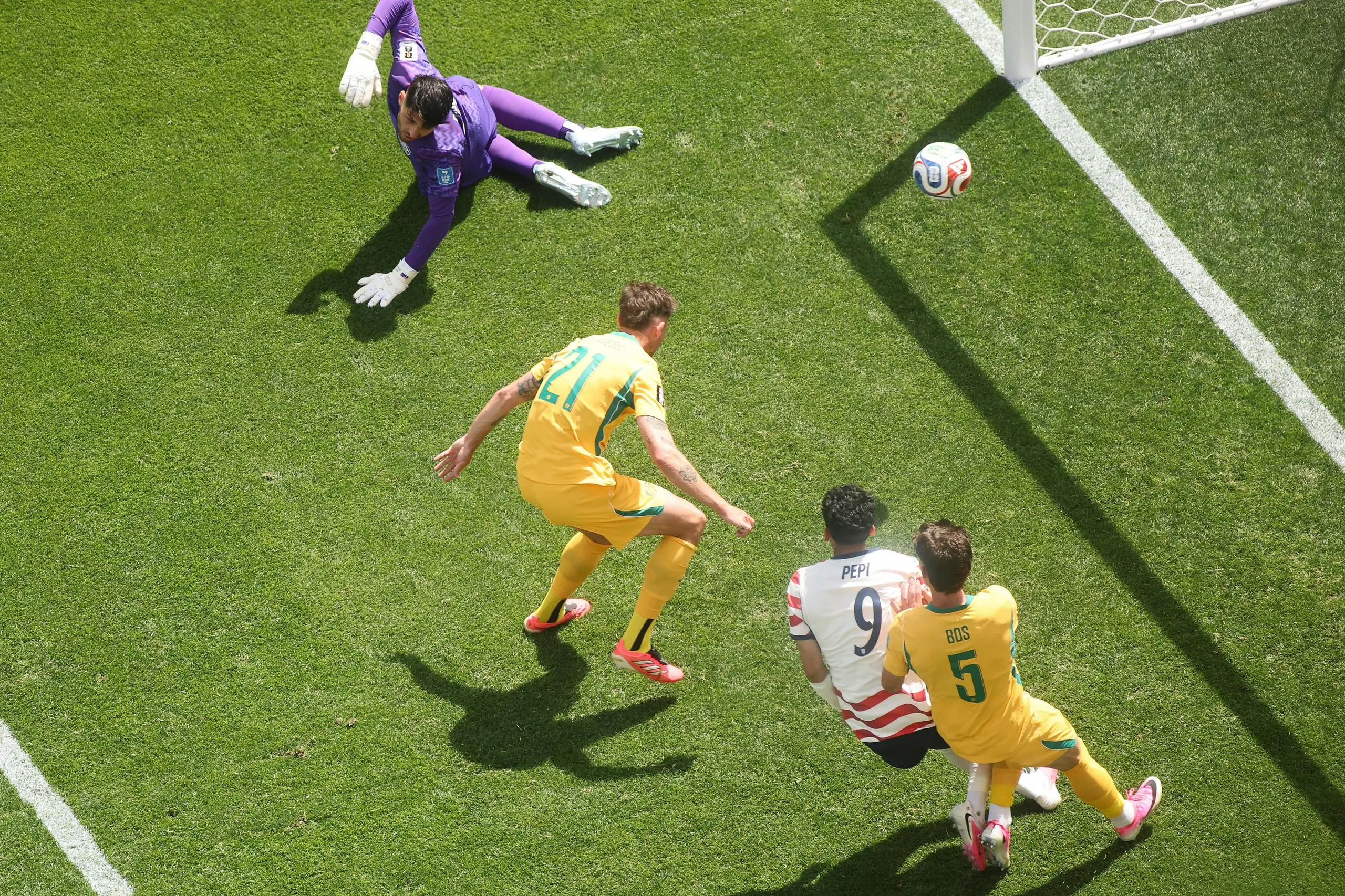
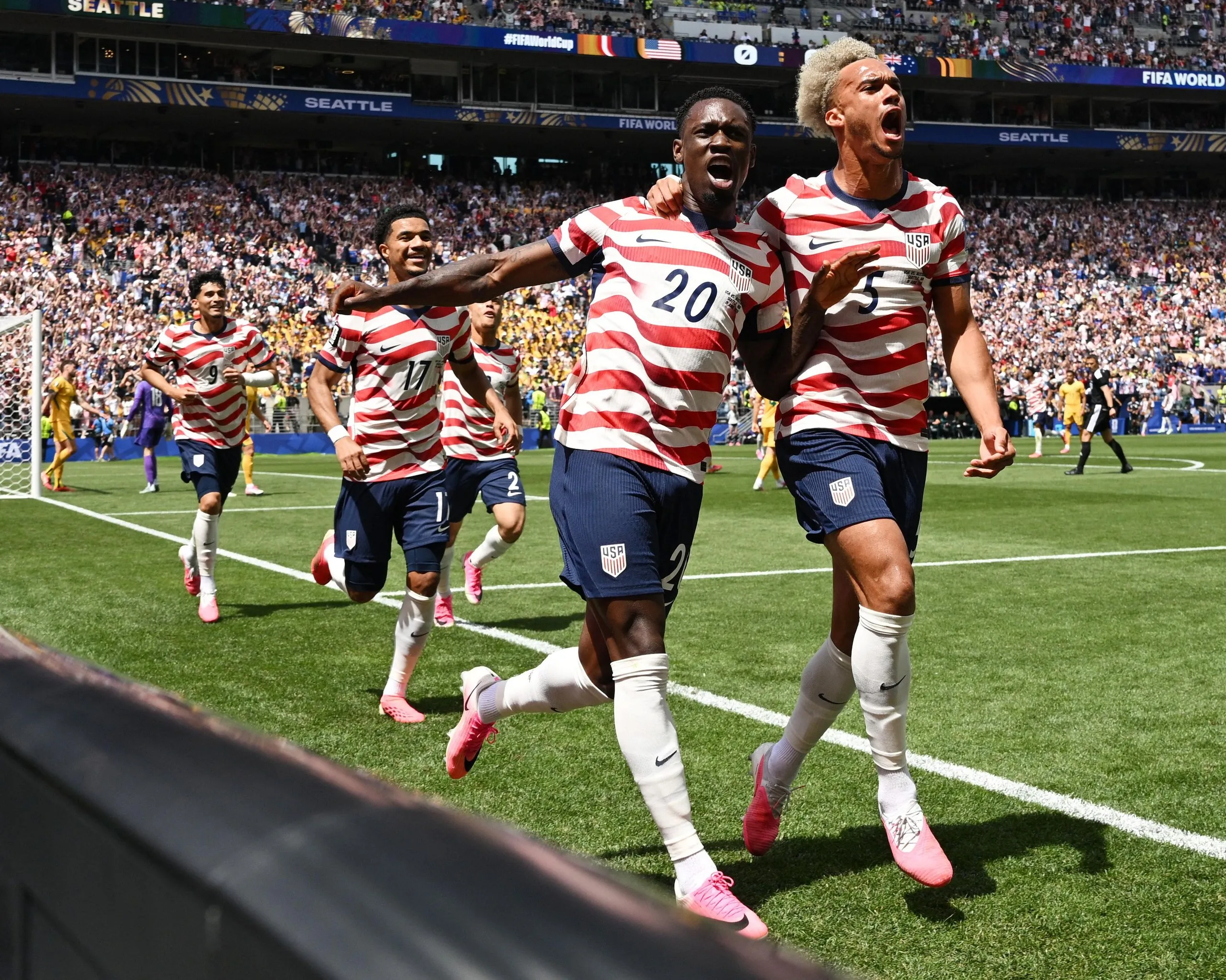
Balogun, who had been in excellent form throughout the World Cup, surged down the flank, setting up Pepi. Unfortunately for Burgess, his frantic attempt to intercept resulted in an own goal, putting the USA ahead.
With ten minutes elapsed, the USA maintained possession, but it seemed to have little effect on Australia, who intensified their pressing efforts.
A promising opportunity for the USA arose when Dest found space within the box, but his shot was effectively blocked.
In the eighth minute, Leckie executed a late tackle on Adams, raising questions as to why it was not penalized with a yellow card.
Australia continued to apply pressure, regaining possession several times before advancing to Touré, who found himself caught between US defenders.
The red-and-white team appeared somewhat unsettled at this juncture.
McKennie sent in a quality cross from the right, but Balogun was penalized for a foul.
The first foul of the match was called against Weston McKennie, indicating an intense start to the contest.
Robinson attempted to create an opportunity on the left against Italiano, but his cross deflected off Italiano and back for a goal kick.
The US forwards pressed high up the pitch, compelling Australia into a defensive stance as the USA circulated the ball effectively.
The match opened with a startling turnover from the US defense, where Freeman’s wayward pass allowed Touré to take a shot that Freese easily saved.
Felix Zwayer officiated the match, leading an all-German officiating crew, with fellow German Bastian Dankert overseeing VAR.
In a lively pre-kickoff atmosphere, a fan shared, “I think the USA media made some conclusions based on the last game that, uh, might be a little (a lot) wrong. I watched Souttar quite a bit when he was a Stoke City player and he’s not someone to take lightly.”
Joshua Reynolds noted, “True Blue living in Sheffield and also an Arsenal fan. Go figure. Australia are going to WIN. Then I’m off to Butlins to celebrate. Socceroos is a truly AWFUL nickname but we’re know stuck with it, only marginally better than the Matildas urghh. Cmon Australia. Win it for my friend Simon, currently residing in the stars.” emphasizing the need not to underestimate Souttar.
Simone Holmes, a ‘True Blue’ fan from Sheffield, passionately declared, “I think we want a more topical name – “The Cagefighters”
Several pockets of yellow were evident in the stands, underscoring the support from Australian fans.
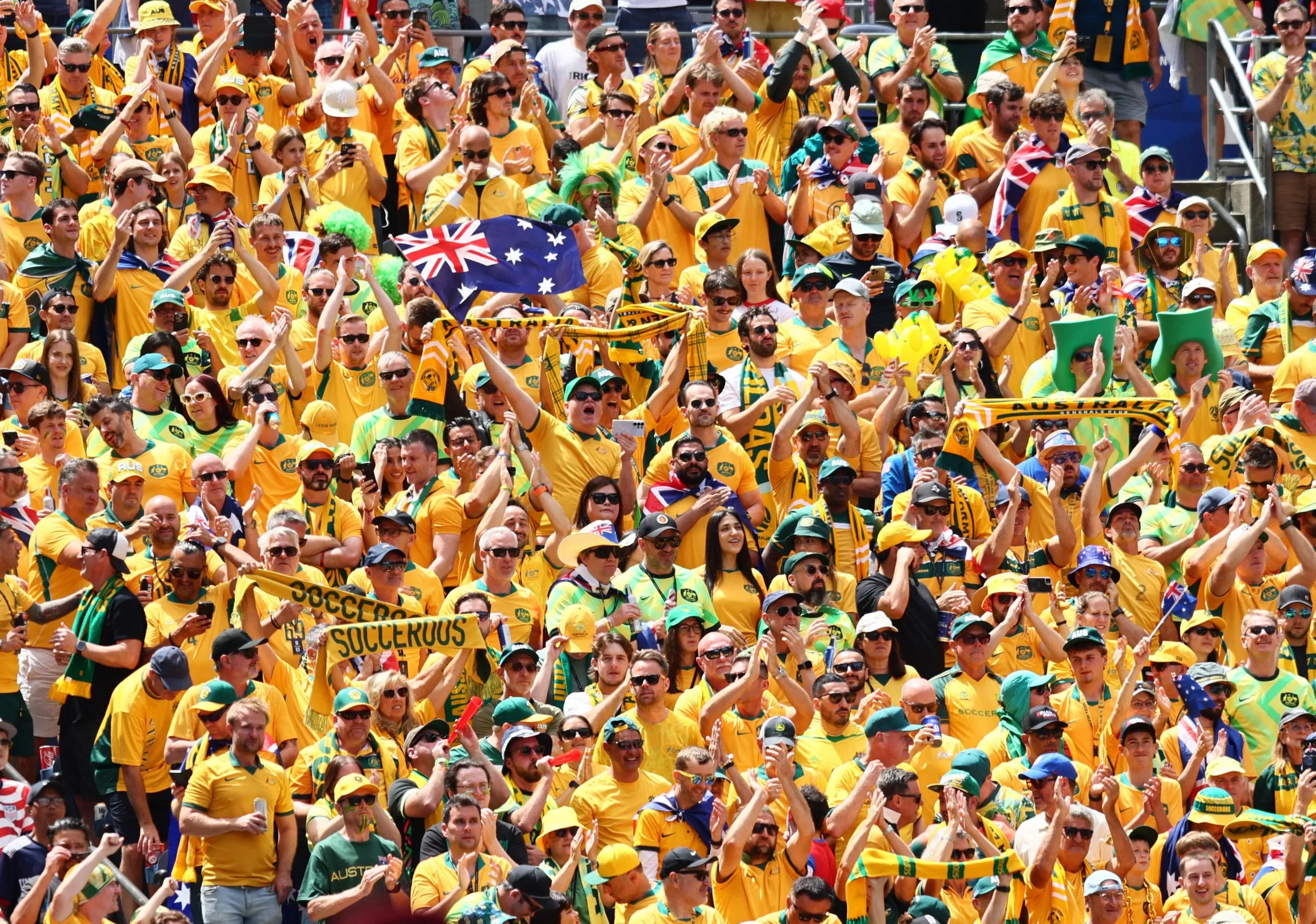
In a surprising twist, Paris Hilton led the USA chants before the game began.
The atmosphere at Lumen Field, known for its vibrant energy, was electric even 30 minutes prior to kickoff. The stadium was nearly full, with a noticeable number of Australian supporters positioned behind the goal.
Reynolds reflected, “How about the DoodleDoos? (Following on from that universally beloved “Yankee Doodle Dandy” commenting on the lack of a catchy nickname for the US team.
Anticipation for the match was palpable, with fans eager to see how both teams would perform. James Pareskevas stated, “Although I think the nickname ‘The Yanks’ is pretty great, it’s no ‘Socceroos’. And the best I can come up with is ‘Soccer Moms’ and I’m ashamed I’m even writing that down.”
He added, “Soccerillos, of course, because of the armadillos.”
Reports indicate that Socceroos coach Tony Popovic has implemented some surprising lineup changes, opting to bench goalscorers Nestory Irankunda and Connor Metcalfe. Veteran Mathew Leckie and Nishan Velupillay have been included in the starting eleven for this crucial match.
Irankunda, who excelled in the previous game against Turkey, is anticipated to make a substantial impact as a substitute.
As both teams gear up for kickoff, the match carries significant implications, particularly for the Socceroos, who aim to secure the top spot in Group D.
Notably, the USA seeks to accomplish something they haven’t achieved in 96 years: winning two consecutive World Cup matches.
Following their successful run in 2022, Australia now aims to make history by finishing first in their World Cup group.
With Christian Pulisic sidelined due to injury, Mauricio Pochettino has chosen to deploy a striking partnership of Ricardo Pepi and Folarin Balogun. Pepi’s capacity to hold up play and contribute to the press will be essential in this encounter.
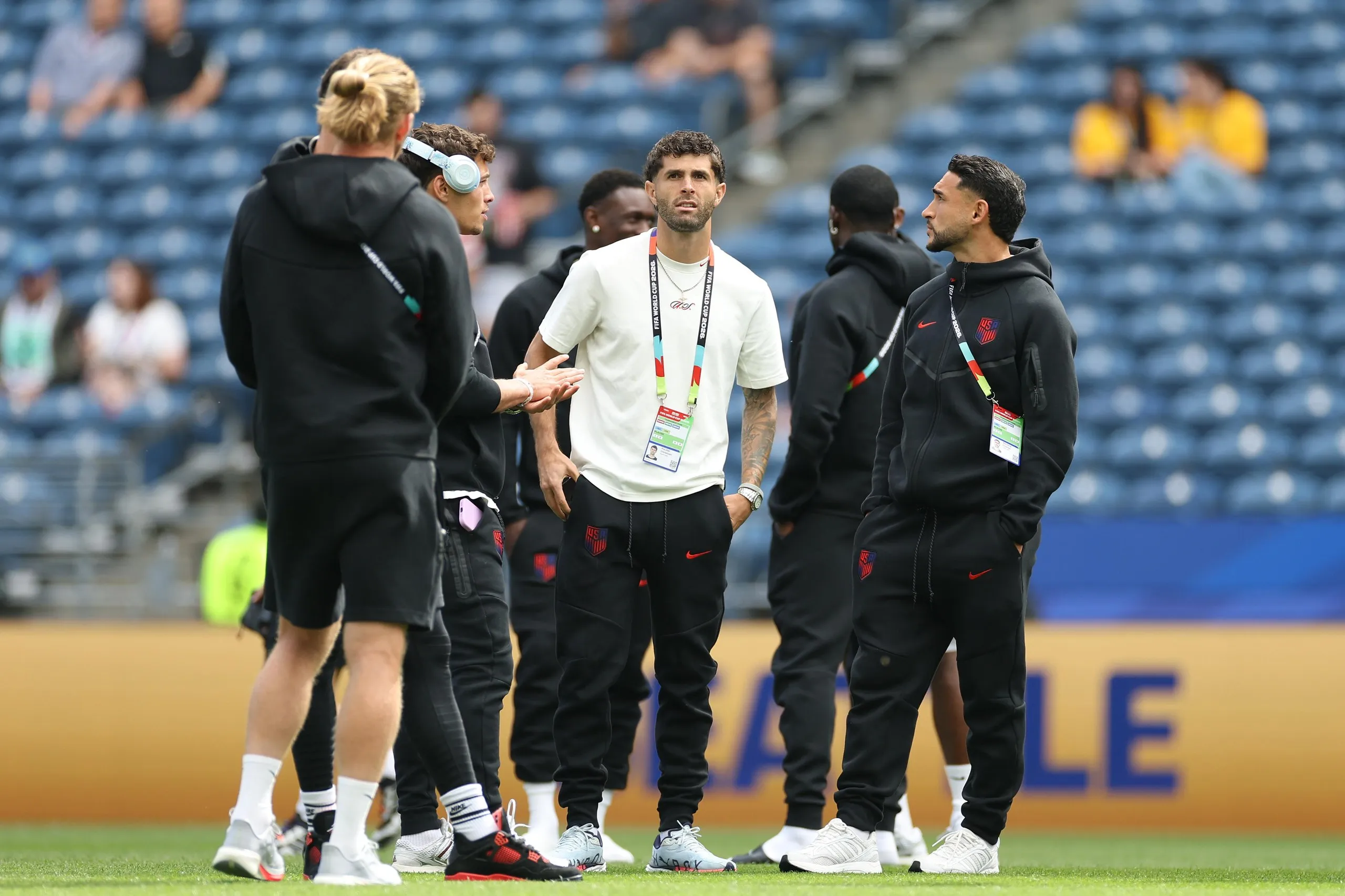
The lineups have been confirmed, with Pulisic unavailable following a calf injury sustained during the opening match against Paraguay.
Pulisic’s absence will undoubtedly alter the dynamics of the US attack, with Pepi stepping in to fill the gap left by the star player.
As the match time approaches, the excitement is tangible, uniting fans from both nations who share a common terminology: ‘soccer.’
Finally, here’s what both teams must achieve to secure victory in this pivotal clash:
Australia
Focus on Irankunda: The 20-year-old’s speed and tenacity make him a vital asset for the Socceroos when deployed as a substitute against fatigued defenders.
United States
Maintain midfield rotations: The US must effectively rotate in midfield to exploit the vulnerabilities in Australia’s defense, which have been evident in preceding matches.