


The upcoming men’s World Cup has been embroiled in visa complications as FIFA grapples with stringent immigration regulations in the United States. Unlike previous tournaments where temporary visas were easily granted in host nations, the 2026 World Cup finds itself mired in the aftermath of the second Trump administration’s rigorous border policies. This has left many affected, including players, officials, and fans.
Omar Artan’s Disappointment
Omar Artan, one of the 52 referees chosen by FIFA for the tournament, encountered a major setback upon his arrival in Miami. He was denied entry into the United States, missing the chance to become the first Somali official to oversee a World Cup match.
FIFA stated that Artan “will be unable to train and officiate,” distancing itself from the diplomatic issues involved. The organization commented, “FIFA is not involved in host country immigration processes, including visa adjudications … a host government ultimately determines who receives a visa and who is admitted into their country.”
Somali Referee Maintains Optimism
Despite his visa troubles, the Somali referee has expressed a positive outlook regarding his career. Omar Artan, awarded the title of 2025 men’s referee of the year by the Confederation of African Football (CAF), arrived in Miami on a flight from Istanbul but faced a refusal of entry from U.S. Customs and Border Protection.
“Despite the circumstances, I am in a positive mood and focused on the next challenges in my refereeing career,” Artan remarked, as reported by a local news outlet. He continued, “I would like to thank FIFA and CAF for all their support and promise to maintain my refereeing standards as I look to the future. I appreciate the football community for their messages and wish my colleagues great success during the World Cup. I look forward to joining them again in future competitions.”
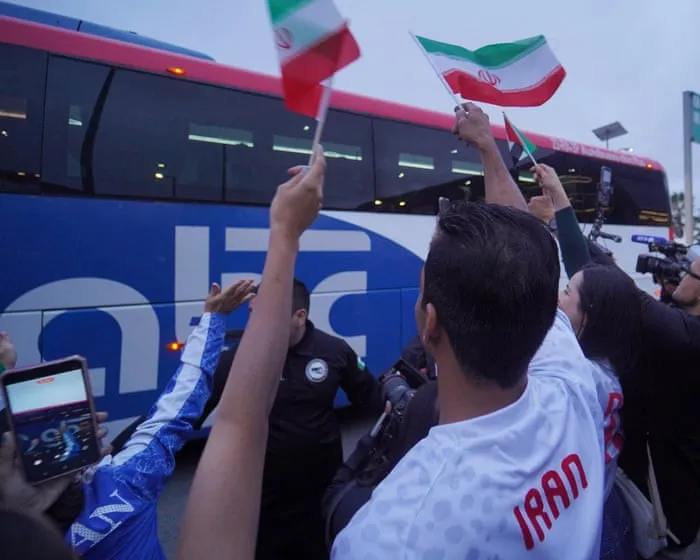
Reports from state media indicate that at least 15 Iranian officials and team members, deemed crucial to their campaign, have also been denied visas. While U.S. authorities assert they have granted entry to all necessary support staff, Iran’s football federation contends that co-hosts have revoked ticket allocations for their group matches, aiming to hinder the presence of Iranian fans.
“We are disappointed by this behavior,” stated head coach Amir Ghalenoei. “This has certainly never happened before.”
Iran has relocated its training camp to Tijuana, Mexico, creating logistical challenges as the team will need to commute across the border for their Group G matches in Inglewood and Seattle. The Iranian ambassador to Mexico suggested that the team must enter and exit U.S. territory on game days, complicating their ability to fulfill FIFA’s required pre-match media obligations, although this was disputed by Iranian state media.
Iraqi Footballers Face Visa Struggles
The ongoing conflict in the Middle East has adversely impacted Iraqi football. With U.S. consular services in Iraq halted, obtaining standard visas has become nearly impossible.
For those with existing paperwork, the U.S. border has proven unwelcoming. Aymen Hussein, a 30-year-old striker from Al-Karma, was detained and questioned for nearly seven hours at Chicago’s O’Hare Airport before being granted entry. In contrast, the team’s photographer, Talal Salah, was held for over ten hours and ultimately denied entry after a search of his phone.
South Africa’s Travel Delays
South Africa’s journey to the World Cup, where they are scheduled to face Mexico on June 11, was significantly hampered by documentation issues. After a festive send-off parade, their chartered flight from Johannesburg to Mexico City was grounded due to several players lacking proper Mexican entry documentation.
This situation appears to stem from administrative errors rather than any malicious intent. Sports Minister Gayton McKenzie described the incident as “embarrassing and grossly unfair toward the players and coaching staff,” placing the blame on the South African Football Association.
Swiss Forward’s Last-Minute Visa Issues
Swiss forward Breel Embolo faced delays in joining his teammates at their Group B training camp due to complications with his U.S. entry visa. These issues reportedly relate to a 2023 conviction involving multiple threats, for which he received a suspended fine. The Rennes player had to rush to the U.S. embassy in Bern to secure last-minute approval for his travel.
Scottish Fans in Turmoil
The Electronic System for Travel Authorization (Esta) has also caused chaos for British fans. Reports indicate that two families planning to support Scotland in their first World Cup since 1998 had their approved statuses suddenly revoked just days before their trip.
The Speirs brothers from Kirkcaldy submitted their Esta applications on December 14 and received approval the following day, only to see their status marked as “travel not authorized” on June 3.
Rising Costs and Travel Bans
For fans from nations excluded from the Esta scheme, entry barriers are not only bureaucratic but also financial. An Esta costs $40 (£30), while a standard visitor visa amounts to $185 (£140) – a significant expense before even considering travel and ticket costs.
Since Donald Trump began his second term, the likelihood of entering the U.S. has dramatically decreased. A broad travel ban restricts citizens from 39 countries from entering the U.S., and visa processing is entirely suspended for 75 nations.
Among the 48 teams competing in the World Cup, Haiti and Iran face total entry bans, while Côte d’Ivoire and Senegal contend with partial restrictions. Furthermore, many nations experience visa rejection rates exceeding 40%, including Uzbekistan, Ecuador, and multiple entrants from Africa and the Middle East.
Recently, the U.S. did make a minor concession by waiving a $15,000 visa bond for fans from five African countries – Algeria, Cape Verde, Côte d’Ivoire, Senegal, and Tunisia. However, for thousands of supporters, journalists, and officials, this World Cup is rapidly becoming the most inaccessible in history.