


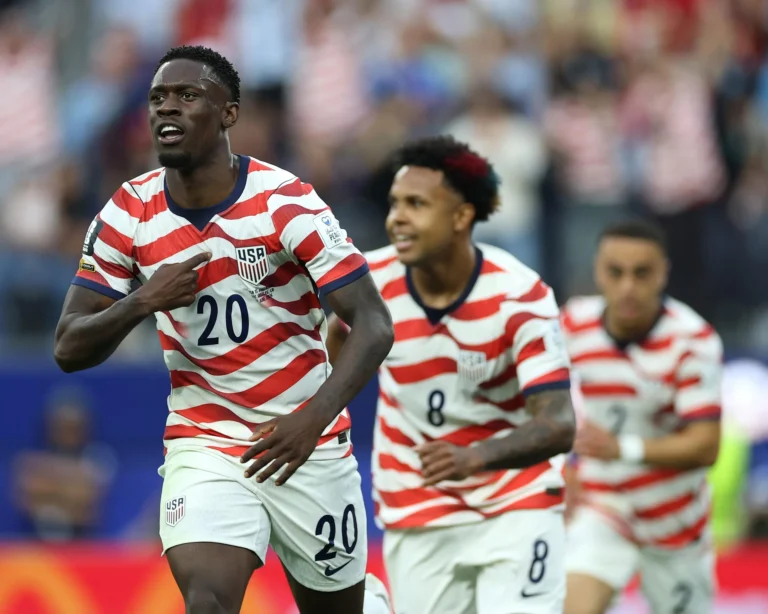
Engaging with the Department of Homeland Security’s social media feels akin to navigating a casino at 4 AM; it can lead to moments that leave you questioning the current state of affairs. One such instance arose earlier this month when, just days after the US team triumphed over Paraguay with a 4-1 victory in their World Cup debut, DHS shared a photo featuring players Chris Richards, Sergiño Dest, and Folarin Balogun. The accompanying headline read, “DEFEND THE HOMELAND” with a caption stating, “OUR SOIL.”
The irony in this message, posted on Juneteenth, a day celebrating emancipation, was striking. This is the same department that barred a prominent referee from Somalia and has subjected Iran’s players to precarious day-to-day visa statuses during the tournament, seemingly undermining the event it now seems to celebrate.
Furthermore, the administration is currently pursuing a questionable challenge to the 14th Amendment in the Supreme Court while simultaneously embracing players like Dest, a Netherlands-born Brooklynite; Richards, a military child raised abroad; and Balogun, a British Nigerian who gained his American citizenship through birthright. The fervor surrounding the World Cup seems to have captivated even those who support the Make America Great Again movement, though this may ultimately lead to disappointment.
This observation is not a critique of the US Men’s National Team (USMNT), who, despite a recent 3-2 loss to Turkey, have successfully progressed to face Bosnia and Herzegovina in the knockout stage next Wednesday. However, it highlights that many Americans dismiss soccer as a “sissy sport” that real sports enthusiasts ignore, only to jump on the bandwagon when the tide turns. They mistake the World Cup as merely a platform for showcasing American strength, failing to see that it actually represents a celebration of global migration.
Other nations also resist jingoistic narratives. For instance, the Netherlands has scored nine goals in the tournament, all from players of African or Indonesian heritage. Belgium’s team is filled with individuals whose parents hail from Congo, Senegal, and Ghana, all facing racial discrimination despite their contributions. Spain’s Lamine Yamal, a remarkably talented teenager with Moroccan and Equatoguinean roots, exemplifies a squad increasingly defined by its global makeup. France has firmly embraced its Black-Blanc-Beur initiative, which has proven successful, earning them World Cup victories in both 1998 and 2018, despite some backlash from extremist factions.
Many players on England’s roster could have chosen to represent Ireland or nations in Africa or the Caribbean. This diversity has also enabled the USMNT to recruit promising talents like Balogun, born in New York but who forwent the US residency path and grassroots soccer system to become the team’s top scorer in the tournament.
Ultimately, the narrative of the USMNT’s strong start pales in comparison to the overarching theme of the tournament: the influence of the diaspora. During the match between England and Ghana, social media users voiced what many might think — that a game between colonizer and former colony transcends mere sport. The advancement of teams from Morocco, South Africa, Côte d’Ivoire, Cape Verde, and potentially Senegal to the knockout round further emphasizes the incredible talent flowing from Africa into Europe’s premier leagues.
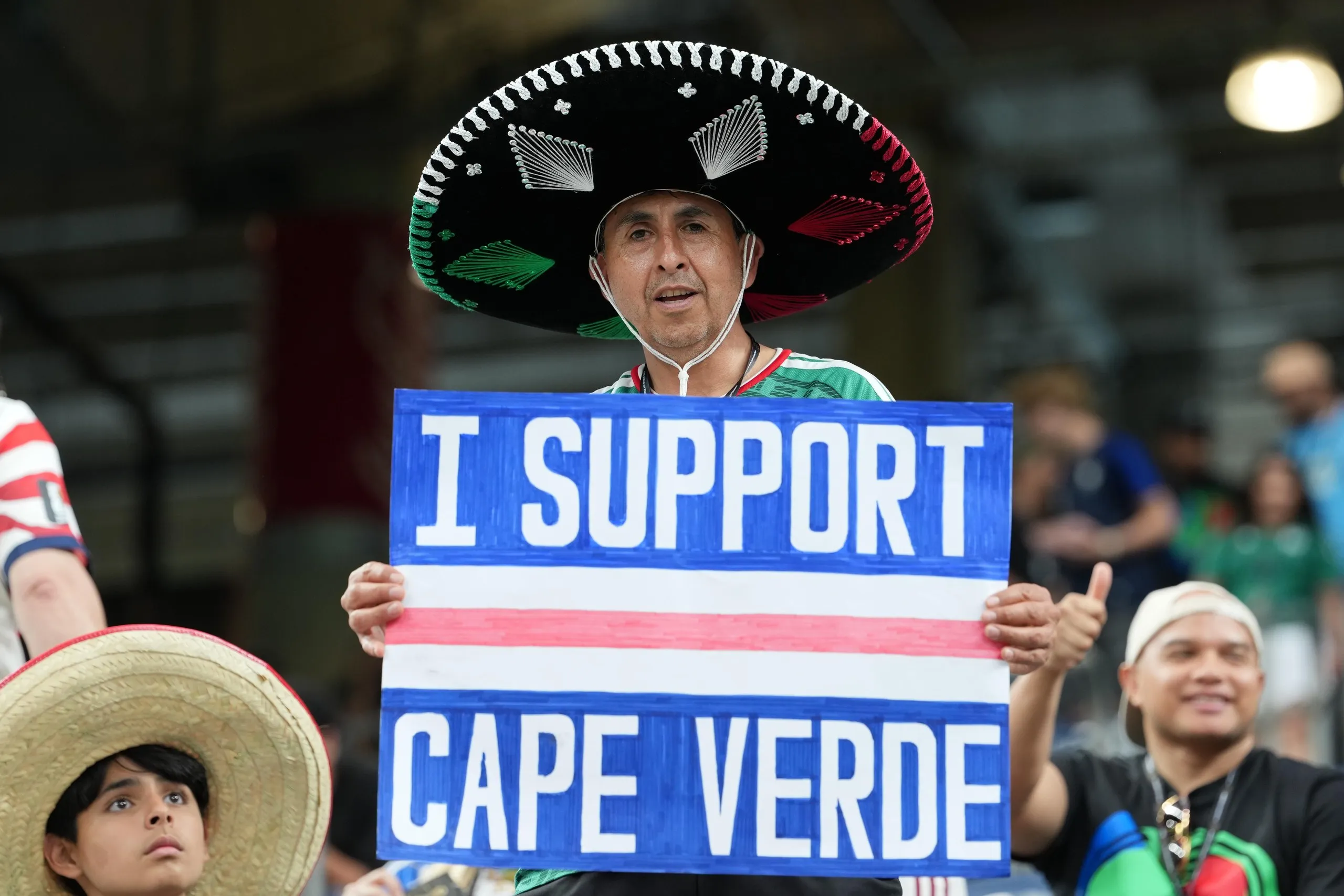
Even the restrictive travel policies imposed by DHS for the World Cup have inadvertently showcased the vibrant diversity within the United States. Stadiums in Philadelphia, Houston, and Miami have been filled with Haitian, Congolese, and Cape Verdean fans, proudly displaying their flags. I encountered a large group of Moroccan supporters in downtown Atlanta before their match against Haiti, and it was evident from their numbers and the hint of American accents that not all had traveled from across the ocean for the event.
Countries that perceive immigration as a threat are witnessing a World Cup that starkly contradicts that notion. It highlights not only the shortsightedness of exclusionary political ideologies but also the failure of leadership within FIFA. If the governing body were not preoccupied with appeasing authoritarian regimes and exploiting everyday fans, it could emerge as a powerful force for global good, akin to the advent of international travel.
This tournament has demonstrated that when politics and cultural posturing are set aside, soccer can indeed serve as a great unifier. It has introduced Japanese fans to the delights of chips and salsa, fostered camaraderie between the people of Scotland and Boston, and kept Brazil’s supporters enjoying festivities alongside New York Knicks fans. The event has also energized the nation’s stores and fast-food establishments. At a watch party for Cape Verde in Oakland, Jill Tucker, who once taught English in the country as a Peace Corps volunteer, was thrilled to encounter one of her former students in the cheering crowd. Such connections remind us that sharing a flag does not equate to sharing the same worldview, especially one imposed from above.
This creates a paradox for the current administration: as it attempts to redefine who qualifies as an American, it cannot escape the fact that diversity is woven into the fabric of national identity. This nation owes much of its cultural and economic power to diversity, equity, and inclusion — from figures like Einstein to Oprah. Soccer follows this trend; European and Latin American newcomers laid the foundation for the sport in industrial hubs and mill towns across the Midwest and Southeast. Continuous immigration over decades has transformed soccer into a beloved national pastime, boasting impressive participation, strong television viewership, and tremendous growth potential. The robust viewership of this year’s World Cup on both Telemundo and Fox reflects the millions of American soccer fans who have long followed the sport in Spanish.
The USMNT has spent years assembling teams that represent global cultures as well as American identity. David Regis, who was born in France and played professionally in Germany with limited English skills, was fast-tracked into the USMNT’s 1998 World Cup squad after marrying an American citizen and obtaining swift citizenship.
In the early 2000s, the spotlight shone on Freddie Adu, a Ghanaian-born child of a green card lottery winner who became the youngest player to compete for the USMNT in a senior international match. Mauricio Pochettino, the USMNT coach with a resemblance to Russell Crowe, hails from Argentina and Europe, continuing a legacy of worldly coaches that includes Scotland’s Robert Millar, who led the US to a historic third-place finish in the 1930 World Cup, and German legend Jürgen Klinsmann, who built his 2014 World Cup roster around American military brats.
In last week’s match against Australia, one standout player was Alex Freeman, a 21-year-old who could have pursued a career in American football, given his lineage — his father, Antonio Freeman, was an NFL star and Super Bowl champion with the Green Bay Packers. The fact that a Black man named Freeman scored for his country during Juneteenth weekend is not merely coincidental in a nation that often shies away from acknowledging diversity; it was almost predestined.
As the World Cup eventually departs from our shores, American sports enthusiasts will return to fixating on the NFL and the baseball playoffs — not before the president attempts to insert himself into the festivities. This aligns with Donald Trump’s brand as much as it does with historical precedent. Historically, the World Cup has been a canvas for jingoistic myth-making, often manipulated by authoritarian regimes aware of its symbolic significance. However, the posts by DHS have had the opposite effect, uncovering the fallacy of American homogeneity and exposing the disparity between the government’s narrative and the lived experiences of its citizens.
The current North American World Cup has made one thing abundantly clear: the world congregates not to reinforce borders but to break them down. The flags serve as reminders of our past and signals of where we may be headed — another realm where “our soil” exists as a complex construct.