



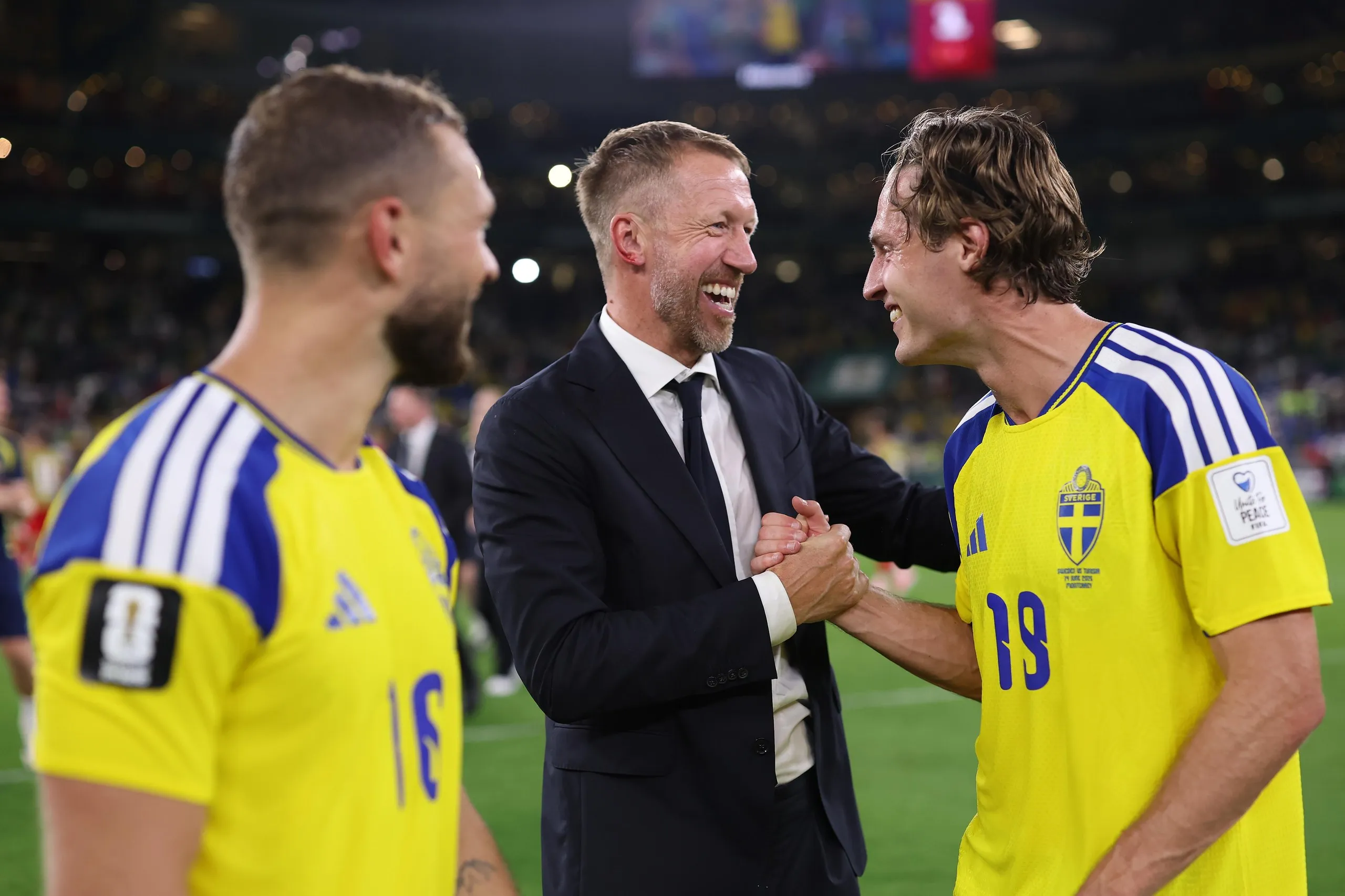
In a surprising twist, Graham Potter, a 51-year-old former left-back for York City, has become a beloved figure in Sweden. Despite his humble demeanor, Potter’s impact on Swedish football is remarkable. He took charge of a national team that had failed to secure a single victory during World Cup qualifying, and together they embarked on a journey of redemption. A recent comfortable win against a faltering Tunisia is just another step in this ongoing revival.
Sweden’s qualifying campaign was far from stellar. The squad faced numerous injuries, yet two losses to Switzerland and Kosovo, along with draws against Slovenia, typically spell disaster for World Cup ambitions. Following these disappointments, Jon Dahl Tomasson was dismissed, leading to Potter’s appointment. Under his guidance, Sweden capitalized on their Nations League performances, successfully overcoming Ukraine and Poland in the play-offs to clinch a spot at the finals. Potter hailed the latter match, decided by an 89th-minute goal from Viktor Gyökeres, as his most memorable night in football.
The weather conditions for the match were challenging; the clouds hung low over the Sierra Madre, creating an uncomfortable atmosphere with temperatures reaching 27C. Players likely found the sticky heat oppressive, and while hydration breaks were warranted, they drew boos from some fans, who criticized them as emblematic of FIFA’s greed. However, the crowd’s spirits were lifted by a lively accordion player wearing a Stetson, momentarily distracting from the controversy.
Tunisia, too, underwent significant changes, having dismissed the coach who started their qualifying campaign, as well as his successor. Following lackluster performances in both the Arab Cup and the Africa Cup of Nations, Sami Trabelsi was replaced by Sabri Lamouchi, a former manager of Nottingham Forest and Cardiff City. Lamouchi introduced significant roster changes, calling up 11 players who had not participated in the previous tournaments, five of whom started the match.
Among the new faces was goalkeeper Abdelmouhib Chamakh, who played a pivotal role in Sweden’s first two goals. Just six minutes into the game, Chamakh hesitated when dealing with a long ball from Viktor Lindelöf, allowing Gyökeres to capitalize on the rebound. Brighton’s Yasin Ayari, born in Stockholm to a Tunisian father, struck first after his shot was blocked, smashing the ball past Chamakh.
Chamakh’s errors continued with the second goal, which arrived around the half-hour mark. Gyökeres orchestrated the attack from the center-circle, deftly assisting Alexander Isak, who cut inside and fired a low shot. While it lacked power, the ball slipped through Chamakh’s grasp, highlighting his struggle as he dropped his head in acknowledgment of the mistake.
Lamouchi’s efforts seemed to address the longstanding anxiety that has plagued Tunisian football. Rather than resorting to time-wasting tactics from the outset, Tunisia displayed some creativity, attempting to play an attacking game. Yet, given the match’s outcome, this approach may have been a miscalculation.
Just before halftime, Omar Rekik, one of Lamouchi’s selections, provided a glimmer of hope by heading in a cross from Hannibal Mejbri. For a brief period in the second half, it appeared Tunisia might stage a comeback. However, their hopes were dashed when Ellyes Skhiri foolishly wandered towards Isak, allowing the Liverpool forward to intercept the ball. Gyökeres capitalized on this mistake, finishing emphatically to increase Sweden’s lead. Moments later, Mattias Svanberg, who had just entered the game, received a perfectly timed pass from Isak and scored, followed by Ayari securing his second goal in injury time, sealing a 5-0 victory.
While Sweden’s previous playoff success against Poland felt somewhat fortuitous, this match clearly showcased their ability to capitalize on Tunisian blunders. Though they may need to create goals independently in the future, for now, they are reveling in the unexpected joy of being at the World Cup. Just six months ago, such a scenario seemed unlikely, but the Potter-led transformation continues to unfold.