


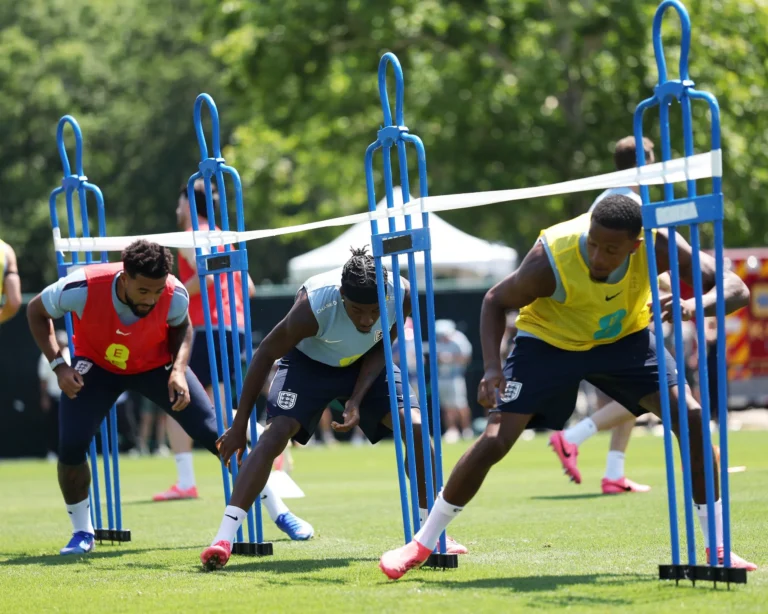
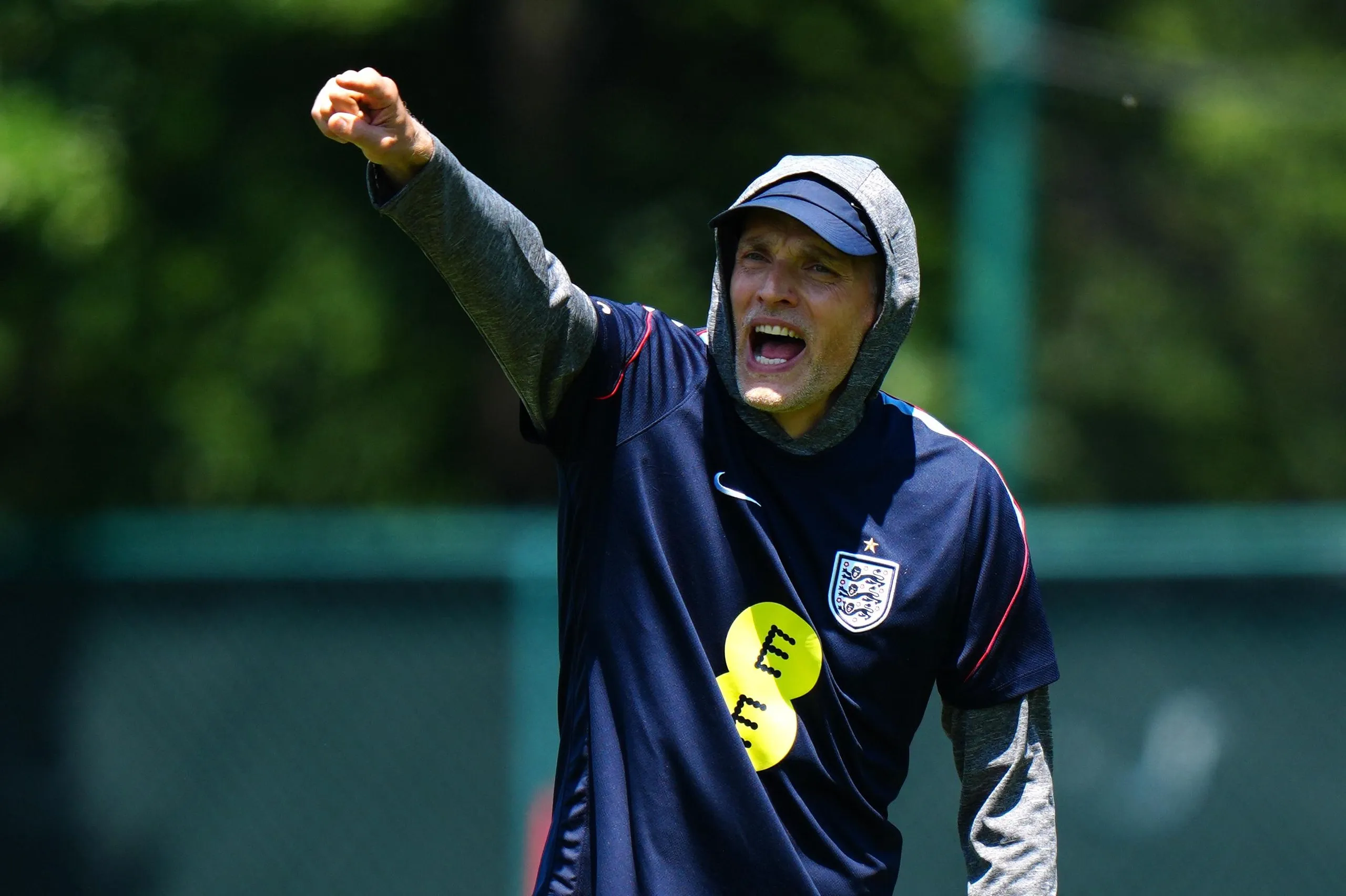
Under the sweltering Missouri sun, Thomas Tuchel directed training with an intensity that mirrored his ambition for perfection as England prepared for their clash against Ghana. Initially observing from a distance, the head coach soon immersed himself in the drills, ensuring they met his high standards.
Dressed in a hoodie to shield himself from the sun, Tuchel monitored a group that included players like Elliot Anderson, Jude Bellingham, Anthony Gordon, Marcus Rashford, Djed Spence, and Ollie Watkins. This session provided a rare glimpse into their preparation, contrasting with the usual limited access journalists have to training sessions at international tournaments. While those often consist of light jogging and occasional rondos, Saturday’s practice in Kansas City revealed a more in-depth look at Tuchel’s methods. Mannequins were strategically placed in four zones, underscoring that there’s no escaping Tuchel’s watchful eye.
Known for his meticulous nature, Tuchel has been reported to measure the grass height during training. Dan Burn noted, “If he sees something that he doesn’t like he calls it out.” This straightforward approach is refreshing and promotes clarity. On this particular day, the emphasis was on rapid transitions and moving the ball through the lines. Players maneuvered past the mannequins, restricted to two touches as they practiced enticing the press and executing give-and-go plays before shifting the ball wide. Tuchel was quick to intervene whenever he sensed a group struggling.
Tuchel places significant importance on players using the correct foot to control the ball. He insists that every player should be aware of their teammates’ preferred foot. This logical approach accelerates play, and as he approached Anderson, Bellingham, Spence, Gordon, and Rashford, the intensity noticeably increased.
With a whistle in hand, Tuchel vocally guided players on foot usage for receiving passes. When he focused on Spence, he urged the full-back to be more alert. “If he sees something that he doesn’t like he calls it out,” he said. “It’s been five minutes already, Djed. Come on!”
England’s objective is to emulate the speed, intensity, and physicality of a Premier League team. Historically, they have faced challenges against teams that apply high pressure. Success in these situations hinges on technique, something Tuchel makes appear straightforward. When a left-footed player receives the ball properly, it facilitates body positioning, enabling them to pass around opponents, initiate attacks, and utilize the pace of their forwards.
The players have expressed how much they gain from Tuchel’s coaching. The engagement is total, yet there’s room for fun as well; basketball games are available at the team hotel, and Burn has been exploring the card game Wolf, trying to gauge who the best bluffs are. “I’ve been watching a few of them before getting in there, trying to work out who the best liars are,” Burn shared.

On their day off last Friday, Harry Kane and Jason Steele joined Burn at a concert by country artist Ella Langley. “I like country music, so I had a cowboy hat on and cowboy boots,” Burn remarked. “If you’re going to do it, do it properly. Ella is an amazing country artist, so it was nice that we get to do those things. Then today it’s focused back on football.”
The expectations are high. While Tuchel oversaw the passing drill, his assistant Anthony Barry actively participated, providing a stream of instructions. Barry conducted a halftime interview with ITV, delivering a candid critique of England’s first half against Croatia, noting a palpable nervous energy in the squad.
Burn, who initially crossed paths with Barry when he was a novice coach at Wigan Athletic, was not taken aback by his directness. “There’s no grey areas with Baz and the manager,” he stated. “The one thing that I really do like about them is that they just say it how there is. They’re not going to beat around the bush. That’s all you want as a player. You just want that honesty.”
With Tuchel and Barry’s candid partnership, England players can expect to be held accountable whenever they show signs of slowing down.